
Allpahuayo Antbird
Percnostola arenarum
Order: Passeriformes / Family: Thamnophilidae

Wikimedia Commons
About the Allpahuayo Antbird
The Allpahuayo Antbird (Percnostola arenarum) is a captivating species native to the rich biodiversity of the Amazon basin. This antbird holds a significant place in the avian community of the Peruvian rainforests, particularly within the Allpahuayo-Mishana National Reserve, from which its name is derived. The reserve, known for its unique white sand forests, provides the perfect habitat for this bird, which relies on the dense understory for both shelter and foraging. Standing out with its contrasting black and white plumage, the Allpahuayo Antbird is adapted to a life in shadows, navigating the labyrinthine trails beneath the forest canopy. Its ecological role is notable as it participates in mixed-species foraging flocks, often trailing army ant swarms to capture insects and other small arthropods flushed out by the ants. This behavior not only benefits the antbird but also contributes to the overall ecosystem by controlling insect populations. Seasonally, the Allpahuayo Antbird displays a fascinating pattern of territoriality and vocalization. During the breeding season, males become particularly vocal, using their distinctive songs to establish territories and attract mates. The bird's reliance on the forest understory makes it sensitive to habitat disturbance, and its presence often indicates the health of its environment. The Allpahuayo Antbird's restricted range and specialized habitat preferences highlight the importance of conservation efforts in the Amazon rainforest. As deforestation and habitat degradation continue to threaten these ecosystems, preserving regions like the Allpahuayo-Mishana National Reserve becomes crucial. The bird’s existence underscores the intricate balance of tropical forest ecosystems, where even small alterations can ripple through the food web, affecting numerous species. Beyond its ecological significance, the Allpahuayo Antbird serves as a symbol of the biodiversity and complexity of the Amazon, a region still revealing new secrets to scientists and naturalists alike.
The Allpahuayo Antbird belongs to the family Thamnophilidae, within the order Passeriformes. These birds typically live estimated lifespan is around 4-6 years in the wild, with limited data on longevity..
How to Identify a Allpahuayo Antbird
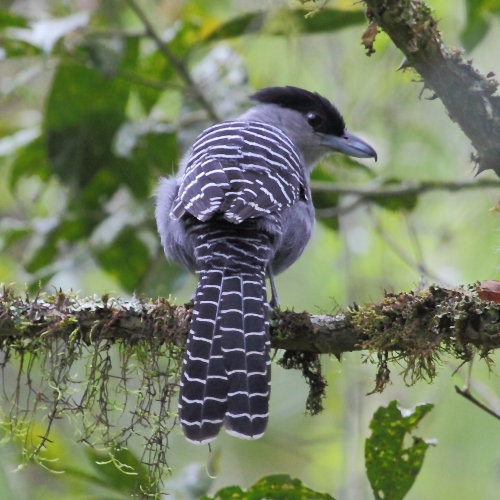
The Allpahuayo Antbird is easily identifiable by its bold black and white coloration. Adult males exhibit a predominantly black plumage with striking white wing bars and a white belly, providing a stark contrast that aids in rapid identification. Females, while similar in overall pattern, display a slightly browner hue on the upperparts, distinguishing them from the males. Juveniles are generally duller than adults, with more muted tones and less distinct markings, which gradually develop as they mature. While observing these birds, one might confuse them with similar antbird species, such as the White-browed Antbird, which shares a similar habitat. However, the Allpahuayo Antbird lacks the prominent white eyebrow stripe, making it distinguishable upon closer inspection. In flight, the Allpahuayo Antbird shows a short, rounded silhouette, typical of many understory birds that do not engage in long-distance flights. When perched, it exhibits a typical antbird posture, often seen clinging to vertical trunks or branches as it surveys its insect prey.
Having trouble telling birds apart? Upload a photo to our bird identification tool for an instant species match.
Allpahuayo Antbird Habitat and Range
Preferred Habitat
The Allpahuayo Antbird thrives in the dense, humid understory of primary and secondary tropical forests. It is particularly associated with the white sand forests within the Allpahuayo-Mishana National Reserve in northeastern Peru. These forests present a unique ecosystem characterized by poor, sandy soils and distinct plant communities. The bird's preferred habitat lies at low elevations, typically below 500 meters, where it finds ample cover and food resources. Unlike some other antbirds, it does not frequent urban or heavily disturbed areas, relying instead on the unbroken forest canopy for survival. Seasonal changes in habitat use are minimal, given its relatively stable tropical environment, but slight shifts in microhabitat preference may occur in response to resource availability.
Geographic Range
The range of the Allpahuayo Antbird is highly restricted to the northeastern part of Peru, with its strongest populations centered in the Allpahuayo-Mishana National Reserve. It does not undertake long-distance migrations, remaining a year-round resident of this region. The bird's limited range underscores its status as an endemic species, with its population densities highest in undisturbed forest areas that provide the complex habitat structure it requires. While it is not found across broader regions of South America, its presence within its range is relatively stable, assuming habitat conditions remain favorable.
Want to know which birds visit your area? Browse our backyard birds by location guides for region-specific species lists.
What Does the Allpahuayo Antbird Eat?
The diet of the Allpahuayo Antbird consists predominantly of insects and other small arthropods. It specializes in following army ant swarms, a behavior that allows it to exploit the disturbances created by the ants as they forage, flushing out prey items such as spiders and beetles. This foraging method is highly efficient and forms the core of its feeding strategy. The bird captures prey using short, quick sallies, often from a low perch or while on the ground. Diet composition remains relatively constant year-round due to the consistent availability of prey in its tropical environment, though slight variations might occur with seasonal fluctuations in insect abundance.
Allpahuayo Antbird Behavior and Social Structure
The Allpahuayo Antbird exhibits a complex social structure that includes both solitary and cooperative behaviors. It is territorial, particularly during the breeding season, with males singing vigorously to defend their area and attract mates. Courtship displays are understated, involving subtle movements and vocalizations. Outside of breeding, the bird often joins mixed-species flocks, enhancing its foraging success and providing additional protection against predators. Its daily activity pattern is diurnal, with peak feeding occurring in the morning and late afternoon. When faced with potential threats, such as predators, the Allpahuayo Antbird uses alarm calls to alert others, often retreating into dense cover to avoid detection.
Allpahuayo Antbird Nesting and Reproduction
The Allpahuayo Antbird constructs cup-shaped nests, typically low to the ground in dense vegetation. Nest materials include leaves, twigs, and other plant fibers, providing both camouflage and structural integrity. Clutch size usually consists of two to three eggs, with both parents sharing incubation duties over a period of approximately two weeks. Once hatched, the chicks remain in the nest for another two weeks, during which both parents actively participate in feeding and protecting the brood. The species generally raises one brood per year, although favorable conditions may occasionally allow for a second.
Allpahuayo Antbird Sounds and Vocalizations
The Allpahuayo Antbird's primary song consists of a series of sharp, melodious notes delivered in rapid succession, reminiscent of a high-pitched trill. This song serves both territorial and mate-attraction purposes. Its call notes are shorter and more abrupt, often used for communication between mates or during flocking. Alarm calls are harsher and more urgent, signaling potential danger. During the dawn chorus, the bird's vocalizations become particularly prominent, contributing to the rich auditory tapestry of its forest habitat.
Interesting Facts About the Allpahuayo Antbird
- 1The Allpahuayo Antbird is named after the Allpahuayo-Mishana National Reserve, highlighting its limited range.
- 2This antbird is part of a guild of species that follow army ants, benefiting from the insects they flush out.
- 3The Allpahuayo Antbird was only described as a distinct species in 2001, showcasing the ongoing discoveries in ornithology.
- 4Its striking plumage provides excellent camouflage against the dappled light of the forest understory.
- 5Unlike many birds, the Allpahuayo Antbird does not migrate, relying entirely on a small area of the Amazon.
- 6Vocalizations of the Allpahuayo Antbird are a key aspect of its social interactions, especially during breeding season.
- 7The bird's presence in the Allpahuayo-Mishana National Reserve highlights the importance of protected areas.
Allpahuayo Antbird Conservation Status
The Allpahuayo Antbird currently holds a 'Near Threatened' status on the IUCN Red List, primarily due to its restricted range and habitat loss. Deforestation and land conversion for agriculture pose significant threats to its rainforest environment. Conservation efforts focus on preserving and protecting the Allpahuayo-Mishana National Reserve and similar habitats. Despite pressures, the population trend remains relatively stable, with ongoing research and habitat management practices aiding in its conservation.
Other Thamnophilidae Species



Birds Similar to the Allpahuayo Antbird
These species are often confused with the Allpahuayo Antbird due to similar appearance or overlapping range.
