Common Scale-backed Antbird
Willisornis poecilinotus
Order: Passeriformes / Family: Thamnophilidae

Wikimedia Commons
About the Common Scale-backed Antbird
The Common Scale-backed Antbird, scientifically known as Willisornis poecilinotus, belongs to the Thamnophilidae family, which is a group of birds known for their presence in tropical rainforests. This intriguing species is primarily found in the Amazon Basin, which spans several South American countries, including Brazil, Colombia, Peru, and Ecuador. As a resident of these dense rainforests, the antbird plays a significant role in the ecosystem, particularly in controlling insect populations. Its ecological niche involves following swarms of army ants to feed on the insects and arthropods they flush out, a behavior known as 'ant-following'. This specialized feeding strategy highlights the bird's importance in maintaining the balance of the forest's intricate food web. The Common Scale-backed Antbird exhibits fascinating seasonal behaviors, often becoming more vocal during the breeding season to establish territories and attract mates. Given its reliance on the health of tropical forests, the antbird serves as an indicator species for the overall health of its habitat. Its presence suggests a rich, biodiverse environment, while its absence could signal ecosystem degradation or habitat loss. This bird is a year-round resident in its tropical habitat, with no significant migratory movements. Its role extends beyond mere insect control; the antbird also contributes to seed dispersal indirectly by affecting the behavior and distribution of insects that interact with plants. Through its interactions with other forest inhabitants, the Common Scale-backed Antbird plays a crucial part in the complex dynamics of tropical ecosystems, making it a species of interest for both ornithologists and conservationists. Understanding the life and habits of Willisornis poecilinotus aids in broader conservation efforts, as protecting this bird involves safeguarding the expansive and diverse habitats of the Amazon rainforest.
The Common Scale-backed Antbird belongs to the family Thamnophilidae, within the order Passeriformes. These birds typically live 4-6 years, with a maximum recorded of 8 years..
How to Identify a Common Scale-backed Antbird
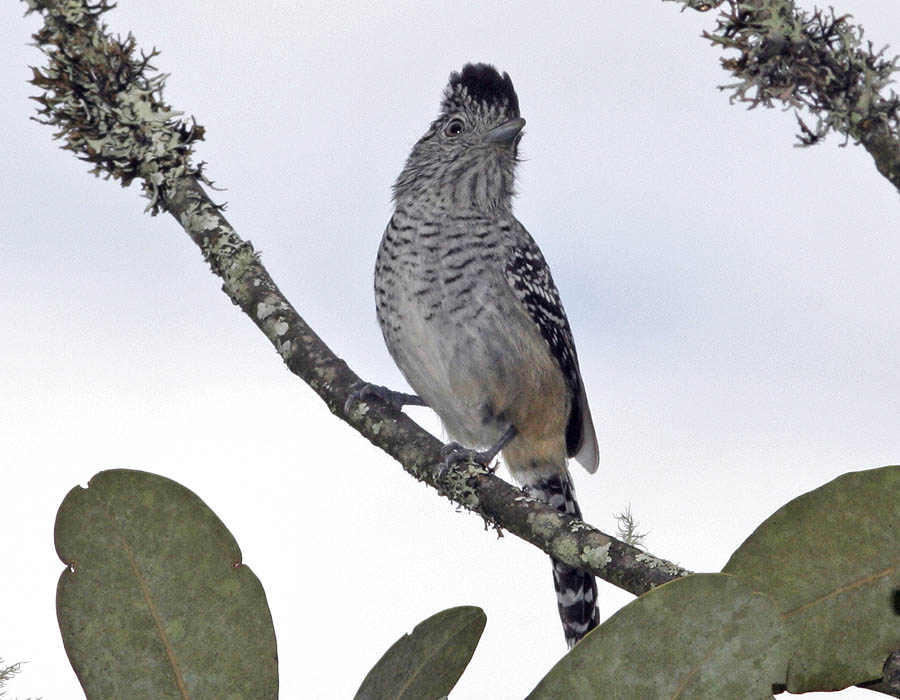
The Common Scale-backed Antbird can be identified by its distinctive plumage, which features a pattern resembling scales. Adult males typically display a striking combination of black and brown feathers with white markings that create the appearance of scales on their backs. Females, in contrast, often have a more muted coloration, with brownish feathers and less pronounced white markings. Juveniles resemble females but may appear even duller until they mature. One of the key identification marks for this species is the contrast between the dark head and the scaly-patterned back. In terms of size, this bird falls into the small to medium range, with an average length of around 13 centimeters. When observing the Common Scale-backed Antbird in flight, one might notice its rounded wings and relatively short tail, which contribute to a somewhat fluttering flight pattern. The perching posture is typically upright, often with the tail slightly cocked. This species could potentially be confused with other antbirds, such as the Spot-backed Antbird, but the scale-like pattern of Willisornis poecilinotus is a distinguishing feature. Another point of confusion may arise with the White-plumed Antbird, yet the latter lacks the distinct scaly appearance. Observers should focus on the unique back pattern and overall coloration to ensure correct identification in the field.
Having trouble telling birds apart? Upload a photo to our bird identification tool for an instant species match.
Common Scale-backed Antbird Habitat and Range
Preferred Habitat
The Common Scale-backed Antbird inhabits the dense, humid lowland rainforests of the Amazon Basin, often in areas with dense understory. This bird thrives in primary forests but can also be found in well-developed secondary forests, provided the canopy is intact and the undergrowth is sufficiently dense. Typically, it resides at elevations ranging from sea level up to about 900 meters. There are no significant seasonal habitat shifts, as the species is a year-round resident of these tropical environments. The antbird is rarely found in urban or heavily disturbed areas, preferring the seclusion and rich resources of undisturbed rainforest. Its reliance on such specific habitat types makes it vulnerable to deforestation and habitat fragmentation, as these activities directly threaten its living conditions. Conservation efforts often focus on preserving large tracts of continuous forest to ensure the survival of this and other rainforest-dependent species.
Geographic Range
The Common Scale-backed Antbird's range is largely restricted to the Amazon Basin, which covers parts of northern South America. Its distribution includes countries such as Brazil, Colombia, Peru, Ecuador, and parts of Venezuela and Bolivia. This bird does not undertake long migratory journeys but is instead a resident species, maintaining territories year-round. Within its range, population densities can vary significantly, with higher concentrations observed in regions with optimal forest cover and healthy army ant populations. These areas often include protected reserves and national parks, such as the Amazon National Park in Brazil and the Yasuni National Park in Ecuador. Outside of these hotspots, the bird's presence may be more sporadic, depending on habitat quality and availability. Its dependence on intact rainforest ecosystems makes any alteration to these environments particularly impactful on its distribution. Efforts to map and monitor its range continue, as understanding population trends is crucial for ensuring its conservation.
Want to know which birds visit your area? Browse our backyard birds by location guides for region-specific species lists.
What Does the Common Scale-backed Antbird Eat?
The Common Scale-backed Antbird primarily feeds on insects and other small arthropods, which it captures by following swarms of army ants. This ant-following behavior enables the bird to access a variety of prey items that are flushed out by the movement of the ants. The diet mainly consists of beetles, spiders, and caterpillars, with occasional small vertebrates such as lizards and frogs. During the dry season, when army ant activity may decrease, the antbird may expand its diet to include other insects found in the understory. Foraging occurs mainly at ground level, where the bird actively moves through dense vegetation in search of disturbed prey. Its keen eyesight and rapid movements aid in capturing small, fast-moving insects. Feeding typically takes place in the morning and late afternoon, times when ant swarms are most active. The Common Scale-backed Antbird's reliance on army ants for food makes it an integral part of a complex ecological relationship, and any disruption to army ant populations could significantly impact the bird's diet and survival.
Common Scale-backed Antbird Behavior and Social Structure
The Common Scale-backed Antbird exhibits intriguing social and territorial behaviors. It is generally seen in pairs or small family groups, maintaining a defined territory that it defends vigorously against intruders. Territorial disputes often involve vocalizations and displays of aggression. During the breeding season, males intensify their singing to establish territory and attract mates. These songs can be heard throughout the day but are most prominent during dawn and dusk. Courtship displays include a series of movements and postures aimed at showcasing plumage and vigor. While this species is not typically found in large flocks, it may join mixed-species foraging groups, especially when following army ant swarms. In response to predators, the antbird relies on cryptic coloration to blend into the environment, often freezing or retreating to denser cover when threatened. Daily activity patterns revolve around feeding and defending territory, with rest periods during the hottest part of the day. The bird's complex social interactions and territorial nature make it a dynamic presence in the rainforest.
Common Scale-backed Antbird Nesting and Reproduction
Nesting for the Common Scale-backed Antbird involves constructing a cup-shaped nest, typically located in low shrubs or small trees within dense forest undergrowth. The nest is made from plant fibers, leaves, and other organic materials, carefully woven to ensure stability and camouflage. The breeding season coincides with the onset of the rainy season, a time when food resources become abundant. A typical clutch consists of two eggs, which both parents incubate for about 14 to 16 days. After hatching, both parents share in feeding and caring for the chicks until they fledge, usually around two to three weeks after hatching. The fledglings remain dependent on the parents for several weeks post-fledging, learning essential survival skills. The Common Scale-backed Antbird generally raises one brood per year, although favorable conditions may occasionally allow for a second. Parental roles are well-balanced, with both sexes involved in all aspects of nesting and chick-rearing, reflecting a strong pair bond vital for the successful rearing of offspring.
Common Scale-backed Antbird Sounds and Vocalizations
The Common Scale-backed Antbird's primary song is a rapid series of clear, whistled notes, often described as sounding like 'wee-chee wee-chee wee-chee'. These calls serve as territorial markers and are a key component of courtship rituals. The bird also emits distinctive call notes that are shorter and used for communication between mates or family members. Alarm calls are harsher and more abrupt, designed to alert nearby birds of potential dangers such as predators. During the dawn chorus, the Common Scale-backed Antbird is particularly vocal, contributing to the cacophony of rainforest sounds. The clarity and rhythmic nature of its song make it easier to identify among the myriad of other avian voices. Similar in quality to a referee's whistle, the antbird's vocalizations are a reliable field mark for those familiar with its soundscape.
Interesting Facts About the Common Scale-backed Antbird
- 1The Common Scale-backed Antbird relies heavily on army ants, following them to feed on insects they disturb.
- 2This bird's scaly back pattern acts as effective camouflage in the dappled light of the forest undergrowth.
- 3Male Common Scale-backed Antbirds sing a distinct whistle-like song to establish territory and attract mates.
- 4Despite being a tropical bird, the Common Scale-backed Antbird does not migrate, remaining within its range year-round.
- 5The species exhibits strong pair bonds, with both parents equally sharing in the care of the young.
- 6The Common Scale-backed Antbird's reliance on healthy forest environments makes it a valuable indicator of ecosystem health.
- 7It is often seen in mixed-species flocks, demonstrating its ability to coexist and cooperate with other bird species for foraging.
Common Scale-backed Antbird Conservation Status
Currently, the Common Scale-backed Antbird holds a status of Least Concern on the IUCN Red List, with population trends considered stable. However, the species faces threats primarily from habitat destruction due to deforestation and land conversion for agriculture. These activities reduce the availability of suitable forest habitat, posing a significant risk to its long-term survival. Conservation efforts focus on preserving large tracts of contiguous rainforest, vital for maintaining the ecological integrity of the species' habitat. Protected areas within the Amazon Basin play a crucial role in safeguarding the antbird's environment. Monitoring initiatives by organizations and local governments aim to track population changes and habitat conditions. Historical data suggests that, while the species is currently stable, continued habitat loss could pose future challenges. Promoting sustainable land-use practices and strengthening protected area networks remain key strategies for ensuring the Common Scale-backed Antbird's continued existence.
Other Thamnophilidae Species



Birds Similar to the Common Scale-backed Antbird
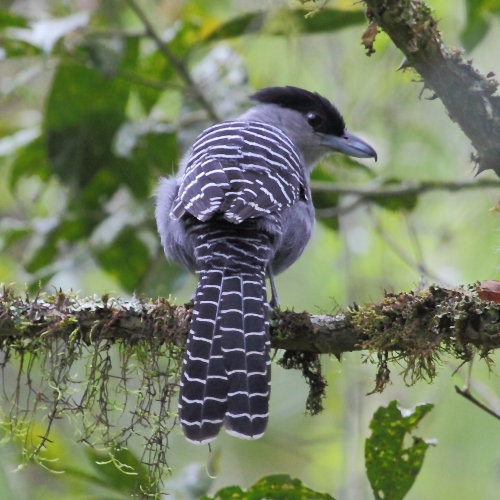
These species are often confused with the Common Scale-backed Antbird due to similar appearance or overlapping range.