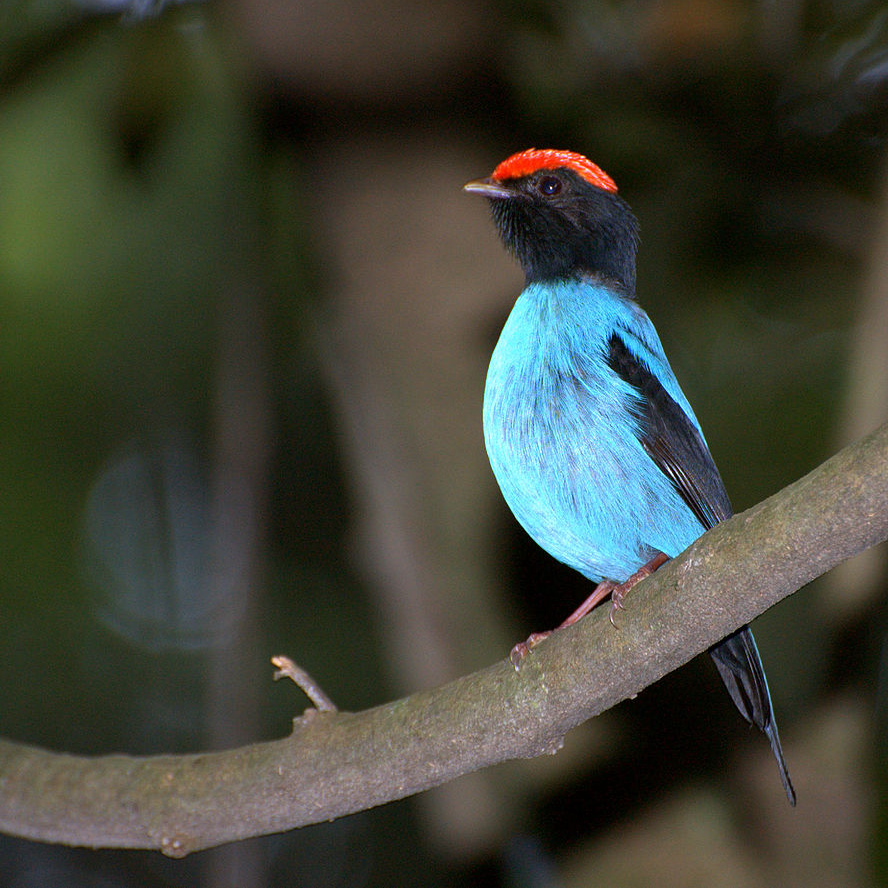
Araripe Manakin
Antilophia bokermanni
Order: Passeriformes / Family: Pipridae

Wikimedia Commons
About the Araripe Manakin
The Araripe Manakin (Antilophia bokermanni) is a remarkable avian species, celebrated for its vivid plumage and restricted distribution. Discovered in 1996 and formally described in 1998, this bird inhabits the humid, forested slopes of the Chapada do Araripe in Ceará, Brazil. Its striking appearance and ecological significance have made it a focal point for conservation efforts. The Araripe Manakin is the flagship species for the region, drawing attention to the environmental importance of its unique habitat. This bird's role in the ecosystem is crucial as it participates in seed dispersal and pollination, supporting the biodiversity of its limited range. The Araripe Manakin's natural habitat comprises the dense understory of wet forests and riparian zones, often near waterfalls or streams. These areas provide the bird with abundant food sources and nesting sites. Seasonal behaviors include subtle shifts in elevation within its range, likely influenced by rainfall patterns and food availability. During the breeding season, males perform elaborate displays to attract females. Outside the breeding season, these manakins may form small groups, but they generally maintain solitary or paired life. As a critically endangered species, the Araripe Manakin faces numerous threats, including habitat destruction from agriculture, urban expansion, and illegal logging. Conservation initiatives focus on habitat preservation, environmental education, and research to better understand the species' ecology and requirements. As such, the Araripe Manakin serves as an ambassador for biodiversity conservation in the region, underscoring the need for sustainable land management and protection of its rainforest home.
The Araripe Manakin belongs to the family Pipridae, within the order Passeriformes. These birds typically live average 8 years, with a maximum recorded of 12 years..
How to Identify a Araripe Manakin
Identifying the Araripe Manakin is a thrilling experience for birders. Adult males are particularly eye-catching with their vibrant red crowns extending to the nape, contrasting starkly with their white body and inky black wings and tail. Females, on the other hand, exhibit a more subdued appearance, characterized by olive-green upperparts and a pale underbelly. Juveniles resemble females but can be distinguished by their incomplete wing coloration and somewhat scruffy appearance. In flight, the Araripe Manakin displays a distinctive silhouette due to its short, rounded wings and relatively short tail. When perched, it maintains an upright posture, often favoring lower branches in shady forest areas. Similar species include other manakins in the region, but none exhibit the unique combination of a red crown and contrasting body colors. Careful observation of the male's display behavior, which involves rapid wing beats and acrobatic movements, further aids in identification.
Having trouble telling birds apart? Upload a photo to our bird identification tool for an instant species match.
Araripe Manakin Habitat and Range
Preferred Habitat
The Araripe Manakin inhabits the lush, subtropical moist forests on the slopes of the Chapada do Araripe. It thrives in environments characterized by dense undergrowth and a proximity to water bodies, such as waterfalls and streams. These settings provide ample food resources and nesting opportunities. Typically found at elevations ranging from 700 to 1,000 meters, the Araripe Manakin is adapted to a specific altitude niche that offers a stable microclimate. Seasonal habitat shifts are minimal, as the bird's range is already constrained by its habitat preferences. Unlike some of its relatives, the Araripe Manakin does not occur in urban areas, relying instead on undisturbed forest patches.
Geographic Range
The Araripe Manakin's range is one of the most restricted among birds, confined entirely to the slopes of the Chapada do Araripe in Ceará, northeastern Brazil. This region provides the specific habitat conditions the species requires. The bird's distribution is limited to an area of approximately 50 square kilometers, making it highly susceptible to habitat changes. Despite its limited range, the Araripe Manakin does not migrate, residing year-round within this confined area. Its population density hotspots align with the wetter zones of its range, where food resources are most plentiful. Conservation efforts focus on these critical areas to prevent further loss of habitat and ensure the species' survival.
Want to know which birds visit your area? Browse our backyard birds by location guides for region-specific species lists.
What Does the Araripe Manakin Eat?
The diet of the Araripe Manakin primarily consists of fruits, making it an essential seed disperser within its ecosystem. It feeds on a variety of small fruits and berries, favoring those from native plant species. During the wet season, when fruit abundance peaks, the manakin's diet is supplemented with insects and other small invertebrates, which provide additional protein. The Araripe Manakin employs a foraging technique known as 'sallying,' where it flits from perch to perch, plucking fruits and catching insects mid-air. Its feeding schedule adapts to the availability of food, with most activity occurring during early morning and late afternoon when temperatures are cooler and insects are more active.
Araripe Manakin Behavior and Social Structure
The Araripe Manakin exhibits fascinating behavior, particularly during the breeding season. Males perform elaborate courtship displays, involving rapid wing flicks and acrobatic flights to attract females. These displays usually occur in lek-like settings, where multiple males gather to showcase their prowess. Territorial behavior is evident, with males often defending small territories within these display arenas. Outside the breeding season, the Araripe Manakin tends to lead a more solitary life, occasionally forming small, loose associations with other manakins. Its response to predators includes a mix of cryptic behavior, relying on its plumage to blend into the dense undergrowth, and alarm calls to warn nearby individuals. Daily activity patterns revolve around foraging and display behaviors, with peaks in activity during cooler parts of the day.
Araripe Manakin Nesting and Reproduction
Nesting for the Araripe Manakin occurs in the dense vegetation of its forest habitat. The species builds small, cup-shaped nests using fine plant fibers, leaf strips, and spider silk, often situated on low branches or shrubs close to water. Clutch size typically consists of two eggs, which are incubated by the female for about 17 days. After hatching, the chicks remain in the nest for approximately 20 days before fledging. Both parents play roles in feeding the chicks, although the female assumes the primary responsibility for incubation. The Araripe Manakin generally produces one brood per year, with breeding timed to coincide with the peak abundance of food resources during the wet season.
Araripe Manakin Sounds and Vocalizations
The Araripe Manakin's vocalizations are a key aspect of its courtship and territorial behaviors. Its primary song is a series of short, high-pitched whistles, delivered in rapid succession with a rhythmic cadence. These songs are often described as having a thin, piercing quality, echoing through the forest understory. In addition to its main song, the Araripe Manakin emits soft call notes used for communication between mates or to signal alarm. During the dawn chorus, males become particularly vociferous, establishing their presence and readiness to display. The manakin's calls are distinctive, yet may sometimes be confused with those of other birds in its habitat, necessitating careful listening for accurate identification.
Interesting Facts About the Araripe Manakin
- 1The Araripe Manakin was only discovered in 1996, making it one of the most recently identified bird species.
- 2Males perform intricate aerial displays to attract females, showcasing agility and vibrant plumage.
- 3Despite its small range, the Araripe Manakin is a flagship species for conservation in northeastern Brazil.
- 4This manakin plays a vital role in seed dispersal, contributing to the health and regeneration of its forest habitat.
- 5The Araripe Manakin's striking red crown makes it unmistakable among other manakin species.
- 6Its entire range covers less than 50 square kilometers, making it highly susceptible to environmental changes.
- 7Conservation efforts include habitat restoration and creating awareness among local communities to protect its habitat.
Araripe Manakin Conservation Status
The Araripe Manakin is classified as Critically Endangered by the IUCN, with a population estimated at fewer than 800 individuals. The primary threat to its survival is habitat loss, driven by agricultural expansion, urban development, and illegal logging. Conservation initiatives focus on habitat protection, including the establishment of protected areas and the restoration of degraded lands. Efforts also include community engagement and education programs to promote sustainable land use practices. Historically, the population has declined due to ongoing deforestation, but recent studies suggest that targeted conservation actions are helping to stabilize numbers. Continued efforts are essential to ensure the long-term survival of this iconic species.