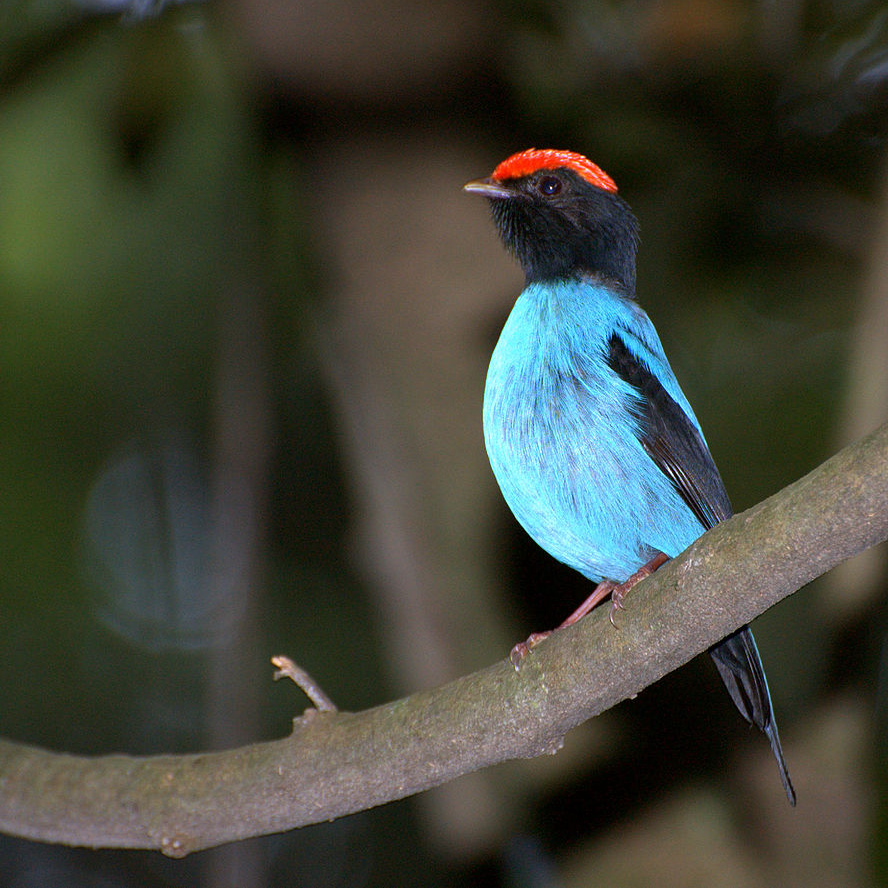
Yungas Manakin
Chiroxiphia boliviana
Order: Passeriformes / Family: Pipridae

Wikimedia Commons
About the Yungas Manakin
The Yungas Manakin, scientifically known as Chiroxiphia boliviana, is a captivating bird endemic to the subtropical and tropical moist montane forests of the Andes. This species thrives primarily in the Yungas region, a biodiversity hotspot that stretches through Bolivia and into parts of Argentina. The Yungas Manakin plays a pivotal role in these ecosystems by participating in seed dispersal, thanks to its frugivorous diet. Often inhabiting the understory and mid-levels of the forest, this bird contributes to forest regeneration and plant diversity.
The significance of the Yungas Manakin extends beyond its ecological contributions; it is also a key species for avian biodiversity in the Andes. The bird's presence indicates healthy forest conditions and serves as an attraction for birdwatchers and researchers alike. Notably, the Yungas Manakin is part of the Pipridae family, known for its complex courtship rituals and brilliant colors. This particular manakin is renowned for its lekking behavior, where males perform intricate dances to attract females, showcasing both their agility and vivid plumage.
Seasonal behaviors of the Yungas Manakin include shifts in foraging and mating activities. During the breeding season, males become highly territorial, establishing and defending their display sites. Outside of the breeding months, which typically align with the wet season from October to March, these birds are less aggressive and often found in mixed-species foraging flocks. Such seasonal shifts underscore the bird's adaptability and its integral role in the dynamic forest ecosystem.
The Yungas Manakin belongs to the family Pipridae, within the order Passeriformes. These birds typically live average 7 years, with a maximum recorded of 11 years..
How to Identify a Yungas Manakin
Adult Yungas Manakins are unmistakable due to their striking coloration and small, compact size. Males boast a brilliant combination of black and blue plumage, with a distinctive red crown that sets them apart from other species. Their back and wings are a deep, glossy blue, while the underparts are jet black. Females and juveniles, in contrast, are more subdued, displaying olive-green hues that provide effective camouflage within the forest understory.
One can differentiate males and females not only by plumage but also by their behavior, especially during the breeding season. Males engage in elaborate courtship displays, which are a key identification trait. In terms of silhouette, the Yungas Manakin appears stout with short, rounded wings and a slightly forked tail, typical of the Pipridae family. When perched, they often adopt a horizontal posture, accentuating their compact form.
While similar species exist within the manakin family, the red crown and unique blue-black coloration of the Yungas Manakin are distinguishing features. In flight, they exhibit rapid, buzzing wingbeats, a common trait among manakins that aids in swift navigation through dense foliage.
Having trouble telling birds apart? Upload a photo to our bird identification tool for an instant species match.
Yungas Manakin Habitat and Range
Preferred Habitat
The Yungas Manakin inhabits the lush cloud forests of the eastern Andes, particularly favoring areas with dense understory vegetation. These forests, rich in mosses and epiphytes, provide the ideal habitat for the bird's foraging and breeding activities. Typically, they are found at elevations ranging from 500 to 2500 meters, with the highest densities occurring at mid-elevations where humidity and forest cover are optimal.
Seasonal habitat shifts are minimal, as the bird is largely sedentary, remaining in its preferred montane forest environment year-round. Unlike some other avian species, the Yungas Manakin has a limited presence in urban or heavily altered landscapes, relying instead on the continuous canopy and diverse plant life of natural forest habitats. This preference underscores the importance of preserving intact forest ecosystems for the species' survival.
Geographic Range
The Yungas Manakin's range is primarily confined to the eastern slopes of the Andes, spanning from southern Peru through Bolivia and into northwestern Argentina. The bird is most commonly observed within Bolivia's Yungas region, which offers a mix of montane and foothill forests. This area, characterized by its high levels of precipitation and biodiversity, provides an ideal environment for the species.
In Argentina, the Yungas Manakin's range extends into the provinces of Salta and Jujuy, where it inhabits similar montane forest ecosystems. Unlike many passerines, the Yungas Manakin does not undertake extensive migrations, instead maintaining residency within its range throughout the year. Population density hotspots coincide with regions of high forest integrity, which underscores the bird's dependence on pristine habitats.
The bird's limited range and specific habitat requirements highlight the importance of conservation efforts in these areas to ensure the species remains a vibrant part of the Andean avifauna.
Want to know which birds visit your area? Browse our backyard birds by location guides for region-specific species lists.
What Does the Yungas Manakin Eat?
The Yungas Manakin primarily feeds on a variety of fruits, playing a critical role in seed dispersal across its habitat. Its diet consists chiefly of small, fleshy berries, which it plucks with precision while hovering or perching. The manakin's frugivorous tendencies are complemented by occasional insectivory, especially during the breeding season when protein demands increase.
Seasonal variations in fruit availability prompt slight shifts in diet, with the bird exhibiting remarkable adaptability in foraging techniques. During times of fruit scarcity, the Yungas Manakin may also consume small arthropods, capturing them by gleaning from leaves and branches. The size of its prey generally remains small, in keeping with its diminutive stature.
The Yungas Manakin often joins mixed-species flocks, which can enhance foraging efficiency and protection against predators. This social foraging strategy allows it to exploit a wider range of food resources and adapt to seasonal changes in its environment.
Yungas Manakin Behavior and Social Structure
The Yungas Manakin is renowned for its complex social and courtship behaviors. Males engage in captivating lekking displays, where they gather in small groups to perform elaborate dances and vocalizations to attract females. These displays occur on traditional lek sites, often cleared patches of forest floor where males execute coordinated jumps and flights, accompanied by mechanical wing snaps and whistles.
Territoriality is a prominent behavior during the breeding season. Males establish and defend small territories around their display sites, becoming highly aggressive towards intruding rivals. Outside the breeding season, the Yungas Manakin exhibits more social tendencies, frequently joining mixed-species flocks that roam the forest in search of food.
The bird's daily activity patterns align with its diurnal nature. It is most active during the early morning and late afternoon, times that correlate with peak fruit availability. In response to predators, the Yungas Manakin relies on its agility and the protective cover of dense foliage, employing evasive flight maneuvers to escape threats.
Yungas Manakin Nesting and Reproduction
Yungas Manakins construct delicate, cup-shaped nests, typically using fine plant fibers, moss, and spider silk. These nests are strategically located on horizontal branches, usually within the dense understory, providing camouflage and protection from predators. The nest placement is often near the territory where males perform their courtship displays, ensuring proximity to potential mates.
The female primarily undertakes nest building and incubation duties, laying a clutch of two eggs. The eggs, pale in color with darker speckles, are incubated for about 18 to 20 days. Following hatching, both parents contribute to feeding the chicks, although the female plays a more pronounced role in brooding.
The fledging period lasts approximately 15 to 17 days, after which the young remain close to the nest, gradually gaining independence. The number of broods per year is typically limited to one, reflecting the bird's investment in ensuring the survival of each offspring in its challenging environment.
Yungas Manakin Sounds and Vocalizations
The Yungas Manakin's primary song comprises a series of high-pitched, melodic notes that rise and fall in a rhythm akin to a musical trill. These vocalizations play a crucial role in courtship displays, serving to attract females and establish male presence at lek sites. The song's quality is clear and flute-like, resonating through the dense forest understory.
In addition to its song, the Yungas Manakin produces a variety of call notes, including sharp 'tic' sounds used for communication between individuals. Alarm calls are more abrupt and harsh, designed to alert others to potential threats. During the dawn chorus, the bird's vocalizations blend with those of other species, creating a symphony that heralds the start of the day in its montane habitat.
Interesting Facts About the Yungas Manakin
- 1Yungas Manakins can perform up to 30 different dance moves during their courtship displays.
- 2The species' lekking sites are often reused over multiple generations, highlighting the cultural relevance of these locations.
- 3A single Yungas Manakin can consume hundreds of small fruits per day, aiding in widespread seed dispersal.
- 4The average lifespan of a Yungas Manakin in the wild is approximately 6 to 8 years.
- 5During courtship, the Yungas Manakin's wing snaps can be heard up to 20 meters away.
- 6These birds are capable of rapid, acrobatic flight maneuvers, essential for navigating dense forest canopies.
- 7Despite their vibrant appearance, the Yungas Manakin relies heavily on stealth and camouflage to avoid predators.
Yungas Manakin Conservation Status
The Yungas Manakin currently holds a status of Least Concern on the IUCN Red List, but ongoing habitat loss poses a significant threat to its population. Deforestation for agriculture and urban development continues to fragment the bird's habitat, particularly in Bolivia and Argentina. Despite these challenges, some populations remain stable due to the relative inaccessibility of certain montane regions. Conservation efforts focus on preserving large tracts of forest, with protected areas being crucial for the species' long-term survival. Historical population data indicate a decline in areas subjected to intensive land use, emphasizing the need for effective habitat management and restoration initiatives to counteract these trends. Awareness and ecotourism also play roles in conservation, as the Yungas Manakin's charismatic displays attract birdwatchers, creating incentives for local communities to preserve natural habitats.