
Arfak Astrapia
Astrapia nigra
Order: Passeriformes / Family: Paradisaeidae

Wikimedia Commons
About the Arfak Astrapia
The Arfak Astrapia (Astrapia nigra) is a striking bird of paradise endemic to the mountains of New Guinea, particularly the Arfak Mountains. This species is a critical component of the montane forest ecosystem, inhabiting altitudes ranging from 1,700 to 2,600 meters. Its presence is especially significant in the Arfak and Tamrau ranges, where dense forests provide the necessary cover and resources. As a member of the Paradisaeidae family, the Arfak Astrapia contributes to the biodiversity that makes New Guinea's ecosystems unique. The bird's role as a seed disperser is vital, assisting in forest regeneration and maintaining the health of its habitat.
The Arfak Astrapia's ecological role is underscored by its feeding and breeding behaviors. During the breeding season, males exhibit spectacular displays to attract females, a critical behavior for species propagation. These displays often occur in specific lekking areas, which are traditional sites used year after year. Outside the breeding season, the Arfak Astrapia maintains a solitary lifestyle, which is typical of many birds of paradise. Its diet consists primarily of fruits and small insects, positioning it as both a seed disperser and a pest controller.
The bird's distribution in New Guinea's high-altitude regions limits its interaction with human-altered landscapes, thus preserving its natural behaviors and ecological contributions. However, this geographic restriction also makes it susceptible to habitat loss due to logging and agricultural expansion. Conservation efforts focus on protecting these montane forests, crucial for the Astrapia's survival. Understanding the bird's seasonal movements and behaviors is essential for developing effective conservation strategies. During certain times of the year, the Arfak Astrapia may descend to lower elevations to exploit different food resources, though it primarily remains at higher altitudes throughout the year.
The Arfak Astrapia belongs to the family Paradisaeidae, within the order Passeriformes. These birds typically live average 5-7 years with a maximum of 10 years recorded..
How to Identify a Arfak Astrapia
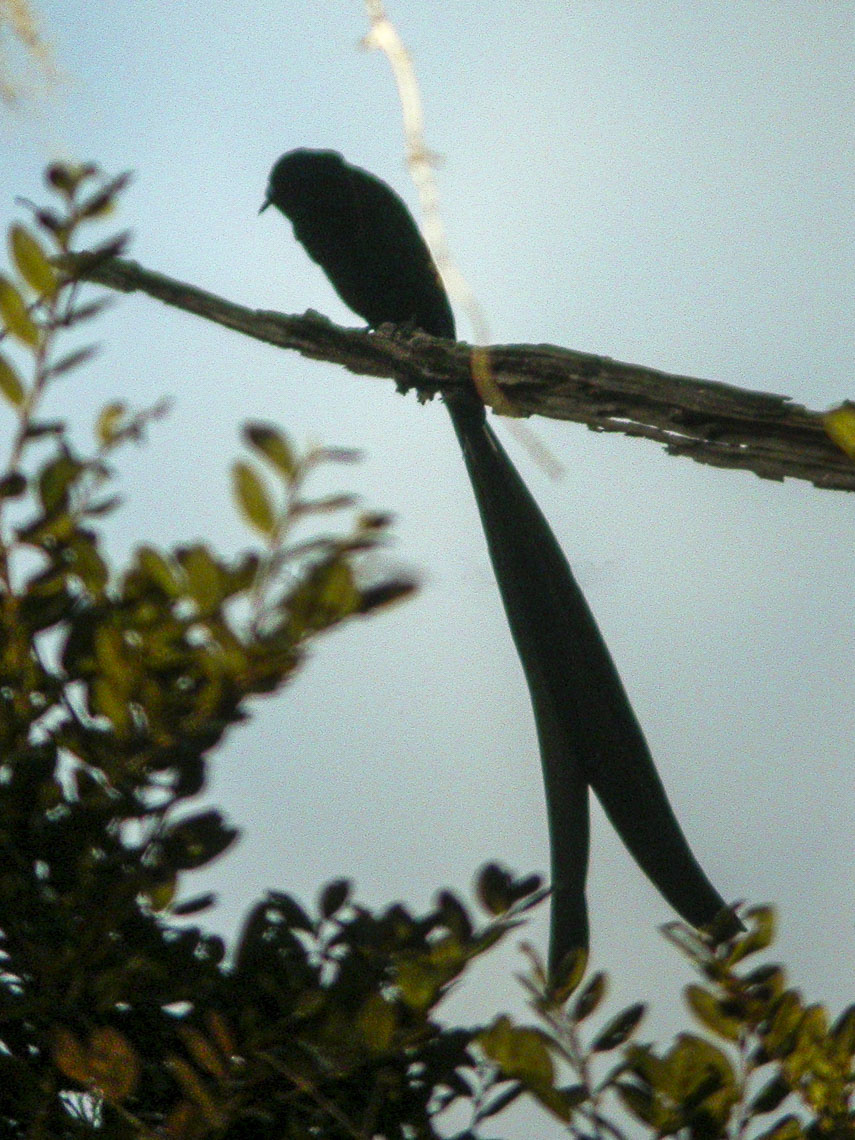
The adult male Arfak Astrapia is a marvel of avian beauty, featuring glossy black plumage with a metallic sheen that shifts between blue and green hues in sunlight. This iridescence is a hallmark of its appearance, providing an immediate visual cue for identification. The elongated tail feathers, often exceeding the length of its body, are another distinctive feature. These tail feathers play a critical role during courtship displays, where the male showcases them in dramatic fashion.
Females, in contrast, are less flamboyant in appearance, with predominantly brown plumage that provides camouflage against the forest backdrop. This sexual dimorphism is typical among birds of paradise, where males tend to exhibit more vibrant colors. Juvenile Arfak Astrapias resemble females but can be distinguished by their slightly duller plumage and the development of the male's characteristic tail feathers as they mature.
Similar species, such as the Black Sicklebill, might cause confusion due to overlapping ranges and color schemes. However, the Astrapia's shorter, more compact beak and the unique tail structure help differentiate it. In flight, the Arfak Astrapia presents a distinctive silhouette, with its long tail streaming behind and rounded wings flapping in a steady rhythm. When perched, its upright posture and the iridescent sheen of its feathers provide a dramatic visual against the forest canopy.
Having trouble telling birds apart? Upload a photo to our bird identification tool for an instant species match.
Arfak Astrapia Habitat and Range
Preferred Habitat
The Arfak Astrapia inhabits primary montane forests, thriving in elevations between 1,700 and 2,600 meters. These forests, dense with mosses and epiphytes, provide both food and nesting sites. The bird favors regions like the Arfak and Tamrau Mountains, which offer ideal conditions for its survival. Seasonal habitat shifts are minimal, although occasional descents to lower forest areas occur in search of food. Unlike some avian species, the Arfak Astrapia rarely frequents urban or heavily disturbed areas, preferring the pristine conditions of high-altitude forests. This preference for remote, undisturbed habitats underscores the importance of conserving these environments to protect the species.
Geographic Range
The Arfak Astrapia's range is predominantly confined to the island of New Guinea, within the Indonesian provinces of Papua and West Papua. It is particularly associated with the Arfak Mountains and Tamrau Range, where its preferred montane forest habitat is found. The bird does not exhibit traditional migratory behavior; instead, it remains a resident of these high-altitude regions throughout the year. Within this limited range, population densities are highest in areas where forest conditions remain undisturbed by human activity. Conservation hotspots include protected regions within its range, where efforts focus on preventing habitat loss from logging and agriculture.
Want to know which birds visit your area? Browse our backyard birds by location guides for region-specific species lists.
What Does the Arfak Astrapia Eat?
The Arfak Astrapia primarily consumes a diet of fruits, notably those of the Lauraceae and Meliaceae families. These fruits provide the necessary energy for its active lifestyle. During certain seasons, the bird supplements its diet with insects, including beetles and caterpillars, which are abundant in its montane forest habitat. This dietary flexibility allows the Arfak Astrapia to adapt to seasonal variations in food availability, ensuring its survival in the dynamic forest ecosystem. Foraging often occurs in the early morning and late afternoon, when the bird moves through the canopy, plucking fruits and capturing insects with deft maneuvers.
Arfak Astrapia Behavior and Social Structure
The Arfak Astrapia exhibits a solitary lifestyle outside the breeding season, a trait common among birds of paradise. Males engage in elaborate courtship displays involving vocalizations and visual spectacles using their iridescent plumage and long tail feathers. These displays occur at traditional lekking sites, where multiple males may compete for the attention of visiting females. Territorial behavior is pronounced during the breeding season, with males defending their display sites vigorously. Despite their solitary nature, Arfak Astrapias occasionally form loose associations when foraging, particularly when food sources are abundant.
Response to predators involves stealth, with the bird utilizing its camouflage to blend into the dense forest environment. It exhibits a diurnal activity pattern, with peak activity occurring during the cooler hours of the day. Rest periods are taken in the mid-morning and early afternoon, often in secluded canopy areas where the bird remains undisturbed.
Arfak Astrapia Nesting and Reproduction
Arfak Astrapias construct cup-shaped nests using a variety of materials, including twigs, moss, and leaves. Nests are typically situated high in the forest canopy, offering protection from ground predators. The female assumes primary responsibility for nest construction, incubation, and chick rearing. Clutch size usually consists of a single egg, a common characteristic among birds of paradise, reflecting the high investment in offspring. The incubation period lasts approximately 18 to 20 days, with fledging occurring around four weeks after hatching. Parental care extends beyond fledging, as the female continues to provide food and protection until the young bird becomes independent.
Arfak Astrapia Sounds and Vocalizations
The Arfak Astrapia's primary song is a series of melodious whistles, each phrase varying in pitch and duration. These whistles, often delivered from high perches, serve as both territorial claims and courtship invitations. Call notes include softer, more guttural sounds used for communication between males and females during the breeding season. Alarm calls are sharp and abrupt, alerting nearby birds to potential danger. During the dawn chorus, the bird's song blends with those of other forest inhabitants, creating a symphony of sounds that heralds the start of a new day.
Interesting Facts About the Arfak Astrapia
- 1The Arfak Astrapia's tail feathers can measure over 30 centimeters, often twice the length of its body.
- 2Despite their striking appearance, Arfak Astrapias remain elusive, often heard rather than seen in dense montane forests.
- 3Males perform elaborate displays, including aerial acrobatics and static poses, to attract females during the breeding season.
- 4The Arfak Astrapia is one of the few bird species with a lek mating system, where males congregate to display competitively.
- 5Its diet primarily consists of fruits, but it will opportunistically prey on insects, showcasing its adaptability.
- 6This bird's iridescent plumage results from microscopic structures that reflect light rather than pigmentation.
- 7The Arfak Astrapia is named after its primary habitat, the Arfak Mountains in West Papua, highlighting its limited geographic range.
Arfak Astrapia Conservation Status
The Arfak Astrapia is currently classified as Near Threatened on the IUCN Red List. Its population faces pressures from habitat destruction due to logging and agricultural encroachment, which threaten the montane forests it relies on. Conservation efforts focus on habitat protection and the establishment of reserves within its restricted range. Population trends suggest a decline, although exact numbers remain uncertain due to the bird's elusive nature. Historical records indicate stable populations until recent decades, highlighting the impact of increased human activity on its habitat.
Other Paradisaeidae Species


Birds Similar to the Arfak Astrapia
These species are often confused with the Arfak Astrapia due to similar appearance or overlapping range.
