
Stephanie's Astrapia
Astrapia stephaniae
Order: Passeriformes / Family: Paradisaeidae
Wikimedia Commons
About the Stephanie's Astrapia
Stephanie's Astrapia (Astrapia stephaniae) is a remarkable bird of paradise, belonging to the family Paradisaeidae, known for its breathtaking beauty and elaborate courtship displays. This species is endemic to the highland forests of Papua New Guinea, particularly thriving in montane and subalpine regions. Named after the Belgian princess Stephanie, the bird exemplifies the opulence for which the birds of paradise are renowned. The species plays a significant role in its ecosystem, acting as both a pollinator and seed disperser. As it feeds on a variety of fruits and arthropods, Stephanie's Astrapia contributes to the health and diversity of its forest environment. The bird's presence serves as an indicator of the ecological health of its habitat, as it requires pristine, undisturbed environments to flourish.
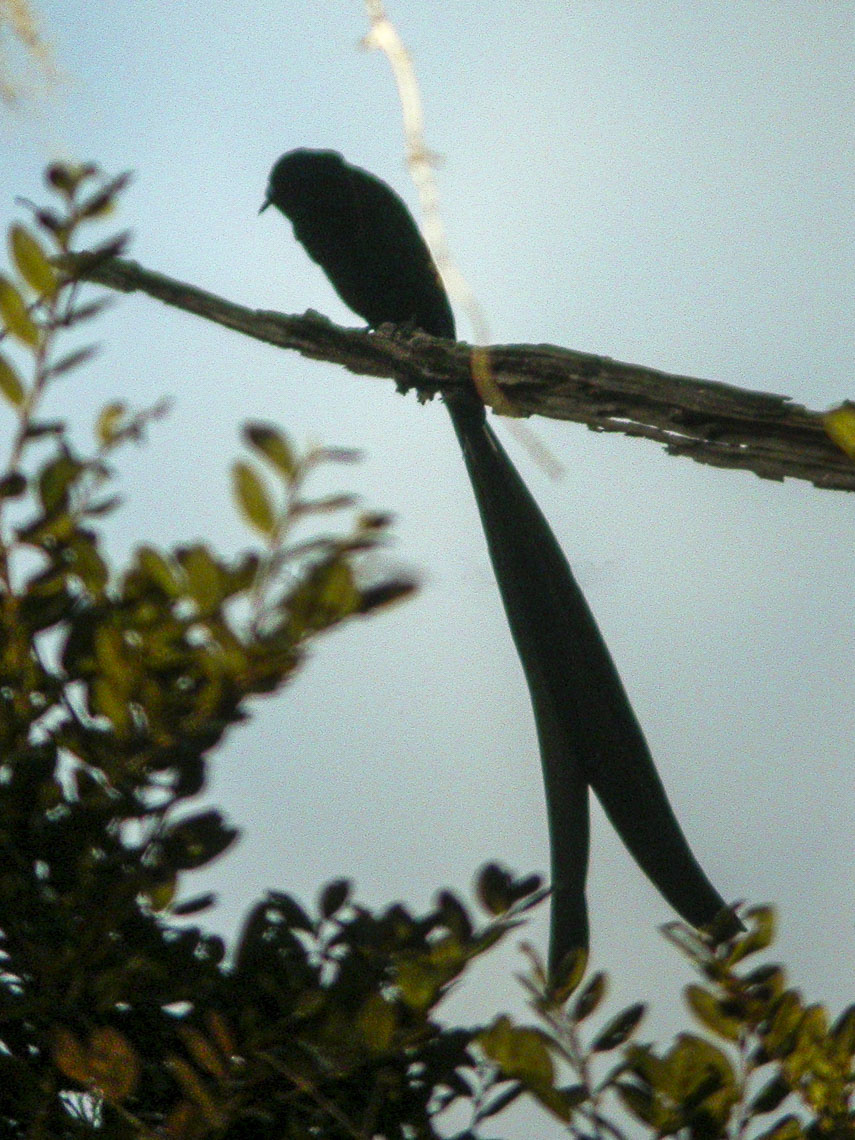
Stephanie's Astrapia exhibits a marked sexual dimorphism, with males displaying a velvety black plumage contrasted by iridescent greens and blues, while females are more subdued, featuring brownish tones with less iridescence. The male's long tail feathers, which can extend up to three times the length of its body, are a defining characteristic used to attract mates. These birds are often observed performing intricate courtship displays, hopping and fluttering through the canopy to capture the attention of potential mates, thereby ensuring the propagation of their species.
Despite their isolated habitat preference, Stephanie's Astrapia maintains a stable population, although deforestation and habitat degradation pose potential threats. Conservation efforts have been vital in preserving the montane forests they call home. These birds are non-migratory, residing year-round in their high-altitude habitats, where they adapt to seasonal changes by altering their diet and behavior. During the breeding season, they become more vocal and active, contributing to the vibrant soundscape of their environment. As a symbol of the rich biodiversity within Papua New Guinea, Stephanie's Astrapia highlights the importance of conservation and sustainable practices in preserving the intricate balance of tropical ecosystems.
The Stephanie's Astrapia belongs to the family Paradisaeidae, within the order Passeriformes. These birds typically live average 6-9 years with a maximum of 13 years recorded..
How to Identify a Stephanie's Astrapia
Stephanie's Astrapia is a medium-sized bird of paradise, with males measuring approximately 37 cm in body length and females slightly smaller. The male is easily identifiable by its glossy black plumage accented with iridescent green and blue highlights on the chest and head, while its elongated tail feathers create a dramatic silhouette. In contrast, females exhibit a more modest appearance with predominantly brown plumage and shorter tails, lacking the iridescent sheen of their male counterparts. Juveniles resemble females but with a more subdued color palette, making them less conspicuous in the dense forest canopy.
In flight, Stephanie's Astrapia displays a distinctive silhouette due to the male's elongated tail feathers, which can be up to three times the length of the bird's body. While perched, these birds maintain an upright posture, often seen hopping between branches in search of food or engaging in courtship displays. Confusion with similar species is possible in mixed flocks; however, the unique tail length and iridescent coloring of the males are reliable distinguishing features.
When comparing Stephanie's Astrapia with other astrapias, the combination of its size, tail length, and plumage colors is unique. Observers should note the habitat when identifying this bird, as it is typically found at higher elevations than some similar species, further aiding in accurate identification.
Having trouble telling birds apart? Upload a photo to our bird identification tool for an instant species match.
Stephanie's Astrapia Habitat and Range
Preferred Habitat
Stephanie's Astrapia inhabits the montane and subalpine forests of Papua New Guinea, often found at elevations ranging from 1,800 to 3,500 meters. These dense, moss-laden forests provide an ideal environment, rich in fruiting trees and abundant insect life. The bird prefers undisturbed habitats, where the canopy is well-developed and diverse, offering ample resources for feeding and nesting.
Although primarily a forest dweller, Stephanie's Astrapia can adapt to a range of forest types, from lower montane rainforests to higher altitude cloud forests. Seasonal shifts may occur, with the birds moving to slightly lower elevations during periods of harsh weather or when food availability changes.
Unlike some of its relatives, Stephanie's Astrapia shows little inclination for urban or suburban environments, instead remaining in relatively remote, pristine areas. This preference highlights the importance of forest conservation in maintaining viable habitats for this and other similar species.
Geographic Range
The range of Stephanie's Astrapia is primarily restricted to the central highlands of Papua New Guinea. This species is found in regions such as the Owen Stanley Range, the Central Highlands, and the Adelbert Range. These areas provide the montane and subalpine forest habitats that the species requires to thrive.
Stephanie's Astrapia is a resident species, exhibiting little to no migratory behavior. Its range remains constant throughout the year, with individuals occupying territories that provide sufficient food and breeding opportunities. The birds are generally found at elevations between 1,800 and 3,500 meters, occasionally venturing lower in search of food during seasonal changes.
The population of Stephanie's Astrapia is relatively dense in areas where suitable habitat is abundant. While their presence is stable in these regions, ongoing habitat destruction poses a potential threat to their long-term viability. Conservation efforts focus on protecting these key areas to ensure the continued survival of the species.
Want to know which birds visit your area? Browse our backyard birds by location guides for region-specific species lists.
What Does the Stephanie's Astrapia Eat?
Stephanie's Astrapia primarily feeds on a diet of fruits and insects, making it an important member of its ecosystem. The bird favors the fruits of native trees, such as figs and laurels, which are abundant in the montane forests it inhabits. This frugivorous diet aids in seed dispersal, contributing to the health and regeneration of the forest.
During the breeding season, Stephanie's Astrapia may increase its intake of protein-rich insects to support the higher energy demands of courtship and nesting. The bird employs a variety of foraging techniques, including gleaning from foliage and hawking for flying insects, demonstrating its adaptability in securing food resources.
The diet of Stephanie's Astrapia varies seasonally, reflecting the availability of food sources in its environment. In times of scarcity, it may expand its diet to include a wider range of arthropods and occasionally small vertebrates. The bird typically feeds during the day, with peak activity occurring in the early morning and late afternoon, coinciding with periods of increased insect activity.
Stephanie's Astrapia Behavior and Social Structure
Stephanie's Astrapia exhibits fascinating social and behavioral traits, particularly during the breeding season. Males are solitary outside of the breeding season but become highly territorial and competitive when seeking mates. They perform elaborate courtship displays, featuring intricate dances and vocalizations to attract females. These displays often involve the male showcasing its iridescent plumage and remarkable tail feathers, creating a captivating spectacle.
The species is generally solitary or found in pairs, especially when feeding. However, during times of abundant food, multiple individuals may congregate at fruiting trees, displaying a more tolerant social behavior. Stephanie's Astrapia is diurnal, with activity peaking in the cooler parts of the day.
In response to predators, such as raptors, Stephanie's Astrapia employs evasive maneuvers and seeks refuge in dense foliage. The bird's awareness and agility are key to its survival in the forest canopy. Its daily activities revolve around foraging, preening, and displaying, with rest periods punctuating these behaviors.
Stephanie's Astrapia Nesting and Reproduction
The nesting habits of Stephanie's Astrapia are as intricate as its courtship displays. The species typically nests high in the forest canopy, selecting sites that provide both concealment and protection from predators. Nests are often constructed in the forks of trees, using a combination of twigs, leaves, and moss to create a sturdy platform.
The female is primarily responsible for nest building and incubation, laying a clutch of one to two eggs. The incubation period lasts approximately 18 to 20 days, during which the female remains vigilant, leaving the nest only for brief foraging trips. The male may assist by providing food, although its primary role is territorial defense and continued courtship displays.
Once hatched, the chicks remain in the nest for about 20 to 24 days, during which both parents participate in feeding and caring for the young. Stephanie's Astrapia typically raises one brood per year, with breeding timed to coincide with periods of peak food availability.
Stephanie's Astrapia Sounds and Vocalizations
The vocalizations of Stephanie's Astrapia are as striking as its appearance. The primary song consists of a series of high-pitched, melodic notes that vary in rhythm and pitch, often described as flute-like. These songs are most prominent during the breeding season, as males use them to attract mates and assert territorial dominance.
In addition to its song, Stephanie's Astrapia produces a range of call notes, including softer chirps and harsh, scolding calls used as alarm signals. These calls serve to communicate with mates and warn of potential threats, maintaining cohesion among individuals.
The dawn chorus of Stephanie's Astrapia is a notable aspect of its daily behavior, with males often beginning their vocalizations at first light, creating a vibrant soundscape accompanied by the calls of other forest species. The bird's vocal repertoire is a key component of its courtship and territorial interactions.
Interesting Facts About the Stephanie's Astrapia
- 1Stephanie's Astrapia's tail feathers can be up to three times the length of its body, making them one of the longest among birds of paradise.
- 2The species was named in honor of Princess Stephanie of Belgium, reflecting the bird's royal and opulent appearance.
- 3Stephanie's Astrapia plays a crucial role in seed dispersal, aiding the regeneration of its forest habitat.
- 4Despite its elaborate plumage, Stephanie's Astrapia relies on camouflage within the dense canopy to avoid predators.
- 5The bird's courtship displays are among the most elaborate in the avian world, involving intricate dances and vocalizations.
- 6Endemic to Papua New Guinea, Stephanie's Astrapia is found only in the country's central highland forests.
- 7Stephanie's Astrapia is non-migratory, residing year-round in its montane forest habitat, adapting to seasonal changes in food availability.
Stephanie's Astrapia Conservation Status
Stephanie's Astrapia currently holds a status of Least Concern according to the IUCN Red List, with a stable population trend. However, the species faces potential threats from habitat destruction due to logging and agricultural expansion. The bird's reliance on pristine montane forests makes it vulnerable to deforestation and habitat fragmentation. Conservation efforts are crucial in mitigating these threats, with protected areas established to preserve critical habitats. Ongoing research and monitoring are essential to ensure the species' long-term survival, particularly in response to environmental changes. Historically, Stephanie's Astrapia has maintained a relatively stable population, benefiting from the remote and inaccessible nature of its habitat. Continued conservation efforts and sustainable land-use practices are vital in preserving the biodiversity of Papua New Guinea's highland forests, safeguarding the future of this captivating bird.
Other Paradisaeidae Species


Birds Similar to the Stephanie's Astrapia
These species are often confused with the Stephanie's Astrapia due to similar appearance or overlapping range.
