
Huon Astrapia
Astrapia rothschildi
Order: Passeriformes / Family: Paradisaeidae

Wikimedia Commons
About the Huon Astrapia
The Huon Astrapia, Astrapia rothschildi, is a captivating bird of paradise endemic to the Huon Peninsula in Papua New Guinea. These birds are members of the Paradisaeidae family, celebrated for their extraordinary plumage and captivating displays. As a medium-sized passerine, the Huon Astrapia displays a blend of iridescent greens and blues, contributing to its remarkable appearance. The species is of particular interest due to its restricted range and unique ecological niche within the montane forests of New Guinea, where it plays a crucial role in the ecosystem by participating in seed dispersal and pollination.
The ecological significance of the Huon Astrapia extends beyond its visual allure. By feeding on a variety of fruits and occasionally small insects, this bird aids in the propagation of numerous plant species native to its habitat. This interaction is vital for maintaining the health and diversity of the forest ecosystems where it resides. The bird's presence is often considered an indicator of the health of the montane forest environment, as it thrives in pristine forest conditions.
The Huon Astrapia's behavior and adaptations are finely tuned to its montane habitat. It exhibits a preference for the upper canopy where it can access its primary diet of fruits and engage in its striking courtship displays. These displays, characterized by a series of acrobatic moves and vocalizations, are performed by males to attract mates. The bird's seasonal behaviors are relatively stable, as it remains in its montane home year-round, exhibiting limited altitudinal movement in response to food availability. This stability in behavior underscores its reliance on the specific environmental conditions found in its native range.
The Huon Astrapia belongs to the family Paradisaeidae, within the order Passeriformes. These birds typically live average 6-8 years with a maximum of 12 years recorded..
How to Identify a Huon Astrapia
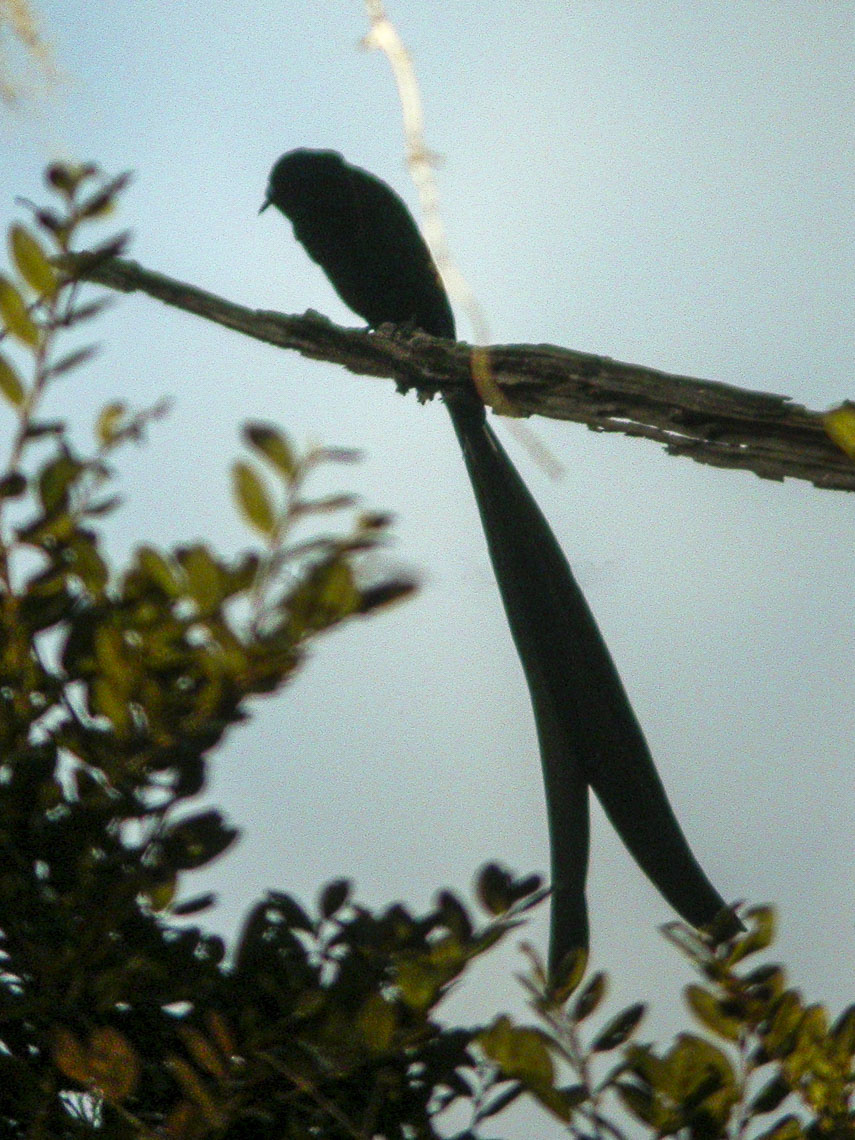
The adult Huon Astrapia is most easily recognized by its vibrant iridescent plumage. Males boast a striking combination of metallic green and blue feathers on the neck and breast, contrasted by a darker, velvet-black body. Their elongated tail feathers, which can extend up to twice the length of their body, are another distinctive feature, shimmering with hints of blue and green when caught in the light. In contrast, females are more subdued, exhibiting a mix of brown and olive tones with a less pronounced tail. Juveniles resemble females but with even duller coloration, lacking the mature sheen of adults.
Sexual dimorphism is prominent in the Huon Astrapia, with males displaying more vibrant colors and elaborate tail feathers, which play a crucial role in their courtship rituals. These physical differences help in easy identification during field observations, especially during the breeding season when males are more active in displaying their conspicuous plumage. The bird's silhouette in flight is notable for its long tail, which creates a unique trailing effect as it moves through the forest canopy.
Confusion with similar species is minimal due to the Huon Astrapia's distinct coloration and restricted range. However, its habitat overlaps with a few other members of the bird of paradise family, necessitating careful observation to differentiate based on size, tail length, and the specific iridescent patterns unique to each species.
Having trouble telling birds apart? Upload a photo to our bird identification tool for an instant species match.
Huon Astrapia Habitat and Range
Preferred Habitat
The Huon Astrapia inhabits the montane forests of the Huon Peninsula in Papua New Guinea. These forests are characterized by dense canopy layers and a rich diversity of flora and fauna, providing an ideal environment for this bird. Typically found at elevations ranging from 1,500 to 3,000 meters, the Huon Astrapia prefers areas where the forest canopy is intact, offering ample food resources and nesting opportunities.
Seasonal habitat shifts are minimal for the Huon Astrapia due to its non-migratory nature and reliance on the stable montane environment. This bird does not venture into urban areas, preferring the remote and undisturbed forest regions where human activity is limited. The pristine condition of these habitats is crucial for their survival, as they rely on the high biodiversity and complex ecosystem interactions present in these montane environments.
The preference for high-altitude forests ensures that the Huon Astrapia remains isolated from many of the threats facing lower elevation bird species. However, this specialization also makes them particularly vulnerable to habitat destruction from logging and other human activities.
Geographic Range
The Huon Astrapia's range is limited to the Huon Peninsula in Papua New Guinea, where it resides year-round. This bird does not exhibit long-distance migratory behavior, instead maintaining a relatively stable presence within its montane forest habitat. The restricted range highlights the importance of the Huon Peninsula as a biodiversity hotspot, home to a variety of endemic species, including the Huon Astrapia.
The bird's breeding and non-breeding ranges overlap due to its non-migratory nature. Within its range, population densities vary, with higher concentrations found in areas where the forest remains undisturbed by human activities. These intact forest regions offer the necessary resources for feeding, nesting, and breeding, contributing to the overall health of the Huon Astrapia population.
Conservation efforts are critical in maintaining the bird's limited range, as habitat loss poses a significant threat to its survival. Protecting the montane forests of the Huon Peninsula ensures the continued existence of the Huon Astrapia and the myriad other species that share its habitat.
Want to know which birds visit your area? Browse our backyard birds by location guides for region-specific species lists.
What Does the Huon Astrapia Eat?
The Huon Astrapia primarily feeds on a diverse array of fruits, making it an important seed disperser within its montane forest habitat. Its diet includes fruits from various plant species native to the region, such as those from the genera Schefflera and Ficus. The bird's feeding behavior involves foraging in the upper canopy, where it skillfully plucks fruit with its strong bill.
In addition to fruit, the Huon Astrapia occasionally consumes small insects, supplementing its diet with protein. This opportunistic feeding behavior allows the bird to adapt to seasonal changes in fruit availability, ensuring a stable food supply throughout the year. While fruits dominate the diet, the inclusion of insects is particularly important during the breeding season when energy demands increase.
Foraging typically occurs during the cooler morning and late afternoon hours, taking advantage of the reduced heat and increased activity of insects. The bird's ability to exploit a range of food sources within its habitat contributes to its ecological role as both a seed disperser and a participant in controlling insect populations.
Huon Astrapia Behavior and Social Structure
The social structure of the Huon Astrapia involves solitary or paired individuals, as the bird does not form large flocks. Territorial behavior is pronounced, particularly during the breeding season when males become highly vocal and display their iridescent plumage to defend their chosen territory and attract mates. The courtship display is a complex series of movements, including puffing out chest feathers, spreading tail feathers, and vocalizing melodious calls.
The bird's daily activity patterns follow a predictable routine, with peak activity occurring during the early morning and late afternoon. During these times, the Huon Astrapia engages in foraging, courtship, and territory defense. Outside the breeding season, the bird remains relatively solitary, with minimal interaction between individuals outside of mating pairs.
In response to predators, the Huon Astrapia employs a combination of cryptic coloration and evasive flight maneuvers. Its primary predators include birds of prey and arboreal mammals. The bird's ability to blend into its forest environment, along with its agile flight, aids in avoiding predation.
Huon Astrapia Nesting and Reproduction
The nesting habits of the Huon Astrapia involve constructing cup-shaped nests high in the forest canopy. These nests are crafted from twigs, leaves, and other plant materials, providing a secure environment for raising young. The choice of nesting site is critical, with pairs selecting locations that offer both concealment and proximity to food sources.
A typical clutch consists of one to two eggs, which are incubated by the female for about three weeks. During this period, the male remains nearby, providing food and protection. After hatching, the chicks are altricial, requiring significant parental care. Both parents participate in feeding and tending to the young, ensuring their development over a fledging period of approximately four weeks.
The Huon Astrapia typically raises one brood per year, with the breeding season timed to coincide with peak food availability. This synchronization ensures that parents have access to adequate resources to support their offspring during the critical growth phase.
Huon Astrapia Sounds and Vocalizations
The song of the Huon Astrapia is a melodious series of whistles and trills, characterized by its rhythmic cadence and varied pitch. This vocalization serves both as a territorial marker and as part of the male's courtship display. The song's quality is rich and resonant, echoing through the forest canopy and making it a distinctive feature of the bird's presence.
In addition to its song, the Huon Astrapia produces a range of call notes, including sharp, quick alarms used to warn of predators. These calls are more abrupt and less musical than the bird's song, serving a practical purpose in communication and survival.
At dawn, the Huon Astrapia participates in the forest's dawn chorus, adding its unique voice to the symphony of bird calls that greet the new day. This behavior underscores the bird's role in the complex acoustic landscape of its montane habitat.
Interesting Facts About the Huon Astrapia
- 1The Huon Astrapia is named after the Huon Peninsula, its exclusive home in Papua New Guinea, highlighting its status as a region-specific species.
- 2Male Huon Astrapias can grow tail feathers that exceed their body length by up to 100%, a feature used prominently in courtship displays.
- 3Despite its striking appearance, the Huon Astrapia relies heavily on camouflage within the dense montane forests to evade predators.
- 4The bird's iridescent plumage results from microscopic structures that refract light, creating its vibrant blue and green hues.
- 5Huon Astrapias play a crucial role in their ecosystem by dispersing seeds of over 30 different plant species, aiding forest regeneration.
- 6Unlike many birds of paradise, the Huon Astrapia does not migrate, remaining within its montane forest habitat throughout the year.
- 7Research on the Huon Astrapia contributes to our understanding of speciation and evolutionary biology within isolated environments.
Huon Astrapia Conservation Status
The Huon Astrapia is currently listed as Least Concern by the IUCN, though its population is suspected to be declining due to habitat destruction. The primary threats to this species include logging, land conversion for agriculture, and human encroachment, all of which reduce the availability of pristine montane forest habitat. Conservation efforts focus on preserving the Huon Peninsula's forest ecosystems, with initiatives aimed at reducing deforestation and promoting sustainable land use practices. Historically, the population of the Huon Astrapia has remained stable, but ongoing habitat degradation poses a significant risk to its future. Protecting the montane forests where the Huon Astrapia resides is crucial for ensuring the survival of this and other endemic species. Collaborative conservation strategies involving local communities and international organizations are key to maintaining the ecological integrity of this region.
Other Paradisaeidae Species


Birds Similar to the Huon Astrapia
These species are often confused with the Huon Astrapia due to similar appearance or overlapping range.
