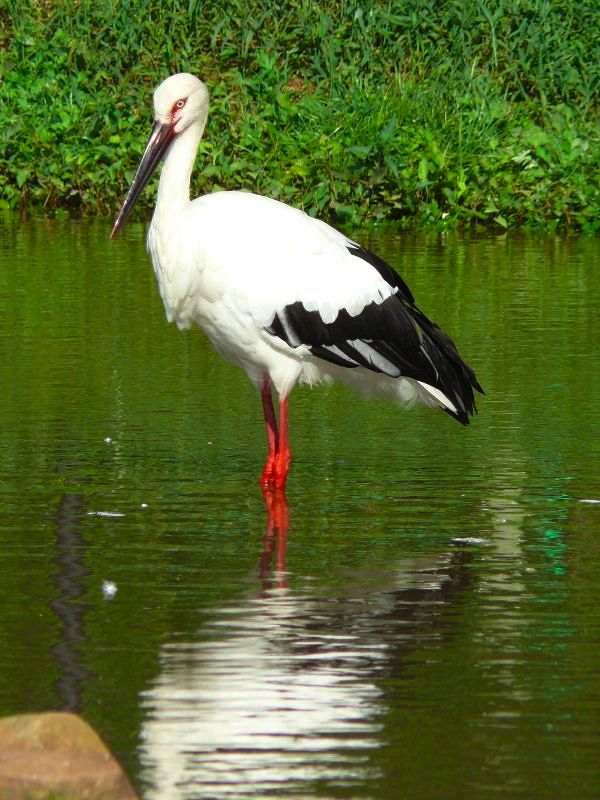
Asian Openbill
Anastomus oscitans
Order: Ciconiiformes / Family: Ciconiidae

Wikimedia Commons
About the Asian Openbill
The Asian Openbill (Anastomus oscitans) is a medium-sized stork native to tropical Asia. Its distinctive gap between the mandibles allows it to expertly extract snails, particularly from flooded rice paddies and marshes across its range. This species plays a crucial ecological role by controlling mollusk populations, particularly apple snails, which are considered pests in flooded agricultural fields. Inhabiting a range of wetlands, the Asian Openbill is commonly found in countries such as India, Bangladesh, Sri Lanka, and extending through Southeast Asia to Thailand and Cambodia. During the monsoon season, the bird exhibits increased activity, exploiting the abundance of aquatic prey. The Asian Openbill is not only significant for its ecological contributions but also for its cultural presence in regions where it is seen as a harbinger of the monsoon season, symbolizing fertility and prosperity. Its adaptation to both natural and human-altered landscapes demonstrates its resilience. In rural areas, rice farmers often welcome the presence of Asian Openbills, as these birds reduce the populations of pest species, thereby benefiting the agricultural economy. Seasonal movements of the Asian Openbill are influenced by water levels. During the dry season, these storks often congregate around permanent water sources such as reservoirs and large rivers. In contrast, the wet season allows them to spread into inundated floodplains and temporary wetlands. The species is diurnal, with peak foraging hours in the early morning and late afternoon, when temperatures are moderate. Asian Openbills exhibit a remarkable adaptation to seasonal changes in water levels, showcasing their flexibility in habitat use and foraging strategies. Their presence in urban wetland areas highlights their adaptability to human expansion.
The Asian Openbill belongs to the family Ciconiidae, within the order Ciconiiformes. These birds typically live average 10-15 years with max recorded 28 years.
How to Identify a Asian Openbill
The Asian Openbill is easily identified by its unique bill structure, which features a noticeable gap between the upper and lower mandibles. This adaptation is specifically suited for gripping and extracting snails. Adult plumage is predominantly white with some grayish tones, particularly on the flight feathers and tail. Juveniles are more uniformly gray, lacking the stark white contrast seen in adults. There is little sexual dimorphism in this species, with males and females appearing similar in size and coloration. In flight, the Asian Openbill displays broad wings with black flight feathers that contrast sharply with the rest of its pale plumage. When perched, the bird's stance is upright and often seen with its neck retracted, typical of storks. The Asian Openbill can be confused with other stork species, such as the Woolly-necked Stork, but the latter lacks the distinctive bill gap. Observing the bill shape and coloration is crucial for correct identification.
Having trouble telling birds apart? Upload a photo to our bird identification tool for an instant species match.
Asian Openbill Habitat and Range
Preferred Habitat
The Asian Openbill thrives in a variety of wetland habitats, including freshwater marshes, flooded rice paddies, and riverbanks. It is typically found in lowland areas but can ascend to higher elevations up to 1,500 meters in regions like the Western Ghats. During the wet season, they expand their range to inundated floodplains and temporary wetlands. In drier months, they become more concentrated around permanent water bodies. While predominantly a species of rural settings, Asian Openbills are increasingly seen in urban wetland reserves, demonstrating their ability to adapt to expanding human landscapes.
Geographic Range
The Asian Openbill's range extends widely across South and Southeast Asia. It breeds in the Indian subcontinent, including India, Bangladesh, and Sri Lanka, and continues through Myanmar, Thailand, Laos, Cambodia, and Vietnam. Migration corridors are influenced by monsoonal patterns, with birds moving locally in response to rainfall and flooding. Populations in countries like India and Bangladesh are more sedentary, while those in Southeast Asia may exhibit more pronounced seasonal movements. Despite its broad distribution, the highest population densities are observed in the floodplains of the Ganges and Brahmaputra rivers.
Want to know which birds visit your area? Browse our backyard birds by location guides for region-specific species lists.
What Does the Asian Openbill Eat?
The primary diet of the Asian Openbill consists of mollusks, particularly apple snails. This specialization allows the bird to thrive in rice paddies and shallow wetlands where these snails are abundant. The bird uses its bill to deftly extract snails from their shells. Secondary food sources include frogs, small fish, and aquatic insects, especially when snail populations are low. Diet changes slightly with the seasons, with a greater dependence on alternative prey during the dry season when water bodies shrink. Foraging occurs mainly during the cooler parts of the day, early morning, and late afternoon.
Asian Openbill Behavior and Social Structure
The Asian Openbill is generally a social species, often found in small to large flocks. These flocks engage in cooperative foraging, which increases their efficiency in finding food. Territorial behavior is minimal, though nesting colonies can become competitive as breeding season approaches. Courtship displays are subtle, with mutual bill-clattering and neck stretching being common. The species is known for its communal roosting habits, with large groups gathering in trees near water bodies at dusk. In response to predators, Asian Openbills rely on their group size to ward off threats rather than individual defensive behaviors. Daily activity patterns revolve around the availability of food and favorable temperatures, with peak activity during cooler parts of the day.
Asian Openbill Nesting and Reproduction
Asian Openbills construct large, untidy stick nests in trees, often choosing sites close to water. These nests are reused and expanded upon each year, creating substantial structures. Preferred nesting trees are those that provide a stable platform and proximity to foraging areas. Clutch size ranges from 2 to 5 eggs, with both parents sharing incubation duties over a period of 25 to 30 days. Once hatched, chicks fledge in approximately 45 to 50 days. Parental roles are cooperative throughout both incubation and chick-rearing stages. Typically, the species raises one brood per year, although two may occur in particularly favorable conditions.
Asian Openbill Sounds and Vocalizations
The Asian Openbill is not known for melodious songs. Its vocalizations consist mainly of harsh croaks and grunts, often heard during social interactions at nesting colonies. Alarm calls are sharp and urgent, serving to alert the flock of potential threats. During the breeding season, the birds can become more vocal, with frequent calls that facilitate pair bonding and colony cohesion. While not a prominent feature of dawn choruses, their calls become more noticeable at roosting sites in the evening.
Interesting Facts About the Asian Openbill
- 1The Asian Openbill's gap in its bill is an evolutionary adaptation for feeding on aquatic snails, a primary food source.
- 2These storks are beneficial to agriculture, reducing pest populations by consuming large quantities of snails in rice paddies.
- 3Asian Openbills are known to nest in large colonies, with some colonies containing hundreds of nests in a single tree.
- 4Despite their large size, Asian Openbills are adept fliers, capable of covering large distances in search of suitable foraging grounds.
- 5The species' range has expanded in some areas due to the proliferation of artificial wetlands such as rice paddies and reservoirs.
- 6Young Asian Openbills are gray, gradually acquiring their white adult plumage as they mature over the first year.
- 7In some cultures, the arrival of Asian Openbills is considered a sign of the impending monsoon, symbolizing renewal and abundance.
Asian Openbill Conservation Status
The IUCN lists the Asian Openbill as a species of Least Concern, with populations generally stable or increasing. However, habitat degradation and wetland drainage pose ongoing threats. Conservation efforts focus on wetland preservation and sustainable agriculture practices. Historical population trends show resilience, with some regions reporting increases due to expanded rice cultivation providing additional habitat. Continued monitoring and habitat conservation remain crucial for ensuring the species' long-term survival.