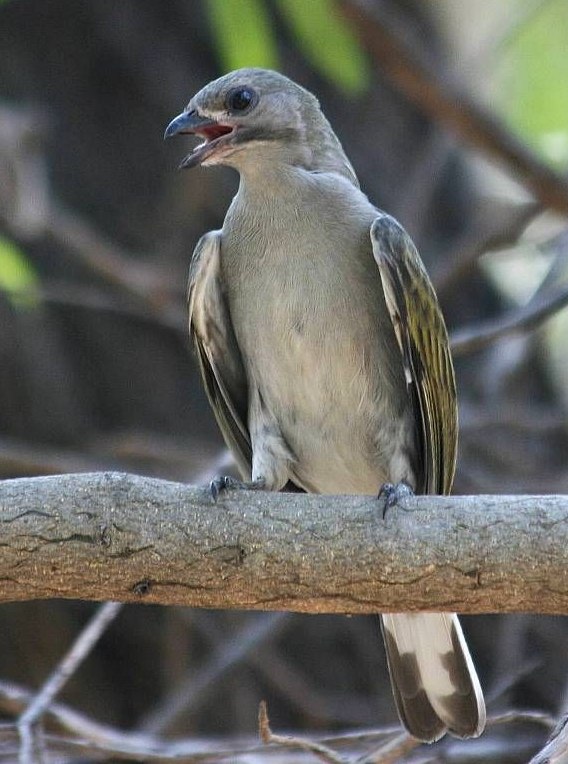
Black-headed Bee-eater
Merops breweri
Order: Coraciiformes / Family: Meropidae

Wikimedia Commons
About the Black-headed Bee-eater
The Black-headed Bee-eater, known scientifically as Merops breweri, is a visually striking bird native to the dense and humid forests of central Africa. Its name is derived from its distinctive black head, which contrasts sharply with its vivid green plumage. This species plays a crucial role in its ecosystem by controlling insect populations, particularly bees and wasps, which constitute a significant part of its diet. Predominantly found in the lowland rainforests of countries like Gabon, Cameroon, and the Republic of the Congo, the Black-headed Bee-eater thrives in regions where dense foliage provides ample cover and foraging opportunities.
Ecologically, the Black-headed Bee-eater contributes to the intricate web of life within its habitat. By preying on a variety of flying insects, it helps maintain ecological balance and supports the health of the forest. During the breeding season, this species becomes notably more active, displaying an increase in vocalizations and territorial behaviors as it establishes breeding sites. The changing seasons bring subtle shifts in the bird's activity; during the wet season, when insect populations flourish, the Black-headed Bee-eater may expand its foraging range slightly but remains largely resident due to its specialized habitat requirements.
Despite its role as a predator, the Black-headed Bee-eater must also navigate the challenges posed by a changing environment. Deforestation and habitat fragmentation threaten its natural habitat, prompting concerns among conservationists about the long-term viability of its populations. However, due to its adaptability and the relative inaccessibility of some of its habitats, the Black-headed Bee-eater continues to be observed in healthy numbers in certain regions, underscoring the resilience of species adapted to niche environments.
The Black-headed Bee-eater belongs to the family Meropidae, within the order Coraciiformes. These birds typically live average 5-7 years with a maximum recorded of 9 years..
How to Identify a Black-headed Bee-eater
The Black-headed Bee-eater is readily identifiable by its solid black head and contrasting bright green body. Adult plumage is vibrant, with a turquoise-blue breast band separating the black head from the green body. Juveniles, however, may exhibit a duller overall coloration and less defined breast band, making them slightly more challenging to identify without close observation. Male and female Black-headed Bee-eaters generally share similar plumage, making them difficult to distinguish based on appearance alone.
In flight, the Black-headed Bee-eater displays a graceful, agile silhouette with narrow, pointed wings and a slightly forked tail, both of which assist in its aerobatic foraging maneuvers. This species often perches conspicuously on exposed branches, where it surveys the surrounding area for insect prey. While perched, its head appears disproportionately large due to the dark plumage, helping it stand out even in the dappled light of the forest.
Confusion with similar species is minimal within its range, as the Black-headed Bee-eater's unique coloration and habitat preferences set it apart from other bee-eaters. However, birders should be aware of its close relative, the Blue-headed Bee-eater, which shares some habitat overlap but can be distinguished by its entirely blue head.
Having trouble telling birds apart? Upload a photo to our bird identification tool for an instant species match.
Black-headed Bee-eater Habitat and Range
Preferred Habitat
The preferred habitat of the Black-headed Bee-eater is the humid lowland rainforests of Central Africa. This bird thrives in environments characterized by dense foliage, which provides both food resources and nesting opportunities. It is often found at elevations ranging from sea level to approximately 1,200 meters, though its presence is more concentrated in the lower elevations where rainforests are most prevalent.
The Black-headed Bee-eater rarely ventures into urban areas, preferring the secluded, untouched expanses of pristine forests. Seasonal habitat shifts are minimal, as this species is largely non-migratory. However, during times of abundant insect activity, such as the wet season, it may be observed exploring the forest edges and clearings in search of prey. Unlike some bee-eater species, the Black-headed Bee-eater does not commonly frequent open grasslands or savannahs, making its presence a reliable indicator of healthy forest ecosystems.
Geographic Range
The Black-headed Bee-eater's range is confined primarily to the central African region. It is most commonly found in countries such as Gabon, the Republic of the Congo, and parts of Cameroon. This species prefers the dense, humid lowland forests typical of these areas, and its distribution is closely linked to the availability of suitable habitat.
Unlike some migratory bee-eater species, the Black-headed Bee-eater is generally resident year-round within its range. Its non-migratory nature is largely due to the consistent climate and food availability provided by its rainforest habitat. Consequently, population densities can vary significantly depending on local environmental conditions and human impact, with the highest densities typically observed in protected or remote regions where forest cover remains intact.
While the Black-headed Bee-eater does not undertake long-distance migrations, it is known to make short, localized movements in response to fluctuations in food availability, particularly during breeding seasons or times of climatic stress.
Want to know which birds visit your area? Browse our backyard birds by location guides for region-specific species lists.
What Does the Black-headed Bee-eater Eat?
The diet of the Black-headed Bee-eater primarily consists of bees and wasps, as its name suggests. This bird employs a specialized foraging technique, catching insects mid-flight with remarkable precision. Once captured, the bee-eater typically returns to a perch to subdue its prey, often removing stingers by repeatedly striking the insect against a branch.
In addition to bees and wasps, the Black-headed Bee-eater's diet includes a variety of other flying insects such as beetles, dragonflies, and moths. Seasonal changes in insect availability can influence its diet composition, with a broader range of prey types consumed during times of insect abundance. The bird's foraging activity peaks during the early morning and late afternoon when flying insects are most active.
Despite its specialized diet, the Black-headed Bee-eater demonstrates a degree of foraging flexibility, occasionally exploiting insect swarms or following other insectivorous birds to capitalize on feeding opportunities. This adaptability, coupled with its efficient hunting skills, enables it to thrive in its forest environment.
Black-headed Bee-eater Behavior and Social Structure
The Black-headed Bee-eater exhibits a range of interesting behaviors that reflect its social and ecological adaptations. Socially, it is typically observed in small family groups or pairs, especially during the breeding season. These groups maintain territories through vocalizations and aerial displays, ensuring access to adequate food resources and nesting sites.
During courtship, the Black-headed Bee-eater engages in displays of aerial acrobatics and the exchange of food between potential mates, reinforcing pair bonds. Flocking behavior is more pronounced outside the breeding season, when individuals may join larger groups to exploit food resources or navigate complex forest environments.
The bird's daily activity pattern includes periods of rest interspersed with active foraging and social interactions. In response to predators, which may include larger birds of prey, the Black-headed Bee-eater relies on its agility and speed to evade capture. Alarm calls serve as a warning to other members of its group, prompting coordinated evasive actions.
Overall, the Black-headed Bee-eater's behavior reflects a balance between social cooperation and territoriality, enabling it to effectively navigate the challenges of its forest habitat.
Black-headed Bee-eater Nesting and Reproduction
The nesting habits of the Black-headed Bee-eater are adapted to its forest environment. This species typically excavates burrows in earthen banks or soft, sandy soil, often along forested stream banks or in termite mounds. The choice of nesting site provides protection from predators and environmental elements.
A typical clutch consists of 2 to 4 eggs, which are incubated primarily by the female. The incubation period lasts approximately 18 to 21 days. Both parents participate in feeding and caring for the chicks, which fledge from the nest around 30 to 35 days after hatching.
The Black-headed Bee-eater may produce one to two broods per year, depending on environmental conditions and food availability. Parental roles are shared, with both adults actively involved in nurturing and defending their offspring. The selection of secure, concealed nesting sites is crucial for the successful rearing of young, minimizing the risk of predation.
Black-headed Bee-eater Sounds and Vocalizations
The vocalizations of the Black-headed Bee-eater are distinctive and varied, contributing to its communication and social behaviors. Its primary song is a series of sharp, melodious notes that rise and fall in pitch, often described as a lively, whistling trill. This song serves both territorial and mating purposes, echoing through the forest to signal the bird's presence.
Call notes are typically shorter and more abrupt, used for close-range communication between pair members or within family groups. During times of alarm, the Black-headed Bee-eater emits a rapid, harsh chatter, alerting others to potential danger.
At dawn, the Black-headed Bee-eater participates in a chorus that marks the beginning of its daily activities. This dawn chorus is less intense than that of some other bird species, yet it plays a crucial role in reinforcing social bonds and establishing territorial boundaries.
Interesting Facts About the Black-headed Bee-eater
- 1The Black-headed Bee-eater can catch insects mid-flight with remarkable agility, a testament to its specialized hunting skills.
- 2Unlike many other bee-eaters, the Black-headed Bee-eater is largely non-migratory, residing year-round in the rich rainforests of Central Africa.
- 3This species often uses termite mounds as nesting sites, utilizing their structure for protection from predators.
- 4Despite its name, the Black-headed Bee-eater's diet includes a wide variety of flying insects beyond just bees.
- 5The bird's striking coloration serves as both camouflage and a means of communication within the dense forest canopy.
- 6Black-headed Bee-eaters participate in dawn choruses, marking the start of their day and reinforcing social bonds.
- 7The species' reliance on intact forests makes it an important indicator of ecosystem health in its native habitat.
Black-headed Bee-eater Conservation Status
The Black-headed Bee-eater is currently classified as Least Concern by the IUCN due to its relatively stable population numbers and wide distribution. However, ongoing threats such as deforestation and habitat degradation pose significant risks to its long-term survival. Fragmentation of forests due to logging and agricultural expansion reduces available habitat, potentially leading to population declines in more heavily impacted areas. Conservation efforts focus on protecting large tracts of rainforest and establishing wildlife corridors to ensure connectivity between isolated populations. Historically, the Black-headed Bee-eater has maintained stable populations due to its adaptability and the remote nature of its preferred habitats. Continued conservation efforts are essential to mitigate the impacts of human activities and preserve the ecological integrity of the forests it inhabits.