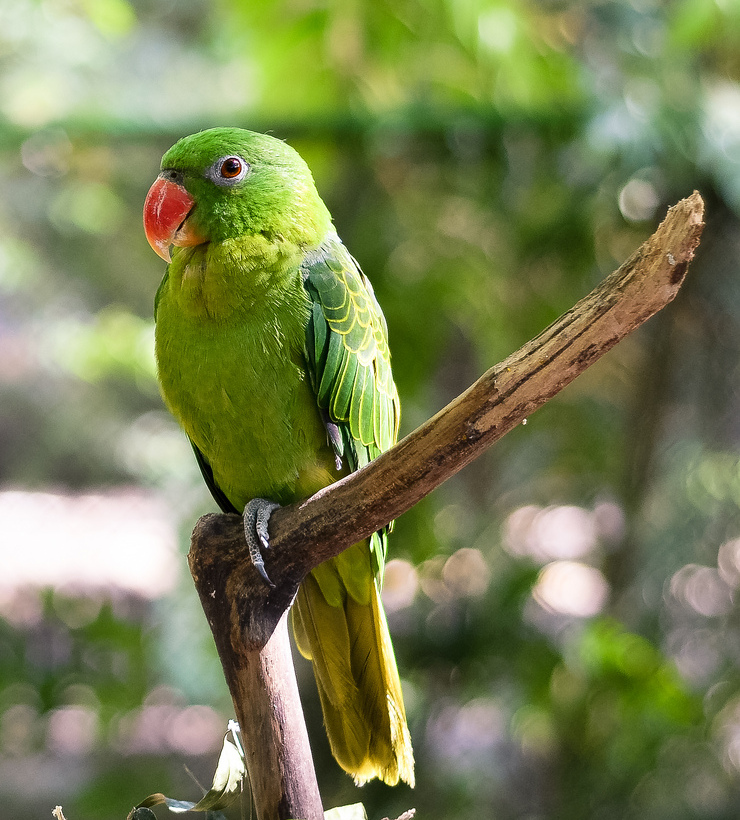
Black-lored Parrot
Tanygnathus gramineus
Order: Psittaciformes / Family: Psittacidae

Wikimedia Commons
About the Black-lored Parrot
The Black-lored Parrot, scientifically named Tanygnathus gramineus, is a captivating avian species endemic to Indonesia's Sangihe Islands. This parrot stands out due to its striking appearance and scarcity. The small population size makes it one of the most sought-after sightings for bird enthusiasts visiting these islands. It belongs to the family Psittacidae and order Psittaciformes, which includes many of the world's parrot species renowned for their intelligence and vocal abilities. Although limited in distribution, the Black-lored Parrot plays an essential role in its ecosystem as both a seed disperser and a consumer of various fruits and seeds. Its presence highlights the rich biodiversity of the Sangihe Islands, adding value to the conservation efforts aimed at preserving this unique habitat. The parrot's ecological role extends beyond simple consumption; it helps maintain the health and diversity of the tropical forests where it resides. As a frugivore, the Black-lored Parrot aids in the propagation of trees and plants, contributing to the floral diversity of its habitat. Seasonally, the Black-lored Parrot may exhibit shifts in its behavior, particularly during breeding periods when its activities become more localized around nesting sites. Understanding its ecological role is vital for conservationists working to protect this species and its environment. Its rarity and dependence on a limited geographic range underscore the importance of habitat conservation efforts. The Black-lored Parrot's presence in these islands speaks to the intricate web of interactions among species that thrive in tropical ecosystems. Its survival hinges not only on the preservation of its immediate environment but also on broader efforts to protect the delicate balance of these island habitats.
The Black-lored Parrot belongs to the family Psittacidae, within the order Psittaciformes. These birds typically live estimated 10-15 years in the wild, potentially longer in captivity..
How to Identify a Black-lored Parrot
The Black-lored Parrot is medium-sized, measuring approximately 36-38 cm in length. Its most distinctive feature is the black lores, which contrast sharply with its predominantly green plumage. Adults exhibit a vibrant green body with a bluish tinge on the wings and tail. The underparts are slightly paler, with a yellowish hue adding to the bird's beautiful coloration. The bill is strong and curved, typical of parrots, with a horn-colored appearance. Juveniles resemble adults but may have less pronounced black lores and a slightly duller plumage overall. Both sexes appear similar, making it difficult to differentiate males from females based on plumage alone. When in flight, the Black-lored Parrot shows a broad wingspan with rounded wingtips, creating a silhouette distinctive from other local bird species. In terms of posture, this parrot often perches upright on branches, using its strong feet to grip while it forages or rests. Confusion with similar species is minimized by its unique facial markings and limited range, although its green body may cause it to blend with other green parrots at a distance.
Having trouble telling birds apart? Upload a photo to our bird identification tool for an instant species match.
Black-lored Parrot Habitat and Range
Preferred Habitat
The Black-lored Parrot inhabits tropical moist lowland forests, a habitat characterized by dense foliage and a rich diversity of plant life. Found primarily on the Sangihe Islands, these parrots favor forest areas that provide ample food and nesting opportunities. They are typically observed at elevations below 1000 meters, where the forest canopy offers both cover and resources. Seasonal habitat shifts are minimal due to the consistent climate of their island home. The parrot relies heavily on the forest's resources, making it less likely to venture into urban or heavily altered landscapes. However, some reports suggest occasional sightings near forest edges where human activity intersects with natural environments. The Black-lored Parrot's reliance on undisturbed forest habitats underscores the importance of preserving these areas from deforestation and other human pressures.
Geographic Range
The range of the Black-lored Parrot is restricted to the Sangihe Islands in Indonesia, where it resides year-round. The islands' limited size means that this species does not migrate and remains within its established range throughout the year. The parrot's breeding and feeding activities are concentrated in these islands, making them critical to its continued existence. Due to its restricted range and habitat preferences, the Black-lored Parrot is not found outside these islands, limiting its exposure to other regions or countries. Population density hotspots are primarily within the lowland forests of Sangihe, where conservation efforts are most needed to ensure the species' survival.
Want to know which birds visit your area? Browse our backyard birds by location guides for region-specific species lists.
What Does the Black-lored Parrot Eat?
The Black-lored Parrot primarily feeds on fruits, seeds, and nuts, which form the bulk of its diet. It forages in the forest canopy, using its strong bill to crack open hard shells and access the nutritious contents within. Seasonal changes in fruit and seed availability influence its diet, with the parrot adapting to whatever resources are most abundant. The bird's foraging behavior is typically diurnal, with peak feeding times occurring during the early morning and late afternoon. Occasionally, the parrot may supplement its diet with flowers or buds, depending on availability. Its role as a seed disperser is crucial for maintaining the forest's biodiversity, as the parrot aids in spreading seeds across different areas, promoting plant growth and regeneration.
Black-lored Parrot Behavior and Social Structure
The Black-lored Parrot exhibits social behaviors typical of many parrot species, often seen in pairs or small family groups. Its social structure revolves around these close-knit units, which can be territorial, particularly during the breeding season. Courtship displays include mutual preening and vocal exchanges, strengthening pair bonds. Flocking behavior outside of breeding periods is minimal, with the parrot preferring the company of its immediate group. In response to predators, the Black-lored Parrot relies on its cryptic plumage and swift flight to evade capture, often retreating to dense foliage for protection. Daily activity patterns include periods of active foraging interspersed with rest, with the parrot being most active during the cooler parts of the day.
Black-lored Parrot Nesting and Reproduction
Nesting for the Black-lored Parrot occurs in tree cavities, often those abandoned by other bird species or naturally occurring holes. The choice of nesting site is influenced by the availability of suitable cavities, with preferences for those that offer protection from predators and environmental factors. Clutch size typically ranges from two to three eggs, with both parents sharing incubation duties. The incubation period lasts approximately 24-28 days, during which the parents remain vigilant and protective. After hatching, the fledglings stay in the nest for several weeks, cared for by both parents until they are capable of independent flight. The Black-lored Parrot typically raises one brood per year, with the breeding season aligned with periods of food abundance.
Black-lored Parrot Sounds and Vocalizations
The Black-lored Parrot's vocalizations include a series of high-pitched squawks and whistles, often described as sharp and metallic in quality. These calls serve various functions, from maintaining contact with mates to alerting others of potential threats. Alarm calls are particularly loud and insistent, designed to warn and coordinate group responses to danger. During the dawn chorus, the parrot's calls contribute to the vibrant soundscape of the forest, with its vocalizations cutting through the ambient noise. Compared to other parrot species, the Black-lored Parrot is less prone to mimicry, focusing instead on a distinct repertoire of calls.
Interesting Facts About the Black-lored Parrot
- 1The Black-lored Parrot is one of only a few parrots found exclusively on the Sangihe Islands, making it a true island endemic.
- 2Despite its vibrant plumage, the Black-lored Parrot's green coloration provides excellent camouflage among the forest foliage.
- 3The Black-lored Parrot plays a vital role in seed dispersal, helping maintain the diversity of plant species on the Sangihe Islands.
- 4This parrot species is rarely seen outside of protected areas, highlighting the importance of conservation zones on the islands.
- 5The Black-lored Parrot's vocalizations are distinctive, with a sharp and metallic quality that sets it apart from other local birds.
- 6Conservationists have identified the Black-lored Parrot as a priority species, due to its endangered status and limited range.
- 7The parrot's preference for tree cavities as nesting sites underscores the importance of mature forest ecosystems for its survival.
Black-lored Parrot Conservation Status
The IUCN classifies the Black-lored Parrot as Endangered, with its population trend showing a worrying decline. Habitat loss due to deforestation poses the most significant threat to its survival, as the parrot's limited range makes it highly vulnerable to environmental changes. Conservation efforts focus on habitat preservation, with initiatives aimed at protecting the remaining forested areas of the Sangihe Islands. Historical population changes indicate a gradual decline in numbers, correlating with increased human activity and habitat destruction. Current conservation strategies emphasize the importance of local engagement and sustainable practices to mitigate further loss.
Other Psittacidae Species


Birds Similar to the Black-lored Parrot
These species are often confused with the Black-lored Parrot due to similar appearance or overlapping range.