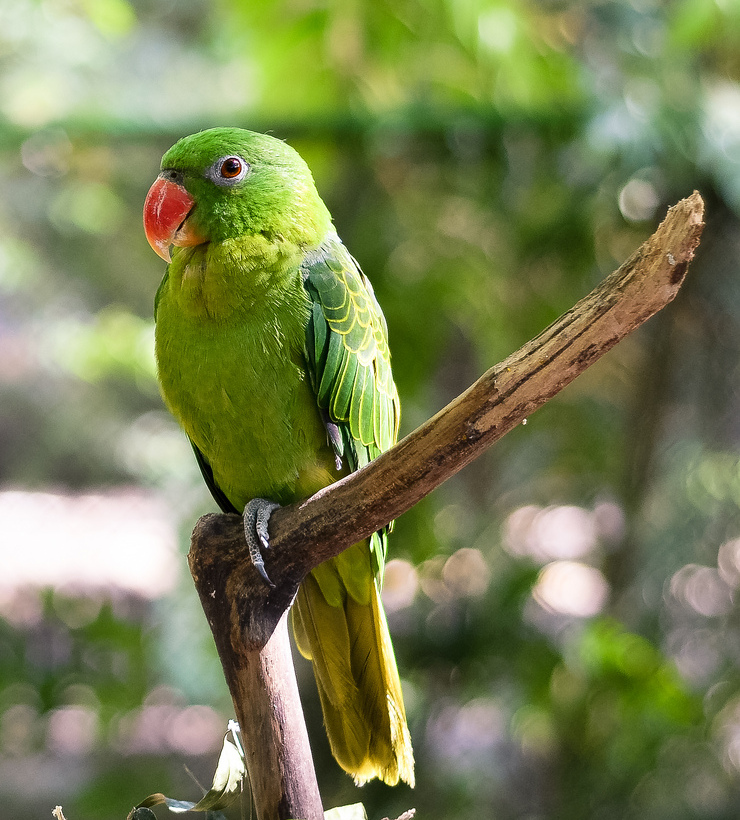
Blue-naped Parrot
Tanygnathus lucionensis
Order: Psittaciformes / Family: Psittacidae

Wikimedia Commons
About the Blue-naped Parrot
The Blue-naped Parrot, scientifically named Tanygnathus lucionensis, is a visually arresting bird native to Southeast Asia. It is particularly associated with the tropical forests of the Philippines, where its vibrant plumage and dynamic behaviors contribute significantly to the local avifauna. This parrot is an integral part of the ecosystem, playing a role in seed dispersal and forest regeneration. The species thrives in a variety of forested environments, ranging from lowland rainforests to montane regions. Although primarily found in the Philippines, the Blue-naped Parrot also inhabits parts of the Indonesian archipelago, specifically on the islands of Talaud and Sangihe. These locations offer a rich tapestry of biodiversity that supports the ecological niche of this parrot. Their seasonal behaviors are marked by shifts in feeding and nesting patterns, reflective of the changing availability of resources. During the breeding season, typically from February to June, the Blue-naped Parrot becomes more territorial, defending its nesting sites with vigor. Outside the breeding season, the birds exhibit more social behaviors, often forming small flocks as they forage across different parts of the forest. These flocks play a critical role in forest ecosystems by assisting in the dispersal of seeds, thereby supporting plant diversity and forest health. The Blue-naped Parrot's ecological contributions extend to its interactions with other species. By consuming a wide range of seeds and fruits, the parrot indirectly supports insect populations that rely on the same plant species, maintaining a balance within the forest. Despite its ecological importance, the Blue-naped Parrot faces numerous threats, primarily due to habitat loss and trapping. Conservation efforts are critical to ensure the survival of this species, which is currently listed as Near Threatened by the IUCN. Protecting the forests of the Philippines and surrounding regions is essential to preserving the rich biodiversity that includes the Blue-naped Parrot.
The Blue-naped Parrot belongs to the family Psittacidae, within the order Psittaciformes. These birds typically live average 15-20 years in the wild, up to 25 years in captivity..
How to Identify a Blue-naped Parrot
The Blue-naped Parrot is distinctive, with its bright green plumage complemented by a striking blue nape, which gives the bird its name. Adult birds sport a vivid green body, a slightly darker green tail, and a blue patch on the nape that extends towards the back. The face features a pale blue wash, and the beak is a robust coral red, a characteristic feature that helps in distinguishing it from similar parrot species. Juveniles can be identified by their duller coloration and lack of a pronounced blue nape, which develops as they mature. Males and females appear similar, although some subtle size differences may be noted, with males generally being slightly larger. The flight silhouette of the Blue-naped Parrot is broad and rounded, typical of many parrot species. In flight, the blue nape is less visible, but the bright green body and red beak remain prominent. While perching, the parrot adopts a typical upright posture, often seen preening or feeding. Confusion with similar species like the Great-billed Parrot can occur, but the latter lacks the distinctive blue nape of the Blue-naped Parrot, providing a clear field mark for identification.
Having trouble telling birds apart? Upload a photo to our bird identification tool for an instant species match.
Blue-naped Parrot Habitat and Range
Preferred Habitat
The Blue-naped Parrot inhabits a variety of forested environments, including primary and secondary forests, mangroves, and coconut plantations. These birds are most commonly found at elevations up to 1,000 meters, though they occasionally venture higher. In addition to natural forests, they are also observed in cultivated areas, demonstrating a degree of adaptability to modified landscapes. While urban presence is rare, these parrots may be seen in rural areas where trees are plentiful. During the breeding season, they prefer dense forests to provide shelter and protection for nesting, while in non-breeding periods, they may frequent more open areas. Seasonal shifts in habitat preference are mainly driven by the availability of food resources. Despite their flexibility, the increasing rate of deforestation poses a significant threat to their natural habitats.
Geographic Range
The Blue-naped Parrot's range predominantly covers the Philippines, where it is found on major islands such as Luzon, Mindanao, and Palawan. In addition to its primary range in the Philippines, it also occurs on the Indonesian islands of Talaud and Sangihe. These regions provide the ideal tropical climate and forested landscapes necessary for the parrot's survival. While typically non-migratory, some local movements within its range occur in response to seasonal availability of food resources. The population density is higher in areas with abundant fruiting trees, which are critical for their diet and nesting. Habitat fragmentation has led to a patchy distribution, with population hotspots often corresponding with regions of undisturbed forest.
Want to know which birds visit your area? Browse our backyard birds by location guides for region-specific species lists.
What Does the Blue-naped Parrot Eat?
The diet of the Blue-naped Parrot is primarily frugivorous, consisting largely of seeds, fruits, and nuts. Seasonal changes in food availability influence their diet, with a preference for certain fruiting trees during particular times of the year. They display impressive dexterity when foraging, using their strong beaks to crack open hard seeds and nuts. The parrot also consumes flowers and buds when seeds and fruits are scarce, showcasing their dietary adaptability. Their foraging behavior typically occurs during the early morning and late afternoon, aligning with periods of reduced heat in tropical environments. Prey size varies, but they favor medium to large-sized seeds, which provide the necessary nutrition for their active lifestyle.
Blue-naped Parrot Behavior and Social Structure
The Blue-naped Parrot exhibits a complex social structure, often forming small flocks outside the breeding season. These flocks provide protection and increased foraging efficiency. During the breeding season, however, they become more territorial, with pairs actively defending their nesting sites. Courtship displays involve mutual preening and vocalizations, strengthening pair bonds. In response to predators, these parrots rely on their agility and the safety of the forest canopy. Their daily activity pattern includes early morning and late afternoon feeding sessions, with periods of rest during the midday heat. These patterns maximize their foraging efficiency while minimizing exposure to predators.
Blue-naped Parrot Nesting and Reproduction
Blue-naped Parrots typically nest in tree cavities, favoring mature trees with suitable hollows. They do not construct nests, instead utilizing existing cavities for breeding. The typical clutch size ranges from two to four eggs, which are incubated by the female for approximately 23-28 days. During incubation, the male provides food for the female, showcasing a cooperative breeding strategy. The chicks fledge around 8 weeks after hatching, though they remain dependent on their parents for several more weeks. Typically, the species raises one brood per year, though in favorable conditions, a second brood may occur. This reproductive strategy is crucial for maintaining stable population numbers.
Blue-naped Parrot Sounds and Vocalizations
The vocalizations of the Blue-naped Parrot are varied, with a primary song consisting of high-pitched, melodic whistles and calls. These sounds serve multiple purposes, including territory defense and mate attraction. Alarm calls are harsh and rapid, alerting others to potential dangers. During the dawn chorus, their calls can be heard echoing through the forest, adding to the cacophony of early-morning bird activity. The sound quality is often compared to a series of clear, flute-like notes, which are distinguishable from other forest birds.
Interesting Facts About the Blue-naped Parrot
- 1The Blue-naped Parrot can live up to 25 years in the wild, showcasing impressive longevity for its size.
- 2This parrot species has a wingspan of approximately 25-30 cm, allowing for agile flight through dense forests.
- 3Blue-naped Parrots are known to mimic sounds, although they are not as accomplished as some other parrot species.
- 4They are highly social birds, often seen engaging in mutual preening, a behavior that strengthens social bonds.
- 5This species contributes significantly to seed dispersal, which aids in forest regeneration and plant diversity.
- 6Despite their bright colors, Blue-naped Parrots blend well into the forest canopy, using foliage for camouflage.
- 7Their strong beaks are not only used for feeding but also for climbing and manipulating objects in their environment.
Blue-naped Parrot Conservation Status
The Blue-naped Parrot is currently classified as Near Threatened by the IUCN, primarily due to habitat loss and illegal trapping for the pet trade. Deforestation, particularly in the Philippines, poses a significant threat to their natural habitats. Despite these challenges, some conservation efforts are underway, including habitat restoration and stricter enforcement of wildlife protection laws. Historically, population numbers have declined due to these threats, but localized conservation initiatives offer hope for stabilizing and potentially increasing their populations in the future.
Other Psittacidae Species


Birds Similar to the Blue-naped Parrot
These species are often confused with the Blue-naped Parrot due to similar appearance or overlapping range.