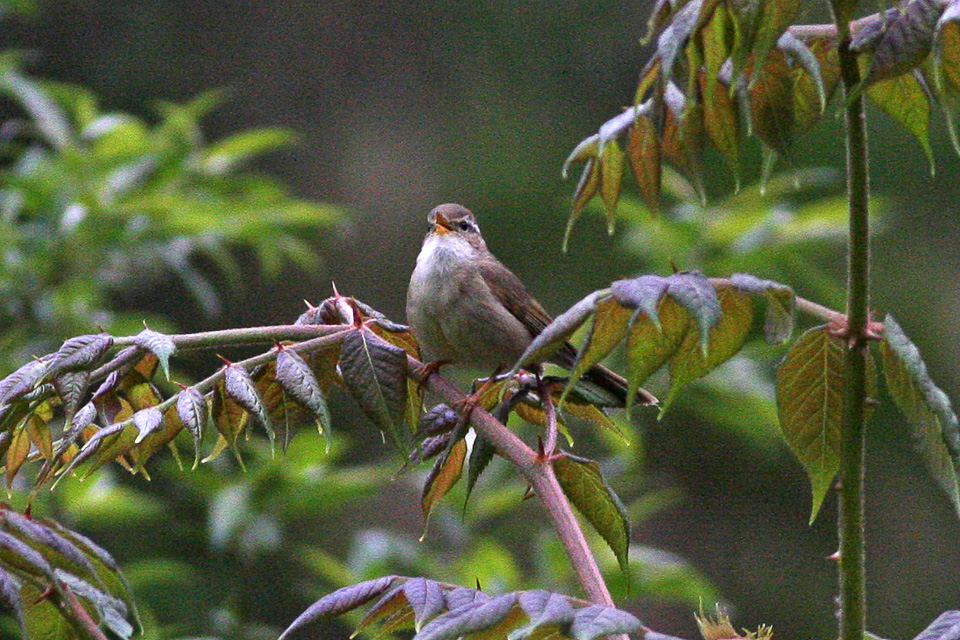
Blyth's Leaf Warbler
Phylloscopus reguloides
Order: Passeriformes / Family: Phylloscopidae

Wikimedia Commons
About the Blyth's Leaf Warbler
Blyth's Leaf Warbler, or Phylloscopus reguloides, is a small passerine bird that belongs to the family Phylloscopidae. This species is especially noted for its vibrant olive-green plumage and active foraging behavior. It plays a significant role in the ecosystems of its native regions by controlling insect populations. Blyth's Leaf Warbler is primarily found in the temperate and subtropical montane forests across Asia, where it thrives in the dense foliage. Its presence is most notable in regions like the Himalayas, northeastern India, and extending into southern China and Southeast Asia. These warblers are essential to the forest food chain, feeding on insects and subsequently providing prey for larger animals. During the breeding season, Blyth's Leaf Warbler migrates to higher altitudes, taking advantage of the increased food availability and suitable nesting sites. As a migratory species, it demonstrates fascinating seasonal behavior, moving to lower elevations or more southern regions during the winter months. The warbler's adaptability to various forest habitats makes it a crucial component of the biodiversity in these regions, where it supports the ecological balance.
The Blyth's Leaf Warbler belongs to the family Phylloscopidae, within the order Passeriformes. These birds typically live average 5-6 years, with a maximum recorded of 8 years..
How to Identify a Blyth's Leaf Warbler
Blyth's Leaf Warbler features distinctive olive-green upperparts and yellowish underparts, with a striking supercilium that is bright yellow and extends above the eye. The wings show two pale wing-bars, which are particularly noticeable in flight. Adults possess a pointed bill and a slightly rounded tail, aiding in their agile foraging movements. Juveniles resemble adults but tend to have a duller plumage with less distinct markings. The differences between male and female Blyth's Leaf Warblers are subtle, as both sexes exhibit similar coloration and size. However, males might display slightly brighter plumage during the breeding season. When compared to similar species such as the Greenish Warbler, Blyth's Leaf Warbler's more vibrant plumage and distinct wing-bars serve as key identifiers. Its flight silhouette is characterized by rapid wing beats and agile maneuvers, while its perching posture often involves active flicking movements as it searches for insects.
Having trouble telling birds apart? Upload a photo to our bird identification tool for an instant species match.
Blyth's Leaf Warbler Habitat and Range
Preferred Habitat
Blyth's Leaf Warbler predominantly inhabits montane and submontane forests, preferring dense understory and canopy layers. It is commonly found at elevations ranging from 1,000 to 3,500 meters, particularly in the Himalayas. The warbler thrives in mixed forests of oak, rhododendron, and coniferous trees. During the breeding season, it ascends to higher altitudes, whereas in winter, it may descend to lower elevations or move to subtropical forests. The bird is not typically found in urban environments, preferring the cover and rich insect life of rural forests.
Geographic Range
The breeding range of Blyth's Leaf Warbler stretches across the Himalayan region, including parts of Nepal, Bhutan, and northeastern India. In winter, it migrates to southern China, northern Thailand, and Myanmar. Migration corridors often follow the mountain ranges, providing safe passage and abundant food. The warbler's population is more concentrated in regions with extensive forest cover, where it can find optimal conditions for feeding and nesting.
Want to know which birds visit your area? Browse our backyard birds by location guides for region-specific species lists.
What Does the Blyth's Leaf Warbler Eat?
Blyth's Leaf Warbler primarily feeds on small insects, including caterpillars, beetles, and flies. During the breeding season, its diet consists predominantly of protein-rich insects to support energy-intensive activities like nesting and rearing young. In winter, it may diversify its diet to include other arthropods and occasionally small fruits. The warbler uses a gleaning foraging technique, picking insects off leaves and branches while hovering momentarily. This method allows it to exploit various levels of the forest canopy and understory.
Blyth's Leaf Warbler Behavior and Social Structure
Socially, Blyth's Leaf Warbler is often seen alone or in pairs during the breeding season but may join mixed-species flocks during migration and winter. Its territorial behavior includes singing from perches to establish and defend its nesting area. Courtship displays involve aerial chases and vocalizations to attract mates. The warbler is diurnal, with peak activity in the early morning and late afternoon when it forages actively. In response to predators, it may emit alarm calls and engage in evasive flight. Its daily activities revolve around foraging and maintaining territory.
Blyth's Leaf Warbler Nesting and Reproduction
Blyth's Leaf Warbler constructs a cup-shaped nest using grass, moss, and leaves, often situated in low shrubs or among the dense understory. The preferred nesting sites are concealed and offer protection from predators. A typical clutch contains 3-5 eggs, which are incubated for about 12-14 days. Both parents participate in feeding the fledglings, which leave the nest approximately 10-12 days after hatching. The species typically raises one brood per year, but favorable conditions may allow for a second.
Blyth's Leaf Warbler Sounds and Vocalizations
The primary song of Blyth's Leaf Warbler consists of a series of high-pitched, rapid trills that vary in pitch and rhythm. This song is often delivered from a concealed perch within the canopy. Call notes include sharp 'chip' sounds used for communication with mates and signaling alarm. During the dawn chorus, its song contributes to the complex acoustic environment of its forest habitat, often blending with the calls of other warblers and songbirds.
Interesting Facts About the Blyth's Leaf Warbler
- 1Blyth's Leaf Warbler can be distinguished from similar species by its unique song pattern, which involves rapid trills and subtle variations.
- 2This warbler's migration between breeding and wintering grounds can cover distances over 1,000 kilometers, showcasing its remarkable endurance.
- 3Blyth's Leaf Warbler was named after Edward Blyth, a 19th-century British zoologist who contributed significantly to ornithology.
- 4Despite its small size, typically measuring around 10 centimeters in length, Blyth's Leaf Warbler plays a vital role in insect population control.
- 5The bird's foraging technique involves hovering momentarily to pick insects off leaves, a behavior that requires significant agility and precision.
- 6During the breeding season, male Blyth's Leaf Warblers may sing up to 500 times per day to establish and maintain territory.
- 7Blyth's Leaf Warbler often joins mixed-species flocks during migration, benefiting from increased foraging success and predator vigilance.
Blyth's Leaf Warbler Conservation Status
Blyth's Leaf Warbler is currently classified as Least Concern by the IUCN, with populations considered stable. The primary threats to its habitat include deforestation and habitat fragmentation. Conservation efforts focus on preserving forest habitats and establishing protected areas. Historically, the warbler's population has fluctuated with changes in forest cover, emphasizing the importance of sustainable forest management practices.