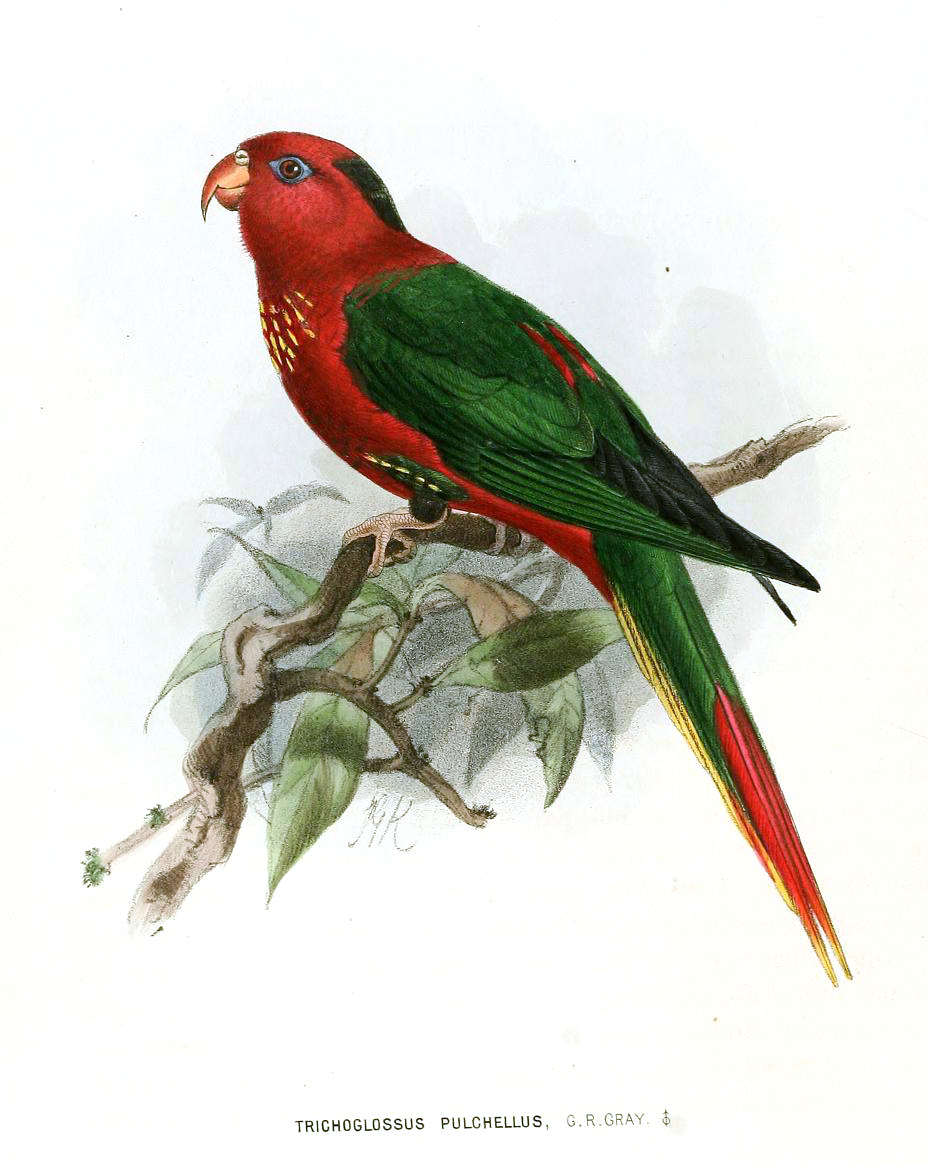
Broad-billed Parrot
Lophopsittacus mauritianus
Order: Psittaciformes / Family: Psittaculidae

Wikimedia Commons
About the Broad-billed Parrot
The Broad-billed Parrot, scientifically known as Lophopsittacus mauritianus, was a remarkable bird species endemic to the island of Mauritius. Unfortunately, it is now extinct, but it played a significant role in its ecosystem during its existence. This parrot belonged to the family Psittaculidae and was distinguished by its large, powerful beak, which was well-adapted for cracking hard seeds and nuts. The Broad-billed Parrot inhabited the dense forests and woodlands of Mauritius, thriving in the island's unique ecosystem, which was characterized by a rich diversity of plant and animal life. The extinction of this parrot, along with several other endemic species, highlights the fragility of island ecosystems in the face of human activity.
Lophopsittacus mauritianus contributed significantly to the ecological balance of Mauritius. As a frugivore, it played a crucial role in seed dispersal, aiding in the regeneration of the island's flora. The parrot's diet consisted of a variety of seeds, nuts, and fruits, which it foraged from the island's native trees. By consuming these seeds and fruits, the Broad-billed Parrot facilitated the distribution of plant species, enabling the propagation of diverse plant life across its habitat.
The Broad-billed Parrot's extinction is a poignant reminder of the vulnerability of island species to introduced predators and habitat destruction. The arrival of humans on Mauritius, along with the introduction of invasive species such as rats, cats, and pigs, led to significant habitat changes and the decline of native species. Furthermore, deforestation and land conversion for agriculture reduced the availability of suitable habitats for the Broad-billed Parrot, contributing to its eventual extinction. Efforts to conserve the remaining biodiversity of Mauritius have since been prioritized to prevent further loss of endemic species.
The Broad-billed Parrot belongs to the family Psittaculidae, within the order Psittaciformes. These birds typically live unknown, but similar parrots suggest a potential lifespan of 20-30 years..
How to Identify a Broad-billed Parrot
The Broad-billed Parrot was notable for its distinctive features, including its large, robust beak that was highly adapted for its diet. The adult plumage was primarily a muted grayish-brown, providing effective camouflage within the forested environment of Mauritius. While there were no stark sexual dimorphisms, subtle differences between males and females may have existed, possibly in terms of size, with males being slightly larger. Juvenile parrots likely exhibited similar plumage to adults but with less intense coloration.
In flight, the Broad-billed Parrot displayed a somewhat heavy and labored silhouette due to its size and the weight of its bill. Its wings were broad and rounded, aiding in maneuverability within the dense forest canopy. Perching posture was upright, supported by strong legs and feet adapted for grasping branches securely. Unlike some other parrot species, the Broad-billed Parrot's coloration did not feature vibrant hues, which helped it blend into its surroundings, making field identification challenging without close observation.
Confusion with similar species was minimal, as the Broad-billed Parrot was one of the few large parrots on Mauritius. Its unique beak size and shape were distinguishing characteristics that set it apart from smaller parrot species. The absence of bright colors further reduced the likelihood of misidentification with other parrots, which often exhibited more vivid plumage.
Having trouble telling birds apart? Upload a photo to our bird identification tool for an instant species match.
Broad-billed Parrot Habitat and Range
Preferred Habitat
The Broad-billed Parrot thrived in the dense, subtropical forests of Mauritius, particularly favoring areas with abundant native vegetation. These forests were characterized by a mix of hardwood trees and a diverse understory, providing both food and shelter for the parrot. The parrot's habitat ranged from lowland forests to slightly elevated regions, although it primarily remained within forested areas to access its food sources.
Unlike some bird species that adapted to urban environments, the Broad-billed Parrot was confined to natural habitats, relying heavily on the undisturbed forest for survival. Seasonal habitat shifts were likely limited, as the island's climate remained relatively stable throughout the year, allowing the parrot to maintain a consistent range within its preferred habitat.
The parrot's reliance on specific forested areas underscored its vulnerability to habitat destruction. As human activities encroached on these forests, the availability of suitable habitats diminished, contributing to the species' eventual extinction. Conservation of similar habitats today remains critical for preserving the remaining biodiversity on Mauritius and other islands with endemic species.
Geographic Range
The Broad-billed Parrot was endemic to Mauritius, meaning its entire range was confined to this single island in the Indian Ocean. It did not migrate, as the island's stable climate provided consistent resources throughout the year. The parrot inhabited the island's dense forests, which covered much of Mauritius before human colonization and subsequent deforestation.
Breeding and nesting likely occurred within the same range as the parrot's general habitat, with suitable nesting sites found in the forested areas. The lack of migration corridors or extensive range variations highlights the parrot's specialization to its island environment. This specialization, while advantageous in stable conditions, rendered the species particularly susceptible to environmental changes.
Population density hotspots for the Broad-billed Parrot would have been concentrated in regions of Mauritius with the densest and most diverse forests. However, due to extensive habitat loss and the introduction of invasive species, these areas gradually diminished until the parrot's eventual extinction. The limited range and specialized habitat needs emphasize the challenges faced by island species when confronted with rapid environmental changes.
Want to know which birds visit your area? Browse our backyard birds by location guides for region-specific species lists.
What Does the Broad-billed Parrot Eat?
The Broad-billed Parrot's diet consisted primarily of seeds, nuts, and fruits found within the forests of Mauritius. Its large, robust beak was highly effective at cracking open hard-shelled seeds and nuts, allowing it to access nutrient-rich food sources that other species might find challenging to consume. The parrot likely favored seeds from native trees, which were abundant within its habitat.
Seasonal changes in diet would have been minimal due to the island's relatively constant climate, though variations in fruit and seed availability could have influenced feeding patterns. The parrot's role as a frugivore and seed disperser was crucial for maintaining the health and diversity of its forest ecosystem.
Foraging techniques included using its powerful beak to manipulate and open food items, ensuring efficient extraction of seeds. The size of prey items, such as larger seeds and nuts, required the parrot's specialized adaptations. Feeding occurred primarily during daylight hours, with the parrot moving through the forest canopy to access different food sources. Its diet and feeding behavior contributed to the propagation of plant species, making its extinction a significant loss for the ecological balance of Mauritius.
Broad-billed Parrot Behavior and Social Structure
The Broad-billed Parrot exhibited social behavior typical of many parrot species, often seen in small groups or pairs, particularly during the breeding season. Its social structure likely involved strong pair bonds, with both members of a pair participating in activities such as foraging and nesting.
Territorial behavior may have been present, particularly during nesting periods, as parrots often defend their nesting sites from intruders. Courtship displays were likely a part of the parrot's behavior, involving vocalizations and physical gestures to strengthen pair bonds and attract mates.
Flocking patterns could vary, with larger aggregations forming in areas with abundant food resources. The parrot's response to predators would have included vocal alarm calls and evasive flight behavior to escape threats. Its daily activity patterns were predominantly diurnal, with peak activity during the early morning and late afternoon when foraging was most productive.
The extinction of the Broad-billed Parrot underscores the importance of understanding the social and behavioral ecology of island species. These behaviors, once lost, contribute to the decline in biodiversity and the disruption of ecological processes.
Broad-billed Parrot Nesting and Reproduction
The Broad-billed Parrot nested in tree cavities, a common nesting strategy among parrot species, which provided protection from predators and the elements. Suitable nesting sites would have been located in mature trees within the dense forests of Mauritius, where competition for nesting spaces was likely high.
Clutch size for the Broad-billed Parrot typically consisted of 2 to 3 eggs, with both parents participating in incubation and subsequent chick-rearing. The incubation period likely lasted several weeks, during which one parent would remain in the nest while the other foraged for food.
Fledging timelines for the parrot's chicks would have depended on food availability and environmental conditions, with young parrots leaving the nest several weeks after hatching. Parental roles were shared, with both male and female parrots contributing to feeding and protecting the young.
The number of broods per year was likely limited to one, given the extensive care required for each set of offspring. The reliance on specific nesting sites and the need for stable forest habitats emphasize the vulnerability of the Broad-billed Parrot to habitat destruction and environmental changes.
Broad-billed Parrot Sounds and Vocalizations
The Broad-billed Parrot was known for its vocalizations, which included a variety of calls used for communication within its social groups. Its primary song likely consisted of rhythmic, melodic sequences with a moderate pitch, serving as both a territorial marker and a tool for attracting mates.
Call notes were varied, ranging from soft contact calls used between mated pairs to louder alarm calls that alerted the flock to potential threats. These alarm calls were sharp and piercing, facilitating rapid communication across distances within the forest.
The dawn chorus, a common behavior among many bird species, would have featured prominently in the parrot's daily routine, with vocal activity increasing at dawn as the parrot greeted the new day and interacted with its social group. The parrot's vocal repertoire, while not as complex as some songbirds, was an essential aspect of its behavioral ecology, aiding in both social cohesion and survival.
Interesting Facts About the Broad-billed Parrot
- 1The Broad-billed Parrot was one of several unique bird species that became extinct on Mauritius, alongside the famous dodo.
- 2Its robust beak was capable of cracking open tough seeds and nuts, a testament to its specialized feeding adaptations.
- 3The extinction of the Broad-billed Parrot occurred around the late 17th century, shortly after human settlement on Mauritius.
- 4Despite its extinction, the Broad-billed Parrot's ecological role in seed dispersal remains a critical area of study for understanding island ecosystems.
- 5The Broad-billed Parrot's extinction highlights the vulnerability of island species to introduced predators and habitat destruction.
- 6Mauritius, the home of the Broad-billed Parrot, is renowned for its high level of endemism, with many species found nowhere else on Earth.
- 7Historical records and subfossil remains have provided insights into the appearance and behavior of the Broad-billed Parrot despite its extinction.
Broad-billed Parrot Conservation Status
The Broad-billed Parrot is classified as extinct by the IUCN Red List. Its population decline was primarily driven by habitat destruction and the introduction of invasive species following human settlement on Mauritius. These factors led to rapid environmental changes that the parrot could not adapt to, resulting in its extinction in the late 17th century. Conservation efforts for similar species today focus on habitat preservation and the control of invasive species to prevent further loss of biodiversity on islands. Historical population changes for the Broad-billed Parrot serve as a cautionary tale, highlighting the impact of human activity on isolated ecosystems. The parrot's extinction underscores the need for comprehensive conservation strategies that address both habitat protection and the mitigation of threats posed by introduced species. By learning from past extinctions, conservationists aim to safeguard the remaining endemic species on Mauritius and other islands.