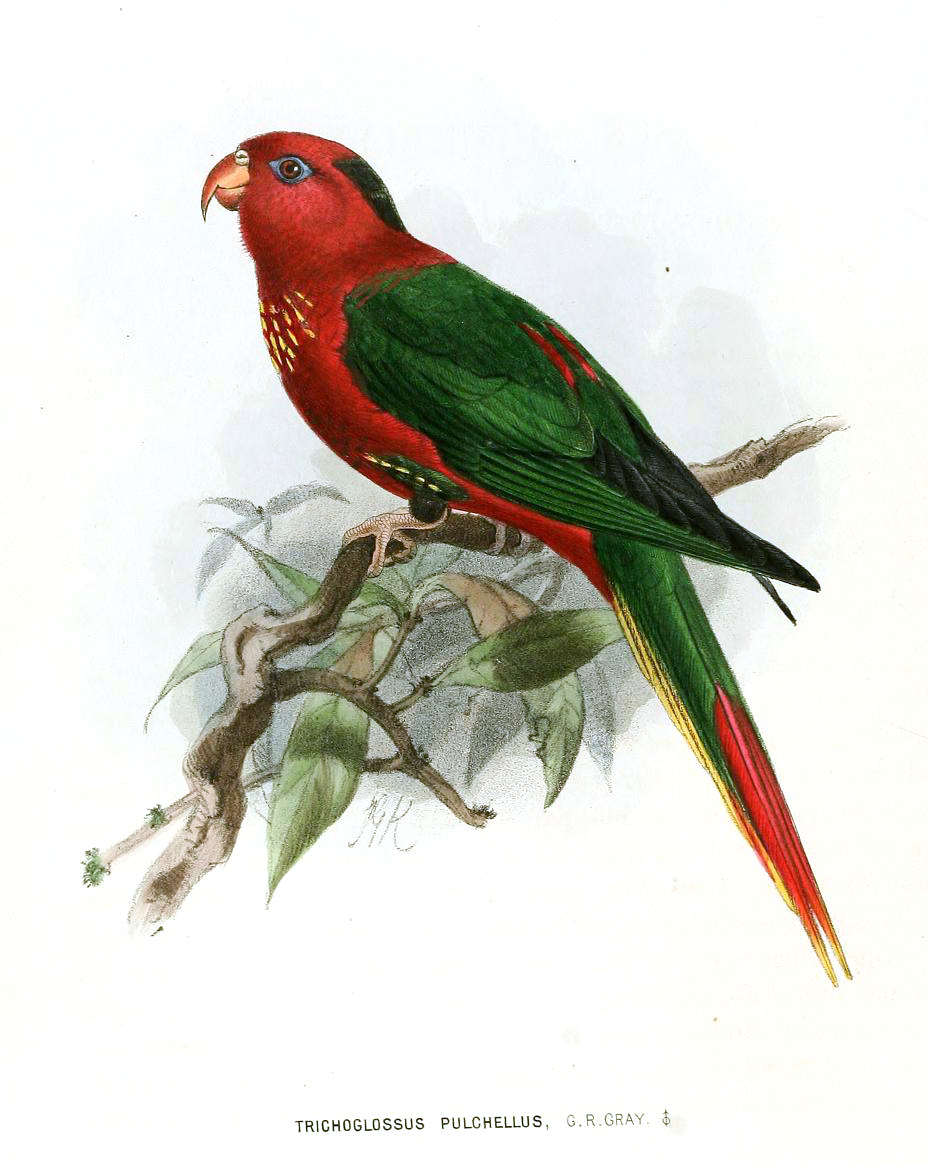
Pygmy Lorikeet
Charminetta wilhelminae
Order: Psittaciformes / Family: Psittaculidae

Wikimedia Commons
About the Pygmy Lorikeet
The Pygmy Lorikeet, scientifically known as Charminetta wilhelminae, is one of the smallest yet most striking members of the Psittaculidae family. Endemic to New Guinea, this diminutive bird primarily inhabits montane forests, thriving at altitudes ranging from 1500 to 2800 meters. Known for its vivid green plumage interspersed with splashes of striking red and yellow, it is a visual delight and a testament to the rich biodiversity of its native habitats. The Pygmy Lorikeet plays a crucial ecological role as a pollinator, thanks to its specialized brush-tipped tongue, which facilitates nectar feeding. This trait not only aids in the bird's sustenance but also ensures the pollination of various native plant species, contributing to the overall health and balance of the ecosystem. Seasonal behaviors of the Pygmy Lorikeet include altitudinal migrations, where they may descend to lower altitudes during cooler months in search of food. These movements are not entirely predictable and depend largely on the availability of resources such as flowering plants and fruiting trees. The bird's significance transcends ecological contributions, as it holds cultural value among indigenous communities in New Guinea who regard the lorikeet with reverence. The Pygmy Lorikeet is a testament to the intricacies of avian life in tropical montane ecosystems, where it plays an indispensable role in maintaining ecological equilibrium. Its presence indicates a healthy forest ecosystem, providing insight into the ecological dynamics at play. Unfortunately, habitat destruction and climate change pose significant threats to this species, emphasizing the need for concerted conservation efforts to preserve its natural environment.
The Pygmy Lorikeet belongs to the family Psittaculidae, within the order Psittaciformes. These birds typically live 5-8 years in the wild, up to 12 years in captivity..
How to Identify a Pygmy Lorikeet
The Pygmy Lorikeet is a small parrot, measuring approximately 13 cm in length. Its plumage is predominantly bright green, providing an excellent camouflage against the lush foliage of its montane forest habitat. Notable features include a vivid red forehead and crown, contrasted by a yellowish-green breast. The wings display a mix of green and yellow, with a subtle blue wash on the outer primaries. In terms of sexual dimorphism, males and females are almost identical, though females may exhibit slightly duller colors. Juveniles resemble adults but lack the intensity of coloration and possess a more muted crown. The Pygmy Lorikeet can be confused with other lorikeets in New Guinea, but its small size and distinct coloration help differentiate it. In flight, it exhibits a rapid, direct flight pattern, often moving in small flocks. When perched, the bird maintains an upright posture, typically resting on thin branches while feeding.
Having trouble telling birds apart? Upload a photo to our bird identification tool for an instant species match.
Pygmy Lorikeet Habitat and Range
Preferred Habitat
The Pygmy Lorikeet is typically found in the montane forests of New Guinea, favoring elevations between 1500 and 2800 meters. These habitats are characterized by dense canopies and a rich diversity of flowering plants, which provide essential nectar sources. The lorikeet may occasionally be observed in lower montane forests during seasonal food shortages. Unlike some lorikeet species, the Pygmy Lorikeet is seldom seen in urban areas, preferring the seclusion of remote, forested regions. The bird's choice of habitat is closely tied to the availability of flowering trees and shrubs, which supply both food and nesting sites.
Geographic Range
The Pygmy Lorikeet is endemic to the island of New Guinea, with its range primarily concentrated in the highland regions. It is found in both the Indonesian provinces in the west and the independent nation of Papua New Guinea to the east. The species does not undertake long-distance migrations, but it exhibits altitudinal movements in response to seasonal changes in food availability. Within its range, it is most commonly seen in dense montane forests rather than lower altitudes or coastal areas. Population density tends to be higher in regions with abundant flowering plants, which provide critical food resources.
Want to know which birds visit your area? Browse our backyard birds by location guides for region-specific species lists.
What Does the Pygmy Lorikeet Eat?
The Pygmy Lorikeet's diet is predominantly composed of nectar, which it skillfully extracts from flowers using its specialized brush-tipped tongue. Primary food sources include nectar from a variety of flowering plants native to its montane forest habitat. In addition to nectar, the lorikeet also consumes pollen, fruit, and occasionally small insects, especially during the breeding season when protein demand increases. The bird actively forages throughout the day, often seen in small groups visiting flowering trees and shrubs. Its foraging activity peaks during the early morning and late afternoon, coinciding with the availability of fresh nectar.
Pygmy Lorikeet Behavior and Social Structure
Social and gregarious, the Pygmy Lorikeet often forms small flocks, particularly around rich feeding sites. These groups exhibit a complex social structure, with individuals frequently engaging in mutual preening and other affiliative behaviors. The species is not highly territorial, although it may defend specific feeding trees from intruders. During the breeding season, courtship displays include aerial chases and mutual preening between pairs. The Pygmy Lorikeet demonstrates a high degree of adaptability in its daily routines, adjusting feeding and resting patterns according to resource availability. Its response to predators involves swift, agile flight and retreat to dense foliage.
Pygmy Lorikeet Nesting and Reproduction
The Pygmy Lorikeet nests in tree cavities, often selecting locations that offer protection from predators and the elements. Nests are typically lined with wood dust and feathers, providing a soft bed for the eggs. Clutch size generally ranges from two to three eggs, with an incubation period of approximately 20 days. Both parents share in incubation duties and feeding of the chicks, ensuring a higher success rate for offspring survival. Fledging occurs about 5 weeks post-hatching, with juveniles remaining with their parents for a few weeks before gaining independence. The species is known to produce one or two broods per year, depending on environmental conditions.
Pygmy Lorikeet Sounds and Vocalizations
The Pygmy Lorikeet produces a series of high-pitched, rapid chattering calls, often heard as a flurry of notes during flight or while feeding. Its primary song is a repetitive, melodic series of chirps that can be likened to the tinkling of a small bell. Alarm calls are sharper and more abrupt, serving as a warning to other flock members of potential danger. The dawn chorus of the Pygmy Lorikeet is a lively affair, with multiple individuals contributing to a chorus of chattering that signals the start of their daily activities.
Interesting Facts About the Pygmy Lorikeet
- 1The Pygmy Lorikeet measures just 13 cm in length, making it one of the smallest lorikeets in the world.
- 2Unlike many parrots, the Pygmy Lorikeet does not mimic human speech, instead using complex vocalizations to communicate.
- 3This lorikeet's specialized brush-tipped tongue is an adaptation for feeding on nectar, similar to that of hummingbirds.
- 4The Pygmy Lorikeet is a key pollinator for several plant species in New Guinea's montane forests.
- 5Despite its small size, the Pygmy Lorikeet can travel long distances in search of food, often covering large areas of forest.
- 6The bird's vibrant red and green plumage makes it a popular subject for birdwatchers visiting New Guinea.
- 7Fossil evidence suggests that lorikeets have been present in Oceania for millions of years, highlighting their long evolutionary history.
Pygmy Lorikeet Conservation Status
The Pygmy Lorikeet is currently listed as Least Concern by the IUCN, although its population trends are not well-documented. Habitat destruction due to logging and agricultural expansion poses significant threats to this species. While it remains relatively widespread within its range, ongoing environmental pressures could impact future population stability. Conservation efforts focus on preserving montane forest habitats and promoting sustainable land-use practices. Historical data suggests that the Pygmy Lorikeet's population has remained relatively stable, although continued monitoring is essential to ensure its long-term survival.