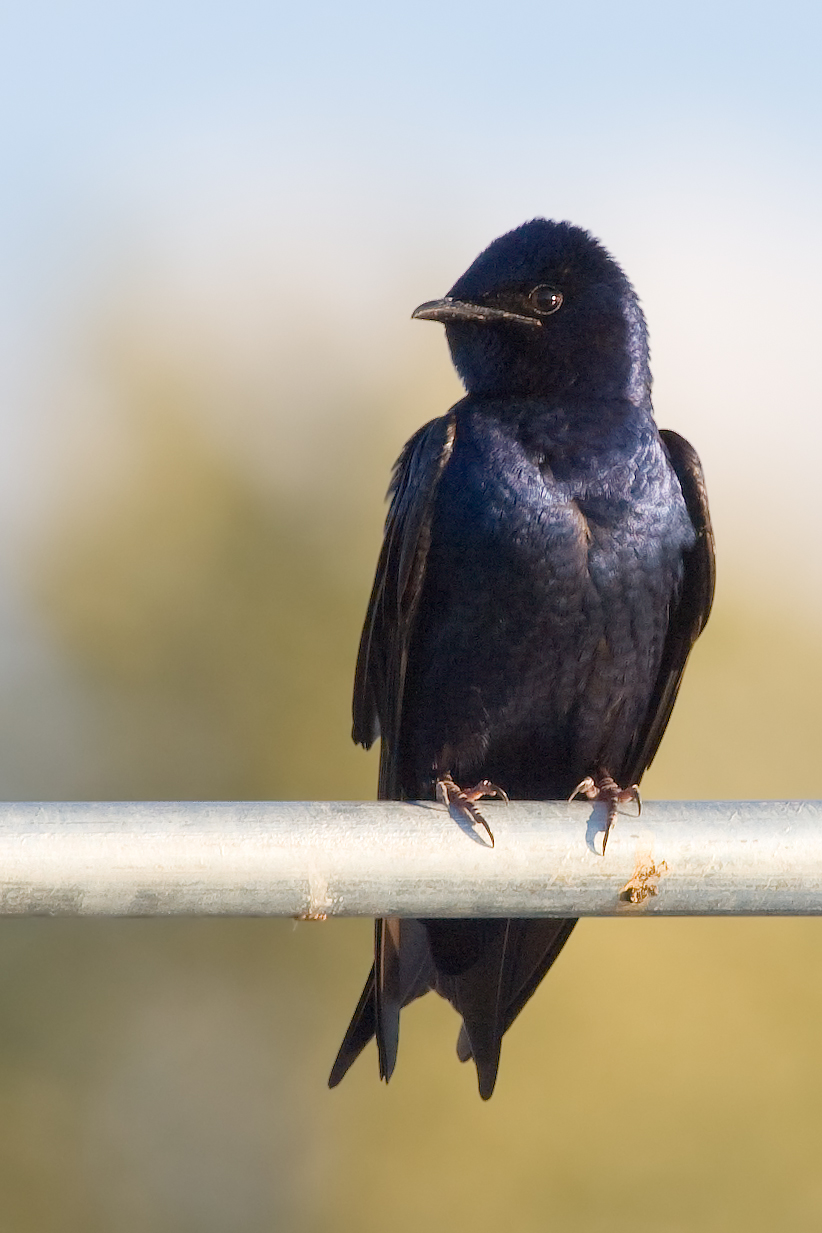
Brown-chested Martin
Progne tapera
Order: Passeriformes / Family: Hirundinidae

Wikimedia Commons
About the Brown-chested Martin
The Brown-chested Martin (Progne tapera) is a robust and charismatic member of the swallow family, Hirundinidae. Found predominantly in South America, this bird extends its presence from northern Argentina up to parts of southern Central America. The species adapts remarkably well to diverse environments, ranging from open grasslands to the edges of forests and even urban landscapes. Its adaptability is key to its widespread distribution. In regions like the Amazon Basin, it plays a significant ecological role by controlling insect populations, thus contributing to ecosystem balance. During the breeding season, which coincides with the warmer months, the Brown-chested Martin can be observed engaging in aerial displays, a behavior integral to its courtship rituals. These displays not only serve a reproductive purpose but also reinforce pair bonds and territorial claims. As seasons shift, this martin may adjust its foraging strategies, targeting different insect populations that emerge with changing climatic conditions. The Brown-chested Martin is a vital component of the food web, serving both as a predator of insects and as prey for larger avian predators. Its success in diverse habitats exemplifies the resilience and adaptability of the species, making it a fascinating subject for ornithologists and bird enthusiasts alike.
The Brown-chested Martin belongs to the family Hirundinidae, within the order Passeriformes. These birds typically live typically 5-7 years, with a maximum recorded of 10 years..
How to Identify a Brown-chested Martin
The Brown-chested Martin is a medium-sized swallow, measuring about 15-18 cm in length with a wingspan of approximately 30-35 cm. Adults exhibit a distinctive brown chest, which contrasts with their lighter underparts and grayish-brown upperparts. The wings and tail are darker, providing a clear silhouette against the sky. Juveniles resemble adults but may have slightly duller plumage and less distinct chest markings. Males and females are similar in appearance, although males might display slightly glossier feathers during the breeding season. In flight, the Brown-chested Martin shows a streamlined profile with pointed wings and a slightly notched tail, aiding in their agile aerial maneuvers. This species can be confused with other swallows, such as the Gray-breasted Martin, but can be distinguished by its more pronounced brown chest and different vocalizations. When perched, the Brown-chested Martin often sits upright on wires, branches, or other elevated structures, providing clear views of its characteristic plumage.
Having trouble telling birds apart? Upload a photo to our bird identification tool for an instant species match.
Brown-chested Martin Habitat and Range
Preferred Habitat
The Brown-chested Martin inhabits a variety of open and semi-open landscapes. It thrives in grasslands, savannas, and open woodlands, frequently found near water bodies where insects are abundant. This martin also adapts well to urban and suburban environments, often seen around towns and cities where it exploits human-made structures for nesting and perching. The species is found from sea level to elevations of about 2,000 meters, although it is more common in lowland areas. Seasonal movements may occur, but these are generally related to local food availability rather than long-distance migration.
Geographic Range
The Brown-chested Martin primarily breeds in South America, with its range extending from northern Argentina through Brazil, Bolivia, Paraguay, and into parts of southern Central America, including Panama. While some populations are resident, others may undertake short-distance movements in response to seasonal changes in insect abundance. During the non-breeding season, they may disperse more widely within their range. Hotspots for this species include the Pampas region of Argentina and the Pantanal in Brazil, where large populations can be observed during the breeding season.
Want to know which birds visit your area? Browse our backyard birds by location guides for region-specific species lists.
What Does the Brown-chested Martin Eat?
The Brown-chested Martin primarily feeds on flying insects, making it an adept aerial forager. It captures prey mid-flight, often targeting swarms of insects such as flies, beetles, and occasionally small moths. Insects like ants and termites are particularly favored during swarming events. Seasonal changes affect its diet, with the martin adjusting its foraging strategies to exploit the most abundant prey at any given time. It typically forages during daylight hours, with peak activity often occurring in the morning and late afternoon when insect activity is highest. The bird’s agile flight and quick maneuverability make it an efficient predator, helping to control insect populations in its habitat.
Brown-chested Martin Behavior and Social Structure
The Brown-chested Martin displays a range of social behaviors, often seen in flocks outside the breeding season. These flocks can number from a few individuals to several dozen, particularly in areas with abundant food resources. During the breeding season, the martins become more territorial, with pairs defending nesting sites vigorously. Courtship involves aerial displays, where males perform acrobatic flights to attract females. This species is generally non-aggressive towards other birds but will defend its territory against other martins. The Brown-chested Martin is diurnal, with its daily activities focused on feeding, preening, and social interactions. It is vigilant against predators, using alarm calls and evasive flight to escape threats.
Brown-chested Martin Nesting and Reproduction
Brown-chested Martins typically nest in natural cavities, such as holes in trees or cliffs, and have adapted to using artificial structures like buildings and bridges. They line these cavities with grass, feathers, and other soft materials to form a cup-shaped nest. Clutch size varies from 3 to 5 eggs, which the female incubates for about 14-16 days. Both parents participate in feeding the hatchlings, which fledge approximately 20-24 days post-hatching. The species usually raises one brood per year, although in regions with extended favorable conditions, a second brood may occur. Parental care extends for several weeks after fledging, ensuring the young develop essential survival skills.
Brown-chested Martin Sounds and Vocalizations
The primary song of the Brown-chested Martin is a series of rapid, twittering notes, often delivered in flight. This song serves as both a territorial and courtship signal. Calls are generally short and sharp, used to maintain contact within flocks. Alarm calls are more urgent and harsh, alerting other birds to potential threats. During the dawn chorus, males are particularly vocal, establishing their presence and advertising for mates. The martin's vocalizations, while not as melodious as some songbirds, are critical to its social structure and reproductive success.
Interesting Facts About the Brown-chested Martin
- 1The Brown-chested Martin can often be seen in large flocks of up to 100 birds during migration periods.
- 2This species has adapted well to urban environments, often nesting on buildings and bridges.
- 3In the wild, Brown-chested Martins have been known to live up to 8 years.
- 4Their diet consists overwhelmingly of insects, which they catch mid-flight with incredible precision.
- 5The species engages in elaborate aerial displays during courtship, showcasing their flying skills.
- 6Brown-chested Martins are one of the few swallow species that regularly use human structures for nesting.
- 7Their presence is beneficial to agriculture, as they help control pest insect populations.
Brown-chested Martin Conservation Status
Currently, the Brown-chested Martin is listed as Least Concern by the IUCN, with a stable population trend. While not facing significant threats, habitat destruction and urbanization could pose localized risks. Conservation efforts focus on preserving natural habitats and promoting the use of artificial nesting sites to support urban populations. Historically, the species has maintained a stable population across its range, benefitting from its adaptability to varied environments.
Other Hirundinidae Species


Birds Similar to the Brown-chested Martin
These species are often confused with the Brown-chested Martin due to similar appearance or overlapping range.