
Brown Scrub Robin
Erythropygia signata
Order: Passeriformes / Family: Muscicapidae

Wikimedia Commons
About the Brown Scrub Robin
The Brown Scrub Robin (Erythropygia signata) is a small, elusive songbird belonging to the Muscicapidae family. This bird is endemic to the coastal forests and thickets of southeastern Africa, particularly within South Africa, Mozambique, and Eswatini. These regions serve as critical habitats due to their dense underbrush, which provides both cover and food resources. The robin thrives in subtropical and tropical dry forests, where it plays a vital role in controlling insect populations and contributing to seed dispersal. Its preference for thick, scrubby environments makes it a unique inhabitant of a niche ecosystem. The Brown Scrub Robin is a resident bird, exhibiting limited migratory behavior, although some altitudinal movement may occur in search of optimal foraging grounds. During the breeding season, which typically spans the austral spring and summer months, the Brown Scrub Robin becomes more vocal and active, often seen flitting through undergrowth or perched low on branches. This seasonal behavior is crucial for attracting mates and establishing territories. The species' presence in these regions underscores its ecological importance as both a predator and a prey species. As urbanization and deforestation continue to threaten its natural habitats, the Brown Scrub Robin's role in maintaining ecological balance becomes increasingly significant.
The Brown Scrub Robin belongs to the family Muscicapidae, within the order Passeriformes. These birds typically live typically around 4-6 years, with a maximum recorded of 8 years..
How to Identify a Brown Scrub Robin
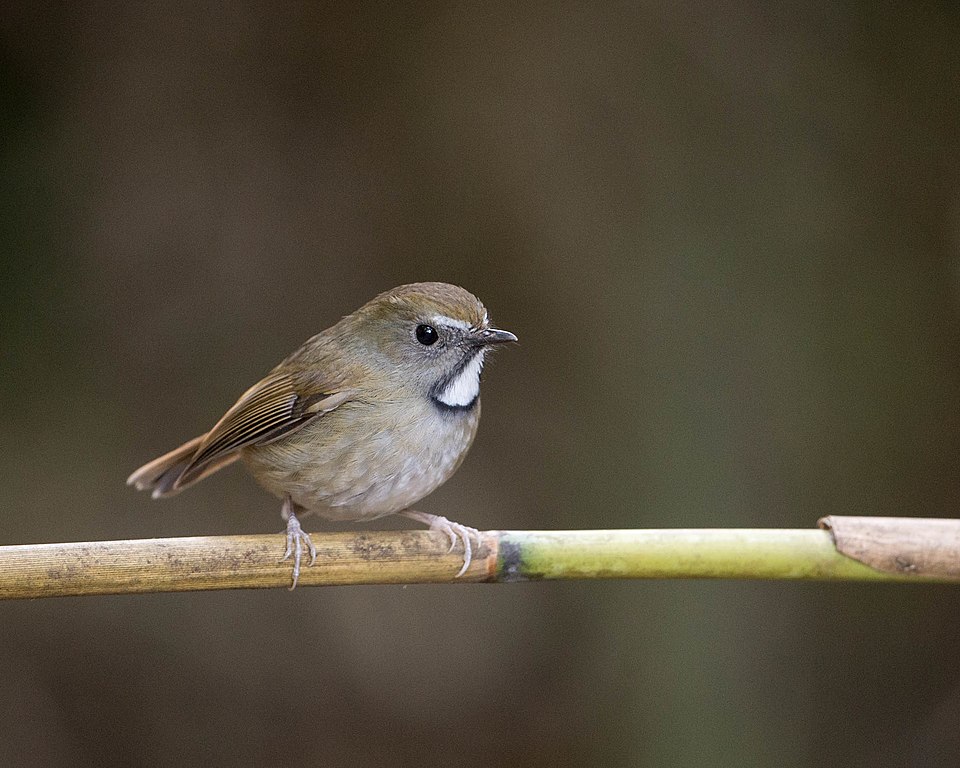
The adult Brown Scrub Robin exhibits a distinctive rufous tail that sets it apart from other species within its range. Its upperparts are a warm brown color, while the underparts are paler, often with a slight buff tint. This coloration provides excellent camouflage within its preferred habitat of dense scrub and undergrowth. Juveniles resemble adults but tend to have a more mottled appearance, with streaks on their breast and a less defined rufous tail. There is little sexual dimorphism in this species, with males and females looking quite similar. One might confuse the Brown Scrub Robin with the similar-looking Cape Robin-Chat, but the latter has a more pronounced white eyebrow and a contrasting orange chest. In flight, the Brown Scrub Robin's tail fans out, displaying its rufous color more prominently. It typically perches low to the ground or within dense vegetation, often flicking its tail up and down, a behavior that can aid in identification.
Having trouble telling birds apart? Upload a photo to our bird identification tool for an instant species match.
Brown Scrub Robin Habitat and Range
Preferred Habitat
The Brown Scrub Robin primarily inhabits subtropical and tropical dry forests, coastal thickets, and dense shrublands. It prefers areas with thick underbrush, which provide ample cover from predators and abundant food sources. These environments are usually found at elevations ranging from sea level to about 1500 meters. While predominantly a forest and scrubland species, the Brown Scrub Robin can occasionally be found in more open areas during foraging expeditions, although it typically avoids urban settings. Seasonal shifts in habitat preference are minimal, as the bird tends to remain within the same general area throughout the year, moving only slightly to accommodate food availability.
Geographic Range
The Brown Scrub Robin is endemic to southeastern Africa, with its range primarily confined to South Africa, Mozambique, and Eswatini. Within these countries, it is most commonly found along the coastal strip, where dense forests and thickets provide ideal habitat. Population density tends to be highest in protected areas where habitat disturbance is minimal. The species does not undertake long-distance migrations but may exhibit some local movement in response to seasonal changes in food availability. Its range does not extend beyond these regions, making it a species of interest due to its restricted distribution.
Want to know which birds visit your area? Browse our backyard birds by location guides for region-specific species lists.
What Does the Brown Scrub Robin Eat?
The Brown Scrub Robin's diet consists predominantly of insects and other invertebrates, which it hunts by foraging through leaf litter and probing into soil and decaying wood. Common prey items include beetles, spiders, and caterpillars. During the austral summer, when insect activity peaks, these robins become particularly active in their pursuit of food. They may also consume small fruits and berries when available, which supplement their diet especially during the drier months when insect availability may decrease. The Brown Scrub Robin employs a 'hop-and-stop' foraging technique, pausing frequently to scan for movement before striking at prey. This method is efficient in the dense undergrowth where it typically feeds.
Brown Scrub Robin Behavior and Social Structure
Brown Scrub Robins are primarily solitary birds, though they may occasionally be seen in pairs during the breeding season. They are territorial, with males vigorously defending their patch against intruders. Courtship involves the male singing from a prominent perch and presenting food to the female as part of the bonding process. Their daily activity patterns include foraging in the early morning and late afternoon when temperatures are cooler. In response to predators, Brown Scrub Robins rely on their cryptic plumage to remain unseen and may emit a series of sharp alarm calls to alert nearby birds. Although not typically found in large flocks, they may temporarily join mixed-species foraging groups, benefiting from the increased vigilance against predators.
Brown Scrub Robin Nesting and Reproduction
The Brown Scrub Robin typically builds its nest low in dense vegetation, often in a bush or a tangle of vines. The nest is a cup-shaped structure composed of twigs, leaves, and rootlets, with finer materials lining the interior for added comfort. A typical clutch consists of 2-3 eggs, which are incubated primarily by the female over a period of approximately 14 days. Both parents participate in feeding the chicks, which fledge about two weeks after hatching. The species usually raises one brood per year, though a second brood is possible if conditions are favorable. Parental care extends several weeks post-fledging, ensuring the young birds develop sufficient foraging skills.
Brown Scrub Robin Sounds and Vocalizations
The primary song of the Brown Scrub Robin is a melodious series of whistles and trills, often delivered from a concealed perch within dense foliage. The rhythm is varied, with a mix of high-pitched notes that can carry over considerable distances. Call notes are short and sharp, serving as contact calls between mates or as alarms when predators are nearby. During the dawn chorus, the Brown Scrub Robin's song can be a prominent feature of the soundscape, adding to the rich tapestry of avian sounds. Its vocalizations are reminiscent of other scrub-robin species but are distinguishable by their specific tonal quality and rhythm.
Interesting Facts About the Brown Scrub Robin
- 1The Brown Scrub Robin's tail is not only a key identification feature but also aids in balancing as it hops through dense underbrush.
- 2Unlike many birds, the Brown Scrub Robin remains in the same area year-round, making it a reliable presence in its preferred habitats.
- 3This robin is known for its secretive behavior, often heard rather than seen, as it skulks in the shadows of dense thickets.
- 4Brown Scrub Robins have a unique foraging style, employing a 'hop-and-stop' technique to search for insects in leaf litter.
- 5Their nests are well camouflaged and placed low to the ground, making them difficult to spot by predators and birders alike.
- 6Despite its relatively small range, the Brown Scrub Robin is adaptable, thriving in a variety of scrub and forest habitats.
- 7The species plays a crucial ecological role, controlling insect populations and aiding in the dispersal of seeds through its varied diet.
Brown Scrub Robin Conservation Status
Currently listed as Least Concern by the IUCN, the Brown Scrub Robin's population is considered stable. However, habitat destruction due to urbanization and agricultural expansion poses a significant threat to its long-term survival. Conservation efforts focus on habitat preservation, particularly in areas where human encroachment is pronounced. Historical data suggest that while the population has faced pressures, effective management of protected areas has helped maintain numbers. Continued monitoring and habitat restoration are essential to ensuring the species remains common within its range.
Other Muscicapidae Species


Birds Similar to the Brown Scrub Robin
These species are often confused with the Brown Scrub Robin due to similar appearance or overlapping range.

