
Kalahari Scrub Robin
Erythropygia paena
Order: Passeriformes / Family: Muscicapidae

Wikimedia Commons
About the Kalahari Scrub Robin
The Kalahari Scrub Robin, scientifically known as Erythropygia paena, is a small passerine bird that thrives in the arid and semi-arid scrublands of southern Africa. This species plays a crucial role in the ecosystem as both a predator of insects and a prey species for larger animals. Its presence signals a healthy scrubland environment, indicative of a balanced ecosystem. The Kalahari Scrub Robin is typically found in regions such as Botswana, Namibia, and parts of South Africa, where it frequents dry savannas and scrubby areas. These birds are excellent indicators of ecological health due to their sensitivity to habitat changes. They are adapted to environments with sparse vegetation, relying on the cover and resources provided by shrubs and low bushes. Seasonally, while the Kalahari Scrub Robin does not undertake long migrations, it may exhibit local movements in response to rainfall and food resource availability. During the dry season, these birds are often more concentrated around water sources and areas with higher insect activity. Their ecological role extends beyond mere insect control; by being part of the food chain, they contribute to the biodiversity that supports larger predatory species. The Kalahari Scrub Robin's adaptability to its harsh environment and its role as both predator and prey make it an integral component of the Kalahari ecosystem.
The Kalahari Scrub Robin belongs to the family Muscicapidae, within the order Passeriformes. These birds typically live typically around 5-6 years, with a maximum recorded of 9 years..
How to Identify a Kalahari Scrub Robin
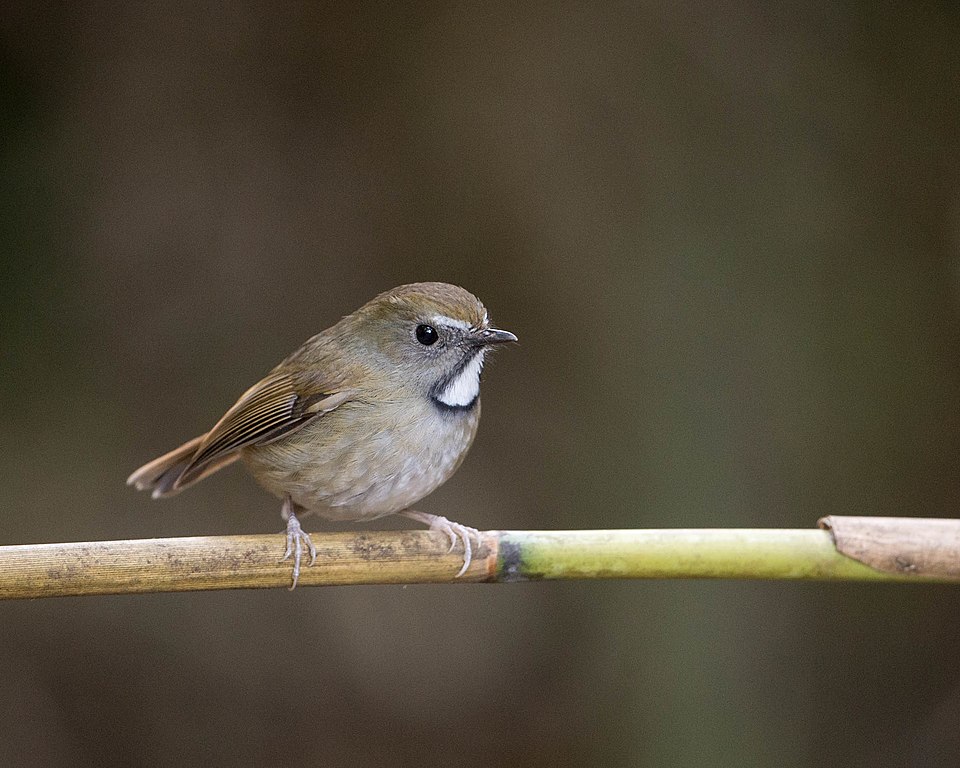
The Kalahari Scrub Robin is easily identifiable by its olive-brown plumage and distinctive rufous rump, which is particularly visible during flight. Adult males and females show no significant difference in plumage, a trait common among scrubland birds that rely on camouflage. Juveniles resemble adults but may have slightly duller coloration. The bird measures around 15 cm in length, making it a small-sized passerine. It has a slender build with a long tail that it habitually flicks, a behavior often used for communication and balance. The robin's flight silhouette is characterized by its short, rounded wings and relatively long tail. The Kalahari Scrub Robin can be confused with other members of the Muscicapidae family, such as the Karoo Scrub Robin, but the latter lacks the pronounced rufous rump. When perched, the Kalahari Scrub Robin often adopts an upright posture, enabling quick takeoffs at any sign of danger. Its small size and distinctive coloring make it a charming sight for birdwatchers familiar with its habitat.
Having trouble telling birds apart? Upload a photo to our bird identification tool for an instant species match.
Kalahari Scrub Robin Habitat and Range
Preferred Habitat
The Kalahari Scrub Robin thrives in the dry, open scrublands and savannas of southern Africa. This bird is commonly found at elevations ranging from sea level to about 2000 meters, where it prefers areas with sparse vegetation. It is often seen in environments dominated by acacia shrubs and thorny bushes, which provide both food and nesting sites. Unlike some other species, the Kalahari Scrub Robin does not frequent dense forests or wetlands. Instead, it has adapted to the harsh conditions of arid regions, where it can exploit the sparse vegetation for cover and foraging opportunities. While urban environments are generally unsuitable, the robin may occasionally be spotted in rural gardens and agricultural edges, especially where natural scrubland has been preserved.
Geographic Range
The Kalahari Scrub Robin is found in the southern part of Africa, with its range extending across Namibia, Botswana, and the northern regions of South Africa. It is a resident bird, meaning it does not migrate long distances but may move locally in response to environmental conditions. Population density is highest in regions where scrubland and savanna intersect, providing optimal foraging and nesting habitats. In Namibia, the robin is abundant in the central and eastern parts, while in Botswana, it is commonly seen in the Kalahari Desert region. The bird's presence in South Africa is more scattered, primarily confined to the northern and western parts of the country. While their range does not extend into the coastal areas, local movements can occur during different seasons, particularly in response to rainfall patterns.
Want to know which birds visit your area? Browse our backyard birds by location guides for region-specific species lists.
What Does the Kalahari Scrub Robin Eat?
The Kalahari Scrub Robin primarily feeds on insects, making it an effective insectivore within its ecosystem. Its diet includes ants, beetles, and various larvae, which it forages from the ground and low vegetation. During the breeding season, the robin may increase its intake of protein-rich insects to support the energy demands of nesting and feeding chicks. Occasionally, the bird supplements its diet with small seeds and berries, particularly when insect availability declines. Its foraging technique involves hopping along the ground and probing the soil with its bill, a method well-suited to its scrubland habitat. The Kalahari Scrub Robin is typically active during the cooler parts of the day, with peak feeding times occurring in the early morning and late afternoon. This behavior not only maximizes feeding efficiency but also helps the bird avoid the intense midday heat typical of its arid environment.
Kalahari Scrub Robin Behavior and Social Structure
The Kalahari Scrub Robin exhibits a range of behaviors that reflect its adaptation to the arid scrubland environment. Socially, the robin is generally solitary or found in pairs, particularly during the breeding season. It maintains a territory that it defends vigorously from intruders, employing both vocalizations and physical displays to assert dominance. During courtship, the male performs an elaborate display involving wing flicking and tail fanning to attract a mate. Outside the breeding season, these robins may form loose flocks, especially around water sources where food is plentiful. In response to predators, the Kalahari Scrub Robin relies on its cryptic plumage and agile flight to evade capture. Its daily activity pattern involves periods of intense foraging interspersed with rest in shaded areas to conserve energy during the hottest part of the day. This behavioral adaptability is key to its survival in the challenging conditions of the Kalahari Desert.
Kalahari Scrub Robin Nesting and Reproduction
The Kalahari Scrub Robin constructs its nest in low bushes or shrubs, often choosing sites with dense foliage for added protection. The nest is a cup-shaped structure made from grass, leaves, and twigs, lined with softer materials such as feathers or animal hair. Nesting typically occurs during the rainy season when food is most abundant. A clutch usually consists of 2-4 eggs, which are incubated by the female for about 13-15 days. Both parents participate in feeding the chicks, which fledge approximately 14-16 days after hatching. The breeding pair may raise two broods in a single season if conditions are favorable. The robin's nesting habits reflect its adaptation to the arid environment, with reliance on the limited but crucial resources provided by the scrubland.
Kalahari Scrub Robin Sounds and Vocalizations
The primary song of the Kalahari Scrub Robin is a melodious series of whistles and warbles, often delivered from a prominent perch. Its song is characterized by a rising and falling pitch, with a quality that is both sweet and penetrating. In addition to its song, the robin produces various call notes, including sharp, metallic 'tik' sounds used for communication between mates and as alarm calls in response to threats. The dawn chorus of the Kalahari Scrub Robin is particularly notable, as males sing vigorously to establish and defend territory. These vocalizations are an essential aspect of the robin's behavior, aiding in mate attraction and territorial defense.
Interesting Facts About the Kalahari Scrub Robin
- 1The Kalahari Scrub Robin can flick its tail over 20 times per minute as a communication method.
- 2This robin species has a territory size averaging around 0.5 hectares in optimal habitats.
- 3Despite its small size, the Kalahari Scrub Robin's song can be heard over 200 meters away.
- 4During extreme heat, the Kalahari Scrub Robin seeks shade to regulate its body temperature efficiently.
- 5Unlike many other birds, the Kalahari Scrub Robin is known to forage alone, reducing competition for resources.
- 6The robin’s rufous rump becomes more vivid during the breeding season, serving as a visual cue for mates.
- 7The Kalahari Scrub Robin's nest success rate increases significantly after heavy seasonal rains.
Kalahari Scrub Robin Conservation Status
The Kalahari Scrub Robin currently holds a conservation status of Least Concern according to the IUCN Red List. The population trend appears to be stable, with no significant declines reported in its natural range. However, habitat destruction due to agricultural expansion and urban development poses potential threats to its populations. Conservation efforts focus on preserving scrubland habitats and maintaining the ecological balance required for the species' survival. Historical population changes have been minimal, as the robin's adaptability has allowed it to thrive despite environmental pressures. Continued monitoring and habitat protection are essential to ensure its ongoing presence in the Kalahari ecosystem.
Other Muscicapidae Species


Birds Similar to the Kalahari Scrub Robin
These species are often confused with the Kalahari Scrub Robin due to similar appearance or overlapping range.

