
Cape Crombec
Sylvietta rufescens
Order: Passeriformes / Family: Macrosphenidae

Wikimedia Commons
About the Cape Crombec
The Cape Crombec (Sylvietta rufescens) is a small, insectivorous bird indigenous to sub-Saharan Africa. It belongs to the family Macrosphenidae and thrives in diverse environments ranging from arid savannas to denser woodlands. The bird's adaptability to different habitats across its range signifies its ecological significance, as it plays a vital role in insect population control. Found predominantly in southern regions of the continent, the Cape Crombec is a year-round resident in countries like South Africa, Namibia, and Botswana. Its presence in these regions underscores its ability to adapt to both climatic variations and habitat fragmentation. Observers often note the Cape Crombec's unique tail-less body, which contributes to its distinct appearance and aids in rapid, agile movements through foliage. Seasonally, the Cape Crombec does not engage in long migrations, but may shift locally to exploit resources, particularly during breeding seasons when it seeks optimal nesting sites. This behavior minimizes competition and predation, ensuring higher reproductive success rates. The bird is also an important food source for larger predators, linking it to broader ecological networks. The Cape Crombec's presence in both urban gardens and rural landscapes highlights its adaptability and resourcefulness, making it a species of great interest to ornithologists and birdwatchers alike. This bird is an example of how avian life can thrive in varied conditions, contributing to the rich biodiversity of Africa.
The Cape Crombec belongs to the family Macrosphenidae, within the order Passeriformes. These birds typically live around 5 years with a maximum of 8 years recorded..
How to Identify a Cape Crombec
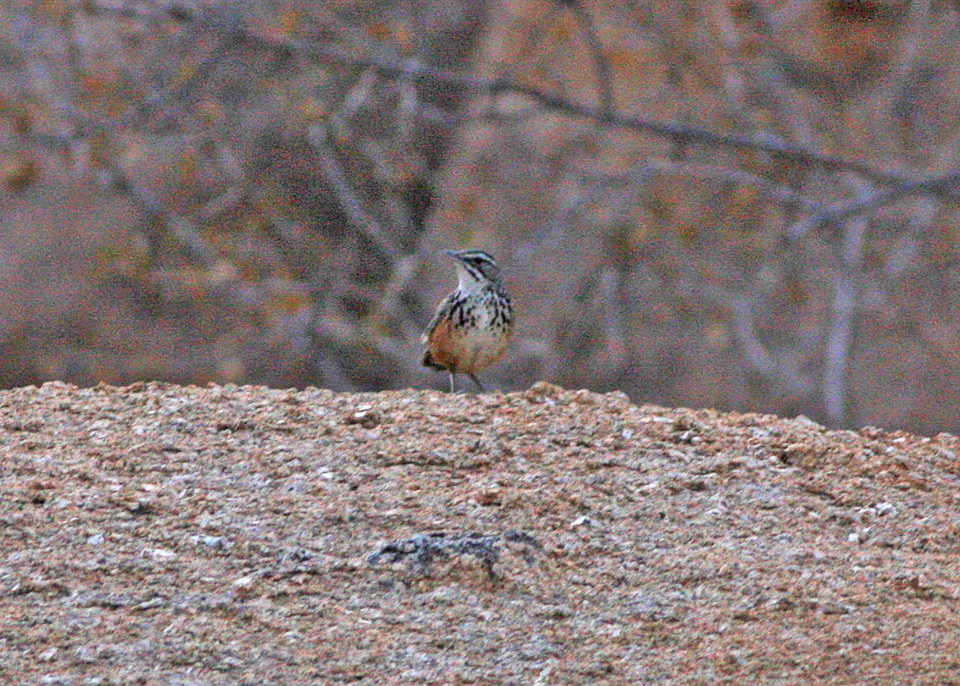
The Cape Crombec is easily recognized by its small size and lack of a tail, giving it a unique, rounded appearance. Adult birds exhibit a predominantly brownish-olive coloration with subtle rufous tones on the underparts, particularly on the flanks and belly. These hues blend well with the dry, bushy habitats the bird frequents. There is little sexual dimorphism; both males and females share similar coloration and size, which can make them challenging to distinguish in the field. Juveniles resemble adults but feature slightly duller plumage, lacking the full vibrancy of mature birds. The Cape Crombec's short, stout bill is adapted for gleaning insects from foliage, a behavior frequently observed during its active foraging. In flight, the bird's silhouette is compact, with rapid wingbeats that allow it to dart quickly among shrubs and trees. When perched, it often assumes a horizontal posture, which, combined with its tail-less body, can make it appear almost spherical. The Cape Crombec might be confused with similar species within its range, such as the Green Crombec, but its distinct coloration and tail-less form are clear differentiators.
Having trouble telling birds apart? Upload a photo to our bird identification tool for an instant species match.
Cape Crombec Habitat and Range
Preferred Habitat
The Cape Crombec inhabits a variety of environments across its range, including dry savannas, shrublands, and open woodlands. It is frequently found in semi-arid regions with scattered trees and bushes, where it can effectively forage for insects. The bird is adaptable to different elevations, although it primarily occupies lower to mid-level areas where its preferred habitats are prevalent. Urban gardens and parks also attract the Cape Crombec, showcasing its adaptability to human-altered environments. It is less commonly associated with dense forested areas, preferring open spaces that facilitate its foraging style. Seasonal shifts in habitat preference are minimal, but some local movements occur to track food availability and nesting sites.
Geographic Range
The Cape Crombec's range extends across much of southern Africa, where it is a non-migratory resident. Its distribution includes large parts of South Africa, Namibia, Botswana, and Zimbabwe, with populations also present in Angola, Zambia, and Mozambique. This bird prefers areas with a semi-arid climate, although it can adapt to various local conditions. Population densities are higher in regions with abundant shrubs and small trees, as these provide essential resources for feeding and nesting. Unlike many other bird species, the Cape Crombec does not undertake long-distance migrations, but it may engage in local movements to exploit seasonal food sources and optimal breeding sites. This behavior ensures the bird's survival across its extensive range.
Want to know which birds visit your area? Browse our backyard birds by location guides for region-specific species lists.
What Does the Cape Crombec Eat?
The diet of the Cape Crombec primarily consists of insects and other small arthropods, which it skillfully gleans from the foliage of shrubs and trees. This bird uses its short, strong bill to probe into crevices and under leaves, capturing a variety of prey such as caterpillars, beetles, and spiders. The Cape Crombec's foraging technique involves active movement through dense vegetation, often accompanied by a series of quick hops and wing flicks to flush out hidden insects. Seasonal variations in diet are minimal as the bird remains in regions where insect availability is relatively constant throughout the year. However, during wetter months, when insect populations increase, the Cape Crombec may exploit these temporary abundance peaks to support breeding and feeding young. The bird typically forages throughout daylight hours, with activity peaking in the early morning and late afternoon when temperatures are cooler and insects are more active.
Cape Crombec Behavior and Social Structure
The Cape Crombec exhibits a solitary or pair-living social structure, rarely forming large flocks. Pairs maintain territories throughout the year, often engaging in vocalizations to assert their presence. Territorial disputes may occur, marked by chases and vocal duels. During the breeding season, males perform simple courtship displays that include singing from conspicuous perches and presenting food to females. The Cape Crombec is diurnal, with activity concentrated during daylight hours. It spends much of its time foraging within its territory, using its agility to navigate densely vegetated areas. When threatened by predators, the Cape Crombec relies on rapid movement and its ability to hide within thick foliage. It employs a repertoire of alarm calls to alert mates of danger. While it does not form large flocks, it may join mixed-species foraging groups, particularly during non-breeding periods, to increase foraging efficiency and predator vigilance.
Cape Crombec Nesting and Reproduction
The Cape Crombec builds its nest in a variety of locations, often selecting thorny bushes or trees that provide protection from predators. Its nests are compact, cup-shaped structures constructed from fine grasses, plant fibers, and spider webs, skillfully woven to create a sturdy cradle for eggs. The female typically lays a clutch of 2 to 3 eggs, which are incubated for approximately 13 to 15 days. Both parents participate in incubation, although the female often takes on a more significant role. Upon hatching, the chicks are altricial, requiring constant care and feeding by both parents. The fledging period lasts around 14 to 17 days, after which the young birds gradually gain independence. The Cape Crombec may raise multiple broods per year, particularly in regions with prolonged warm and wet seasons that support abundant food resources.
Cape Crombec Sounds and Vocalizations
The Cape Crombec's primary song is a series of high-pitched, melodious notes delivered in rapid succession, reminiscent of a soft trill. This song serves as a territorial declaration and courtship display, often heard during the breeding season. Its call notes include sharp, metallic 'tsip' sounds used in communication between mates or to alert others of potential threats. When alarmed, the Cape Crombec emits a more urgent, staccato series of calls that resemble the sound of a small bell being rung quickly. During the dawn chorus, its song can be distinguished from other species by its rapid rhythm and clear tonal quality. The Cape Crombec's vocalizations are crucial for maintaining pair bonds and coordinating activities among mates.
Interesting Facts About the Cape Crombec
- 1The Cape Crombec is one of the few birds adapted to a tail-less life, enhancing its mobility in dense vegetation.
- 2Despite its small size, the Cape Crombec can cover extensive ground rapidly, utilizing its agile flight to navigate its environment.
- 3The Cape Crombec's nests are often so well-hidden in thorny bushes that they are challenging for both predators and researchers to find.
- 4Its song, a rapid series of high-pitched notes, is vital for territory establishment and attracting mates.
- 5Unlike many birds, the Cape Crombec does not migrate, staying within its range year-round and adapting to local seasonal changes.
- 6The Cape Crombec's foraging style involves rapid movements and frequent wing flicks to flush out insects, a behavior unique to its habitat.
- 7Although it forms pairs, the Cape Crombec may join mixed-species flocks outside the breeding season, benefiting from group foraging dynamics.
Cape Crombec Conservation Status
The Cape Crombec is currently listed as Least Concern by the IUCN, with stable population trends across its range. While habitat loss due to agricultural expansion and urbanization poses potential threats, this bird's adaptability reduces its vulnerability. Conservation efforts focus on maintaining natural habitats and promoting sustainable land use practices. Historically, the Cape Crombec has shown resilience to environmental changes, ensuring its continued presence in diverse African landscapes. Monitoring population trends and habitat conditions remains essential to ensure this species does not face increased risks in the future.
Other Macrosphenidae Species


Birds Similar to the Cape Crombec
These species are often confused with the Cape Crombec due to similar appearance or overlapping range.

