
Green Crombec
Sylvietta virens
Order: Passeriformes / Family: Macrosphenidae

Wikimedia Commons
About the Green Crombec
The Green Crombec (Sylvietta virens) stands out as a distinctive member of the family Macrosphenidae, primarily inhabiting the lush forests of sub-Saharan Africa. This diminutive bird is immediately recognizable by its near-absence of a tail, a unique feature that sets it apart from many of its avian neighbors. It plays a significant role in the ecosystem, particularly through its insectivorous diet which helps control insect populations. The Green Crombec thrives in a variety of forested environments, ranging from moist lowland forests to secondary growth and wooded savannas. These habitats are crucial for maintaining its population, providing both food resources and nesting sites.
In terms of distribution, the Green Crombec is widely found across West and Central Africa, with significant populations in countries such as Nigeria, Cameroon, Gabon, and the Democratic Republic of the Congo. Seasonal behavior of the Green Crombec is relatively stable, as it does not migrate but rather shifts within its habitat depending on food availability and breeding needs. This bird is often found in pairs or small family groups, which enhances its foraging efficiency and provides stability during breeding seasons.
Ecologically, the Green Crombec contributes to the health of forest ecosystems by controlling insect populations, which in turn supports the growth and regeneration of vegetation. Its presence is an indicator of forest health, and conservation of its habitat is crucial for the preservation of biodiversity in these regions. Due to its dependence on forested environments, deforestation poses a significant threat, underscoring the importance of ongoing conservation efforts to protect these vital ecosystems.
The Green Crombec belongs to the family Macrosphenidae, within the order Passeriformes. These birds typically live approximately 5 years, with some living up to 8 years..
How to Identify a Green Crombec
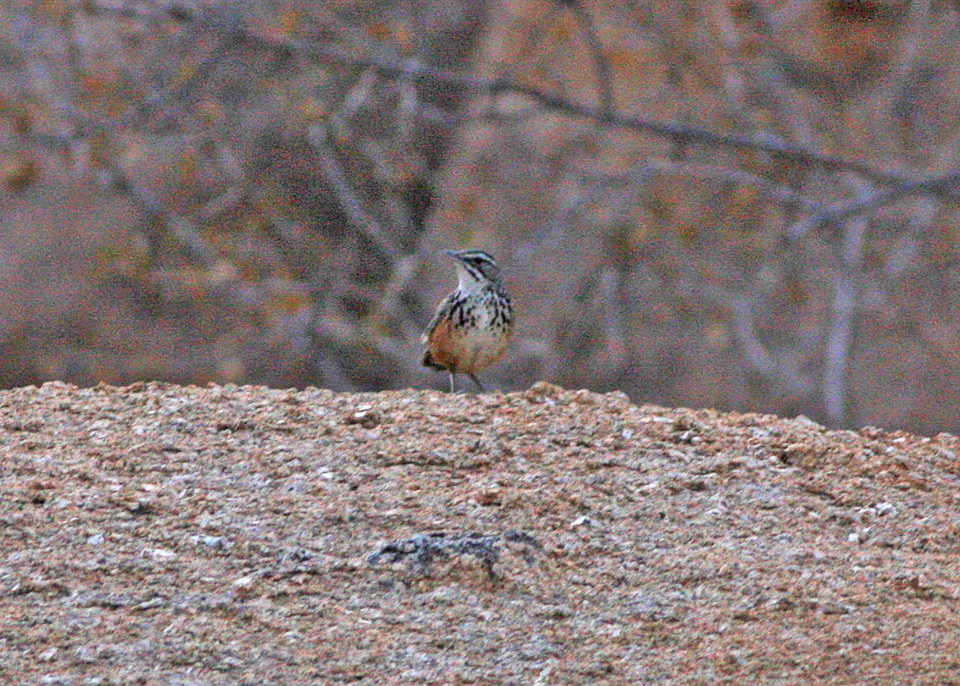
Identifying the Green Crombec involves noting its small size, roughly 10 cm in length, with a uniformly green upper body and pale underparts. The lack of a noticeable tail is a key field mark. Adult plumage is consistent across both sexes, with no significant dimorphism. Juveniles may appear slightly duller, but overall, the plumage remains consistent with adults. The Green Crombec's bill is short and slightly curved, well-suited for its insect diet. In the field, it can be confused with other small greenish birds, but its distinct lack of a tail and specific calls usually prevent misidentification. When observing in flight, the Green Crombec exhibits a quick, direct flight pattern, often remaining low in the underbrush. While perching, it often assumes a horizontal posture, clinging close to branches as it searches for food.
Having trouble telling birds apart? Upload a photo to our bird identification tool for an instant species match.
Green Crombec Habitat and Range
Preferred Habitat
The Green Crombec predominantly inhabits tropical and subtropical forests. It prefers dense, evergreen forests but is also found in deciduous woodlands and secondary growth areas. Within these habitats, it occupies the understory and mid-story where it can forage efficiently. In regions like Nigeria and Cameroon, it is often found at elevations ranging from sea level to about 1,500 meters. Although primarily a rural species, it can occasionally be observed in urban parks and gardens that maintain significant tree cover. Unlike some other forest birds, the Green Crombec does not exhibit significant seasonal habitat shifts, remaining within its forested range year-round.
Geographic Range
The Green Crombec is largely a resident bird of the African tropical rainforest belt. Its breeding range extends across countries such as Nigeria, Cameroon, Gabon, and the Democratic Republic of the Congo. It is commonly found throughout the Congo Basin, where the forest habitats provide ample resources for breeding and foraging. It does not undertake long-distance migrations but may disperse locally within its range in response to food availability or habitat changes. Population density tends to be higher in undisturbed forest areas, with lower densities in fragmented or degraded habitats. The presence of the Green Crombec is often a reliable indicator of healthy forest ecosystems in these regions.
Want to know which birds visit your area? Browse our backyard birds by location guides for region-specific species lists.
What Does the Green Crombec Eat?
The diet of the Green Crombec primarily consists of insects and other small arthropods. It forages actively in the underbrush, using its keen eyesight to search for prey among leaves and branches. Its short, curved bill is adept at picking small insects from foliage. Seasonal variations in its diet are minimal, though it may occasionally supplement its insect diet with small fruits or seeds, particularly during periods of lower insect availability. The Green Crombec typically feeds throughout the day, with peak activity observed in the early morning and late afternoon when insect activity is highest. It employs a methodical foraging technique, often working systematically through patches of vegetation.
Green Crombec Behavior and Social Structure
The Green Crombec exhibits a largely social structure, often seen in pairs or small family groups. It is territorial, especially during the breeding season, when pairs defend their chosen nesting sites vigorously. Courtship displays are subtle, involving synchronized movements between the pair and coordinated calls. Unlike many other passerines, the Green Crombec does not form large flocks, but maintains small, cohesive groups that facilitate efficient foraging and predator vigilance. In response to predators, the Green Crombec relies on its cryptic plumage and quick, darting flight to evade capture. Its daily activity patterns include periods of intense foraging interspersed with rest and social interactions.
Green Crombec Nesting and Reproduction
The Green Crombec constructs a compact, cup-shaped nest, often hidden among dense foliage in the mid-story of forests. Nests are typically built from fine grasses, leaves, and spider webs, providing camouflage and stability. Preferred nesting sites include forked branches or dense thickets. The typical clutch size ranges from two to three eggs, which are incubated by both parents over a period of approximately 14 days. Fledging occurs about 17 days after hatching, with both parents continuing to feed and care for the young. The Green Crombec may raise one to two broods per year, depending on environmental conditions and food availability.
Green Crombec Sounds and Vocalizations
The song of the Green Crombec is a rapid series of high-pitched notes, often described as a tinkling sequence that can be heard during territorial displays and pair bonding. Its call notes are short and sharp, serving as communication between family groups. In moments of alarm, the Green Crombec emits a quick, repetitive chittering sound, alerting its companions to potential threats. During the dawn chorus, its song blends into the forest soundscape, adding to the symphony of bird calls that characterize these environments.
Interesting Facts About the Green Crombec
- 1The Green Crombec is one of the few bird species that lacks a noticeable tail, adapting perfectly to its dense forest habitat.
- 2Despite its small size, the Green Crombec plays a crucial role in controlling insect populations, showcasing the importance of even the smallest birds in ecosystem balance.
- 3The species is a year-round resident of its range, making it a reliable indicator of forest health in sub-Saharan Africa.
- 4Its song, a series of tinkling notes, is often one of the first sounds heard at dawn in its forest habitat.
- 5Green Crombecs are known for their agility and ability to move swiftly through dense foliage, thanks to their compact size and lack of a long tail.
- 6The bird's scientific name, Sylvietta virens, reflects its vibrant plumage with 'virens' meaning green, highlighting its distinctive coloration.
- 7The Green Crombec's nesting strategy involves camouflaging its nest with local materials, providing a clever defense against predators.
Green Crombec Conservation Status
The Green Crombec is currently listed as Least Concern by the IUCN, with populations considered stable across much of its range. However, ongoing deforestation and habitat fragmentation pose significant threats, potentially impacting future population trends. Conservation efforts focus on preserving large tracts of forest and promoting sustainable land use practices. Historical data suggests that while populations have fluctuated in response to habitat changes, the species has shown resilience in adapting to secondary growth and managed forests. Continued conservation attention is essential to ensure the long-term survival of this and other forest-dependent species.
Other Macrosphenidae Species


Birds Similar to the Green Crombec
These species are often confused with the Green Crombec due to similar appearance or overlapping range.

