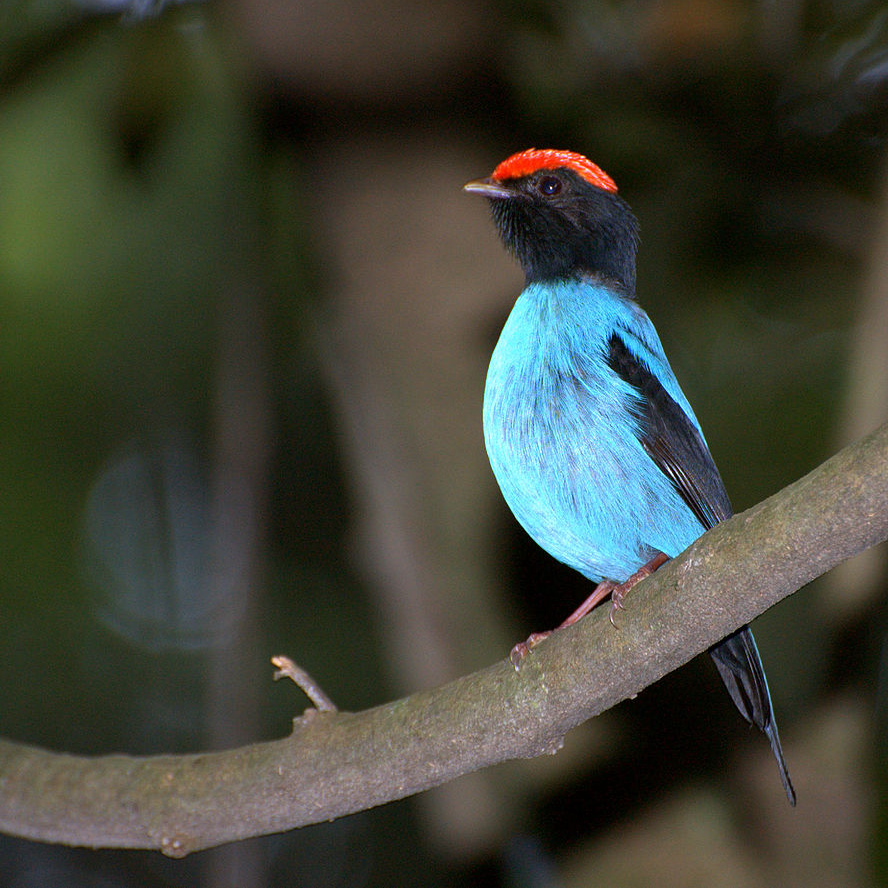
Cerulean-capped Manakin
Lepidothrix coeruleocapilla
Order: Passeriformes / Family: Pipridae

Wikimedia Commons
About the Cerulean-capped Manakin
The Cerulean-capped Manakin, scientifically known as Lepidothrix coeruleocapilla, is a small passerine bird that captivates observers with its brilliant blue crown. This species belongs to the family Pipridae and is native to the humid forests of South America, specifically the eastern slopes of the Andes in Peru. It is a part of the varied and charismatic manakin family, known for their vibrant plumage and complex mating displays. The ecological role of the Cerulean-capped Manakin involves acting as both a pollinator and seed disperser, thanks to its diet that includes a variety of fruits.
In the verdant understories of montane and lowland tropical forests, this bird plays a significant role in the ecosystem. The Cerulean-capped Manakin is particularly significant due to its restricted range and the specificity of its habitat, making it a species of interest for conservationists. The bird's presence indicates a healthy, biodiverse forest ecosystem, and its behavior influences the dynamics of fruiting plant species in its environment.
Seasonal behaviors of the Cerulean-capped Manakin include shifts in foraging patterns and a distinct breeding season. During the breeding season, males perform elaborate courtship displays that are integral to their mating rituals. These displays often involve acrobatic flights and a series of calls to attract females. The bird's ecological importance is further underscored by its interactions with other species within its habitat, including competition with other fruit-eating birds and potential predation by raptors and other forest predators.
The Cerulean-capped Manakin belongs to the family Pipridae, within the order Passeriformes. These birds typically live 4 years on average, with some individuals known to live up to 7 years..
How to Identify a Cerulean-capped Manakin
The Cerulean-capped Manakin is easily identified by its striking cerulean blue crown, which sets it apart from similar species. Adult males display this vivid blue cap along with a predominantly black body, creating a stark contrast that is unmistakable in its native habitat. Females, on the other hand, have a more subdued appearance with olive-green plumage overall, lacking the bright crown but still maintaining a subtle elegance. Juvenile birds often resemble females in coloration until they reach maturity.
This species might be confused with other manakins, such as the Opal-crowned Manakin, but the latter's crown is a distinctive opalescent white rather than blue. The Cerulean-capped Manakin has a compact body and short tail, typical of the manakin family, and often perches upright in dense foliage. In flight, its short wings and rapid wingbeats produce a characteristic buzzing sound, aiding in identification.
When perched, this manakin exhibits a stocky posture with a slight forward tilt, often using its short tail for balance. The male's striking coloration becomes a key field mark during the breeding season when it is most visible as the bird engages in its showy displays.
Having trouble telling birds apart? Upload a photo to our bird identification tool for an instant species match.
Cerulean-capped Manakin Habitat and Range
Preferred Habitat
The Cerulean-capped Manakin primarily inhabits the humid lowland and montane forests of eastern Peru. These dense forests provide the ideal environment rich in fruiting trees and ample cover from potential predators. Typically found at elevations ranging from 500 to 1500 meters, this manakin prefers areas with a dense understory where it can forage and display.
Seasonally, the Cerulean-capped Manakin may exhibit slight shifts in habitat use, particularly during the breeding season when males seek out specific display sites within the forest. While this bird is generally a resident species, it may undertake local movements to exploit fruiting resources as they become seasonally available. Unlike some manakins, it does not frequent urban areas, maintaining a preference for undisturbed forest habitats.
In rural environments, the Cerulean-capped Manakin can be a more common presence, especially in regions where forest habitats remain intact. However, habitat fragmentation poses a significant threat, limiting the availability of suitable environments for this species.
Geographic Range
The range of the Cerulean-capped Manakin is primarily confined to the eastern slopes of the Andes in Peru, making it an endemic species with a relatively restricted distribution. Within this region, the bird occupies a narrow band of humid forests that stretch along the Andean foothills. This limited range contributes to its classification as a species of concern in terms of conservation.
The Cerulean-capped Manakin is a resident bird, showing little evidence of long-distance migration. However, it may engage in altitudinal movements within its range, particularly in response to seasonal changes in food availability. During the breeding season, the bird's presence becomes more concentrated in areas with suitable display sites and nesting opportunities.
Population density tends to be highest in regions where the forest remains largely undisturbed by human activities. Despite its limited range, pockets of suitable habitat provide critical refuges for this species, emphasizing the importance of preserving these areas to maintain healthy population levels.
Want to know which birds visit your area? Browse our backyard birds by location guides for region-specific species lists.
What Does the Cerulean-capped Manakin Eat?
The diet of the Cerulean-capped Manakin primarily consists of small fruits and berries, which it forages from the forest understory and mid-canopy. This frugivorous diet is supplemented by small insects, particularly during the breeding season when protein requirements increase. The bird's feeding schedule is largely dictated by the availability of ripe fruits, leading to periods of active foraging interspersed with rest.
Seasonal changes in fruiting patterns of forest trees and shrubs influence the dietary habits of the Cerulean-capped Manakin. During peak fruiting times, the bird can become highly localized in areas with abundant food sources. The manakin employs a variety of foraging techniques, including hovering to pluck fruits from branches and short sallying flights to capture insects in mid-air.
Prey size for the insect component of its diet is typically small, with a preference for soft-bodied insects such as caterpillars and flying ants. This dietary flexibility allows the Cerulean-capped Manakin to adapt to seasonal fluctuations in food availability, maintaining its energy balance throughout the year.
Cerulean-capped Manakin Behavior and Social Structure
The Cerulean-capped Manakin exhibits fascinating social and territorial behaviors, particularly during the breeding season when males engage in elaborate courtship displays. These displays involve rapid wingbeats, acrobatic flights, and distinctive vocalizations aimed at attracting females and establishing dominance among rival males.
Socially, the Cerulean-capped Manakin is not highly gregarious outside of the breeding season, often found alone or in pairs foraging for fruits in the dense forest understory. Territorial behavior becomes more pronounced as males establish and defend display sites from which they perform their courtship rituals. These sites, often used year after year, are critical for successful mating.
In response to predators, the Cerulean-capped Manakin relies on its agile flight and dense forest cover for protection. It may give alarm calls to alert other birds of potential threats, though its small size makes it less conspicuous than larger species. Daily activity patterns include active foraging during the cooler morning and late afternoon hours, with periods of rest during the heat of midday.
Cerulean-capped Manakin Nesting and Reproduction
The Cerulean-capped Manakin constructs a delicate cup-shaped nest, typically made from fine plant fibers, moss, and spider silk, which provides both strength and flexibility. These nests are usually placed in the forks of small trees or shrubs within the forest understory, providing concealment from predators.
Clutch size is generally two eggs, with an incubation period of approximately 18 to 21 days. The female assumes primary responsibility for incubating the eggs, while the male's role is largely restricted to courtship and territory defense. Once the eggs hatch, both parents may participate in feeding the chicks, although the extent of male involvement can vary.
Fledging occurs about 15 to 20 days after hatching, with young birds remaining hidden in dense foliage until they are capable of sustained flight. The Cerulean-capped Manakin typically raises one brood per year, although favorable conditions may occasionally allow for a second.
Cerulean-capped Manakin Sounds and Vocalizations
The Cerulean-capped Manakin produces a series of short, melodic whistles that serve as its primary song. These whistles, characterized by a clear, rising pitch, often form part of the bird's courtship displays. The song, though not as complex as that of some other manakins, is distinctive and aids in territory establishment.
In addition to its song, the Cerulean-capped Manakin uses various call notes, including sharp 'tik' sounds, to communicate with other members of its species. Alarm calls are more abrupt and can be heard when the bird is disturbed by potential threats.
During the dawn chorus, the Cerulean-capped Manakin's song contributes to the symphony of sounds in the tropical forest, though its voice is softer and less penetrating than some of its larger counterparts. The overall quality of its vocalizations is smooth and flute-like, with a rhythm that is both soothing and repetitive.
Interesting Facts About the Cerulean-capped Manakin
- 1The Cerulean-capped Manakin's blue crown is not a pigment but a structural color created by microscopic feather structures.
- 2Manakins, including the Cerulean-capped Manakin, are known for their acrobatic courtship displays, some of which resemble a dance.
- 3Despite its small size, the Cerulean-capped Manakin plays a crucial role in seed dispersion, aiding forest regeneration.
- 4The bird's courtship displays can involve up to 300 wingbeats per second, rivaling the speed of hummingbirds.
- 5The Cerulean-capped Manakin's habitat is limited to a narrow range in Peru, making it an important indicator of forest health.
- 6This manakin is part of a family known for its bright colors and complex behaviors, numbering over 60 species.
- 7The Cerulean-capped Manakin's flight is so rapid and buzzing that it has been likened to the sound of a bee.
Cerulean-capped Manakin Conservation Status
The IUCN currently lists the Cerulean-capped Manakin as Near Threatened, with population trends showing a general decline due to habitat loss. Primary threats to this species include deforestation and habitat fragmentation, driven by agricultural expansion and logging activities in its limited range. Conservation efforts focus on protecting remaining forest habitats and promoting sustainable land-use practices. Organizations are working to establish protected areas and corridors that facilitate movement and genetic exchange between populations. Historical population changes highlight the vulnerability of the Cerulean-capped Manakin to environmental pressures, requiring ongoing monitoring and research to ensure its survival. Promoting awareness and community involvement in conservation initiatives is crucial for maintaining the ecological integrity of the bird's habitat. Continued efforts to mitigate habitat destruction and support biodiversity conservation could help stabilize or even increase the Cerulean-capped Manakin population in the future.