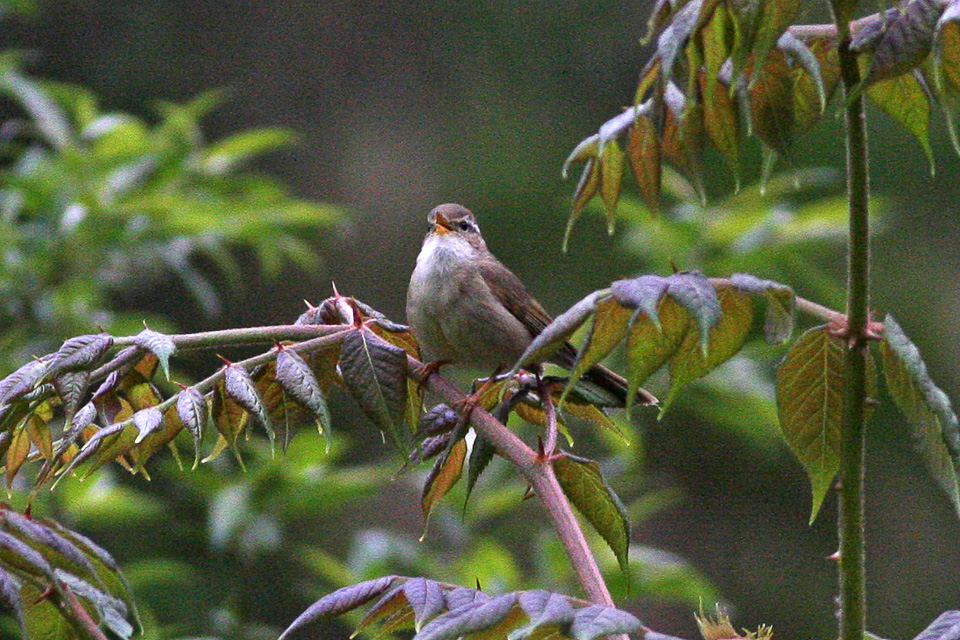
Chestnut-crowned Warbler
Seicercus castaniceps
Order: Passeriformes / Family: Phylloscopidae

Wikimedia Commons
About the Chestnut-crowned Warbler
The Chestnut-crowned Warbler (Seicercus castaniceps) is a small, agile bird primarily found in montane forests of Asia. Known for its distinctive chestnut-colored crown, this warbler plays a vital role in the ecosystem as an insect predator. The species is prevalent in regions such as the Himalayas, extending through the forests of Nepal, Bhutan, and Northern India, reaching parts of China, Thailand, and Myanmar. These birds thrive in dense undergrowth and bamboo thickets, often at elevations between 1,500 and 3,000 meters. During winter, some populations descend to lower altitudes, seeking refuge in warmer climes. The Chestnut-crowned Warbler is significant for its role in controlling insect populations, contributing to the ecological balance within its habitat. Its presence indicates a healthy forest ecosystem. Observing this warbler often involves spotting its quick, darting movements among leaves as it searches for insects. The Chestnut-crowned Warbler is also noted for its vivacious song, a series of sharp, melodious notes that resonate through the forest. This vocalization, along with its active foraging behavior, makes it an essential component of its avian community. As a migratory species, it showcases a fascinating seasonal behavior pattern, moving in response to changes in temperature and food availability. The warbler's adaptability to different forest types, from subtropical to temperate, highlights its ecological versatility. Its interactions with other bird species, particularly during migration, can influence local bird populations. This interaction is especially important in mixed-species flocks, where the Chestnut-crowned Warbler is known to participate, enhancing its survival through cooperative behaviors. The continuity of suitable forest habitats is crucial for the survival of the Chestnut-crowned Warbler, as deforestation poses a significant threat to its population. Conservation efforts focus on preserving these habitats to ensure the species' longevity.
The Chestnut-crowned Warbler belongs to the family Phylloscopidae, within the order Passeriformes. These birds typically live typically 3-5 years, with some individuals reaching up to 7 years.
How to Identify a Chestnut-crowned Warbler
The Chestnut-crowned Warbler is a small bird, measuring about 11 cm in length, with a wingspan of approximately 18 cm. Its most distinguishing feature is the rich chestnut crown that contrasts with its olive-green upperparts and yellowish underparts. The bird displays a subtle yellowish eye-ring, which adds to its distinctive look. Unlike many birds, there is little sexual dimorphism in the Chestnut-crowned Warbler; males and females share similar plumage. Juveniles, however, may appear slightly duller, lacking the vibrant chestnut hue seen in adults. In flight, this warbler exhibits rapid, flitting movements, with a somewhat rounded silhouette. The Chestnut-crowned Warbler can be confused with similar species such as the Black-faced Warbler, but the latter lacks the prominent chestnut crown. Observers can distinguish the Chestnut-crowned Warbler by its unique combination of plumage colors and active foraging behavior. When perched, it often holds its body horizontally, with its tail slightly cocked, aiding in identification.
Having trouble telling birds apart? Upload a photo to our bird identification tool for an instant species match.
Chestnut-crowned Warbler Habitat and Range
Preferred Habitat
Chestnut-crowned Warblers inhabit montane and submontane forests, favoring dense undergrowth and bamboo thickets. They are commonly found at elevations ranging from 1,500 to 3,000 meters, thriving in the cool, moist conditions typical of these altitudes. During winter, some populations migrate to lower elevations, inhabiting subtropical forests where temperatures are milder. Though primarily forest-dwellers, they occasionally venture into secondary growth areas and forest edges. This adaptability allows them to exploit a variety of forest types, from subtropical to temperate regions. Urban presence is minimal, as they prefer undisturbed forest habitats over heavily populated areas.
Geographic Range
The Chestnut-crowned Warbler's range spans across several countries in Asia. Breeding populations are concentrated in the Himalayan regions, including Nepal, Bhutan, and Northern India. Their range extends eastward through parts of Southeast Asia, such as Myanmar, Thailand, and into southern China. During the non-breeding season, some populations migrate to lower altitudes, spreading into broader areas of the region. Specific hotspots include the forests of Sikkim and Arunachal Pradesh in India, where population densities are relatively high. Migration corridors generally follow altitudinal paths, allowing the warbler to access different habitats seasonally.
Want to know which birds visit your area? Browse our backyard birds by location guides for region-specific species lists.
What Does the Chestnut-crowned Warbler Eat?
The diet of the Chestnut-crowned Warbler primarily consists of insects, making it an effective insectivore. It forages actively among leaves and branches, employing a quick, darting motion to capture prey. This warbler's diet varies seasonally with prey availability, shifting from small insects like caterpillars and beetles in summer to spiders and other arthropods in fall and winter. Their foraging technique is characterized by gleaning, where they inspect foliage meticulously. They predominantly hunt during the early morning and late afternoon, aligning their feeding schedule with peak insect activity. The size of prey typically ranges from 2 to 10 mm, suitable for their small bills and agile hunting style.
Chestnut-crowned Warbler Behavior and Social Structure
Chestnut-crowned Warblers are highly social, often seen in mixed-species flocks, particularly during migration. This behavior offers protection against predators and increases foraging efficiency. They exhibit territorial behavior in the breeding season, with males singing vigorously to defend their territories. Courtship displays include fluttering flights and singing to attract females. Flocking patterns change with the seasons, as they join larger groups in non-breeding months. These warblers are diurnal, with peak activity during dawn and dusk. When faced with predators, they rely on dense foliage for cover and emit sharp alarm calls to alert other birds. Their daily routine includes periods of intense foraging interspersed with rest and grooming.
Chestnut-crowned Warbler Nesting and Reproduction
The nesting behavior of the Chestnut-crowned Warbler involves constructing cup-shaped nests made from moss, leaves, and grass. Nests are typically located on the ground or in low shrubs, well-hidden among vegetation. Clutch size ranges from 3 to 5 eggs, which are incubated by the female for about 12 to 14 days. Both parents participate in feeding the chicks, which fledge approximately 10 to 12 days after hatching. This species may produce one to two broods per year, depending on environmental conditions. Nesting success relies heavily on habitat quality, with dense undergrowth providing necessary protection from predators.
Chestnut-crowned Warbler Sounds and Vocalizations
The primary song of the Chestnut-crowned Warbler consists of a series of high-pitched, melodic notes, delivered in rapid succession. This song is often described as bright and cheerful, serving as a territorial and mate attraction call. Their call notes are sharp and distinctive, often used in communication within flocks. Alarm calls are shorter and more abrupt, designed to warn others of potential threats. During the dawn chorus, their song is particularly prominent, adding to the vibrant soundscape of their forest habitat. The warbler's vocalizations are crucial for maintaining social bonds and territory.
Interesting Facts About the Chestnut-crowned Warbler
- 1The Chestnut-crowned Warbler can often be heard singing at dawn, contributing to the forest's morning chorus.
- 2Despite its small size, the Chestnut-crowned Warbler can cover impressive distances during seasonal migrations.
- 3This warbler's diet consists mainly of insects, playing a crucial role in controlling pest populations.
- 4The Chestnut-crowned Warbler's nests are expertly camouflaged, blending seamlessly with the forest floor.
- 5With a rapid, flitting flight, these warblers are a delightful sight for birdwatchers in their native habitats.
- 6Participating in mixed-species flocks allows the Chestnut-crowned Warbler to reduce predation risks.
- 7Their distinctive chestnut crown makes them a favorite among birders seeking visually striking species.
Chestnut-crowned Warbler Conservation Status
The Chestnut-crowned Warbler is currently listed as Least Concern by the IUCN, with a stable population trend. However, habitat loss due to deforestation poses a significant threat, particularly in areas where logging and agricultural expansion are prevalent. Conservation efforts focus on habitat preservation and the establishment of protected areas to ensure the species' long-term survival. Historical data indicate that while populations have remained stable, continued habitat degradation could lead to declines. Efforts to curb deforestation and promote sustainable land-use practices are crucial for maintaining healthy populations of this and other forest-dependent species.