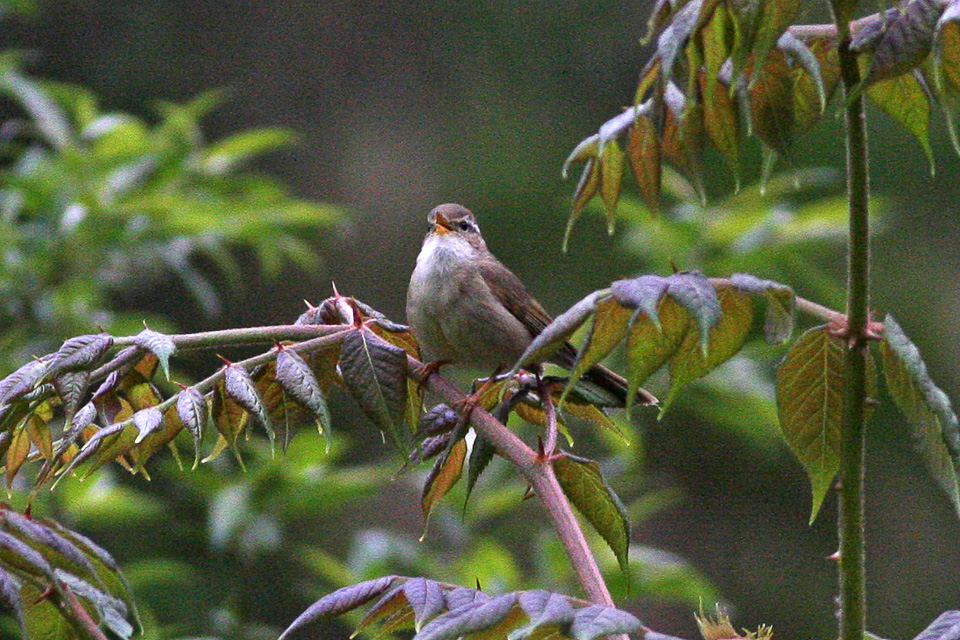
Common Chiffchaff
Phylloscopus collybita
Order: Passeriformes / Family: Phylloscopidae

Wikimedia Commons
About the Common Chiffchaff
The Common Chiffchaff, scientifically known as Phylloscopus collybita, is a small passerine bird that belongs to the family Phylloscopidae. This species is a classic example of a widespread and adaptable warbler, occurring across much of Europe and parts of Asia. Known for its distinctive 'chiff-chaff' song, the bird plays a critical role in the ecosystem as both a consumer of insects and a prey species for larger birds. Found predominantly in temperate regions, the Chiffchaff's range extends from the British Isles in the west to Siberia in the east. It frequents woodlands, shrubs, and gardens, thriving in both deciduous and mixed forests where it can find ample food and nesting opportunities. The ecological significance of the Common Chiffchaff is underscored by its role in controlling insect populations, which helps maintain a balanced ecosystem. The bird's seasonal movements are also notable. While many European populations migrate to the Mediterranean region, North Africa, and the Middle East during the winter months, some individuals, especially in western Europe, remain resident. This migratory behavior is influenced by climatic conditions and food availability, illustrating the Chiffchaff's adaptability. During the breeding season, which stretches from March to July, the Common Chiffchaff establishes territories in woodlands and gardens. The males arrive first, singing persistently to attract females and deter rivals. Their song, a simple yet persistent 'chiff-chaff-chiff-chaff,' is a familiar sound in springtime forests and serves both as a mating call and a territorial marker. The Chiffchaff's adaptability and resilience make it an important species for studying the impacts of climate change on migratory patterns and habitat use. In summary, the Common Chiffchaff is not only a delightful presence in many natural settings but also a valuable indicator of environmental health.
The Common Chiffchaff belongs to the family Phylloscopidae, within the order Passeriformes. These birds typically live average 2-4 years with a maximum recorded of 7 years..
How to Identify a Common Chiffchaff
The Common Chiffchaff is a small bird, measuring about 10 to 12 centimeters in length with a wingspan ranging from 15 to 21 centimeters. Adults display a predominantly olive-brown plumage with a paler underside, which can appear slightly yellowish. The bird's legs are typically dark brown or black, providing a contrast against its lighter body. One of the key field marks of the Chiffchaff is its supercilium, or 'eyebrow' stripe, which is usually less pronounced than that of similar species like the Willow Warbler. Juveniles resemble adults but are generally duller in color with a more pronounced yellow wash across the chest. Unlike some other warbler species, there is little sexual dimorphism in the Chiffchaff, meaning males and females look alike. However, males tend to be slightly larger. The bird's flight pattern is characterized by quick, fluttery movements, often interspersed with short glides. When perched, the Chiffchaff often flicks its tail downward, a behavioral trait that can aid in its identification. Confusion with the Willow Warbler, a close relative, is common due to similar size and coloration, but the Chiffchaff's duller plumage and distinctive song are useful distinguishing factors.
Having trouble telling birds apart? Upload a photo to our bird identification tool for an instant species match.
Common Chiffchaff Habitat and Range
Preferred Habitat
Common Chiffchaffs inhabit a variety of woodland environments, preferring deciduous and mixed forests, especially those with dense undergrowth. They thrive in areas with ample shrubs and bushes, which provide both food and nesting sites. These birds are often found at elevations up to 2,000 meters, depending on local vegetation and climate. While primarily forest dwellers, Chiffchaffs have adapted well to human-modified landscapes, commonly occurring in parks and gardens, particularly during migration. In urban settings, they are often observed in areas with ample green space. Seasonal habitat shifts are apparent as Chiffchaffs move from breeding territories in temperate forests to wintering grounds in more open, scrubby areas across the Mediterranean, North Africa, and parts of the Middle East.
Geographic Range
The breeding range of the Common Chiffchaff extends across much of Europe and into western and central Asia. This includes countries from the UK and Ireland eastward to Russia, and southward to France, Italy, and the Balkans. In winter, the bird migrates to southern Europe, North Africa, and the Middle East, with some populations reaching as far as India. The Chiffchaff's migratory corridors are well-established, with significant numbers passing through regions such as the Iberian Peninsula and the Balkans. Population density hotspots include the UK, where the bird is a common breeder, and North Africa, where many European Chiffchaffs spend the winter. The species' adaptability to different climates and habitats contributes to its broad and somewhat overlapping range, showcasing its resilience to environmental variations.
Want to know which birds visit your area? Browse our backyard birds by location guides for region-specific species lists.
What Does the Common Chiffchaff Eat?
The diet of the Common Chiffchaff consists mainly of small insects and other invertebrates, such as caterpillars, aphids, and spiders. During the breeding season, the demand for protein-rich food increases, leading Chiffchaffs to forage extensively among leaves and branches where prey is abundant. They employ a gleaning technique, picking insects off foliage with precision. As seasons change and insect availability declines, Chiffchaffs supplement their diet with berries and seeds. This dietary flexibility allows them to adapt to different ecological conditions across their migratory range. Feeding primarily occurs during daylight hours, with peak activity in the early morning and late afternoon. The bird's small size enables it to exploit a niche feeding strategy, capturing prey that larger birds might overlook.
Common Chiffchaff Behavior and Social Structure
The Common Chiffchaff exhibits a range of behaviors that are characteristic of its species. Socially, Chiffchaffs are generally solitary outside of the breeding season, though they may form loose flocks during migration. Territoriality is pronounced in males during the breeding season. They establish and defend territories through song and display, aiming to attract a mate and ward off competitors. Courtship involves the male performing a display flight and singing persistently. In response to predators, Chiffchaffs employ a variety of alarm calls, often retreating to dense cover. Daily activity patterns are diurnal, with peak activity periods in the morning and late afternoon. The bird's incessant foraging is punctuated by periods of rest and preening, a behavior that maintains feather condition and aids in parasite control.
Common Chiffchaff Nesting and Reproduction
Common Chiffchaffs build nests that are typically located on or near the ground in dense vegetation. The nest is a domed structure made from grasses, leaves, and moss, with a side entrance. Females undertake the construction, lining the interior with feathers for insulation. The typical clutch size ranges from 4 to 7 eggs, which are white with reddish-brown speckles. Incubation, conducted solely by the female, lasts about 13 to 15 days. After hatching, both parents participate in feeding the chicks. The fledging period occurs approximately 12 to 15 days post-hatching, during which the young develop rapidly. Chiffchaffs generally raise one brood per year, though in optimal conditions, a second brood may be attempted. This reproductive strategy reflects the species' adaptability and resilience.
Common Chiffchaff Sounds and Vocalizations
The Common Chiffchaff is renowned for its distinctive song, a repetitive 'chiff-chaff-chiff-chaff' which is simple yet unmistakable. The rhythm is steady, and the pitch slightly rising and falling, creating a soothing, albeit monotonous, soundscape. Chiffchaffs also produce a variety of calls, including a sharp 'hweet' used as an alarm signal. During the dawn chorus, the male's song dominates, announcing territory and attracting mates. Compared to other warblers, the Chiffchaff's vocalizations are less varied but serve their purpose in territorial and mating contexts, contributing to the bird's success as a widespread songbird.
Interesting Facts About the Common Chiffchaff
- 1The Common Chiffchaff can live up to 5 years in the wild, a notable lifespan for such a small bird.
- 2Chiffchaffs are among the earliest migrants to return to Europe in spring, often arriving as early as March.
- 3Despite their small size, Chiffchaffs undertake migrations of up to 3,000 kilometers between breeding and wintering grounds.
- 4The species name, collybita, comes from a Greek word meaning 'money-changer,' referring to the bird's repetitive song.
- 5The Chiffchaff's song is useful in identifying it from similar species like the Willow Warbler, which has a more melodious tune.
- 6In some regions, Chiffchaffs are known to hybridize with closely related species, leading to interesting genetic studies.
- 7Chiffchaffs can adapt their diet to include more plant material in winter, demonstrating their ecological flexibility.
Common Chiffchaff Conservation Status
The Common Chiffchaff is currently listed as Least Concern by the IUCN, with a stable population trend across much of its range. The primary threats to the species include habitat loss due to deforestation and urban development. Climate change also poses a potential threat, affecting the timing of migration and breeding. Conservation efforts focus on maintaining and restoring suitable habitats, particularly in breeding and wintering areas. Historically, population changes have mirrored shifts in land use and climate, but the Chiffchaff's adaptability has allowed it to persist across varied environments. Continued monitoring is essential to ensure that this resilient species remains a common sight in its wide range.