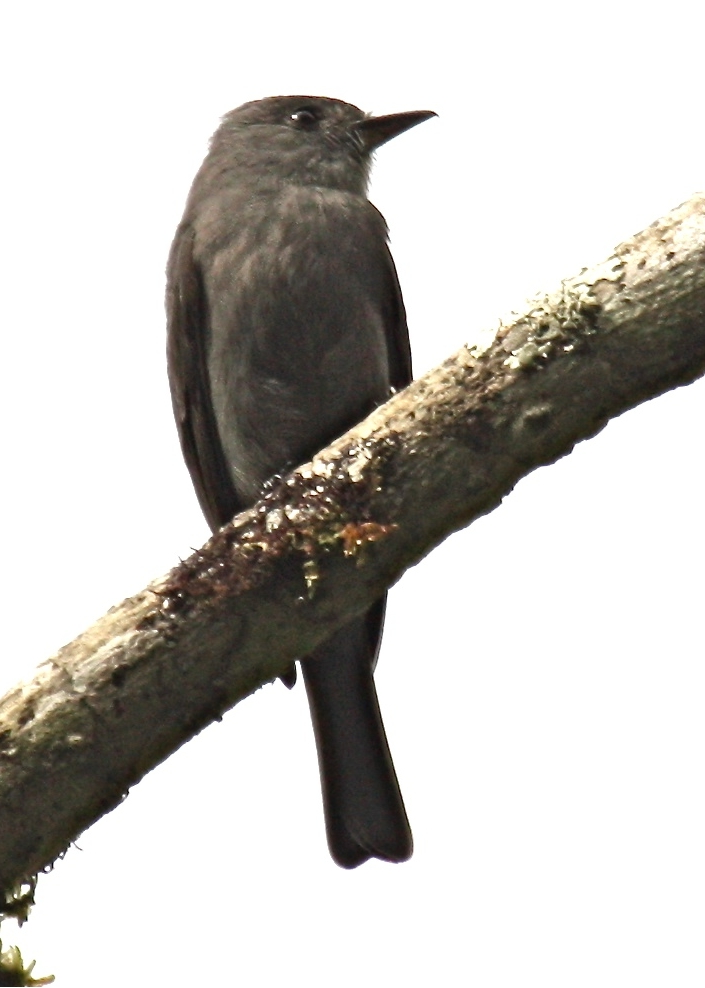
Chapman's Antshrike
Thamnophilus zarumae
Order: Passeriformes / Family: Thamnophilidae
Wikimedia Commons
About the Chapman's Antshrike
The Chapman's Antshrike, Thamnophilus zarumae, is a captivating bird species belonging to the family Thamnophilidae. This species is primarily found in the subtropical and tropical moist lowland forests of western South America, particularly in countries such as Ecuador and Peru. The Chapman's Antshrike plays a vital role in the ecosystem by helping control insect populations, as it predominantly feeds on insects and other arthropods. With a strong presence in the Chocó biogeographic region, this bird contributes to the rich biodiversity found there.
The significance of the Chapman's Antshrike lies not only in its ecological role but also in its contribution to avian diversity. Known for its distinctive vocalizations, this bird often serves as an indicator species, reflecting the health of its habitat. Conservationists and bird enthusiasts alike value the Chapman's Antshrike for its role in maintaining the ecological balance and its potential to attract ecotourism, a growing industry in regions like Ecuador's cloud forests.
Ecologically, the Chapman's Antshrike is an integral part of the forest community. It often engages in mixed-species foraging flocks, which enhances its foraging efficiency while reducing the risk of predation. During the breeding season, which typically coincides with the wet season, the Chapman's Antshrike becomes more conspicuous as males sing to defend territories and attract mates. Its presence in these regions underscores the importance of preserving intact forest habitats, as deforestation poses a significant threat to its survival.
Overall, the Chapman's Antshrike exemplifies the intricate relationships between species and their environments. Its behavior, diet, and interactions with other bird species highlight the complex dynamics of tropical forest ecosystems. As a result, understanding and protecting the habitats of the Chapman's Antshrike can lead to broader conservation successes, benefiting numerous other species that share its habitat.
The Chapman's Antshrike belongs to the family Thamnophilidae, within the order Passeriformes. These birds typically live 6-8 years, with some individuals reaching up to 10 years..
How to Identify a Chapman's Antshrike
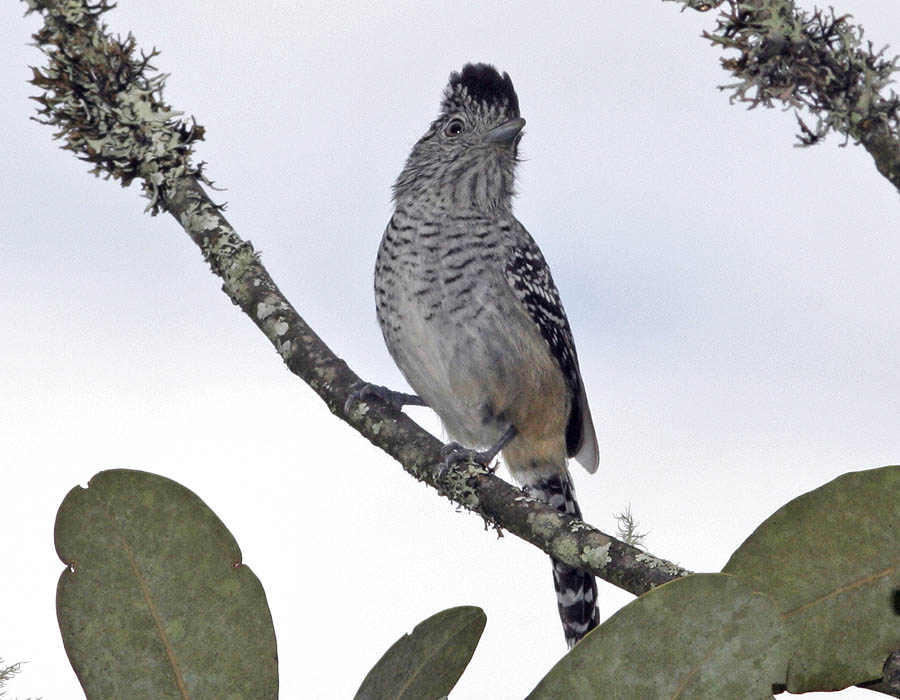
The Chapman's Antshrike is a medium-sized bird, measuring about 15 centimeters in length. Males display a striking black and white plumage, with a distinctive black cap and a white supercilium that creates an eye-catching contrast. Their wings and tail are predominantly black, adorned with white bars that are visible during flight. Females, on the other hand, exhibit a more subdued coloration, with grayish-brown upperparts and buff underparts, allowing them to blend seamlessly into their surroundings while nesting or foraging.
Juvenile Chapman's Antshrikes resemble females but tend to have a duller and more mottled appearance. Both sexes show a stout bill, well-suited for their insectivorous diet, and a strong, slightly hooked beak that aids in capturing prey. When observed in the field, the posture of the Chapman's Antshrike is often upright, with a slight tilt to the head, giving it an alert and inquisitive demeanor.
In flight, the Chapman's Antshrike reveals its broad, rounded wings and relatively short tail. These features, combined with its distinctive coloration, make it relatively easy to distinguish from other sympatric antbirds. However, observers may confuse it with the Barred Antshrike (Thamnophilus doliatus), which shares similar habitats. Careful attention to plumage details and vocalizations can aid in accurate identification.
Having trouble telling birds apart? Upload a photo to our bird identification tool for an instant species match.
Chapman's Antshrike Habitat and Range
Preferred Habitat
The Chapman's Antshrike thrives in subtropical and tropical moist lowland forests, particularly in the Chocó biogeographic region. These forests, characterized by high humidity and dense vegetation, are ideal habitats for the antshrike. It can be found at elevations ranging from sea level to approximately 1,500 meters, although it is most commonly observed below 1,200 meters.
Within these forests, the Chapman's Antshrike favors areas with dense undergrowth and thickets, where it can forage for insects and other invertebrates. It is less commonly found in disturbed areas or open habitats, highlighting its preference for intact forest environments. Seasonal habitat shifts are minimal for this species, as it tends to remain within its preferred forested habitats year-round.
While the Chapman's Antshrike is primarily associated with rural and forested areas, it can occasionally be observed near the edges of urban environments, particularly in regions where forest fragments are interspersed with human development. However, its presence in these areas is contingent upon the availability of suitable forest habitats nearby.
Geographic Range
The Chapman's Antshrike is primarily found in western South America, with its range extending across parts of Ecuador and northern Peru. In Ecuador, it inhabits the coastal lowlands and foothills of the Andes, particularly within the provinces of Manabí, Guayas, and El Oro. In Peru, its range extends into the departments of Tumbes and Piura.
This species does not undertake significant migratory movements, instead remaining relatively sedentary within its range. Its distribution is largely influenced by the availability of suitable forest habitats, which are increasingly threatened by deforestation and habitat fragmentation.
Population density hotspots for the Chapman's Antshrike occur in regions where forest cover is still abundant, such as the protected areas within the Chocó biogeographic region. Conservation efforts focused on preserving these habitats are crucial for maintaining the species' range and population stability.
Want to know which birds visit your area? Browse our backyard birds by location guides for region-specific species lists.
What Does the Chapman's Antshrike Eat?
The diet of the Chapman's Antshrike primarily consists of insects and other arthropods, making it an important insectivore within its ecosystem. It forages actively in the understory and mid-levels of the forest, often joining mixed-species foraging flocks to increase its foraging success and reduce predation risk.
The Chapman's Antshrike employs a variety of foraging techniques, including gleaning insects from foliage, bark, and branches, as well as sallying to capture prey in mid-air. Its diet includes ants, beetles, caterpillars, and spiders, among other invertebrates, and it occasionally consumes small vertebrates when available.
Seasonal changes in food availability can influence the diet of the Chapman's Antshrike. During the wet season, when insect abundance is high, the bird may focus on larger prey items, while in drier periods, it may rely more heavily on smaller, more abundant insects. Its flexible foraging strategies and diet allow it to adapt to varying food resources within its habitat.
Chapman's Antshrike Behavior and Social Structure
The Chapman's Antshrike exhibits a range of behaviors that reflect its adaptation to the subtropical forest environment. It is generally solitary or found in pairs, maintaining territories that it defends through vocalizations and displays. Males sing to establish and maintain these territories, often perch conspicuously to broadcast their presence.
Courtship displays of the Chapman's Antshrike include mutual preening and feeding by the male to the female, which strengthens pair bonds. During the breeding season, the male becomes more vocal and active in territory defense, while both sexes participate in nest building and rearing the young.
While typically seen alone or in pairs, the Chapman's Antshrike may join mixed-species flocks, especially outside the breeding season. This behavior increases foraging efficiency and provides protection from predators. The bird remains alert to potential threats, using alarm calls to warn conspecifics and other species of danger. Daily activity patterns include periods of active foraging interspersed with rest and vocalization.
Chapman's Antshrike Nesting and Reproduction
The Chapman's Antshrike constructs cup-shaped nests, typically situated in dense thickets or low shrubs. These nests are built using fine twigs, leaves, and plant fibers, providing camouflage and protection for the eggs and chicks. The choice of nesting site is crucial, as it must offer concealment from predators and stability during adverse weather conditions.
A typical clutch consists of two to three eggs, which are incubated by both parents for approximately 14 to 16 days. During this period, the adults share responsibilities, with one parent foraging while the other incubates. After hatching, the chicks remain in the nest for about 12 to 14 days before fledging.
Parental care continues after fledging, with both parents involved in feeding and protecting the young until they become independent. The Chapman's Antshrike typically raises one brood per year, although in favorable conditions, a second brood may be attempted.
Chapman's Antshrike Sounds and Vocalizations
The primary song of the Chapman's Antshrike consists of a series of clear, melodious whistles that rise and fall in pitch. This song is often heard at dawn, as males announce their presence and establish territories. The song's rhythm is steady and deliberate, making it a distinctive feature of the forest soundscape.
In addition to its primary song, the Chapman's Antshrike uses a variety of call notes to communicate. These include soft contact calls between mates and more urgent alarm calls when predators are nearby. The alarm calls are sharp and abrupt, serving as an effective warning to other birds in the vicinity.
The dawn chorus, particularly during the breeding season, showcases the vocal capabilities of the Chapman's Antshrike. Its song, while not complex, is powerful and carries well through the dense forest, making it a key component of the morning avian chorus.
Interesting Facts About the Chapman's Antshrike
- 1Chapman's Antshrike was named in honor of the American ornithologist Frank M. Chapman, who contributed significantly to the study of Neotropical birds.
- 2The species is part of the antbird family, which includes over 230 species known for their insectivorous diets and association with army ant swarms.
- 3Chapman's Antshrike's song is so distinct that it can be used to identify individuals, an unusual trait among antbirds.
- 4Though primarily insectivorous, the Chapman's Antshrike occasionally consumes small vertebrates such as lizards and frogs.
- 5The Chapman's Antshrike's vocalizations can serve as an important tool for researchers monitoring forest health and bird diversity.
- 6Despite its striking appearance, the Chapman's Antshrike is often difficult to spot due to its preference for dense undergrowth.
- 7The Chocó biogeographic region, home to the Chapman's Antshrike, is one of the most biologically diverse areas on the planet.
Chapman's Antshrike Conservation Status
The Chapman's Antshrike is currently listed as Least Concern by the IUCN, but its population trend is decreasing due to ongoing habitat loss. Deforestation for agriculture and logging poses significant threats to its forest habitats, particularly in Ecuador and Peru. Conservation efforts for the Chapman's Antshrike focus on habitat preservation and the establishment of protected areas. Initiatives aimed at sustainable land use and reforestation are crucial for maintaining suitable habitats for this species. Historical population changes are not well documented, but the increasing rate of habitat loss suggests a need for continued monitoring and conservation action. Raising awareness about the importance of conserving forest habitats not only benefits the Chapman's Antshrike but also numerous other species that rely on these ecosystems. Collaborative efforts between governments, NGOs, and local communities are essential to ensure the long-term survival of the Chapman's Antshrike and its habitat.
Other Thamnophilidae Species

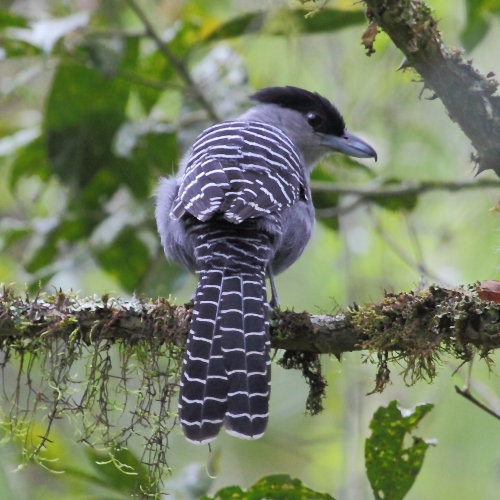


Birds Similar to the Chapman's Antshrike
These species are often confused with the Chapman's Antshrike due to similar appearance or overlapping range.