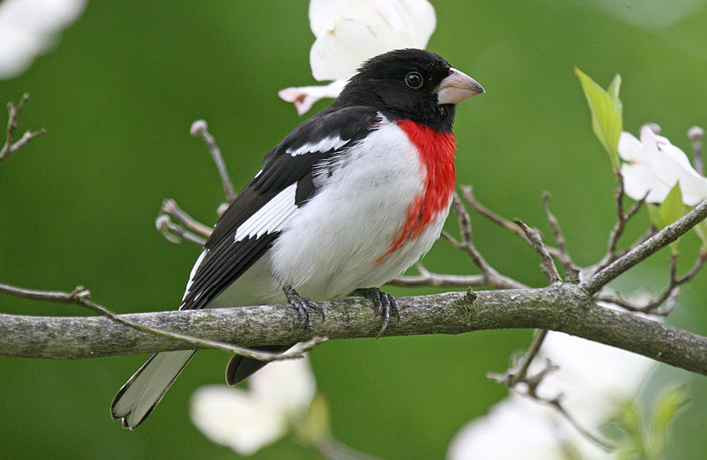
Crimson-collared Grosbeak
Rhodothraupis celaeno
Order: Passeriformes / Family: Cardinalidae

Wikimedia Commons
About the Crimson-collared Grosbeak
The Crimson-collared Grosbeak, scientifically known as Rhodothraupis celaeno, is a visually striking bird belonging to the Cardinalidae family. This impressive songbird commands attention with its bold coloration and robust build. Found primarily in the lowland forests and subtropical regions of northeastern Mexico, this species has garnered interest for its unique role in the ecosystem as both a seed disperser and an insect predator. Its presence in the rich tropical and subtropical forests of Tamaulipas, Nuevo León, and Veracruz highlights its preference for dense, humid environments where it can forage efficiently. The Crimson-collared Grosbeak is not just a beauty to behold but also serves as an important ecological participant, aiding in seed distribution which contributes to forest regeneration.
With a range that overlaps several significant birdwatching areas, the Crimson-collared Grosbeak becomes particularly intriguing during the breeding season when its vivid plumage and distinctive calls allow it to stand out among the forest canopy. While its numbers are stable, localized threats such as habitat destruction pose potential risks. As a non-migratory species, its annual cycle remains rooted within its established range, yet subtle seasonal movements occur in response to food availability.
This bird's ecological role extends beyond its immediate habitat. As forests face challenges from human encroachment, the Grosbeak's ability to thrive in secondary growth areas underlines its adaptability. By consuming a varied diet of fruits, seeds, and insects, the Crimson-collared Grosbeak supports the biological control of insect populations and contributes to the dynamics of forest ecosystems. Observing this striking bird offers insight into the intricate balance of tropical forest life, making it a favorite among both local and international birdwatchers.
The Crimson-collared Grosbeak belongs to the family Cardinalidae, within the order Passeriformes. These birds typically live 5 years on average, with a maximum of 9 years recorded..
How to Identify a Crimson-collared Grosbeak
The Crimson-collared Grosbeak is easily identifiable by its striking coloration and robust body. Adult males exhibit a prominent crimson collar and head, providing a vivid contrast to their predominantly black body and wings. Females, while sharing the crimson collar, often display more muted tones, with a brownish-black body that can aid in camouflage among the dense foliage. Juveniles resemble females but have an even more subdued color palette, lacking the full intensity of the adult plumage.
One might confuse this species with other grosbeaks, such as the Rose-breasted Grosbeak, but the Crimson-collared Grosbeak's distinctive coloration and larger size make it distinct. In flight, the bird's silhouette is characterized by broad wings and a slightly rounded tail, aiding in its agile navigation through forest canopies. When perched, this grosbeak maintains an upright posture, often clinging to branches as it surveys its surroundings.
Field marks to note include the bright red band encircling the neck and contrasting black face mask that extends towards the nape. The bill is thick and conical, typical of seed-eating birds, and is a grayish color that complements its striking plumage.
Having trouble telling birds apart? Upload a photo to our bird identification tool for an instant species match.
Crimson-collared Grosbeak Habitat and Range
Preferred Habitat
The Crimson-collared Grosbeak inhabits a variety of forested environments, primarily within the subtropical and tropical regions of northeastern Mexico. It favors dense lowland forests, but it can also be found in secondary growth and disturbed areas, demonstrating some adaptability to habitat changes. These birds are typically located at elevations from sea level up to about 1,500 meters, often in regions that experience abundant rainfall and rich biodiversity.
The species shows a preference for habitats with dense foliage, offering ample cover and feeding opportunities. Although primarily associated with rural and forested areas, the Crimson-collared Grosbeak occasionally ventures into gardens and plantations where suitable tree cover exists. Seasonal habitat shifts are relatively minor, mostly influenced by the availability of food resources rather than extensive geographical movements.
Geographic Range
The Crimson-collared Grosbeak is native to northeastern Mexico, with its range spanning from the state of Tamaulipas southward through Veracruz into the northern parts of San Luis Potosí and Hidalgo. This species does not exhibit long-distance migration, instead remaining within its breeding range year-round. Its distribution is closely linked to the availability of suitable forest habitats, which provide both food and shelter.
Population density tends to be higher in the more humid regions of its range, particularly where fruiting trees are abundant. While the grosbeak is generally more common in its core range, isolated populations may occur in suitable habitats outside of these areas, reflecting its capacity to exploit available resources. The lack of extensive migratory behavior implies stability within its established territories, though minor seasonal movements are noted in response to environmental changes.
Want to know which birds visit your area? Browse our backyard birds by location guides for region-specific species lists.
What Does the Crimson-collared Grosbeak Eat?
The diet of the Crimson-collared Grosbeak is diverse, primarily consisting of fruits, seeds, and insects. This varied diet allows it to adapt to changing food availability throughout the year. Fruits and berries form the core of their diet, with a preference for those available in their native subtropical forests. Some of the favored fruit sources include figs and various berries, which the grosbeak consumes by using its strong bill to break open the fruit to access the nutritious pulp inside.
Insect consumption is particularly important during the breeding season when protein demand increases. The grosbeak displays adept foraging techniques, capturing insects by gleaning them from leaves and branches. It may also pursue flying insects, demonstrating agility and precision. The bird's feeding schedule is generally diurnal, with peak activity occurring in the early morning and late afternoon when temperatures are cooler and insect activity is high.
Crimson-collared Grosbeak Behavior and Social Structure
The Crimson-collared Grosbeak exhibits a mix of social and solitary behaviors, often seen alone or in pairs during the breeding season. Outside of this period, small family groups may be observed, particularly in areas with abundant food. Territorial behavior is prominent, with males actively defending prime feeding and nesting sites through vocalizations and displays.
Courtship involves a series of visual and auditory displays, with males showcasing their vibrant plumage and singing to attract females. The grosbeak's vocalizations play a crucial role in both attracting mates and establishing territorial boundaries. Flocking behavior is less common, though occasional loose associations with other fruit-eating birds may occur during periods of high fruit abundance.
In response to predators, the Crimson-collared Grosbeak relies on a combination of quick flight and strategic use of dense foliage for cover. Daily activities are structured around feeding, with rest periods during the hottest parts of the day.
Crimson-collared Grosbeak Nesting and Reproduction
Crimson-collared Grosbeaks build their nests in trees, often at heights that provide safety from ground-based predators. The nests are typically cup-shaped and constructed from a mix of twigs, grasses, and leaves, with a softer lining of plant fibers. They prefer concealed locations within dense foliage to reduce the risk of predation.
A typical clutch consists of 2 to 4 eggs, with the female primarily responsible for incubation. The incubation period lasts about 12 to 14 days, during which the male supports by providing food. Once hatched, the chicks are altricial, requiring significant parental care. Both parents participate in feeding the young, ensuring a diet rich in insects for optimal growth. Fledging occurs approximately 14 to 18 days after hatching, with the young remaining dependent on the parents for a short period post-fledging. The species generally raises one brood per year, although favorable conditions may allow for a second.
Crimson-collared Grosbeak Sounds and Vocalizations
The song of the Crimson-collared Grosbeak is a series of melodious, flute-like notes that vary in pitch and rhythm, creating a pleasant and distinctive sound. These songs are often delivered from a high perch, serving both to attract mates and to assert territorial claims. Call notes include a sharp, metallic 'tink' sound used for communication between individuals, especially during foraging or when the flock is under threat.
Alarm calls are more abrupt and harsher in tone, designed to alert others to potential danger. During the dawn chorus, males can be heard singing vigorously, their voices carrying across the forest as they establish their presence for the day. The grosbeak's song quality is reminiscent of other members of the Cardinalidae family, yet its unique tonal quality makes it distinguishable to the practiced ear.
Interesting Facts About the Crimson-collared Grosbeak
- 1The Crimson-collared Grosbeak was first described by John Gould in 1859, highlighting its striking appearance.
- 2This species is one of the few grosbeaks found exclusively in Mexico, emphasizing its range specificity.
- 3Despite its vibrant colors, the grosbeak's subdued female plumage aids in camouflage while nesting.
- 4The grosbeak's diet shift to more insects during breeding season ensures adequate protein for chick development.
- 5Its song, though less complex than that of other cardinals, is still a beautiful addition to its forest soundscape.
- 6Crimson-collared Grosbeaks are known to favor fruit from the Ficus genus, which is abundant in their habitat.
- 7These birds play a crucial role in seed dispersal, helping maintain the ecological health of their forested homes.
Crimson-collared Grosbeak Conservation Status
The Crimson-collared Grosbeak is currently listed as a species of Least Concern by the IUCN, with a stable population trend. However, habitat destruction due to deforestation and agricultural expansion poses a long-term threat. Conservation efforts focus on preserving critical habitats within its range and promoting sustainable land-use practices. Historically, the grosbeak's population has remained relatively stable, but ongoing environmental pressures necessitate continued monitoring. Efforts to establish protected areas and reserves in northeastern Mexico contribute to the bird's conservation. Community engagement and environmental education also play crucial roles in fostering local support for habitat protection.
Other Cardinalidae Species


Birds Similar to the Crimson-collared Grosbeak
These species are often confused with the Crimson-collared Grosbeak due to similar appearance or overlapping range.