
Crimson-hooded Manakin
Pipra aureola
Order: Passeriformes / Family: Pipridae

Wikimedia Commons
About the Crimson-hooded Manakin
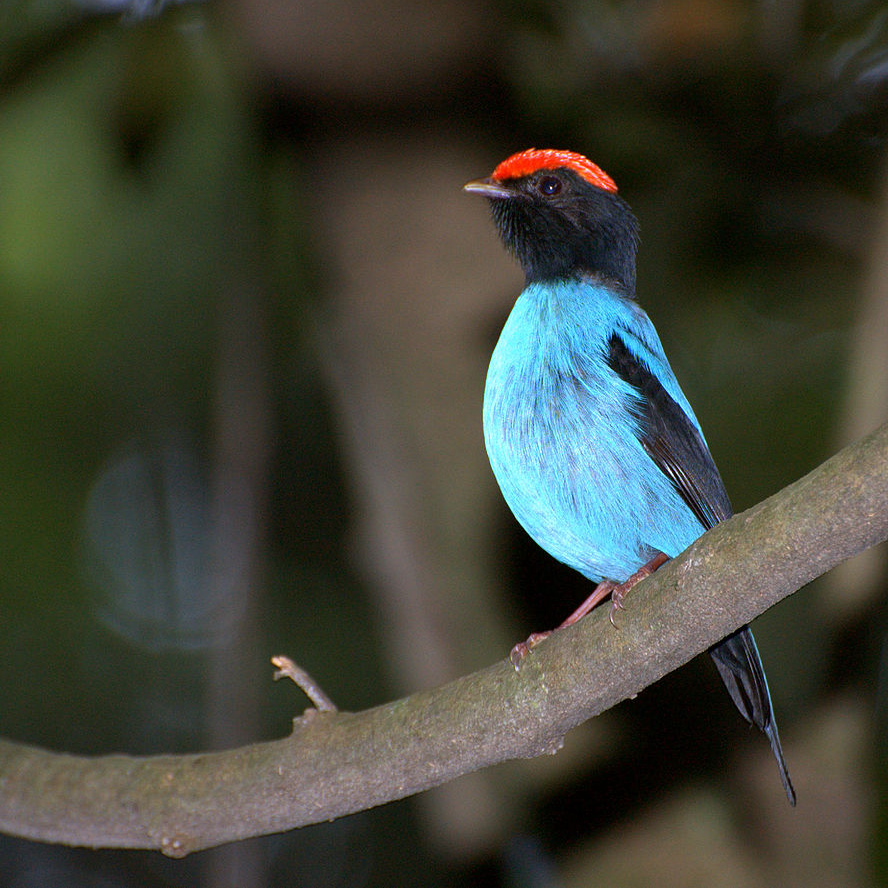
The Crimson-hooded Manakin (Pipra aureola) is a small passerine bird known for its vibrant plumage and fascinating behaviors. This species, part of the family Pipridae, captivates bird enthusiasts with its bright red head and contrasting black body, making it a striking presence in its native habitats. Found predominantly in the tropical forests of northern South America, the Crimson-hooded Manakin thrives in regions such as Guiana, Suriname, and the Amazon basin in Brazil. These dense, humid forests provide the ideal environment for the manakin to engage in its complex courtship displays, which are integral to its mating success and species propagation.
The ecological role of the Crimson-hooded Manakin extends beyond mere aesthetic appeal. As a frugivore, this bird plays a crucial part in seed dispersal, aiding in the maintenance of forest biodiversity. Its diet mainly consists of small fruits and berries, which it consumes while performing acrobatic foraging maneuvers. During the breeding season, the male manakins engage in elaborate dance rituals at communal display grounds known as leks. These displays, involving coordinated movements and vocalizations, are not only a spectacle but also a critical aspect of the bird's reproductive strategy.
Seasonal behaviors of the Crimson-hooded Manakin are influenced by the availability of food resources. While these birds do not undergo long-distance migrations, they may engage in localized movements to track fruiting events within their forested habitats. This ensures that they have a steady supply of food throughout the year, particularly during the breeding season when energy demands are heightened. The adaptability of the Crimson-hooded Manakin to shifting food availability underscores its resilience in the face of environmental changes.
The Crimson-hooded Manakin belongs to the family Pipridae, within the order Passeriformes. These birds typically live typically 5-7 years, with the potential to reach 10 years in ideal conditions..
How to Identify a Crimson-hooded Manakin
The adult Crimson-hooded Manakin is easily identifiable by its vivid crimson hood, which contrasts sharply with its glossy black body. The male's red plumage extends from the crown down the neck, creating a hood-like appearance that is unique among manakins. In contrast, the female displays a more subdued olive-green coloration, lacking the distinctive red hood altogether. Juveniles of both sexes resemble the female but gradually acquire their adult plumage over successive molts.
One might mistake the Crimson-hooded Manakin for the Red-capped Manakin (Ceratopipra mentalis), especially in regions where their ranges overlap. However, the Red-capped Manakin's red is confined to the cap, whereas the Crimson-hooded Manakin's red extends to form a full hood. In flight, the Crimson-hooded Manakin presents a compact silhouette, with rapid wingbeats and a slightly arched posture.
Perched, the manakin often adopts an erect stance, accentuating its bright hood. Males frequently display on thin branches within open forest understories, where their vibrant colors stand out against the lush green foliage. Such behaviors, along with their distinctive coloration, make the Crimson-hooded Manakin a sought-after species for birdwatchers visiting its tropical habitats.
Having trouble telling birds apart? Upload a photo to our bird identification tool for an instant species match.
Crimson-hooded Manakin Habitat and Range
Preferred Habitat
The Crimson-hooded Manakin resides primarily in lowland tropical forests, favoring areas with dense undergrowth and plenty of fruit-bearing trees. These environments, found at elevations typically not exceeding 600 meters, provide the necessary resources for feeding and breeding. The bird thrives in the humid, evergreen forests of the Guianas and the Amazon basin, where it benefits from a consistent supply of food and suitable lekking sites.
While the manakin generally avoids urban areas, its presence can sometimes be noted in forest fragments near human settlements, provided these patches retain sufficient structural complexity to support its needs. Seasonal shifts in habitat use correspond with fruiting cycles, where manakins may temporarily relocate within their range to exploit localized abundance of food. However, they do not exhibit the wide-ranging habitat shifts seen in some other avian species.
Despite its preference for undisturbed habitats, the Crimson-hooded Manakin can occasionally be observed in secondary forests and well-preserved edges, where it continues to perform its dynamic displays and contribute to forest ecology.
Geographic Range
The breeding range of the Crimson-hooded Manakin extends through the tropical lowland forests of northern South America. It is most prominently found in the Guianas, including French Guiana, Suriname, and Guyana, as well as in parts of Venezuela and the northern Amazon basin of Brazil.
Unlike many other bird species, the Crimson-hooded Manakin does not undertake long migratory journeys. It remains within its established range year-round, adapting to seasonal changes in food availability by shifting locally within its habitat. This stability in range reflects the bird's reliance on the consistent climate and resources of tropical forests.
Population density tends to be highest in regions with minimal human disturbance, particularly in expansive tracts of primary rainforest. However, manakins can also be found in secondary growth and forest edges, provided these areas retain sufficient canopy cover and fruit diversity to support their dietary needs.
Want to know which birds visit your area? Browse our backyard birds by location guides for region-specific species lists.
What Does the Crimson-hooded Manakin Eat?
Fruit forms the cornerstone of the Crimson-hooded Manakin's diet, with a preference for small, fleshy varieties like berries from understory trees and shrubs. This fruit diet not only sustains the bird but also positions it as a critical agent of seed dispersal within its ecosystem. The manakin's foraging tactics are agile and dynamic, often involving short flights and acrobatic maneuvers to pluck fruit from branches.
While fruit dominates their nutritional intake, these birds occasionally supplement their diet with small insects, particularly during the breeding season when protein demands increase. This opportunistic consumption of insects provides essential nutrients that support reproductive efforts.
The feeding schedule of the Crimson-hooded Manakin typically spans throughout daylight hours, with peak activity occurring in the cooler hours of the morning and late afternoon. This timing allows the bird to avoid the midday heat, maximizing foraging efficiency and minimizing exposure to potential predators.
Crimson-hooded Manakin Behavior and Social Structure
The Crimson-hooded Manakin exhibits fascinating social and territorial behaviors, particularly during the breeding season. Males congregate at leks, communal display sites where they perform intricate courtship displays to attract females. These displays involve coordinated movements, jumps, and wing snaps, creating a captivating auditory and visual spectacle.
Outside the breeding season, Crimson-hooded Manakins tend to be solitary or found in small groups, focusing on foraging. They maintain a relatively small home range, which they defend against conspecifics to secure food resources. These birds communicate through a series of calls and displays to assert dominance or indicate readiness to mate.
In response to predators, manakins exhibit evasive flight patterns and seek cover in dense foliage. Their daily activity patterns are closely tied to resource availability, with most feeding and social interactions occurring during the cooler parts of the day.
Crimson-hooded Manakin Nesting and Reproduction
Crimson-hooded Manakins construct small, delicate nests, often suspended from horizontal branches in the understory. These nests are typically built from fine plant fibers and spider silk, providing both strength and flexibility. The female primarily undertakes nest construction, ensuring a well-camouflaged site to protect against predators.
The typical clutch consists of two eggs, which the female incubates for about 18 to 21 days. Once hatched, the chicks remain in the nest for approximately 15 to 20 days before fledging. During this period, the female provides all parental care, feeding the young with a diet rich in soft fruits and occasional insects.
The Crimson-hooded Manakin usually raises one brood per year, although favorable conditions may allow for a second. The success of each breeding cycle depends heavily on the availability of food and the absence of significant disturbances in their habitat.
Crimson-hooded Manakin Sounds and Vocalizations
The vocal repertoire of the Crimson-hooded Manakin features a series of sharp, high-pitched notes that serve various communicative purposes. The primary song consists of a rapid succession of metallic clicks and trills, often heard during lek displays as males vie for female attention. This song is interspersed with softer, more subdued calls used for maintaining contact with mates or signaling territory boundaries.
Alarm calls are more abrupt and louder, designed to alert others to the presence of predators. During the dawn chorus, the Crimson-hooded Manakin's song blends with the symphony of forest sounds, creating a rich acoustic environment that underscores the vibrancy of tropical ecosystems.
Interesting Facts About the Crimson-hooded Manakin
- 1Male Crimson-hooded Manakins can perform up to 30 jumps per minute during their courtship displays, showcasing their agility.
- 2Despite their small size, manakins can consume fruits nearly half their body weight in a single day.
- 3The lekking behavior of manakins is a remarkable example of sexual selection, where females choose mates based on display performance.
- 4Crimson-hooded Manakins are known to mimic the calls of other bird species, adding complexity to their vocal repertoire.
- 5These birds play a crucial role in their ecosystem by dispersing the seeds of over 50 different plant species.
- 6The red coloration in male manakins comes from carotenoid pigments, which they acquire through their fruit diet.
- 7Manakins can occupy territories as small as 0.5 hectares, illustrating their dependence on localized food resources.
Crimson-hooded Manakin Conservation Status
The International Union for Conservation of Nature (IUCN) currently classifies the Crimson-hooded Manakin as a species of Least Concern, reflecting stable population trends across its range. Despite this favorable status, ongoing threats such as habitat loss and fragmentation due to logging and agricultural expansion pose significant risks to its habitat. Conservation efforts focus on preserving large tracts of tropical forest, which are crucial for maintaining healthy populations. Protected areas like national parks and reserves play a vital role in safeguarding these habitats. While the species is not currently endangered, monitoring efforts continue to ensure that population levels remain stable and that potential threats do not escalate.
Other Pipridae Species


Birds Similar to the Crimson-hooded Manakin
These species are often confused with the Crimson-hooded Manakin due to similar appearance or overlapping range.