Dark Newtonia
Newtonia amphichroa
Order: Passeriformes / Family: Vangidae

Wikimedia Commons
About the Dark Newtonia
The Dark Newtonia (Newtonia amphichroa) is a small passerine bird that belongs to the Vangidae family, endemic to the montane forests of Madagascar. These birds are of particular interest to ornithologists due to their restricted geographic distribution and unique ecological roles. Found primarily in the eastern rainforests, including areas such as the Masoala Peninsula and the Andringitra Massif, the Dark Newtonia thrives in altitudes ranging from 800 to 2,000 meters. Their habitat preference highlights their adaptability to dense forest canopies where they play a critical role in controlling insect populations.
Madagascar's biodiversity is remarkable, and the Dark Newtonia contributes to this richness by occupying a specific niche within the island's ecosystem. Their presence is vital for maintaining the health of forest ecosystems, as they aid in the regulation of insect populations. During the breeding season, which typically occurs from September to December, their activities intensify. They engage more actively in foraging, which supports their increased nutritional needs during this period. The seasonal rains of Madagascar influence their behavior, as they adapt to the changing availability of food resources.
The ecological role of the Dark Newtonia extends beyond mere pest control. Their interactions with other species, including potential competition and predation, form a complex web that underscores the interconnectedness of Madagascar's forest ecosystems. As these birds forage, they may inadvertently assist in seed dispersal, although this is not their primary ecological function. Understanding the role of species like the Dark Newtonia helps conservationists develop strategies to preserve Madagascar's unique habitats.
Observations of the Dark Newtonia reveal their adaptability and resilience in the face of environmental changes, although habitat destruction continues to pose a significant threat. Conservation efforts aimed at protecting Madagascar's forests indirectly benefit this species, highlighting the importance of habitat preservation. Research continues to explore the full extent of their ecological contributions, as each species plays a part in the intricate mosaic of life on Madagascar.
The Dark Newtonia belongs to the family Vangidae, within the order Passeriformes. These birds typically live average 3-4 years, with a max recorded of 5 years..
How to Identify a Dark Newtonia
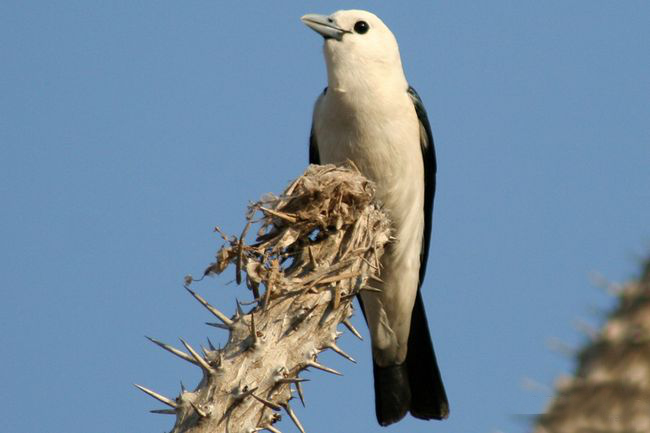
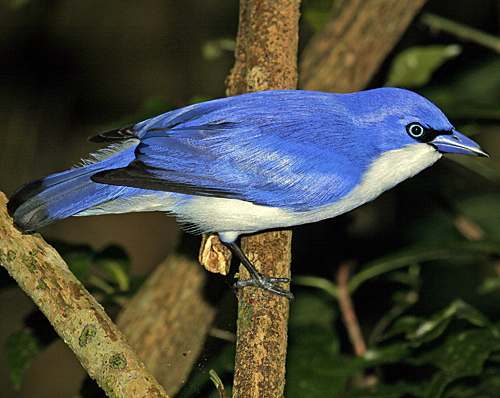
Identifying the Dark Newtonia in the field requires attention to its distinctive slate-gray plumage, which sets it apart from many other species in Madagascar's diverse bird population. Adult Dark Newtonias exhibit a uniform gray coloration with a subtle brownish tinge on the wings and back. Their underparts are slightly paler, providing a modest contrast that can be discerned with close observation. Both male and female Dark Newtonias share similar plumage, making sex differentiation challenging in the field.
Juvenile Dark Newtonias may be mistaken for adults due to their similar coloring, though they often display a slightly duller tone and lack the full depth of coloration seen in mature birds. The bird's compact size, typically around 12 to 14 centimeters in length, and its relatively short tail contribute to its distinctive silhouette.
In flight, the Dark Newtonia maintains a low profile, preferring short bursts of flight from branch to branch rather than extended aerial journeys. Their perching posture is upright, often allowing them to blend seamlessly with the forest's foliage. While they might be confused with other small passerines in the region, their consistent gray plumage and habitat preferences aid in accurate identification.
Having trouble telling birds apart? Upload a photo to our bird identification tool for an instant species match.
Dark Newtonia Habitat and Range
Preferred Habitat
The Dark Newtonia inhabits the montane forests of eastern and southeastern Madagascar, favoring dense, high-altitude forests. These forests provide the dense canopy cover that is crucial for their survival. They are typically found at elevations ranging from 800 to 2,000 meters, where the dense foliage and high humidity create ideal conditions for their insect-rich diet.
Seasonal changes influence their habitat use, with slight shifts in altitude as they search for optimal feeding grounds. Unlike some other bird species, the Dark Newtonia does not frequent urban areas, preferring the seclusion and resources provided by the intact forest. The absence of significant urban encroachment into their preferred habitats has allowed them to maintain stable populations within these montane forests.
Geographic Range
The geographic range of the Dark Newtonia is limited to Madagascar, where they are endemic to the island's eastern rainforests. Their breeding range is concentrated in the montane regions, including the Masoala Peninsula and Andringitra Massif. These areas, rich in biodiversity, provide the necessary resources and conditions for their breeding and foraging activities.
Migration is not characteristic of the Dark Newtonia, as they are largely sedentary within their limited range. They do not undertake long-distance migrations like some other bird species. However, they may exhibit minor local movements driven by food availability and climatic conditions. Population density hotspots are most notable in protected areas where forest cover remains largely intact, ensuring a stable environment for their populations.
Want to know which birds visit your area? Browse our backyard birds by location guides for region-specific species lists.
What Does the Dark Newtonia Eat?
The Dark Newtonia primarily feeds on insects, which they skillfully extract from foliage and bark within their montane forest habitat. Their diet includes a wide variety of arthropods, such as caterpillars, beetles, and spiders. Seasonally, their diet may shift slightly as different insect populations become available, allowing them to take advantage of abundant prey.
Foraging techniques involve meticulous gleaning along branches and leaves, often accompanied by quick, darting movements to capture elusive prey. The Dark Newtonia's small size enables them to access food sources in dense foliage where larger birds might struggle. Their feeding schedule is largely diurnal, with peak activity in the early morning and late afternoon when insects are most active.
Dark Newtonia Behavior and Social Structure
The Dark Newtonia exhibits intriguing behaviors that reflect their adaptation to Madagascar's montane forests. They are generally solitary or found in pairs, maintaining small territories during the breeding season. Males perform simple courtship displays that involve calls and subtle movements to attract a mate.
Flocking behavior is uncommon outside of family groups, and they exhibit strong territorial instincts, often engaging in vocalizations to defend their area from intruders. In the presence of predators, the Dark Newtonia employs evasive maneuvers, relying on their agility to navigate the dense forest cover.
Their daily activity pattern includes periods of foraging interspersed with rest during the hottest parts of the day. Social interactions are limited, as their solitary nature reduces the need for complex social structures. However, their vocalizations, while not elaborate, play a crucial role in territory establishment and mate attraction.
Dark Newtonia Nesting and Reproduction
The nesting habits of the Dark Newtonia reflect their adaptation to the montane forests of Madagascar. They construct cup-shaped nests using twigs, leaves, and moss, typically situated in the fork of a tree branch. The selection of nesting sites is strategic, often in dense foliage that offers protection from predators and harsh weather conditions.
Clutch sizes range from two to three eggs, with both parents involved in incubation, which lasts approximately 14 to 16 days. Once hatched, the chicks are altricial, requiring constant care and feeding by both parents. Fledging occurs after about two to three weeks, with fledglings remaining close to the nest site as they learn essential survival skills.
The Dark Newtonia typically raises one brood per year, although favorable conditions might allow for a second. Parental roles are shared, with both the male and female contributing to feeding and protection, ensuring the survival of their young in the challenging forest environment.
Dark Newtonia Sounds and Vocalizations
The vocalizations of the Dark Newtonia are characterized by a series of simple, repetitive calls. Their primary song consists of a soft, melodic series of notes, often described as a gentle, rhythmic 'cheep-cheep-cheep.' The song is most frequently heard during the breeding season as males establish territories and attract mates.
Call notes are brief and less melodic, typically used for communication between mates and signaling alarm. These calls are sharper and quicker, helping to convey urgency when necessary. The Dark Newtonia participates in the dawn chorus, adding their distinct voice to the symphony of sounds that herald the start of a new day in Madagascar's forests.
Interesting Facts About the Dark Newtonia
- 1The Dark Newtonia is one of only four species in the genus Newtonia, highlighting its unique evolutionary path.
- 2Unlike many birds, the Dark Newtonia exhibits little sexual dimorphism, with males and females looking alike.
- 3The species' limited range makes it an important indicator for the health of Madagascar's montane forest ecosystems.
- 4Despite their name, Dark Newtonias are not related to the more diverse Newtonidae family, instead belonging to Vangidae.
- 5Their feeding behavior often includes a distinctive side-to-side head movement while searching for insects.
- 6Dark Newtonias are known to participate actively in mixed-species foraging flocks, benefiting from group dynamics.
- 7The bird's name, 'Newtonia,' honors the British ornithologist Edward Newton, who studied Madagascar's avifauna.
Dark Newtonia Conservation Status
Currently, the Dark Newtonia is classified as Least Concern by the IUCN, indicating a stable population trend. However, habitat destruction due to logging and agricultural expansion poses a significant threat to their long-term survival. Conservation efforts focus on preserving Madagascar's montane forests, which are crucial for the survival of this and many other endemic species. Historical population changes have been influenced by habitat alteration, although protected areas have provided a refuge for stable populations. Continued awareness and habitat conservation are essential to ensure that the Dark Newtonia remains a thriving component of Madagascar's avian diversity.