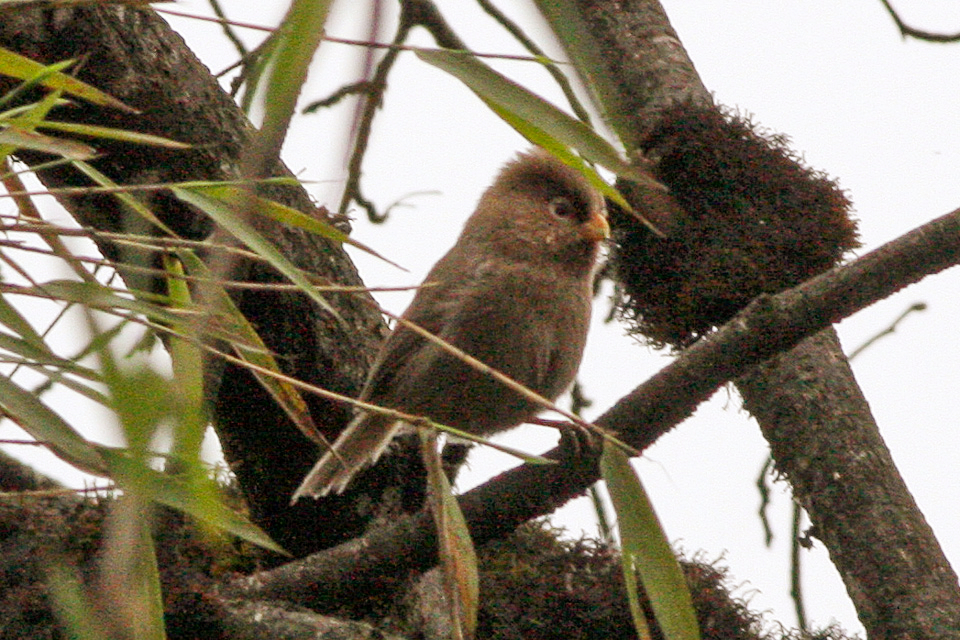
Desert Lesser Whitethroat
Curruca minula
Order: Passeriformes / Family: Sylviidae

Wikimedia Commons
About the Desert Lesser Whitethroat
The Desert Lesser Whitethroat (Curruca minula) is a small passerine bird belonging to the family Sylviidae. It thrives in arid and semi-arid regions, showcasing its adaptability to environments that challenge many other avian species. Found primarily in the deserts and scrublands of Central and South Asia, this bird plays a vital role in the ecosystems where it resides, often acting as both predator and prey. It helps control insect populations, thus maintaining the ecological balance in its habitat. These birds are most commonly observed in Iran, Afghanistan, and the Indian Subcontinent, with populations also present in parts of the Middle East. Seasonal behavior of the Desert Lesser Whitethroat includes a distinctive migratory pattern. Breeding typically occurs in the warmer months, when they can take advantage of the increased insect abundance. During winter, they migrate to slightly less arid regions, where resources are more plentiful. This seasonal movement highlights their adaptability and resilience, key traits for survival in the harsh conditions they often inhabit. The Desert Lesser Whitethroat's ecological significance extends beyond its role in pest control. As a prey species, it is an important food source for larger predators, including raptors and mammals. Its presence in diverse regions, from the Middle East to South Asia, underscores its wide ecological niche. The bird's adaptability to human-altered landscapes further demonstrates its resilience, as it often inhabits agricultural areas and even suburban gardens. This coexistence with humans has implications for both conservation and biodiversity, as it requires a balance between human expansion and the preservation of natural habitats. Despite its small size, the Desert Lesser Whitethroat's impact on its environment is significant, underlining the importance of conserving not only this species but the habitats it depends on.
The Desert Lesser Whitethroat belongs to the family Sylviidae, within the order Passeriformes. These birds typically live average 3-5 years, max recorded 7 years.
How to Identify a Desert Lesser Whitethroat
The Desert Lesser Whitethroat is a small songbird, measuring approximately 12 cm in length with a wingspan of about 17-20 cm. Its plumage is predominantly gray, with a paler underbelly and a slightly darker back. One of the key identification features is its distinct white throat, which contrasts sharply with its darker head and upper parts. The bird's eyes are highlighted by a fine white eye-ring, and its beak is slender and pointed, typical of insectivorous birds. Adult males and females are similar in appearance, though males may exhibit slightly bolder coloration. Juveniles resemble adults but tend to have a more muted plumage, lacking the sharp contrasts between the throat and head. When compared to similar species, such as the Common Whitethroat or the Lesser Whitethroat, the Desert Lesser Whitethroat is distinguished by its more uniform gray tones and the absence of rufous coloration. Its flight is agile and flickering, with frequent changes in direction as it navigates through its habitat. When perched, it often adopts an upright posture, making it easier to observe its distinctive throat patch.
Having trouble telling birds apart? Upload a photo to our bird identification tool for an instant species match.
Desert Lesser Whitethroat Habitat and Range
Preferred Habitat
The Desert Lesser Whitethroat primarily inhabits arid and semi-arid regions, often found in deserts, scrublands, and sparse woodlands. It thrives in areas where vegetation is scattered, and the landscape is dominated by shrubs and low bushes. Typical elevations for this species range from sea level up to 1500 meters, depending on the region. In some areas, such as the Thar Desert in India and the deserts of Iran, they are a common sight amidst thorny acacia and other hardy plant species. During different seasons, these birds may shift habitats slightly, moving to areas with denser vegetation during the breeding season to take advantage of the increased insect activity. Although primarily a bird of rural and undeveloped areas, the Desert Lesser Whitethroat occasionally ventures into urban environments, particularly in gardens and parks that provide suitable foraging opportunities.
Geographic Range
The Desert Lesser Whitethroat has a wide distribution across the arid regions of Asia. Its breeding range extends from the eastern parts of Iran and Afghanistan through Pakistan and into northwestern India. During the non-breeding season, individuals may migrate to slightly more temperate areas within South Asia, such as the lower Himalayan foothills, where conditions are less harsh. Throughout its range, the Desert Lesser Whitethroat is relatively common, with population density hotspots found in regions like Rajasthan in India and the Baluchistan province in Pakistan. Its migration corridors typically follow the Indus Valley and other river systems, which provide necessary resources during their seasonal movements. These corridors are crucial for their survival, offering resting and feeding stops along their journey.
Want to know which birds visit your area? Browse our backyard birds by location guides for region-specific species lists.
What Does the Desert Lesser Whitethroat Eat?
The Desert Lesser Whitethroat primarily feeds on insects, which constitute the bulk of its diet. Its foraging technique involves actively searching through foliage and on the ground for beetles, caterpillars, spiders, and other small invertebrates. During the breeding season, when insect populations peak, these birds are particularly busy, often observed hopping energetically among shrubs in search of prey. In addition to insects, they may occasionally consume seeds and berries, especially in the non-breeding season when insects are less abundant. This opportunistic feeding strategy allows the Desert Lesser Whitethroat to adapt to varying seasonal food availability. Typically, these birds feed throughout the day, taking advantage of cooler morning and late afternoon temperatures to avoid the midday heat.
Desert Lesser Whitethroat Behavior and Social Structure
The Desert Lesser Whitethroat exhibits a range of behaviors characteristic of its adaptability to harsh environments. These birds are generally solitary or found in pairs, particularly during the breeding season when they exhibit strong territorial behavior. Males perform song displays to attract mates and establish territories, often singing from elevated perches. Courtship involves a series of chase flights and vocalizations. Outside the breeding season, they may form small flocks, especially during migration when safety in numbers provides protection against predators. Their response to threats often includes a series of alarm calls and rapid evasive maneuvers. The Desert Lesser Whitethroat is primarily diurnal, with peak activity during the cooler parts of the day. Its adaptability is further showcased by its ability to exploit a range of habitats, from dense thickets to open scrub, depending on the availability of food and shelter.
Desert Lesser Whitethroat Nesting and Reproduction
The nesting habits of the Desert Lesser Whitethroat involve careful selection of location and construction. They typically build their nests low in dense shrubs or thorny bushes, ensuring protection from predators. The nests are cup-shaped, crafted from grass, twigs, and plant fibers, often lined with softer materials such as feathers or animal hair. Clutch size ranges from 3 to 5 eggs, which are incubated by the female for about 11 to 13 days. Both parents participate in feeding the chicks, which fledge approximately 12 to 14 days after hatching. The Desert Lesser Whitethroat usually raises one brood per year, although in areas with abundant resources, a second brood might be attempted. Parental roles are shared, with both male and female actively involved in the care and protection of their young.
Desert Lesser Whitethroat Sounds and Vocalizations
The Desert Lesser Whitethroat has a distinctive song characterized by a dry, scratchy quality, often described as a series of quick, harsh notes. This song serves as both a territorial call and a mating display. Apart from its primary song, the bird also emits a variety of call notes, including soft, staccato chirps used to maintain contact with its mate or signal alarm. When disturbed, the alarm calls become more insistent, often accompanied by agitated movements. During the dawn chorus, its song blends with those of other desert species, contributing to the rich tapestry of sounds that define these arid landscapes.
Interesting Facts About the Desert Lesser Whitethroat
- 1The Desert Lesser Whitethroat's migratory behavior allows it to exploit different ecological niches seasonally.
- 2This species shares its habitat with over 200 other bird species in the deserts of India.
- 3Despite its small size, the Desert Lesser Whitethroat can travel hundreds of kilometers during migration.
- 4Its adaptable diet includes insects and berries, allowing it to survive in various conditions.
- 5The Desert Lesser Whitethroat's song is one of the first heard at dawn in its habitat, marking its territory.
- 6These birds often nest close to the ground, using thorny shrubs for protection against predators.
- 7The Desert Lesser Whitethroat is part of a group of birds known as 'warblers,' known for their vocal abilities.
Desert Lesser Whitethroat Conservation Status
Currently, the Desert Lesser Whitethroat is listed as Least Concern by the IUCN. Its population trend appears stable, with no major widespread threats identified. However, habitat destruction due to agricultural expansion and urban development poses localized threats. Conservation efforts largely focus on preserving the natural habitats that support not only the Desert Lesser Whitethroat but also a myriad of other species. Historical data suggests that while population numbers have fluctuated with environmental changes, the species has demonstrated resilience, maintaining healthy populations across its range.