
Dusky Cisticola
Drymoica obscura
Order: Passeriformes / Family: Sylviidae
About the Dusky Cisticola
The Dusky Cisticola (Drymoica obscura) is a small, unassuming bird that plays a significant role in the ecosystems of sub-Saharan Africa. Belonging to the family Sylviidae, it is a member of the vast order Passeriformes. This species is primarily found in the savannas and grasslands of countries such as Angola, Zambia, and Tanzania. It thrives in open landscapes where it can blend seamlessly with the surrounding vegetation due to its muted coloration. The Dusky Cisticola is an integral part of its habitat, serving as both prey and predator. As insectivores, these birds help control insect populations, which benefits the plant life and agricultural activities in the regions they inhabit. The presence of the Dusky Cisticola, therefore, indicates a healthy ecosystem, as it relies on balanced environmental conditions for survival. During the breeding season, typically from September to March, their activity peaks. The males are particularly vocal, using their calls to establish territories and attract mates. This period is crucial for the continuation of the species, as it ensures a new generation of Dusky Cisticolas. Outside the breeding season, these birds exhibit more subdued behavior, focusing on foraging and avoiding predators. The Dusky Cisticola's role as a seed disperser also aids in the propagation of various plant species across the savanna, further cementing its ecological importance. By engaging in daily activities that contribute to seed distribution, the Dusky Cisticola helps maintain the plant diversity that is crucial for the functioning of its habitat.
The Dusky Cisticola belongs to the family Sylviidae, within the order Passeriformes. These birds typically live average 3-5 years with a maximum recorded of 8 years..
How to Identify a Dusky Cisticola
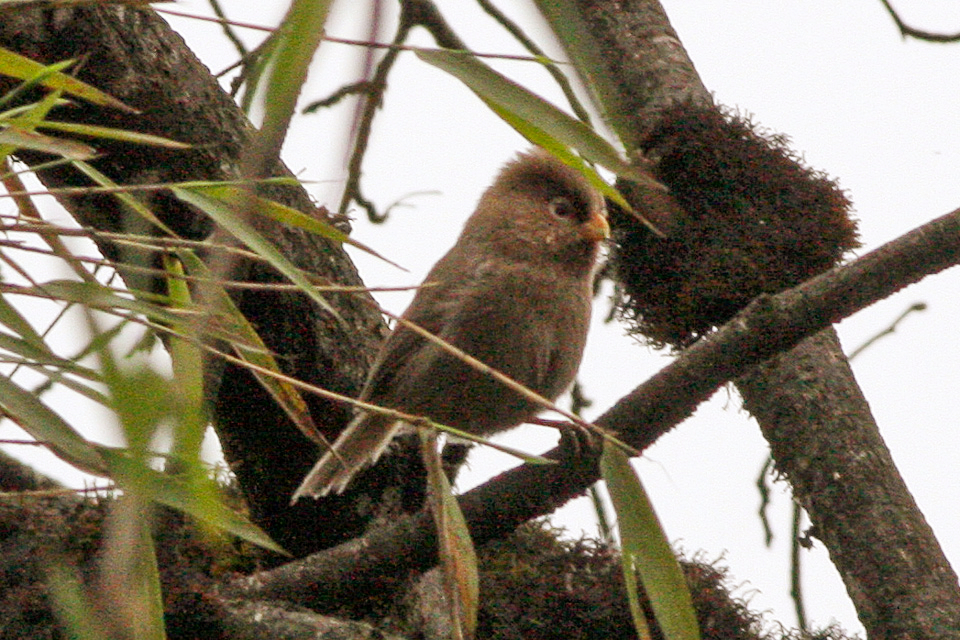
Identifying the Dusky Cisticola involves noting its overall gray-brown plumage, which provides excellent camouflage against the savanna backdrop. Adults display a subtle blend of brown on their backs and wings, with a lighter underbelly that can appear almost white in bright light. Juveniles are slightly paler than adults, lacking the more pronounced coloration found in mature birds. Males and females share similar plumage, making them difficult to distinguish based solely on appearance. The Dusky Cisticola's small size and compact shape are key identifying features. Its short, slightly rounded wings and tail create a distinctive silhouette in flight, which can be observed when the bird moves between shrubs and grasses. While perched, the Dusky Cisticola often adopts a vertical posture, highlighting its short tail and rounded head. This characteristic posture aids birdwatchers in distinguishing it from other cisticolas. Comparatively, the Tawny-flanked Prinia and other small warblers may cause confusion, but the Dusky Cisticola's soft, muted tones and unique calls set it apart.
Having trouble telling birds apart? Upload a photo to our bird identification tool for an instant species match.
Dusky Cisticola Habitat and Range
Preferred Habitat
The Dusky Cisticola predominantly inhabits open savannas and grasslands, where its camouflage is most effective. These environments provide ample foraging opportunities and cover from predators. The bird is commonly found at elevations ranging from sea level up to approximately 2,000 meters, depending on the availability of suitable habitat. Seasonal habitat shifts are minimal for the Dusky Cisticola, as it tends to remain within the same general area year-round. However, it may move locally in response to changes in food availability or environmental conditions. While primarily found in rural settings, the Dusky Cisticola occasionally ventures into less densely populated urban areas where suitable vegetation is present. In these environments, patches of grassland or overgrown fields can serve as suitable refuges.
Geographic Range
The Dusky Cisticola's range covers a substantial portion of sub-Saharan Africa, with its presence noted in Angola, Zambia, Tanzania, and parts of the Democratic Republic of the Congo. It is a resident species, meaning it does not engage in long-distance migrations. Instead, the bird occupies its preferred habitats throughout the year, with some local movements possible. Population density is highest in areas where open grasslands dominate the landscape, as these provide optimal conditions for foraging and nesting. In regions such as the miombo woodlands of Zambia, the Dusky Cisticola is a familiar sight, contributing to the area's rich biodiversity. Its stable presence in these regions underscores its adaptability to the environmental conditions prevailing in the savannas and grasslands.
Want to know which birds visit your area? Browse our backyard birds by location guides for region-specific species lists.
What Does the Dusky Cisticola Eat?
The Dusky Cisticola's diet primarily consists of insects, which it skillfully hunts among the grasses and low shrubs of its habitat. Its foraging behavior involves moving quickly through vegetation, using its short, sharp bill to snatch up prey. During the wet season, when insect populations peak, the bird's diet becomes even more insect-heavy. However, it may also consume small seeds and plant material, particularly when insects are less abundant. The Dusky Cisticola displays a keen ability to adapt its foraging techniques to the available food sources, utilizing both the ground and low vegetation to find sustenance. Typical prey includes various grasshoppers, beetles, and caterpillars, with the bird often seen pecking at leaves and stems to uncover hidden insects. Its feeding schedule aligns with the cooler parts of the day, such as early morning and late afternoon, when insect activity is heightened.
Dusky Cisticola Behavior and Social Structure
Socially, the Dusky Cisticola is a solitary bird outside the breeding season, with individuals primarily focused on foraging and evading predators. During the breeding season, males become more territorial, often engaging in vocal displays to assert dominance and secure optimal nesting sites. Courtship involves males performing aerial displays and vocalizations to attract females. Flocking behavior is uncommon, as the Dusky Cisticola prefers a solitary lifestyle, although temporary loose associations may form when abundant food sources are available. In response to predators, the bird relies on its camouflage and quick, darting flight to escape detection. Daily activity patterns are centered around feeding and maintaining territory, with the Dusky Cisticola being most active during the cooler parts of the day.
Dusky Cisticola Nesting and Reproduction
The Dusky Cisticola constructs a cup-shaped nest using a variety of materials including grasses, leaves, and spider webs. These nests are typically situated low to the ground, often within dense grass clumps that provide concealment from predators. Clutch sizes generally range from two to four eggs, with the female responsible for incubation. The incubation period lasts about 12 to 14 days, after which both parents participate in feeding the chicks. The fledging period occurs approximately two weeks post-hatching, during which the chicks develop the skills necessary for survival. The Dusky Cisticola typically raises one or two broods per year, depending on environmental conditions and food availability.
Dusky Cisticola Sounds and Vocalizations
The Dusky Cisticola is known for its distinctive song, which consists of a series of rapid, buzzing notes that rise and fall in pitch. This song is often described as resembling the sound of a small motor or a mechanical buzz. In addition to its primary song, the Dusky Cisticola emits various call notes that serve as communication between individuals, particularly during the breeding season. Alarm calls are sharper and more abrupt, alerting others to potential danger. During the dawn chorus, the Dusky Cisticola's song contributes to the rich tapestry of sounds that define the African savanna at sunrise.
Interesting Facts About the Dusky Cisticola
- 1The Dusky Cisticola's song is often compared to the sound of a buzzing insect, aiding in its identification.
- 2Despite its small size, the Dusky Cisticola plays a crucial role in controlling insect populations across its range.
- 3The bird's muted gray-brown plumage provides perfect camouflage against the savanna's dry grasses.
- 4Dusky Cisticolas are known to use spider webs as binding material when constructing their intricate nests.
- 5This species is non-migratory, choosing to remain within the same general area throughout the year.
- 6The Dusky Cisticola's preference for open grasslands makes it a key indicator species for healthy savanna ecosystems.
- 7These birds often build their nests close to the ground, expertly hidden among dense grass clumps.
Dusky Cisticola Conservation Status
The Dusky Cisticola is currently classified as 'Least Concern' by the IUCN, with a stable population trend. Its ability to adapt to a variety of open habitats has contributed to its resilience against environmental changes. However, habitat loss due to agricultural expansion and land development poses a potential threat. Conservation efforts focus on preserving natural grasslands and savannas to ensure the continued survival of the Dusky Cisticola. Historical population changes have remained relatively stable, indicating a robust adaptability to changing conditions.
Other Sylviidae Species



Birds Similar to the Dusky Cisticola
These species are often confused with the Dusky Cisticola due to similar appearance or overlapping range.