
Dusky Crested-Flycatcher
Elminia nigromitrata
Order: Passeriformes / Family: Stenostiridae

Wikimedia Commons
About the Dusky Crested-Flycatcher
The Dusky Crested-Flycatcher (Elminia nigromitrata), a member of the family Stenostiridae, plays a significant role in the ecosystems of Central African montane forests. This small songbird, characterized by its agile flight and striking plumage, contributes to insect population control, acting as a natural pest regulator. Found predominantly in countries like Cameroon, Guinea, and the Democratic Republic of Congo, the Dusky Crested-Flycatcher frequents montane forests, especially those rich in dense underbrush and canopy cover. The bird's ecological role extends beyond pest management; it also aids in seed dispersion, contributing to forest regeneration. Seasonal behaviors of the Dusky Crested-Flycatcher reveal a bird that is largely sedentary, with some local movements influenced by food availability and weather conditions. Unlike many passerines, it does not undertake long migrations, instead relying on territorial fidelity to maintain its ecological niche. Its presence in forests is an indicator of healthy, biodiverse habitats, underscoring the importance of conservation efforts to preserve these environments. The Dusky Crested-Flycatcher's significance is magnified by its interactions with other species. As an insectivorous bird, it forms a part of the complex food web, providing a food source for larger avian predators and mammals. Its role in this biological network illustrates the interconnectedness of forest ecosystems and highlights the need for holistic conservation strategies. Climate change poses an escalating threat to its montane forest habitat, necessitating ongoing research and conservation initiatives to ensure the survival of this species. Through its everyday activities and interactions, the Dusky Crested-Flycatcher embodies the intricate balance of nature, serving as a reminder of the delicate interplay between species and their environments.
The Dusky Crested-Flycatcher belongs to the family Stenostiridae, within the order Passeriformes. These birds typically live average 5 years, with a maximum recorded of 8 years..
How to Identify a Dusky Crested-Flycatcher
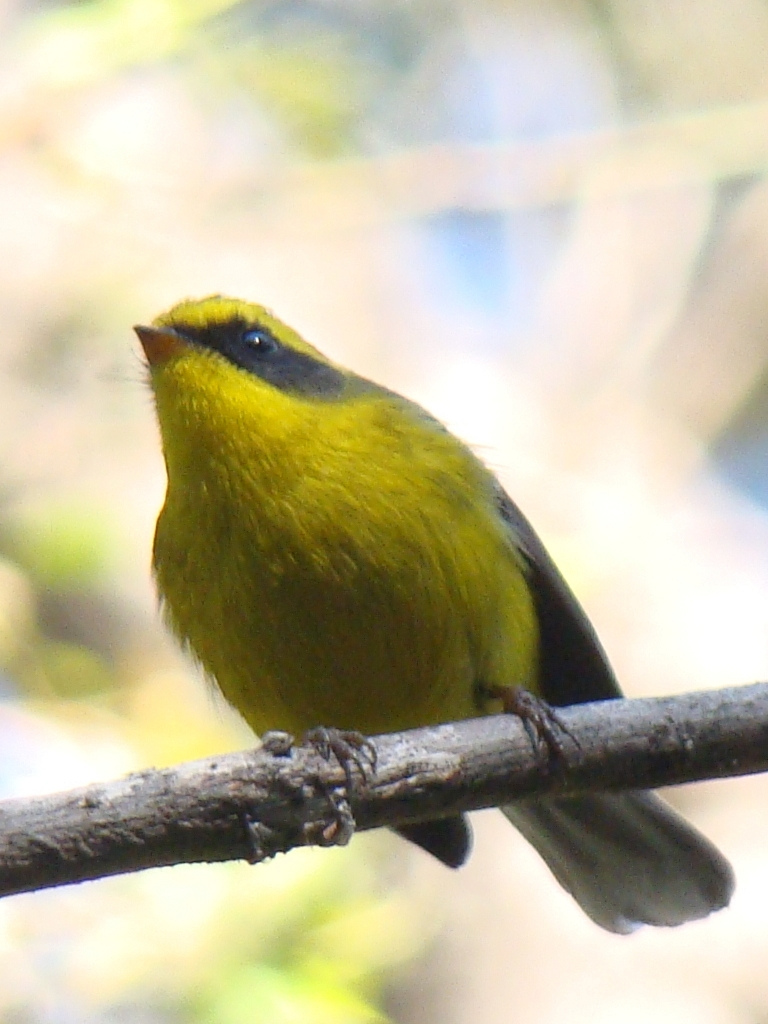
The Dusky Crested-Flycatcher is easily identified by its dark, somewhat elongated crest, a feature that stands out against its otherwise lighter plumage. Adults exhibit a blue-gray coloration across the head and back, with a paler underside that can appear almost whitish in certain lighting conditions. The contrast between the dark crest and lighter body offers a distinctive field mark for birders. Juveniles tend to have a duller appearance, with less pronounced crest and more muted coloration overall. Males and females of the species show little dimorphism, making visual sex differentiation challenging in the field. However, close observation of behavior, particularly during the breeding season, might offer clues. The flight silhouette of the Dusky Crested-Flycatcher is characterized by rapid wingbeats and agile maneuvers, typical of flycatchers as they dart after airborne insects. When perched, this bird often adopts an upright posture, with its crest prominently displayed. It can be confused with other flycatchers, but the combination of its crest and coloration helps in distinguishing it from similar species.
Having trouble telling birds apart? Upload a photo to our bird identification tool for an instant species match.
Dusky Crested-Flycatcher Habitat and Range
Preferred Habitat
The Dusky Crested-Flycatcher is primarily associated with montane forest habitats, thriving particularly in regions with lush vegetation and a dense canopy. These forests, often found at elevations ranging from 1,000 to 2,500 meters, provide the necessary cover and food resources. Examples of such habitats include the montane forests of Cameroon and the Albertine Rift montane forests in the Democratic Republic of Congo. The bird shows a preference for areas with plentiful insect life and thick underbrush, where it can forage and nest effectively. While the Dusky Crested-Flycatcher is not commonly found in urban settings, it may occasionally venture into forest edges or rural gardens that mimic its natural environment. Seasonal habitat shifts are minimal due to its largely sedentary nature, although local movements might occur within its range to exploit food resources.
Geographic Range
The Dusky Crested-Flycatcher is predominantly found in the montane forests of Central Africa. Its range includes countries such as Cameroon, Nigeria, Equatorial Guinea, and the Democratic Republic of Congo. The bird is non-migratory, maintaining a year-round presence within these regions. Population density is notably higher in areas where forest cover remains intact, with hotspots in the highlands of Cameroon and along the Albertine Rift. Despite being a resident species, minor range contractions or expansions might occur in response to habitat degradation or forest restoration efforts. However, these movements are typically localized and do not equate to long-distance migrations. Conservation areas and national parks within its range provide critical refuges, supporting stable populations even as surrounding habitats face anthropogenic pressures.
Want to know which birds visit your area? Browse our backyard birds by location guides for region-specific species lists.
What Does the Dusky Crested-Flycatcher Eat?
The Dusky Crested-Flycatcher primarily feeds on insects, employing agile aerial maneuvers to capture prey mid-flight. Its diet consists of a variety of small insects, including flies, beetles, and moths. Seasonal changes can influence its diet composition, with an increase in available insect larvae during the wet season leading to a more diverse intake. Foraging techniques are characterized by swift sallies from a perch, a behavior typical of many flycatchers. The bird selects prey that ranges in size but generally targets smaller insects that are easier to catch and digest. Feeding typically occurs during daylight hours, with peak activity in the early morning and late afternoon when insect activity is highest. This dietary specialization as an insectivore makes the Dusky Crested-Flycatcher an essential component of its habitat, helping to maintain balanced insect populations.
Dusky Crested-Flycatcher Behavior and Social Structure
The Dusky Crested-Flycatcher exhibits a social structure that is primarily solitary or found in pairs, especially during the breeding season. However, outside of this period, it may join mixed-species foraging flocks, which can enhance feeding efficiency and provide protection against predators. Territorial behavior is prominent during the breeding season when males actively defend their nesting sites through vocalizations and physical displays. Courtship displays include song and aerial acrobatics designed to attract a mate. Daily activities revolve around foraging and territory maintenance, with peak activity periods in the early morning and late afternoon. The bird exhibits a keen awareness of its surroundings and will issue alarm calls to warn of nearby predators. Despite its small size, the Dusky Crested-Flycatcher is a tenacious defender of its territory, often engaging in aggressive interactions with intruders.
Dusky Crested-Flycatcher Nesting and Reproduction
The Dusky Crested-Flycatcher builds a cup-shaped nest, typically constructed from fine twigs, grass, and moss, often lined with softer materials like feathers. Nest location is strategic, usually placed in the fork of a tree branch or within dense foliage to conceal it from predators. Clutch size generally consists of 2 to 3 eggs, with an incubation period lasting around 14 to 16 days. Both parents share incubation duties, although the female takes on a more prominent role. Once hatched, the fledglings remain in the nest for approximately 18 to 21 days, during which both parents are actively involved in feeding and protecting the young. The Dusky Crested-Flycatcher typically raises one brood per year, although favorable conditions may lead to a second. Parental investment is high, with continued care and feeding of fledglings even after they leave the nest.
Dusky Crested-Flycatcher Sounds and Vocalizations
The primary song of the Dusky Crested-Flycatcher is a series of melodious whistles and trills, delivered with a rhythmic cadence that is both clear and piercing. These vocalizations serve multiple purposes, from territory defense to mate attraction. The bird also produces short, sharp call notes used in communication between pairs or as alarm signals. During the dawn chorus, its song becomes more prominent, adding to the symphony of forest sounds. The quality of its song can be likened to that of other flycatchers, yet it maintains a unique tonal quality that experienced birders can identify.
Interesting Facts About the Dusky Crested-Flycatcher
- 1The Dusky Crested-Flycatcher's crest can be raised or lowered, signaling emotional states or territorial presence.
- 2Unlike many birds, the Dusky Crested-Flycatcher does not migrate, staying in the same area year-round.
- 3Dusky Crested-Flycatchers often join mixed-species flocks, benefiting from increased foraging success.
- 4Their nests are strategically camouflaged, blending seamlessly with the surrounding foliage.
- 5Despite their small size, Dusky Crested-Flycatchers are known for their bold territorial defense against larger birds.
Dusky Crested-Flycatcher Conservation Status
The Dusky Crested-Flycatcher is currently listed as Least Concern by the IUCN, with stable population trends across much of its range. However, habitat destruction through deforestation and land conversion poses ongoing threats. Conservation efforts focus on preserving and restoring montane forest habitats, with protected areas playing a crucial role. Historical population changes have been minimal, but continued vigilance is necessary to prevent future declines. Collaborative conservation initiatives involving local communities and international organizations aim to safeguard the future of this species.
Other Stenostiridae Species


Birds Similar to the Dusky Crested-Flycatcher
These species are often confused with the Dusky Crested-Flycatcher due to similar appearance or overlapping range.

