
White-tailed Blue Flycatcher
Elminia albicauda
Order: Passeriformes / Family: Stenostiridae

Wikimedia Commons
About the White-tailed Blue Flycatcher
The White-tailed Blue Flycatcher (Elminia albicauda) is a captivating avian species belonging to the family Stenostiridae, notable for its striking appearance and dynamic behavior. This small songbird inhabits the montane forests and wooded areas of central and eastern Africa, prominently found in countries such as Uganda, Kenya, Tanzania, and Zambia. Its vibrant blue feathers, coupled with a contrasting white tail, make it an eye-catching presence in its preferred environments. The ecological significance of the White-tailed Blue Flycatcher is profound, as it plays a vital role in controlling insect populations, thereby maintaining the health of its habitat. This flycatcher thrives in high-altitude regions, often between 1,500 to 3,000 meters, where it benefits from the rich biodiversity and dense vegetation. Seasonal behaviors of the White-tailed Blue Flycatcher include altitudinal movements in response to climatic changes, typically descending to lower elevations during the colder months. This ability to adapt to varying environments underscores its resilience and adaptability. The White-tailed Blue Flycatcher's contribution to its ecosystem extends beyond its role as an insectivore. It participates in seed dispersal, aiding in the regeneration of plant life within its habitat. Its active foraging techniques, often involving agile maneuvers and short flights, contribute to the dynamic energy flow within its ecosystem. Moreover, this species serves as an indicator of environmental health, as its presence signifies a robust and balanced ecosystem. Observing the White-tailed Blue Flycatcher provides insights into the complex interrelationships within montane forest ecosystems, highlighting the intricate balance required for ecological stability.
The White-tailed Blue Flycatcher belongs to the family Stenostiridae, within the order Passeriformes. These birds typically live average 4-5 years with a maximum recorded of 7 years..
How to Identify a White-tailed Blue Flycatcher
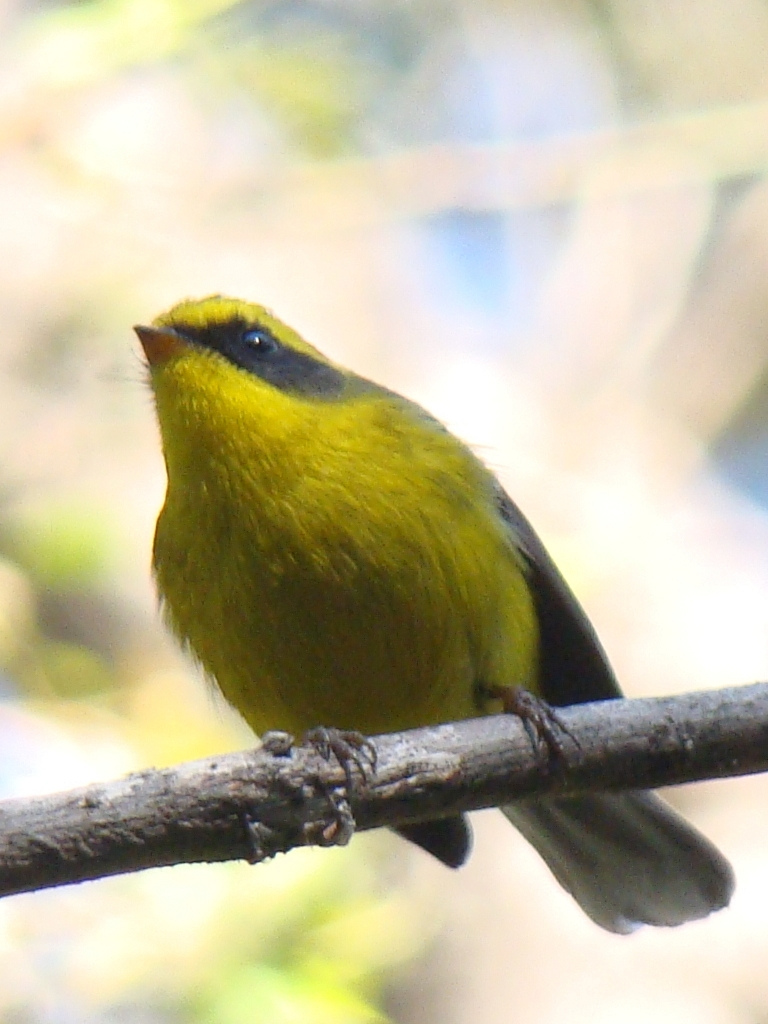
Adult White-tailed Blue Flycatchers boast a stunning cobalt blue plumage that contrasts vividly with their pure white tail, a key field mark for identification. The blue extends across their back, wings, and head, while their underparts are typically lighter, offering a subtle gradation of blue hues. Juveniles differ noticeably, displaying a duller, more muted coloration lacking the full vibrancy of adults. Males and females share similar plumage, making sex differentiation challenging without close observation of behavior or breeding roles. In flight, the White-tailed Blue Flycatcher's silhouette is characterized by rapid wing flaps and a distinctive white tail, often fanned out. Perched, they exhibit an upright posture, frequently flicking their tail and wings, a behavior that aids in distinguishing them from other small blue birds. Although their vivid coloration is a primary identifier, confusion with other flycatchers such as the African Blue Flycatcher can occur. However, the latter lacks the conspicuous white tail, providing a reliable distinguishing feature. The combination of their dynamic movements, vibrant coloration, and specific habitat preferences often assists birders in accurately identifying this species.
Having trouble telling birds apart? Upload a photo to our bird identification tool for an instant species match.
White-tailed Blue Flycatcher Habitat and Range
Preferred Habitat
White-tailed Blue Flycatchers favor montane and sub-montane forests, thriving in areas with dense foliage and abundant insect life. They are commonly found at elevations ranging from 1,500 to 3,000 meters, exploiting the cooler, humid conditions of these high-altitude zones. These flycatchers frequent both primary and secondary forests, adapting to varying degrees of forest maturity. Seasonal shifts may lead them to descend to lower elevations during colder periods, seeking warmer microclimates. While primarily forest dwellers, White-tailed Blue Flycatchers occasionally venture into forest edges and clearings, although they tend to avoid more open, urban settings. Their presence in rural and lightly disturbed areas indicates a degree of adaptability, yet they remain predominantly associated with forested landscapes. These habitat preferences underscore their reliance on rich, diverse ecosystems for foraging and nesting, highlighting the importance of forest conservation for their continued survival.
Geographic Range
The White-tailed Blue Flycatcher inhabits a broad range within central and eastern Africa, with populations established in countries such as Uganda, Kenya, Tanzania, and Zambia. Breeding occurs primarily in high-altitude regions where montane and sub-montane forests provide optimal conditions. While not migratory in the traditional sense, these flycatchers may undertake altitudinal migrations, moving to lower elevations during colder months to escape harsh conditions. Such movements are typically localized, with individuals remaining within a general geographic area. Population density hotspots include the forested regions of the Rwenzori Mountains, the Aberdare Range, and Mount Kenya, where the dense canopy and rich biodiversity offer ideal living conditions. Despite being widespread within their preferred habitats, their specific ecological needs limit their range to areas that can sustain these conditions. Understanding the White-tailed Blue Flycatcher's range is crucial for conservation efforts, as habitat loss and climate change could threaten their established territories.
Want to know which birds visit your area? Browse our backyard birds by location guides for region-specific species lists.
What Does the White-tailed Blue Flycatcher Eat?
The White-tailed Blue Flycatcher primarily feeds on insects, making them proficient insectivores. Their diet consists of a variety of arthropods, including beetles, flies, and caterpillars, which they actively hunt using agile flight maneuvers and sharp visual acuity. Seasonal changes can influence their dietary preferences, with an increase in softer-bodied insects during the rainy season when these prey items become more abundant. Foraging techniques include sallying from a perch to capture insects mid-air, gleaning from foliage, and even hover-gleaning in some instances. The flycatcher's small size and agility allow it to exploit a wide range of prey sizes, although they typically target insects up to 10 millimeters in length. Feeding schedules are diurnal, with peak activity occurring during the cooler parts of the day, such as early morning and late afternoon. The White-tailed Blue Flycatcher's role as a predator of insects is integral to controlling pest populations and maintaining ecological balance within their habitats.
White-tailed Blue Flycatcher Behavior and Social Structure
White-tailed Blue Flycatchers exhibit a range of behaviors that illustrate their social and ecological roles. While generally solitary or found in pairs, they may form small, loose flocks during non-breeding seasons, particularly in areas with abundant food resources. Territorial behavior is evident during the breeding season, with males engaging in vocal displays and aggressive posturing to defend nesting sites. Courtship involves elaborate displays, with males showcasing their vibrant plumage and performing aerial acrobatics to attract females. The flycatcher's response to predators is swift and strategic, often involving alarm calls and evasive flight patterns to deter threats. Daily activity patterns include bursts of foraging interspersed with periods of rest and preening. Despite their small size, White-tailed Blue Flycatchers exhibit a bold and curious nature, often approaching observers within their territory. Their lively presence and energetic behavior make them a dynamic and engaging subject of study for bird enthusiasts.
White-tailed Blue Flycatcher Nesting and Reproduction
White-tailed Blue Flycatchers construct cup-shaped nests, meticulously crafted from plant fibers, moss, and spider webs to ensure structural integrity and camouflage. Nest placement is strategic, often located in the fork of a tree branch or nestled within dense foliage to provide protection from predators and environmental elements. The typical clutch size ranges from two to four eggs, with both parents sharing incubation duties over a period of approximately 13 to 15 days. Post-hatching, fledging occurs around 17 to 21 days, with parental care extending beyond fledging as juveniles develop survival skills. The species typically produces one to two broods per year, with breeding seasons aligning with periods of high insect abundance to maximize food availability for the growing chicks. Parental roles are well-defined, with both the male and female participating in feeding and protecting the young, highlighting the cooperative nature of their breeding strategies.
White-tailed Blue Flycatcher Sounds and Vocalizations
The White-tailed Blue Flycatcher's song is a melodious series of high-pitched, trilling notes that resonate through its forested habitat. The rhythm is fast-paced, with a quality that can be likened to a tinkling stream or a delicate wind chime. Call notes are sharp and abrupt, used in communication between mates and signaling alarm. During the dawn chorus, their song is particularly prominent, as males establish territory and attract mates with their vibrant vocalizations. Alarm calls are distinctive and sharp, serving to alert conspecifics of potential danger. The acoustic presence of the White-tailed Blue Flycatcher enhances the soundscape of their environment, contributing to the rich auditory tapestry of montane forests.
Interesting Facts About the White-tailed Blue Flycatcher
- 1White-tailed Blue Flycatchers can perform a unique hovering flight to catch insects, showcasing their agility.
- 2They exhibit fascinating courtship behavior, with males performing aerial acrobatics to attract females.
- 3Their nests are architectural marvels, often built with spider webs to add strength and flexibility.
- 4Despite their small size, they play a significant role in controlling insect populations in montane forests.
- 5The vibrant blue plumage of the White-tailed Blue Flycatcher reflects UV light, making them stand out to other birds.
- 6Their vocalizations are a delightful addition to the dawn chorus, marking their presence in the forest.
- 7These flycatchers are known for their territorial nature, often defending their space vigorously during breeding season.
White-tailed Blue Flycatcher Conservation Status
Currently, the White-tailed Blue Flycatcher holds a status of Least Concern according to the IUCN Red List, with population trends considered stable. However, their reliance on forested habitats makes them vulnerable to deforestation and habitat degradation, primarily driven by agricultural expansion and logging activities. Conservation efforts focus on habitat preservation and restoration, ensuring that their montane forest environments remain intact and resilient. Historical population assessments indicate a stable presence in their traditional range, yet ongoing monitoring is essential to detect potential declines early. Climate change poses an additional threat, potentially altering their high-altitude habitats and impacting food availability. Continued conservation initiatives are crucial to safeguarding the future of the White-tailed Blue Flycatcher and the ecological communities they inhabit.
Other Stenostiridae Species


Birds Similar to the White-tailed Blue Flycatcher
These species are often confused with the White-tailed Blue Flycatcher due to similar appearance or overlapping range.