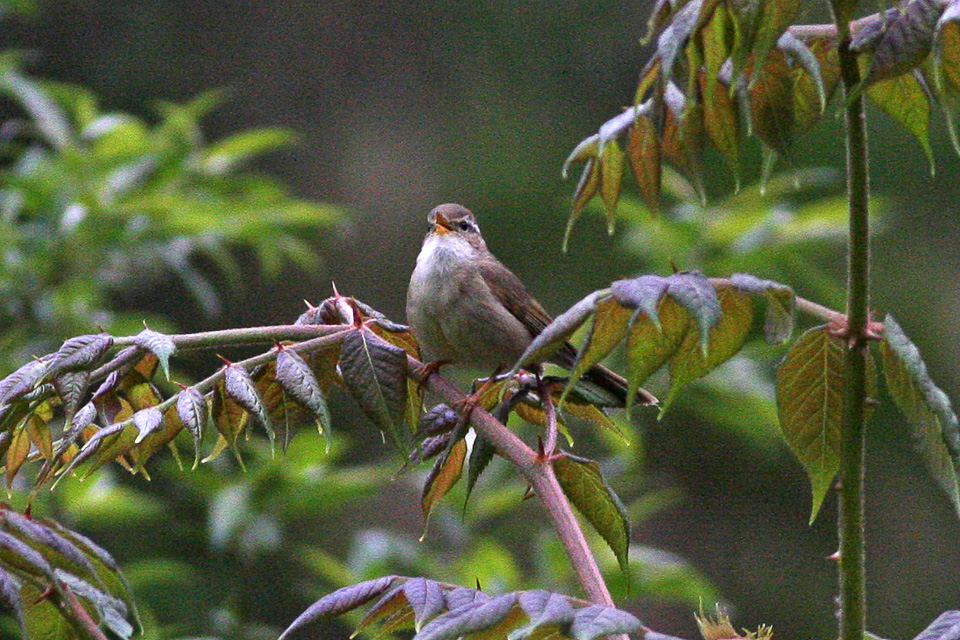
Dusky Warbler
Phylloscopus fuscatus
Order: Passeriformes / Family: Phylloscopidae

Wikimedia Commons
About the Dusky Warbler
The Dusky Warbler, scientifically known as Phylloscopus fuscatus, is a small, inconspicuous bird belonging to the extensive Phylloscopidae family. Its nondescript appearance contrasts with its notable adaptability and extensive range across Eurasia. This warbler breeds primarily in the temperate regions of Eastern Europe and across Siberia, extending as far east as the Kamchatka Peninsula. Its breeding habitats include dense thickets, undergrowth in deciduous and mixed forests, as well as scrubby areas near water bodies. The Dusky Warbler plays a crucial role in its ecosystem by managing insect populations, as it feeds primarily on a variety of small invertebrates. During the non-breeding season, the Dusky Warbler undertakes a long migration to wintering grounds in Southern and Southeast Asia, including India, Southeast China, and the northeastern parts of the Indian subcontinent. Here, it frequents wetlands, reedbeds, and agricultural fields, showcasing its ecological flexibility. Seasonally, the Dusky Warbler exhibits distinct behaviors. During the breeding season, it becomes more territorial and vocal, often heard in the early morning and late evening. In contrast, during winter, it tends to be more solitary or found in small groups, foraging quietly in dense cover. Its presence across diverse habitats and broad geographical range underscores its adaptability, yet it also faces challenges from habitat loss and climate change. The Dusky Warbler's understated appearance belies its ecological significance, making it a subject of interest for both conservationists and bird enthusiasts alike.
The Dusky Warbler belongs to the family Phylloscopidae, within the order Passeriformes. These birds typically live average 5 years with a max recorded of 7 years..
How to Identify a Dusky Warbler
Identifying the Dusky Warbler can be challenging due to its plain appearance, but several key features can aid in its recognition. Adult Dusky Warblers exhibit a uniform brown upperbody with slightly darker wings and tail, while their underparts are a paler buff or grayish-white. The face is marked by a distinct dark eye stripe and a pale supercilium, which is often more pronounced in fresh plumage. Both sexes appear similar, making gender identification in the field difficult. Juvenile Dusky Warblers are similar to adults but tend to show slightly fresher and more rufous-toned plumage when first fledged. Compared to similar species, such as the Radde's Warbler, the Dusky Warbler is smaller and darker, with a shorter tail and a more subdued supercilium. In flight, the Dusky Warbler's silhouette is compact, with rapid wing beats typical of Phylloscopus warblers. When perched, it often adopts a horizontal posture, flicking its wings and tail frequently, which can assist in identification.
Having trouble telling birds apart? Upload a photo to our bird identification tool for an instant species match.
Dusky Warbler Habitat and Range
Preferred Habitat
The Dusky Warbler inhabits a variety of dense, shrubby environments during the breeding season. It prefers thickets, young deciduous forests, and areas with dense undergrowth, often near streams or wetlands. In its breeding range, it can be found from sea level up to elevations of about 1500 meters, particularly in the Siberian taiga. During migration and in its wintering grounds, the Dusky Warbler shows a preference for reedbeds, marshes, and agricultural fields. It is also occasionally seen in urban parks and gardens, particularly in regions where suitable natural habitats are scarce. Throughout the year, the bird's adaptability to different environments is evident, although it generally avoids open, treeless areas.
Geographic Range
The breeding range of the Dusky Warbler spans from Eastern Europe, across Siberia, and into the Russian Far East, including the Kamchatka Peninsula. During migration, it travels extensive distances to reach its wintering grounds in Southern and Southeast Asia. Key wintering areas include northern India, Bangladesh, southern China, and parts of Southeast Asia, such as Thailand and Vietnam. The species follows a broad migratory corridor that takes advantage of various stopover sites rich in resources. Population density is generally higher in the core breeding areas in Siberia and the wintering hotspots in northern India and southern China. The Dusky Warbler's expansive range illustrates its adaptability to diverse climatic conditions and habitats.
Want to know which birds visit your area? Browse our backyard birds by location guides for region-specific species lists.
What Does the Dusky Warbler Eat?
The Dusky Warbler predominantly feeds on small invertebrates. Its diet includes insects such as beetles, caterpillars, and flies, as well as spiders and other arthropods. During the breeding season, when insect populations peak, the warbler's diet is almost exclusively insectivorous. In the winter months, while still primarily insectivorous, it may also consume small seeds and berries, depending on availability. The Dusky Warbler employs various foraging techniques, including gleaning from leaves and branches and occasionally hovering to pick prey from foliage. Its nimble movements and acute vision aid in capturing small prey, typically during dawn and dusk when insect activity is high.
Dusky Warbler Behavior and Social Structure
The Dusky Warbler exhibits a variety of behaviors that reflect its adaptability and survival strategies. It is generally solitary or found in pairs during the breeding season, becoming more territorial as males establish breeding grounds through song and display. Courtship involves males singing persistently, often from a concealed perch, to attract females. In winter, the Dusky Warbler may join mixed-species flocks, benefiting from the safety in numbers while foraging. It is a ground-dwelling warbler, often seen skulking in dense vegetation, which provides cover from predators. When threatened, it often freezes or retreats into thicker cover. Its daily activity patterns are crepuscular, with peak foraging occurring during the early morning and late afternoon. These behaviors underscore its adaptability and resourcefulness across different environments.
Dusky Warbler Nesting and Reproduction
The Dusky Warbler constructs a cup-shaped nest, intricately woven from grasses, leaves, and moss, often reinforced with spider silk. Nests are typically positioned low in dense vegetation or shrubs, providing concealment from predators. The clutch size ranges from 4 to 6 eggs, which are incubated primarily by the female for about 12 to 14 days. Both parents participate in feeding the chicks, which fledge approximately 12 to 14 days after hatching. The Dusky Warbler may raise one or two broods per breeding season, depending on environmental conditions and food availability. Parental roles are shared, although the female tends to spend more time brooding while the male assists with feeding.
Dusky Warbler Sounds and Vocalizations
The Dusky Warbler's primary song consists of a series of sharp, metallic 'tsik' or 'tak' notes delivered in rapid succession. This song is often heard during the breeding season, serving as both a territorial marker and an attraction call for mates. Additionally, the warbler emits a variety of call notes, including a short, sharp 'chink' or 'chit', which is used in alarm situations or to maintain contact between individuals. During the dawn chorus, the Dusky Warbler's song stands out for its brevity and distinctive metallic quality, making it easier to identify among other bird songs. Compared to similar species, its calls are more abrupt and less melodic, reflecting its secretive nature.
Interesting Facts About the Dusky Warbler
- 1The Dusky Warbler can travel over 5,000 kilometers during its migration from Siberia to Southeast Asia.
- 2Despite its plain appearance, the Dusky Warbler's sharp call is a key identifying feature for birdwatchers.
- 3This warbler's adaptability allows it to thrive in both natural and urban environments, including gardens.
- 4The Dusky Warbler's nesting sites are often well hidden in dense vegetation, making them difficult to locate.
- 5In wintering grounds, the Dusky Warbler often joins mixed-species flocks, increasing its foraging efficiency.
Dusky Warbler Conservation Status
The Dusky Warbler is classified as 'Least Concern' by the IUCN, with a stable population trend. Although it faces threats from habitat destruction, particularly due to deforestation and wetland drainage, its extensive range and adaptability have helped buffer against significant declines. Conservation efforts focus on protecting critical habitats along its migratory routes and in both breeding and wintering areas. Historically, the Dusky Warbler has maintained relatively stable populations, though continued monitoring is necessary to ensure that emerging threats do not lead to future declines.