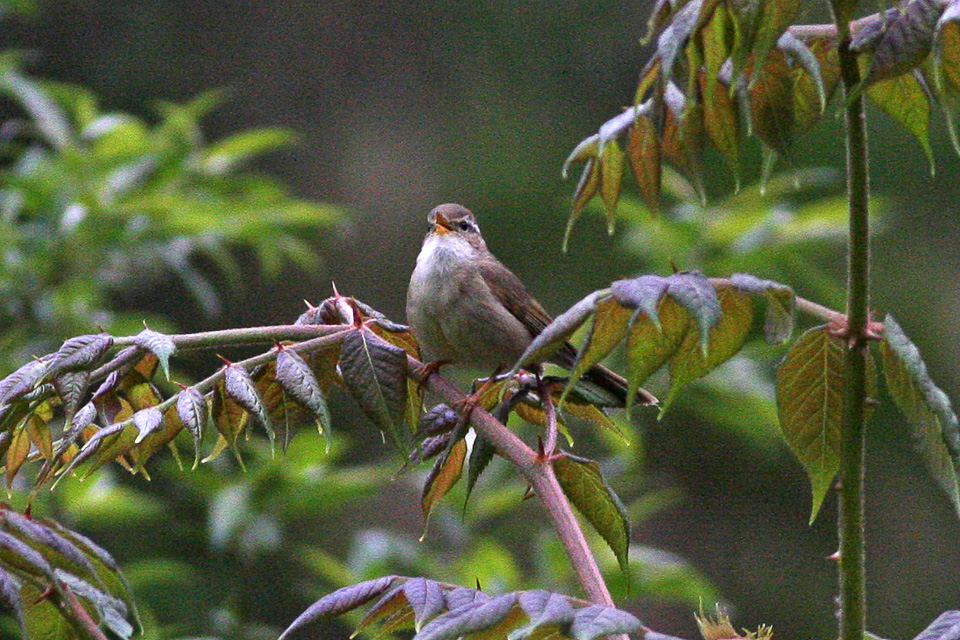
Eastern Crowned Warbler
Phylloscopus coronatus
Order: Passeriformes / Family: Phylloscopidae

Wikimedia Commons
About the Eastern Crowned Warbler
The Eastern Crowned Warbler, scientifically known as Phylloscopus coronatus, is a small yet remarkable songbird belonging to the family Phylloscopidae. This warbler inhabits the dense, deciduous forests across much of Asia, particularly in regions such as the Russian Far East, Northeast China, and parts of Korea. During the breeding season, which spans from late April into July, this species can often be found in mixed and deciduous woodlands where it builds its nest on the ground or in low vegetation. The bird plays a crucial role in controlling insect populations in these ecosystems. In the winter months, the Eastern Crowned Warbler migrates southward to warmer regions, including Southeast Asia, with significant populations in Thailand, Vietnam, and the Malay Peninsula. Such migration makes it an integral part of multiple ecosystems, as it helps in seed dispersal and acts as a prey species for larger predators. This warbler is known for its agile foraging behavior, flitting through the canopy and lower foliage to capture insects. Its presence is a vital indicator of forest health, as it prefers undisturbed habitats with rich biodiversity. Conservationists keep a keen eye on this bird due to habitat loss, which remains a significant threat. The Eastern Crowned Warbler's adaptability to various forest environments, combined with its migratory nature, underscores its ecological significance across its range. Understanding its habits and habitats provides valuable insights into forest ecosystems, emphasizing the need for conservation efforts in both breeding and wintering grounds.
The Eastern Crowned Warbler belongs to the family Phylloscopidae, within the order Passeriformes. These birds typically live average 3-5 years with a maximum recorded of 9 years..
How to Identify a Eastern Crowned Warbler
The Eastern Crowned Warbler is a small bird, measuring approximately 11-12 cm in length. It is most easily recognized by its distinctive crown stripe, which is pale and bordered by dark edges. The overall plumage is greenish above and whitish below. The wings exhibit pale edges, giving a slightly striped appearance. Adults and juveniles share similar plumage, though juveniles may appear slightly duller. Males and females are alike, making gender differentiation challenging in the field. In flight, the warbler's compact silhouette is characterized by rapid wing beats and a slightly rounded tail. When perched, it often adopts an upright posture, flicking its wings intermittently. This species can be confused with the Arctic Warbler, but the latter lacks the prominent crown stripe and has a more uniform olive upperpart. Birders should pay close attention to the head pattern to distinguish it from other similar Phylloscopus species.
Having trouble telling birds apart? Upload a photo to our bird identification tool for an instant species match.
Eastern Crowned Warbler Habitat and Range
Preferred Habitat
The Eastern Crowned Warbler primarily inhabits dense, deciduous, and mixed forests. It thrives at elevations ranging from sea level to about 1500 meters. In regions like the Russian Far East and Northeast China, it prefers mature woodlands with abundant undergrowth. During migration and in winter, it adapts to secondary forests and plantations in Southeast Asia. Although it can occasionally be seen in urban parks, it predominantly favors rural and undisturbed habitats. Seasonal shifts in habitat preference occur as it seeks insect-rich environments for breeding and feeding.
Geographic Range
The Eastern Crowned Warbler breeds across a broad range, including the Russian Far East, northeastern China, and Korea. In winter, it migrates to Southeast Asia, with notable populations in Thailand, Vietnam, and the Malay Peninsula. Its migration corridor includes areas such as Japan and the Philippines, where it is seen during the transition between breeding and wintering grounds. This warbler is most abundant in forested regions, with population density highest in protected areas with minimal habitat disturbance.
Want to know which birds visit your area? Browse our backyard birds by location guides for region-specific species lists.
What Does the Eastern Crowned Warbler Eat?
The Eastern Crowned Warbler primarily feeds on insects and spiders, making it an adept insectivore. Its diet consists of caterpillars, beetles, and other small arthropods, which it gleans from foliage. During the breeding season, its feeding intensifies to support nestlings, often foraging in the upper canopy. In winter, the diet diversifies slightly to include small fruits and seeds, although insects remain the mainstay. Its foraging technique involves flitting through branches and hovering briefly to snatch prey, often during the early morning and late afternoon when insect activity peaks.
Eastern Crowned Warbler Behavior and Social Structure
Eastern Crowned Warblers exhibit solitary or pair-based social structures, particularly during breeding. They are territorial and defend their nesting areas with song and displays. Courtship involves males singing persistently to attract females. Outside the breeding season, these warblers may form loose flocks with other insectivorous birds, enhancing foraging efficiency. When faced with predators, they use alarm calls and take cover in dense foliage. Their activity peaks during dawn and dusk, although they remain active throughout the day.
Eastern Crowned Warbler Nesting and Reproduction
Eastern Crowned Warblers construct their nests on the ground or in low shrubs, using materials like grass, leaves, and moss. They prefer concealed locations to avoid predators. Clutch size usually ranges from 4 to 6 eggs, with an incubation period of approximately 12 to 14 days. Both parents share incubation duties and feeding of the young. Fledging occurs about 12 days after hatching. Typically, they raise only one brood per year, although in favorable conditions, a second brood is possible.
Eastern Crowned Warbler Sounds and Vocalizations
The primary song of the Eastern Crowned Warbler is a series of melodious, high-pitched notes that rise and fall, reminiscent of a tinkling stream. Its call notes are short, sharp 'tsip' sounds, often repeated. Alarm calls are harsher and more insistent, signaling potential threats. During the dawn chorus, its song carries through the forest, a clear indicator of territorial presence.
Interesting Facts About the Eastern Crowned Warbler
- 1The Eastern Crowned Warbler can cover over 2000 kilometers during its migratory journey between breeding and wintering grounds.
- 2Unlike many warblers, the Eastern Crowned prefers to nest on the ground, camouflaging its nest with leaves and grasses.
- 3This warbler is known for its agile foraging, often seen hanging upside down to reach insects on the underside of leaves.
- 4The Eastern Crowned Warbler's song consists of intricate patterns, helping it maintain territory and attract mates.
- 5Despite its small size, the Eastern Crowned Warbler plays a crucial role in controlling forest insect populations.
- 6During migration, these warblers can form mixed-species flocks, increasing their foraging success and predator avoidance.
- 7The Eastern Crowned Warbler's distinctive crown stripe is a key field mark, allowing birdwatchers to identify it even from a distance.
Eastern Crowned Warbler Conservation Status
The Eastern Crowned Warbler currently holds a Least Concern status on the IUCN Red List, although habitat loss poses a significant threat. Deforestation and land conversion in breeding and wintering areas contribute to population pressure. Conservation efforts focus on habitat protection and restoration. Historically, population trends have shown stability, but ongoing monitoring is crucial to detect changes.