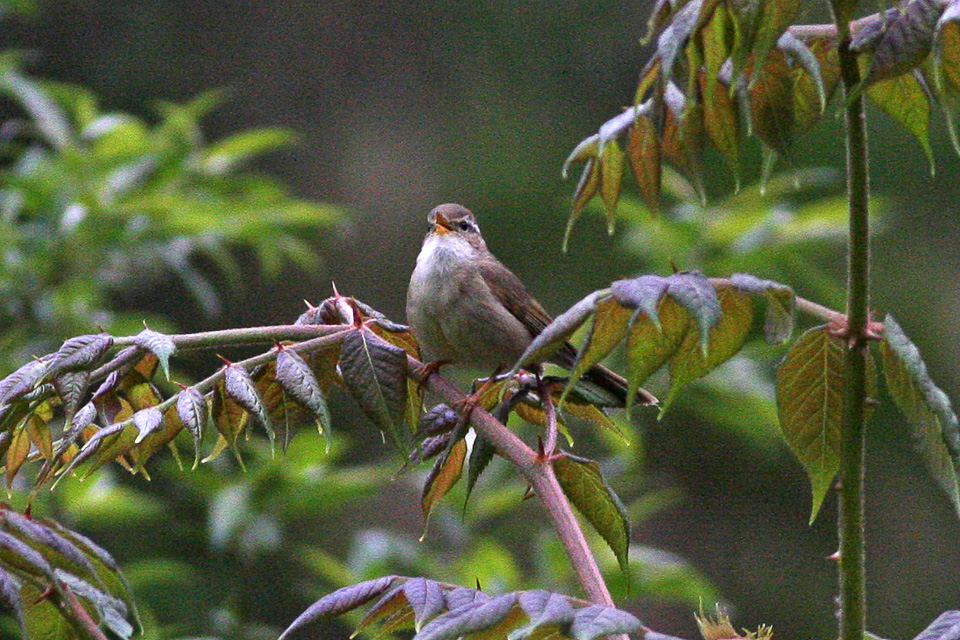
Emei Leaf Warbler
Phylloscopus emeiensis
Order: Passeriformes / Family: Phylloscopidae

Wikimedia Commons
About the Emei Leaf Warbler
The Emei Leaf Warbler (Phylloscopus emeiensis), a diminutive member of the family Phylloscopidae, captivates bird enthusiasts with its vibrant plumage and intricate vocalizations. Native to the montane forests of China, this warbler primarily inhabits the regions surrounding the Emei Mountains, after which it is named. Its presence in these biodiverse areas highlights the ecological richness and significance of such habitats.
As an insectivorous species, the Emei Leaf Warbler plays a crucial role in controlling insect populations, thus maintaining ecological balance in its native forests. Observers often find these birds flitting through the mid to upper canopies, actively foraging among leaves and branches. The warbler is most active during the breeding season, typically from April to July, when its melodious songs resonate through the forests. Outside of the breeding season, it tends to be less vocal, although still visible due to its active foraging behavior.
The Emei Leaf Warbler's ecological role extends beyond its immediate environment. It serves as an indicator species for the health of montane forest ecosystems. Its sensitivity to habitat changes makes it a valuable subject for studies on environmental impacts, particularly in regions facing deforestation and climate change. Conservation efforts aimed at preserving its habitat are crucial for maintaining the biodiversity of these forests. The Emei Leaf Warbler's presence underscores the interconnectedness of species and the importance of preserving natural habitats.
The Emei Leaf Warbler belongs to the family Phylloscopidae, within the order Passeriformes. These birds typically live average 2-4 years with a maximum recorded of 7 years..
How to Identify a Emei Leaf Warbler
The Emei Leaf Warbler is a small songbird, approximately 10 cm in length, with a bright green upper body that aids in its camouflage among the foliage. Its underparts are pale, with a slight yellowish tinge that becomes more pronounced during the breeding season. One of its distinctive features is the bold white supercilium that contrasts sharply with its greenish crown. Juveniles display a duller version of the adult plumage, lacking the vibrant green and distinct markings.
Males and females are similar in appearance, making it challenging to differentiate them in the field. However, during the breeding season, males can be more easily observed due to their increased vocal activity. The warbler's flight silhouette is characterized by rapid, fluttering wingbeats typical of the Phylloscopus genus, allowing it to maneuver adeptly through dense foliage.
Confusion with similar species such as the Blyth's Leaf Warbler (Phylloscopus reguloides) may occur, but the Emei Leaf Warbler's brighter green plumage and more pronounced supercilium provide reliable distinguishing features. When perched, it often adopts an upright stance, occasionally flicking its wings and tail as it surveys its surroundings.
Having trouble telling birds apart? Upload a photo to our bird identification tool for an instant species match.
Emei Leaf Warbler Habitat and Range
Preferred Habitat
The Emei Leaf Warbler thrives in subtropical montane forests, particularly favoring areas with dense canopy cover and abundant understory. In China, its primary habitat encompasses the Emei Mountains and surrounding regions, where elevations range from 1,200 to 2,800 meters. It prefers mixed coniferous and broadleaf forests, which offer a rich supply of insects and shelter.
Seasonal habitat shifts are minimal, as these warblers do not typically undertake long migrations. Instead, they may move to slightly lower elevations during harsher weather conditions in winter, where shelter and food remain accessible. While predominantly forest dwellers, they occasionally venture into adjacent rural landscapes, especially during foraging excursions. The presence of Emei Leaf Warblers in urban areas is rare, as they depend on intact forest ecosystems for survival.
Geographic Range
The Emei Leaf Warbler's range is predominantly confined to the montane regions of southwestern China. Its breeding range is focused in the high-altitude forests of the Emei Mountains, with populations also documented in neighboring areas such as Sichuan and Yunnan provinces. This restricted range emphasizes the species' reliance on specific habitat conditions found in these regions.
Migration in the Emei Leaf Warbler is limited, with most individuals remaining resident within their breeding territories year-round. Some may exhibit altitudinal migration, moving to lower elevations during winter months. Population density is highest in well-preserved forests of the Emei Mountains, where suitable habitat conditions are met. The warbler's limited range and specialized habitat requirements make it a species of interest for conservationists monitoring the impacts of habitat degradation in these regions.
Want to know which birds visit your area? Browse our backyard birds by location guides for region-specific species lists.
What Does the Emei Leaf Warbler Eat?
The Emei Leaf Warbler primarily feeds on insects, which constitute the bulk of its diet year-round. It exhibits a preference for small, soft-bodied insects such as aphids, caterpillars, and beetles. During the breeding season, the warbler's dietary needs increase, prompting more intensive foraging behavior to meet the nutritional demands of both adults and their offspring.
Foraging typically occurs in the mid to upper canopy, where the Emei Leaf Warbler skillfully navigates through foliage, gleaning insects from leaves and branches. This active foraging style involves short, quick flights and occasional hovering as it inspects potential food sources. Seasonal diet shifts are minimal, although the availability of specific insect prey may vary, prompting adjustments in foraging locations and techniques.
The warbler's diet plays a vital role in its ecosystem, aiding in pest control and promoting forest health. Understanding its feeding habits provides insights into the ecological dynamics of its habitat, highlighting the interconnectedness of species within these complex ecosystems.
Emei Leaf Warbler Behavior and Social Structure
The Emei Leaf Warbler exhibits a range of behaviors that reflect its adaptation to forest environments. It is generally solitary or found in pairs during the breeding season. The males are highly territorial, engaging in vocal displays to establish and defend their territories from rivals. Its song, a series of clear, melodious notes, serves both to attract mates and to ward off competitors.
During courtship, the male performs flight displays and engages in chases that demonstrate agility and vigor. These displays, combined with vocalizations, play a crucial role in mate selection. Once paired, Emei Leaf Warblers maintain strong pair bonds throughout the breeding season, often cooperating closely in nest building and chick rearing.
The species is diurnal, with peak activity during early morning and late afternoon. Flocking behavior is uncommon, although outside of the breeding season, individuals may join mixed-species foraging groups, enhancing feeding efficiency and predator avoidance. When threatened, the warbler relies on its cryptic plumage and rapid flight to evade predators, often retreating to dense cover where it remains motionless until the danger has passed.
Emei Leaf Warbler Nesting and Reproduction
The Emei Leaf Warbler constructs its nests in concealed locations, often choosing low branches or dense shrubs within its forest habitat. The nest is cup-shaped, meticulously woven from fine grasses, moss, and spider silk, providing both camouflage and insulation for the eggs and chicks.
A typical clutch consists of 3 to 5 eggs, with the female primarily responsible for incubation, which lasts approximately 12 to 14 days. During this period, the male may assist by providing food, although his primary role remains territorial defense. Once hatched, both parents participate in feeding the chicks, delivering a steady supply of insects to ensure rapid growth and development.
Fledging occurs about 14 to 16 days after hatching, with young warblers remaining under parental care for several weeks as they learn essential survival skills. The species typically raises one brood per year, although favorable conditions may occasionally permit a second. The nesting habits of the Emei Leaf Warbler reflect its adaptation to a dynamic forest environment, emphasizing the importance of suitable habitat for successful reproduction.
Emei Leaf Warbler Sounds and Vocalizations
The Emei Leaf Warbler is renowned for its clear and melodious song, which consists of a series of repetitive, high-pitched notes delivered in rapid succession. This song, often described as a tinkling melody, serves both territorial and mate-attracting purposes. During the dawn chorus, the male's song is particularly prominent, resonating through the forest as a declaration of presence.
In addition to its primary song, the warbler emits a range of call notes used for communication between mates and alerting others to potential threats. These calls are typically short and sharp, serving as an effective alarm system within the dense undergrowth of its habitat. The warbler's vocalizations, though varied, maintain a distinctive quality that helps differentiate it from other sympatric species.
The Emei Leaf Warbler's sounds play a vital role in its ecological interactions, facilitating communication and social cohesion within its primarily solitary lifestyle. Birdwatchers often rely on its distinctive song to locate and identify this elusive species within its forested home.
Interesting Facts About the Emei Leaf Warbler
- 1The Emei Leaf Warbler was first described in 1998, making it a relatively recent addition to ornithology.
- 2This warbler is named after the Emei Mountains in China, a region known for its staggering biodiversity.
- 3The Emei Leaf Warbler's vibrant green plumage provides excellent camouflage in the lush canopy.
- 4Despite its small size, the Emei Leaf Warbler has a powerful and far-carrying song.
- 5Studies show that this warbler plays a critical role in controlling pest populations in its habitat.
- 6The Emei Leaf Warbler's limited range makes it a flagship species for conservation in montane forest regions.
- 7It is often observed in species-rich mixed foraging flocks, enhancing its foraging success and predator awareness.
Emei Leaf Warbler Conservation Status
The Emei Leaf Warbler currently holds a conservation status of Least Concern according to the IUCN. However, its population trends warrant monitoring due to habitat fragmentation and deforestation in its limited range. The primary threats to this species include logging activities and land conversion for agriculture, which degrade the forest habitats essential for its survival. Conservation efforts focus on habitat preservation, with protected areas such as nature reserves playing a crucial role in safeguarding its forest environment. Additionally, ongoing research aims to better understand its ecological needs and responses to environmental changes, contributing to more effective conservation strategies. Historically, the population of the Emei Leaf Warbler has shown resilience, although increasing human activities in its habitat region pose potential risks. Continued conservation attention is necessary to ensure the species' long-term viability and the preservation of the unique ecosystems it inhabits.