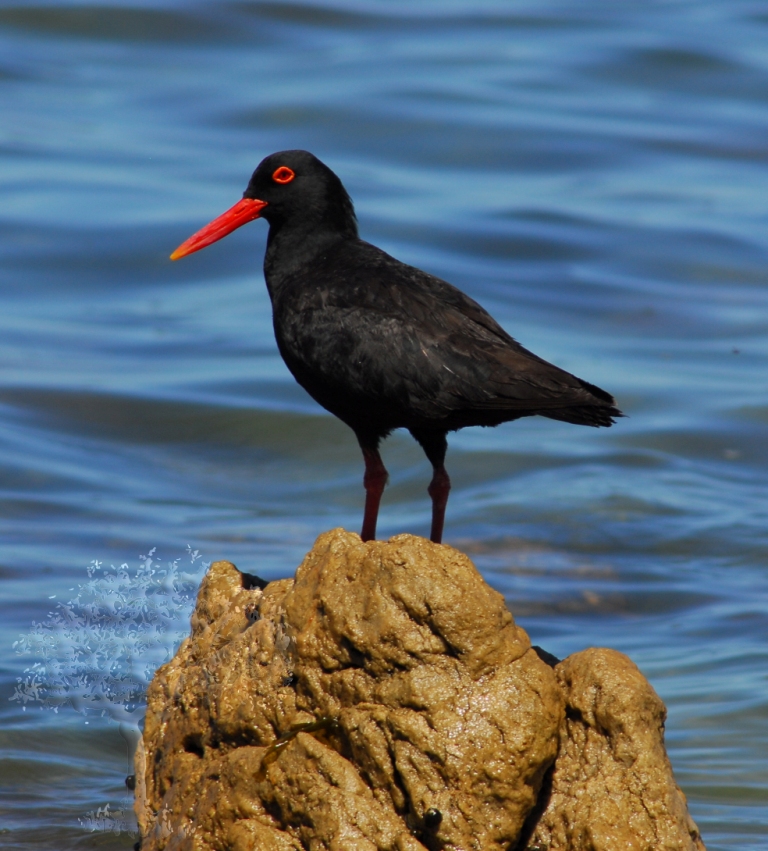
Eurasian Oystercatcher
Haematopus ostralegus
Order: Charadriiformes / Family: Haematopodidae

Wikimedia Commons
About the Eurasian Oystercatcher
The Eurasian Oystercatcher (Haematopus ostralegus) is a robust shorebird recognized for its stark black-and-white plumage, vivid orange-red bill, and conspicuous presence along coastlines and estuaries. This species plays a crucial ecological role as a predator of bivalves and other marine invertebrates, helping to maintain the balance of these populations. They are found across a vast geographic range, from the coasts of Europe to parts of central Asia, with significant populations inhabiting the British Isles, the Netherlands, and Scandinavia. Their preference for coastal habitats makes them a familiar sight on mudflats, sandy shores, and even inland wetlands during the breeding season.
Eurasian Oystercatchers are migratory in nature, with northern populations traveling to southern Europe and North Africa to overwinter. Some populations, particularly those in milder climates, may remain resident throughout the year. Their migration is a spectacle, as large flocks can often be seen traveling together in tight formations. During the breeding season, they exhibit strong territorial behaviors, often returning to the same nesting sites year after year.
In terms of ecological significance, the Eurasian Oystercatcher contributes to the health of intertidal ecosystems by preying on mollusks, thereby controlling these populations and preventing overgrowth. Their feeding activities also aid in nutrient cycling within these habitats. Their presence is an indicator of healthy coastal ecosystems, and changes in their populations can signal shifts in environmental conditions. As such, they serve as valuable indicators for conservationists monitoring the health of coastal and estuarine environments.
The Eurasian Oystercatcher belongs to the family Haematopodidae, within the order Charadriiformes. These birds typically live typically 12-15 years, with some individuals reaching over 30 years..
How to Identify a Eurasian Oystercatcher
Adult Eurasian Oystercatchers are unmistakable, with their glossy black upperparts and contrasting white underparts. Their long, straight, and bright orange bill is particularly striking against their black head, making them easy to identify even at a distance. The legs are pinkish-red, adding another splash of color. In flight, they display a pronounced white wing-bar and white rump, which are key identification features.
Juvenile Eurasian Oystercatchers differ from adults in having duller plumage, with more brownish tones in their black feathers and a less vivid bill color, which starts off greyish and gradually turns to the adult's bright orange as they mature. Sexes are similar in appearance, though females typically have slightly longer bills than males, an adaptation believed to aid in their different foraging strategies.
Confusion with similar species is rare due to the distinctive coloration and size of the Eurasian Oystercatcher. However, in some regions, they may be mistaken for other oystercatcher species, which can be differentiated by subtle differences in plumage and bill shape. Their flight silhouette is characterized by rapid wingbeats and strong, direct flight, making them easily recognizable in the field.
Having trouble telling birds apart? Upload a photo to our bird identification tool for an instant species match.
Eurasian Oystercatcher Habitat and Range
Preferred Habitat
Eurasian Oystercatchers predominantly inhabit coastal areas such as sandy and rocky beaches, mudflats, and estuaries. They are often found at sea level but can also be seen in inland habitats such as wetlands and riverbanks during the breeding season. In some regions, they have adapted to urban environments, nesting on flat rooftops in cities close to water.
During the breeding season, they prefer habitats that offer a mix of tidal areas for feeding and open, flat ground for nesting. Mudflats rich in bivalves and other invertebrates are particularly favored. As winter approaches, many populations migrate to milder coastal regions, where they continue to exploit similar habitats for feeding and roosting.
Geographic Range
The Eurasian Oystercatcher's breeding range extends across Europe and into Central Asia, with significant populations in the United Kingdom, the Netherlands, and Scandinavia. During the winter months, many northern populations migrate southward to spend the season in southern Europe and North Africa, with some reaching as far as the Iberian Peninsula and the Mediterranean coastline.
Migration corridors are primarily coastal, with birds following shorelines to their wintering grounds. Populations in milder climates, such as those in Western Europe, may remain resident year-round. Population densities are highest in regions like the Wadden Sea, where extensive mudflats provide ideal feeding conditions for large flocks.
Want to know which birds visit your area? Browse our backyard birds by location guides for region-specific species lists.
What Does the Eurasian Oystercatcher Eat?
The diet of the Eurasian Oystercatcher primarily consists of marine invertebrates, with a strong preference for bivalve mollusks such as mussels and cockles. Their powerful bills are adept at prying open shells, allowing them to access the soft flesh inside. They also feed on worms, crustaceans, and occasionally small fish.
During different seasons, their diet may vary slightly depending on the availability of prey. In winter, when shellfish are less accessible due to colder waters, they may shift to feeding on more accessible prey like worms and crustaceans. Oystercatchers typically forage during low tide when mudflats are exposed, using a combination of visual and tactile cues to locate their prey.
Eurasian Oystercatcher Behavior and Social Structure
Eurasian Oystercatchers are highly social birds, especially outside of the breeding season, when they gather in large flocks to feed and roost. They exhibit strong territorial behavior during the breeding season, defending their nesting sites vigorously from intruders. Courtship involves distinctive displays, including aerial chases and synchronized flights.
Flocking behavior is particularly noteworthy during migration, with birds traveling in cohesive groups that can number in the hundreds. They are diurnal, being most active during daylight hours, and their response to predators includes alarm calls and mobbing behavior to deter threats.
Eurasian Oystercatcher Nesting and Reproduction
Eurasian Oystercatchers typically nest on open ground, often choosing sites close to water. Nests are simple scrapes in the substrate, lined with small pebbles, shells, and vegetation. They prefer sites that offer good visibility to detect approaching predators.
Clutch size usually consists of 2-4 eggs, which are incubated by both parents for about 24-27 days. Once hatched, chicks are precocial and leave the nest shortly after birth. Fledging occurs approximately 30-35 days later, with both parents sharing the responsibility of feeding and protecting the young. Generally, they raise one brood per year.
Eurasian Oystercatcher Sounds and Vocalizations
The primary call of the Eurasian Oystercatcher is a loud, high-pitched piping sound, often described as 'kleep-kleep.' This call serves multiple purposes, including communication between mates and signaling alarm. During the breeding season, their calls become more frequent and intense, especially when establishing territories or defending nests.
Their alarm calls are sharper and more urgent, used to warn other oystercatchers of potential threats. While not known for melodious songs, their vocalizations are distinct and carry well across open landscapes, making them easily recognizable to those familiar with their sounds.
Interesting Facts About the Eurasian Oystercatcher
- 1The Eurasian Oystercatcher can live up to 40 years in the wild, making it one of the longest-lived shorebirds.
- 2Despite their name, Eurasian Oystercatchers rarely eat oysters, as their preferred diet consists of softer-shelled bivalves.
- 3Eurasian Oystercatchers use a unique technique called 'hammering' to break open shellfish, showcasing their adaptability.
- 4They exhibit a fascinating behavior known as 'foot-trembling,' where they vibrate one foot in shallow water to flush out prey.
- 5The scientific name 'Haematopus ostralegus' translates to 'blood-foot,' referencing their reddish legs.
- 6Some populations have adapted to urban environments, nesting on rooftops in coastal cities.
- 7Eurasian Oystercatchers are known for their strong pair bonds, often mating for life and returning to the same nesting sites annually.
Eurasian Oystercatcher Conservation Status
The Eurasian Oystercatcher is currently listed as 'Least Concern' by the IUCN, with populations generally stable across much of its range. However, certain localized populations face threats from habitat loss, pollution, and human disturbance, particularly in areas of high coastal development. Conservation efforts focus on protecting important breeding and wintering habitats, such as the Wadden Sea, a critical area for large populations. Historical population changes have seen declines in some areas due to habitat modification and increased human activity, but ongoing conservation measures aim to mitigate these impacts.
Other Haematopodidae Species


Birds Similar to the Eurasian Oystercatcher
These species are often confused with the Eurasian Oystercatcher due to similar appearance or overlapping range.