
Fulmar Prion
Pachyptila crassirostris
Order: Procellariiformes / Family: Procellariidae
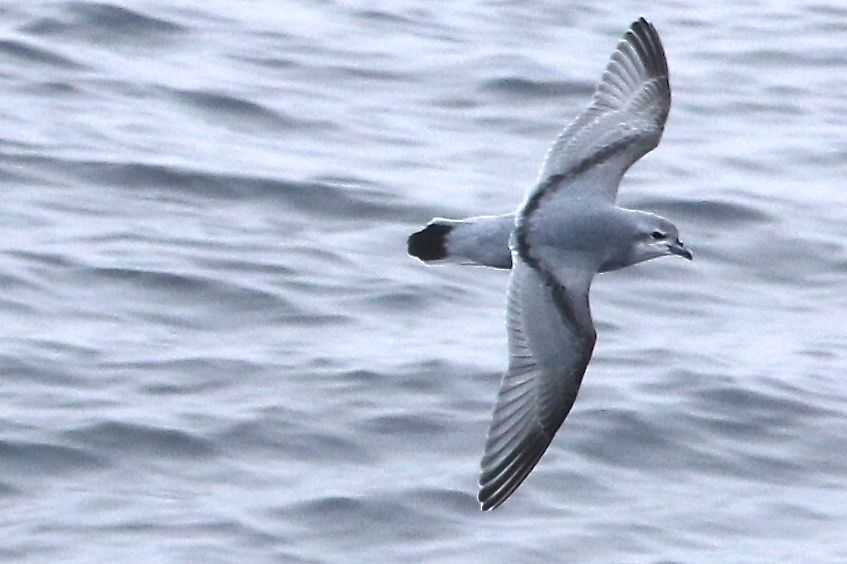
Wikimedia Commons
About the Fulmar Prion
The Fulmar Prion, scientifically known as Pachyptila crassirostris, is a remarkable seabird within the family Procellariidae. This species inhabits the southern oceans, particularly around New Zealand and nearby subantarctic islands. Its unique adaptations make it a significant component of the marine ecosystems it occupies. As a member of the tubenose family, it features specialized nasal passages to excrete salt, allowing it to thrive in the salty marine environment. The Fulmar Prion plays a key role in the ecological dynamics of its habitat by participating in nutrient cycling through its predation on marine life. During the breeding season, these birds congregate in large colonies on remote islands, such as the Chatham Islands, where they nest in burrows or crevices. The Fulmar Prion's presence in these areas influences the local flora and fauna, contributing to the richness of island biodiversity. Its life at sea, outside the breeding season, remains largely elusive, but it is believed to follow specific oceanic currents, exploiting food-rich waters. Seasonal behaviors include migrations to offshore feeding grounds during non-breeding months. The bird's slick plumage and efficient flight patterns allow it to cover vast distances with minimal energy expenditure, highlighting its adaptation to life at sea. Through its migratory and feeding habits, the Fulmar Prion has become a critical subject for understanding marine ecology and the impacts of environmental change on seabird populations.
The Fulmar Prion belongs to the family Procellariidae, within the order Procellariiformes. These birds typically live average 15 years, with some individuals reaching over 20 years..
How to Identify a Fulmar Prion
The Fulmar Prion is medium-sized, with an average wingspan of 60 to 70 cm. Its plumage is predominantly blue-gray on the upperparts, with white underparts and a distinctive dark M-shaped band across the upper wings. The robust bill is a key identifying feature, adapted for its diet of small marine organisms. Juveniles closely resemble adults but may display slightly duller plumage. There is little sexual dimorphism, making males and females difficult to distinguish in the field. In flight, the Fulmar Prion's silhouette is characterized by rapid wingbeats interspersed with glides, typical of prions. Perching, they exhibit an upright posture, often on rocky outcrops or nest sites. Similar species include other prions such as the Fairy Prion, but the Fulmar Prion can be differentiated by its thicker bill and darker plumage markings.
Having trouble telling birds apart? Upload a photo to our bird identification tool for an instant species match.
Fulmar Prion Habitat and Range
Preferred Habitat
The Fulmar Prion primarily inhabits coastal and pelagic oceanic environments. During the breeding season, it nests on subantarctic islands, preferring rocky cliffs and tussock grasslands. These habitats provide necessary cover and protection from predators. Outside of breeding, the bird ventures into open seas, following cold water currents that bring nutrient-rich waters and abundant food sources. It is rare to find this species in urban or rural settings, as it is highly adapted to marine life. Seasonal habitat shifts occur as the birds move from breeding colonies to wide-ranging oceanic feeding grounds, often covering several thousand kilometers.
Geographic Range
The Fulmar Prion's breeding range is concentrated around the subantarctic islands of New Zealand, including the Chatham and Antipodes Islands. During the non-breeding season, it disperses across the southern oceans, with sightings reported as far as the southern coasts of Australia and South Africa. The bird's migration corridors are influenced by oceanic currents, such as the Antarctic Circumpolar Current. While its population density is highest near breeding sites, the species can be widespread across its pelagic range. Despite its broad distribution, the Fulmar Prion is more commonly found in specific marine hotspots where food is abundant.
Want to know which birds visit your area? Browse our backyard birds by location guides for region-specific species lists.
What Does the Fulmar Prion Eat?
The Fulmar Prion's diet primarily consists of small marine organisms, such as copepods, krill, and small fish. During the breeding season, the bird relies heavily on nearby rich feeding grounds to provide for its young. In the non-breeding season, its diet may shift slightly based on available resources, but it consistently favors areas with high concentrations of plankton and small prey. Foraging techniques include surface seizing and occasionally underwater pursuit, utilizing its adept flying skills to spot and capture prey. Feeding primarily occurs during daylight hours when visual hunting is most effective.
Fulmar Prion Behavior and Social Structure
The Fulmar Prion is a gregarious bird, often forming large flocks at sea and dense colonies during breeding. Its social structure is evident in its cooperative nesting and foraging behaviors. Courtship displays involve synchronized flights and vocalizations that strengthen pair bonds. The bird exhibits minimal territorial aggression, allowing for high-density nesting. Flocking patterns are fluid, with large groups appearing in feeding areas. The Fulmar Prion responds to predators with evasive flight and vocal alarms, alerting colony members to danger. Daily activity includes extended periods of foraging interspersed with rest on the water.
Fulmar Prion Nesting and Reproduction
Fulmar Prions nest in burrows, crevices, or under vegetation on isolated islands. They use natural materials like grass and feathers to line their nests. Clutch size is typically one egg per season, with both parents sharing incubation duties over a period of 50 days. Chicks fledge approximately 50-60 days after hatching, dependent on parental feeding. Both parents play active roles in feeding the chick, making multiple trips to sea daily. The species generally raises one brood per year, synchronized with food availability.
Fulmar Prion Sounds and Vocalizations
The Fulmar Prion's primary vocalization is a series of harsh, nasal calls often described as 'braying.' These calls are most common at breeding colonies, especially during courtship and territorial disputes. Alarm calls are sharper and more urgent, serving to warn others of predators. Compared to the calls of related species, the Fulmar Prion's vocalizations are lower in pitch and more rhythmic. Dawn chorus activities include a mix of calls and aerial displays, reinforcing social bonds and territory among colony members.
Interesting Facts About the Fulmar Prion
- 1The Fulmar Prion can desalinate seawater through its specialized nasal glands, a common trait among seabirds.
- 2Despite being a strong flyer, the Fulmar Prion is known for its clumsy landings, often stumbling on rocky surfaces.
- 3This prion species can cover distances of over 1000 kilometers in a single day while searching for food.
- 4Fulmar Prions exhibit a remarkable fidelity to their nesting sites, often returning to the same burrow each year.
- 5During the breeding season, Fulmar Prions can form colonies of over 100,000 pairs on a single island.
- 6The bird's diet includes bioluminescent prey, making nighttime feeding a visually striking event.
- 7Fulmar Prions are known to live for over 20 years in the wild, demonstrating their adaptability and resilience.
Fulmar Prion Conservation Status
The Fulmar Prion is currently classified as Least Concern by the IUCN, with populations appearing stable. Primary threats include habitat disturbance at breeding sites and predation by introduced mammals. Conservation efforts focus on habitat protection and invasive species control. Historical population changes have been influenced by human activity, though recent measures have stabilized numbers. Continued monitoring and habitat management are crucial for maintaining healthy populations.
Other Procellariidae Species


Birds Similar to the Fulmar Prion
These species are often confused with the Fulmar Prion due to similar appearance or overlapping range.

