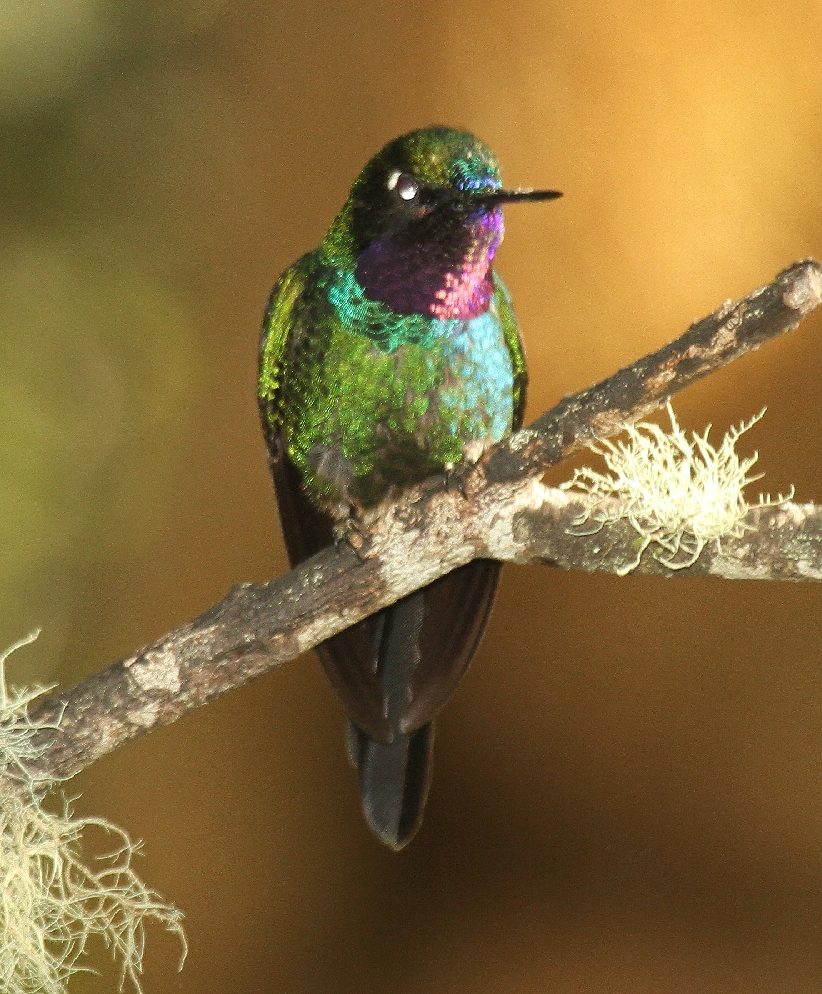
Gorgeted Sunangel
Heliangelus strophianus
Order: Apodiformes / Family: Trochilidae

Wikimedia Commons
About the Gorgeted Sunangel
The Gorgeted Sunangel (Heliangelus strophianus) is a captivating hummingbird species endemic to the cloud forests of the Andes. This small bird, belonging to the Trochilidae family, is renowned for its vivid plumage and active foraging behavior. The Gorgeted Sunangel primarily inhabits regions in Ecuador and southern Colombia, thriving in the humid, montane forests where it plays a critical ecological role as a pollinator. During the breeding season, these birds are highly territorial and exhibit impressive aerial displays to defend their feeding territories. By visiting a variety of flowering plants, they facilitate cross-pollination and contribute to the health of their forest ecosystems. The Gorgeted Sunangel is particularly associated with elevations ranging from 1,200 to 3,000 meters, where it finds abundant floral resources. The bird's presence is a key indicator of healthy, undisturbed habitats, as it requires specific microclimatic conditions provided by the Andean cloud forests. Seasonal behaviors of the Gorgeted Sunangel include altitudinal movements following the flowering cycles of their preferred plants, ensuring year-round access to nectar. This hummingbird also exhibits a partial migratory pattern, moving to slightly lower elevations during harsh weather conditions or when food resources become scarce. The Gorgeted Sunangel's ecological significance extends beyond pollination. Its diet also includes small insects, providing a check on insect populations and contributing to the dynamic balance of the ecosystem. Observations suggest that the bird's population density might fluctuate based on environmental factors such as climate change and habitat alteration, highlighting the need for ongoing conservation efforts to preserve its delicate habitat.
The Gorgeted Sunangel belongs to the family Trochilidae, within the order Apodiformes. These birds typically live average 4-5 years with a maximum recorded of 8 years..
How to Identify a Gorgeted Sunangel
The Gorgeted Sunangel stands out with its brilliant plumage and distinctive markings. Adult males display a vibrant, iridescent green gorget, which is a key field mark, contrasting with their dark, velvety black head and back. The gorget often appears to shimmer with a purple or blue hue, depending on the light conditions. In contrast, females are slightly less colorful, featuring a more subdued green throat and belly, with a grayish crown and back. Juveniles resemble females but have additional brownish tones on their undersides. The bird's size is small, typically measuring around 10-12 cm in length, with a wingspan of approximately 15 cm, making it a medium-sized hummingbird. When comparing the Gorgeted Sunangel to similar species, its distinctive gorget and overall darker coloration help differentiate it from other sunangels. In flight, the Gorgeted Sunangel exhibits rapid, agile movements, often hovering in front of flowers or darting between perches. Its perching posture is upright, often on exposed branches, which allows it to survey its territory and detect intruders or potential mates.
Having trouble telling birds apart? Upload a photo to our bird identification tool for an instant species match.
Gorgeted Sunangel Habitat and Range
Preferred Habitat
Gorgeted Sunangels predominantly occupy the cloud forests of the Andean mountain range, where they find optimal living conditions in the dense, mist-laden vegetation. These habitats are characterized by high humidity and consistent cloud cover, providing rich floral diversity. The preferred elevation range for these birds is between 1,200 and 3,000 meters above sea level, with a preference for areas with abundant flowering plants such as bromeliads and epiphytes. Seasonal habitat shifts are relatively common, with the sunangel moving to slightly lower elevations during colder months or when their primary floral resources are scarce. While typically associated with pristine, rural environments, Gorgeted Sunangels can occasionally be observed in semi-urban areas where suitable habitat remnants exist.
Geographic Range
The Gorgeted Sunangel's range is primarily confined to the Andean regions of Ecuador and southern Colombia. It is a non-migratory species, although some altitudinal movements occur in response to seasonal changes in food availability. During the breeding season, these hummingbirds are found in dense forest interiors, where they establish territories rich in nectar sources. In contrast, during non-breeding periods, they may venture into more open areas, including forest edges and clearings. Population density hotspots include protected areas such as the Podocarpus National Park in Ecuador, where conservation efforts have helped maintain suitable habitats. Although their range is limited, the Gorgeted Sunangel remains relatively common within its preferred habitats.
Want to know which birds visit your area? Browse our backyard birds by location guides for region-specific species lists.
What Does the Gorgeted Sunangel Eat?
The diet of the Gorgeted Sunangel primarily consists of nectar from a variety of flowering plants, including bromeliads, fuchsias, and other native Andean flora. This nectar provides the high energy needed for their rapid flight and metabolism. In addition to nectar, the Gorgeted Sunangel supplements its diet with small insects and arachnids, which provide essential proteins and nutrients. Seasonal changes in diet correspond to the flowering cycles of key plant species, with the sunangel shifting its foraging strategies to align with peak blooming periods. Typical foraging techniques include hovering in front of flowers to extract nectar with their specialized bills and probing into plant structures to capture insects. Feeding typically occurs during daylight hours, with peaks in activity during the early morning and late afternoon.
Gorgeted Sunangel Behavior and Social Structure
Gorgeted Sunangels exhibit a range of fascinating behaviors, particularly related to their social structure and territoriality. These birds are generally solitary outside of the breeding season, with individuals fiercely defending territories rich in nectar sources. Courtship displays are elaborate, involving aerial maneuvers and vocalizations to attract mates. Once paired, both males and females contribute to nest building, although the female takes primary responsibility for incubation and care of the young. Despite their solitary nature, Gorgeted Sunangels may congregate in loose flocks during non-breeding periods, particularly in areas with abundant food resources. Their response to predators includes swift, erratic flight to evade capture and the use of alarm calls to warn conspecifics. Daily activities are largely centered around foraging, with periods of rest and preening interspersed throughout the day.
Gorgeted Sunangel Nesting and Reproduction
Gorgeted Sunangels construct cup-shaped nests using plant fibers, moss, and lichens, often positioned on horizontal branches or within the fork of a tree. These nests are typically well-camouflaged, blending seamlessly with their surroundings. The preferred nest locations are within dense foliage, providing protection from predators and harsh weather. The typical clutch size consists of two white eggs, with an incubation period lasting around 15-17 days. The female assumes the primary role of incubating the eggs and feeding the chicks, although the male may provide some assistance by defending the nest area. Fledging occurs approximately 20-25 days after hatching, with young remaining dependent on the parents for a short period thereafter. The Gorgeted Sunangel typically raises one brood per year, although favorable conditions may allow for a second brood.
Gorgeted Sunangel Sounds and Vocalizations
The Gorgeted Sunangel's vocal repertoire includes a series of high-pitched, melodious notes that are often heard during territorial disputes or courtship displays. The primary song consists of rapid, repetitive sequences that can be likened to a metallic tinkling, with a rhythm that accelerates towards the end. In addition to their song, these hummingbirds produce sharp call notes used as contact calls among conspecifics or as alarm signals to indicate the presence of predators. During the dawn chorus, Gorgeted Sunangels contribute with their lively tunes, adding to the vibrant soundscape of the cloud forest.
Interesting Facts About the Gorgeted Sunangel
- 1The Gorgeted Sunangel's iridescent gorget can appear to change color depending on the angle of light, creating a mesmerizing visual effect.
- 2Despite their small size, Gorgeted Sunangels can consume up to twice their body weight in nectar and insects each day to fuel their high metabolism.
- 3These hummingbirds have specialized wing structures that allow them to hover in place, a skill that facilitates efficient nectar feeding.
- 4The Gorgeted Sunangel's rapid wingbeat, at approximately 50 beats per second, allows it to maintain agility in flight and evade predators.
- 5In addition to their primary diet of nectar, Gorgeted Sunangels help control insect populations by preying on small arthropods.
- 6The species is named for its striking gorget, a feature shared by several other hummingbird species within the same genus.
- 7The Gorgeted Sunangel's altitudinal movements in response to seasonal changes highlight its adaptability within its Andean forest habitat.
Gorgeted Sunangel Conservation Status
The Gorgeted Sunangel currently holds a status of Least Concern according to the IUCN Red List, with populations considered stable across its range. However, primary threats include habitat destruction due to deforestation, agricultural expansion, and climate change. Conservation efforts focus on protecting critical habitats within national parks and reserves, as well as promoting sustainable land-use practices in surrounding areas. Historical data suggest that while the species has maintained a relatively stable population, continued habitat loss could pose significant future risks.
Other Trochilidae Species


Birds Similar to the Gorgeted Sunangel
These species are often confused with the Gorgeted Sunangel due to similar appearance or overlapping range.