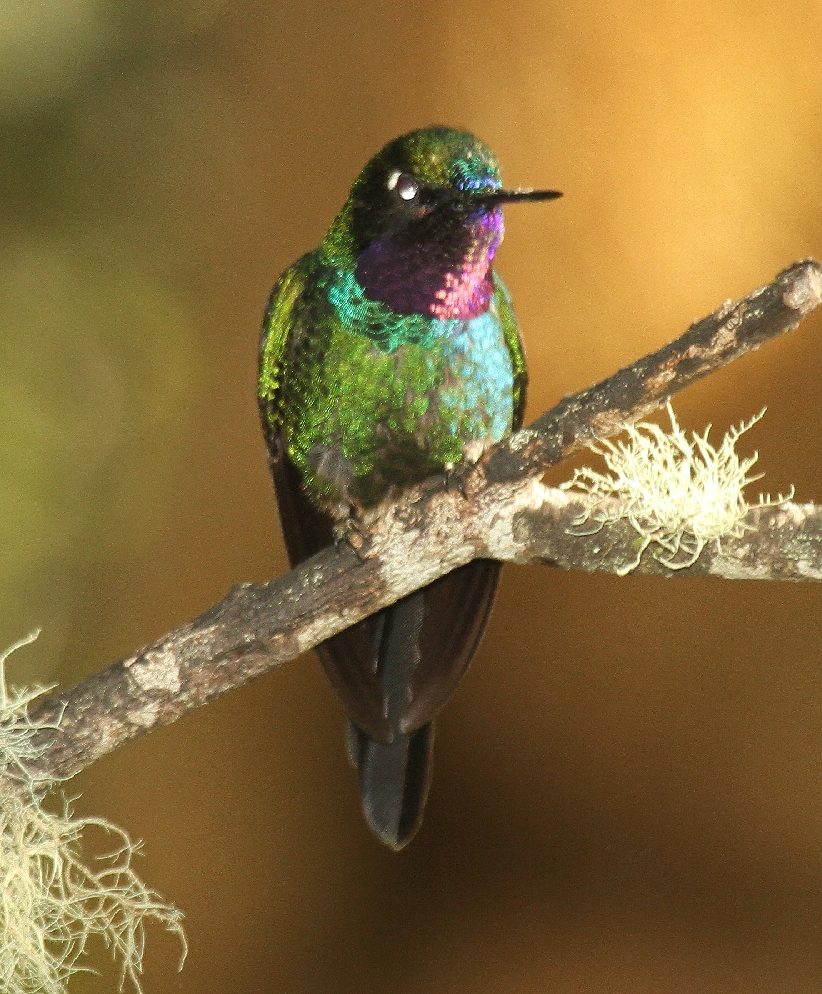
Merida Sunangel
Heliangelus spencei
Order: Apodiformes / Family: Trochilidae

Wikimedia Commons
About the Merida Sunangel
The Merida Sunangel, known scientifically as Heliangelus spencei, is a captivating hummingbird species endemic to the Andes of Venezuela, specifically within the state of Mérida. This species holds great significance for its vibrant presence in the cloud forests and montane regions, often found at elevations ranging from 1,500 to 3,000 meters. The Merida Sunangel plays an essential role in the pollination of high-altitude flora, contributing significantly to the ecosystem's biodiversity. Its presence is a key indicator of the health of these habitats, which are characterized by high humidity and diverse plant life. These birds are often seen darting through the understory, their iridescent plumage flashing in the filtered sunlight. Seasonally, the Merida Sunangel exhibits some altitudinal movements, though it is not migratory. During colder months, it may descend to slightly lower elevations where flowers remain abundant. As a specialist pollinator, the Merida Sunangel aids in the reproduction of numerous plant species, ensuring the resilience and sustainability of its ecosystem. Its interactions with the environment highlight the intricate connections between species and the delicate balance necessary for the survival of these rich habitats. The bird's presence is a testament to the ecological complexity and natural beauty of the Venezuelan Andes, drawing birdwatchers and researchers alike to study and admire its role within this unique landscape.
The Merida Sunangel belongs to the family Trochilidae, within the order Apodiformes. These birds typically live average 5-6 years with a maximum recorded of 9 years..
How to Identify a Merida Sunangel
The Merida Sunangel is a small hummingbird, notable for its striking iridescent colors. Adult males exhibit a brilliant purple throat patch, known as a gorget, which contrasts sharply with their emerald green upperparts and a darker, more subdued underbelly. Females, slightly less vibrant, lack the extensive purple gorget and instead present a more muted coloration, with white-tipped tail feathers providing a distinctive contrast. Juvenile birds resemble females but can be identified by their less defined plumage and shorter tail feathers. In flight, these birds display rapid, agile movements typical of hummingbirds, with their wings appearing almost invisible due to the speed of their beats. When perched, their small stature and upright posture make them difficult to spot among the dense foliage. The Merida Sunangel can be confused with other hummingbirds in its range, such as the Long-tailed Sylph, but its unique coloration and smaller size aid in proper identification.
Having trouble telling birds apart? Upload a photo to our bird identification tool for an instant species match.
Merida Sunangel Habitat and Range
Preferred Habitat
The Merida Sunangel primarily inhabits high-altitude cloud forests and elfin woodlands within its restricted range in the Andes of Venezuela. These environments, characterized by high humidity and a canopy dense with epiphytes, provide ample feeding opportunities and nesting sites. The bird thrives at elevations between 1,500 to 3,000 meters, where it finds a rich array of flowering plants. Seasonal shifts in temperature and flower availability may cause slight altitudinal movements, but the Merida Sunangel remains within montane habitats. Unlike some other hummingbird species, it rarely ventures into urban areas, preferring the tranquility and resource richness of forested environments.
Geographic Range
The Merida Sunangel's range is confined to the Andes in the state of Mérida, Venezuela. This species does not undertake long migrations, instead exhibiting localized movements within its montane range. It is found in high-altitude forests, where it occupies a specific niche alongside other Andean bird species. Population density hotspots correlate with areas of abundant floral resources, particularly in protected reserves and national parks where human disturbance is minimized. The species' limited range makes it vulnerable to habitat changes, underscoring the importance of conservation efforts in these regions.
Want to know which birds visit your area? Browse our backyard birds by location guides for region-specific species lists.
What Does the Merida Sunangel Eat?
The diet of the Merida Sunangel is primarily composed of nectar, which it extracts with precision from a variety of flowering plants adapted to high-altitude environments. This bird plays a crucial role in pollination, favoring flowers with tubular shapes that match its specialized bill. In addition to nectar, it supplements its diet with small insects and spiders, providing essential proteins, especially during breeding season. Foraging typically occurs during daylight hours, with activity peaking in the morning and late afternoon. The bird's feeding technique involves hovering before a flower, using rapid wingbeats to maintain stability while it drinks.
Want to attract Merida Sunangels to your yard? See our recommended feeders and seed types for the best results.
Merida Sunangel Behavior and Social Structure
The Merida Sunangel exhibits a solitary and territorial nature, often defending feeding territories against other hummingbirds with aggressive displays. Males perform elaborate aerial courtship displays to attract females, showcasing their iridescent plumage in sunlight. These displays include rapid dives and arcing flights, accompanied by distinctive vocalizations. When not defending territory or courting, the bird spends time foraging or perching quietly in the dense foliage. Flocking behavior is uncommon, though loose associations may form during migration or in rich feeding areas. The Merida Sunangel remains alert to predators, relying on its agility and speed to evade potential threats.
Merida Sunangel Nesting and Reproduction
The nesting habits of the Merida Sunangel involve constructing small, cup-shaped nests, often situated on horizontal branches or within dense vegetation for camouflage. The nests, crafted from moss, lichen, and spider silk, blend seamlessly with the surrounding environment. Females are solely responsible for building the nest and incubating the eggs, typically laying two small, white eggs per clutch. The incubation period lasts about 16-19 days, followed by a fledging period of 20-25 days, during which the female feeds the chicks a diet rich in protein from insects. The species generally raises one brood per breeding season, a strategy that aligns with the resource limitations of its montane habitat.
Merida Sunangel Sounds and Vocalizations
The Merida Sunangel produces a series of sharp, high-pitched notes that serve as its primary song. These notes are often delivered in rapid succession, creating a rhythmic pattern that can be heard echoing through its montane habitat. Its call notes, softer and less frequent, serve as communication between mates or during territorial disputes. Alarm calls, more intense and rapid, signal the presence of predators. During the dawn chorus, the bird's song contributes to the rich tapestry of sounds within the cloud forests, blending with the songs of other resident species.
Interesting Facts About the Merida Sunangel
- 1The Merida Sunangel can hover in place due to its rapid wingbeats, which reach up to 80 beats per second.
- 2Despite its small size, the Merida Sunangel plays a crucial role in pollinating over a dozen plant species.
- 3The bird's iridescent plumage results from microscopic platelets that refract light, creating vibrant colors.
- 4During courtship, males perform aerial displays that include dives reaching speeds of over 50 km/h.
- 5The Merida Sunangel's high-altitude habitat provides a natural barrier against many predators.
- 6This hummingbird's metabolism allows it to enter a state of torpor at night, conserving energy in cold conditions.
- 7The Merida Sunangel was first described scientifically in 1846 and remains a subject of ornithological study.
Merida Sunangel Conservation Status
The IUCN currently lists the Merida Sunangel as Near Threatened, with populations experiencing a gradual decline due to habitat loss and fragmentation. The primary threats include deforestation for agriculture and urban expansion, which encroach on its limited range. Conservation efforts focus on habitat preservation, particularly within protected areas like national parks. Historical population changes have seen fluctuations, largely driven by environmental pressures and human activities. Continued monitoring and habitat protection are essential to ensure the survival of this unique hummingbird species.
Attracting Merida Sunangels to Your Feeder
The Merida Sunangel is a regular visitor to backyard bird feeders across its range. At the Eye On The Fly feeding station, we observe Merida Sunangels regularly and capture footage with our feeder cameras.
Other Trochilidae Species


Birds Similar to the Merida Sunangel
These species are often confused with the Merida Sunangel due to similar appearance or overlapping range.