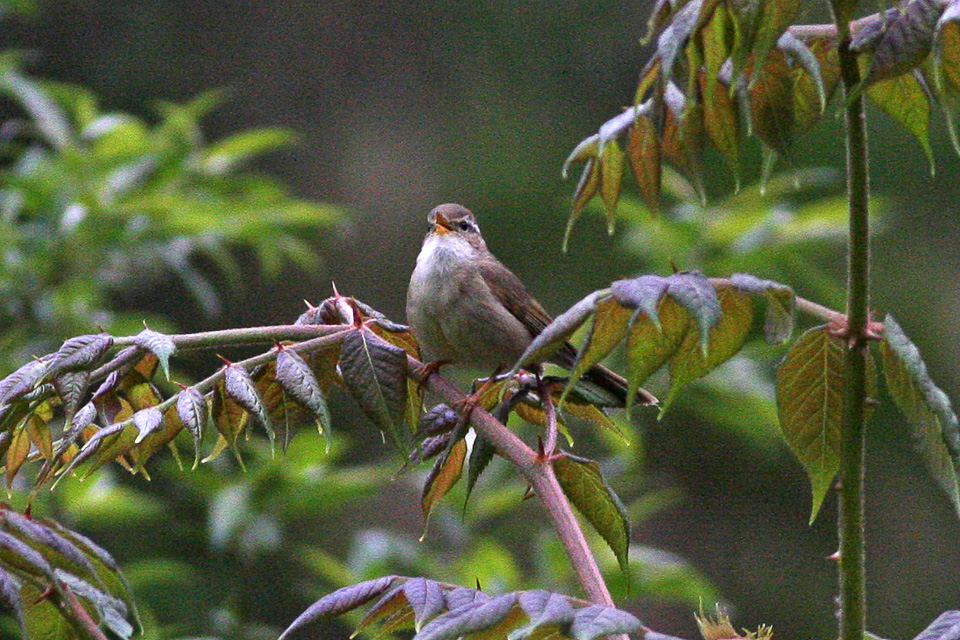
Gray-crowned Warbler
Seicercus tephrocephalus
Order: Passeriformes / Family: Phylloscopidae

Wikimedia Commons
About the Gray-crowned Warbler
The Gray-crowned Warbler, scientifically known as Seicercus tephrocephalus, is a small passerine bird that is a member of the Phylloscopidae family. It plays a critical role in the ecosystems of the montane forests it inhabits, primarily in the Himalayan region and parts of Southeast Asia. This species is especially significant due to its insectivorous diet, which helps control insect populations and maintain ecological balance. Found in regions such as Nepal, Bhutan, northern India, and the highlands of Myanmar and Vietnam, the Gray-crowned Warbler thrives in dense, moist broadleaf forests. These birds are a vital part of the avian biodiversity in these regions. They often inhabit altitudes ranging from 1,500 to 3,500 meters, depending on the season. During the breeding season, which occurs from April to July, they seek out higher elevations to take advantage of the cooler climate and abundant food supply. In the non-breeding season, they descend to lower altitudes, where the temperature is milder and food sources remain accessible. The Gray-crowned Warbler contributes to the health of its habitat not just through its diet but also as a prey species for larger birds and mammals, thus forming an integral part of the food web. Its presence indicates a healthy forest ecosystem, and its absence can signal ecological imbalances. The bird's movements are closely tied to the seasonality of its environment, with monsoons in particular influencing its reproductive success and survival. Monitoring the population dynamics of the Gray-crowned Warbler can provide insights into broader environmental changes and help guide conservation efforts. This warbler is also a subject of interest for birdwatchers and researchers alike due to its melodic song and the challenge it presents in terms of field identification. The Gray-crowned Warbler's ecological role extends beyond mere insect control; it helps in seed dispersal and pollination as it forages through foliage, inadvertently moving pollen and seeds. These activities support plant diversity and regeneration in its native habitats. As climate change and deforestation threaten these montane regions, the conservation of the Gray-crowned Warbler becomes increasingly important. Efforts to preserve this species and its habitat are crucial not only for the bird itself but for the overall health of the ecosystems it inhabits. Understanding the behaviors and needs of the Gray-crowned Warbler can aid in developing effective strategies to protect these vital forested regions.
The Gray-crowned Warbler belongs to the family Phylloscopidae, within the order Passeriformes. These birds typically live average 3-5 years, max recorded 8 years.
How to Identify a Gray-crowned Warbler
The Gray-crowned Warbler is a small bird, measuring approximately 11 centimeters in length. Adult plumage is characterized by a distinguishing gray crown, from which the species derives its common name. The crown contrasts with its olive-green upperparts and yellow underparts, offering a striking appearance. Juveniles, however, may display a duller color palette, with less pronounced gray on the crown. Males and females exhibit similar plumage, making visual sex differentiation challenging in the field. One of the key field marks is the presence of a yellow supercilium above the eye, which enhances the bird's visual appeal and aids in identification. The wings show a slight greenish tint, in harmony with the bird's overall olive hues. In flight, the Gray-crowned Warbler demonstrates a fluttering, rapid wingbeat, a characteristic common to many warblers. Its silhouette, with a rounded head and relatively short tail, is distinctive when perched. Compared to similar species such as the Greenish Warbler, the Gray-crowned Warbler's head pattern and song can serve as distinguishing factors. Birdwatchers may often mistake it for other Phylloscopus warblers, but its vocalizations and habitat preferences can provide additional identification clues.
Having trouble telling birds apart? Upload a photo to our bird identification tool for an instant species match.
Gray-crowned Warbler Habitat and Range
Preferred Habitat
The Gray-crowned Warbler primarily inhabits montane broadleaf forests, thriving in environments characterized by dense foliage and high humidity. These forests provide not only shelter but also an abundance of insect prey. The species is typically found at elevations ranging from 1,500 to 3,500 meters, favoring cooler climates during the breeding season. In the monsoon season, the lushness of these forests supports greater insect activity, aligning with the bird's dietary needs. In the non-breeding season, the Gray-crowned Warbler may descend to lower altitudes, particularly in subtropical or temperate forests, to escape the harsher conditions of higher elevations. While primarily a forest dweller, it occasionally ventures into forest edges or shrubby areas but is rarely found in open fields or urban spaces. The presence of this warbler is a good indicator of healthy forest ecosystems, as it relies on mature, undisturbed habitats to thrive.
Geographic Range
The Gray-crowned Warbler is predominantly found in the Himalayan region, extending its range across several countries in South and Southeast Asia. During the breeding season, it occupies montane forests in Nepal, Bhutan, northern India, and parts of southwest China. Its breeding distribution also includes the highlands of Myanmar and Vietnam, where its presence is linked to specific altitudinal zones. In winter, the warbler migrates to lower elevations within these regions, often moving to southern parts of its range to places like the Indian subcontinent's foothills. The bird's migration is characterized by altitudinal shifts rather than long-distance travel, as it seeks suitable habitat and food resources. The highest population densities occur in areas with extensive, undisturbed forest cover, where the bird can find ample food and breeding sites. However, its distribution can be patchy, influenced by habitat availability and environmental conditions.
Want to know which birds visit your area? Browse our backyard birds by location guides for region-specific species lists.
What Does the Gray-crowned Warbler Eat?
The Gray-crowned Warbler's diet primarily consists of insects and spiders, making it an important insectivore in its habitat. During the breeding season, the bird forages intensively among the leaves and branches of trees, capturing caterpillars, beetles, and other small arthropods. This behavior is particularly vital during the nestling phase, when protein-rich food is essential for chick development. In the non-breeding season, its diet may diversify slightly to include some fruit and seeds, though insects remain the mainstay. The warbler employs a gleaning technique, delicately picking prey from foliage or bark, occasionally using short, aerial sallies to capture flying insects. Its foraging is typically solitary or in small family groups, with feeding activity peaking in the early morning and late afternoon. The Gray-crowned Warbler's feeding habits have a pronounced effect on controlling insect populations, contributing to the ecological balance of its forest habitat.
Gray-crowned Warbler Behavior and Social Structure
The Gray-crowned Warbler exhibits a primarily solitary or paired social structure, especially during the breeding season. Territorial behavior is pronounced, with males singing to defend their territories and attract mates. The courtship display involves a combination of vocalizations and subtle physical displays, such as fluttering flight and wing flicking. During the non-breeding season, the warbler may join mixed-species foraging flocks, gaining safety in numbers and increasing foraging efficiency. These flocks can include other insectivorous birds, which share similar habitat preferences. When threatened by predators, the Gray-crowned Warbler employs an alarm call to alert others, while also utilizing the cover of dense foliage to evade detection. Its daily activity pattern includes periods of intensive foraging interspersed with rest and preening. The warbler's adaptability to different elevations and its responsive behavior to environmental cues, such as temperature changes and food availability, make it a resilient species within its ecological niche.
Gray-crowned Warbler Nesting and Reproduction
The Gray-crowned Warbler constructs a cup-shaped nest using materials like moss, leaves, and fine grass, often lined with feathers or animal hair for added insulation. Nests are typically situated in forked branches or within dense shrubbery, providing concealment from predators. Preferred nesting sites are located at varying heights from the ground, generally between 1 to 3 meters. The female primarily undertakes nest building, with the male occasionally assisting. Clutch size ranges from 3 to 5 eggs, with the female incubating them for approximately 12 to 14 days. Both parents participate in feeding the hatchlings, which fledge after about 11 to 13 days. The Gray-crowned Warbler may produce one to two broods per year, depending on environmental conditions and food availability. Parental roles are shared, with both males and females actively involved in chick rearing, ensuring high survival rates of the young.
Gray-crowned Warbler Sounds and Vocalizations
The Gray-crowned Warbler is known for its melodic and complex song, which serves as a key identification feature. The primary song consists of a series of high-pitched, sweet notes delivered in a rapid, rhythmic sequence. This song is often described as a 'chirr-chirr-chirr' followed by a descending trill, resonating through the forest canopy. In addition to the primary song, the warbler produces a variety of call notes, including soft 'chip' sounds used for communication with mates and offspring. Alarm calls are sharper and more abrupt, serving as a warning to conspecifics of nearby threats. During the dawn chorus, the Gray-crowned Warbler participates energetically, contributing its voice to the collective symphony of the forest. Its song can be compared to that of other Phylloscopus warblers, but with a unique tempo and phrasing that distinguishes it from its relatives.
Interesting Facts About the Gray-crowned Warbler
- 1The Gray-crowned Warbler is part of a complex group of warblers that were once considered a single species, illustrating the diversity within Phylloscopus.
- 2This warbler’s song is one of the most distinctive among its family, making it easier for birdwatchers to identify by sound rather than sight.
- 3The Gray-crowned Warbler has adapted to living at high altitudes, thriving in regions where many other bird species cannot.
- 4During winter, this warbler may descend over 1,000 meters in elevation, showcasing its adaptability to different climatic conditions.
- 5Despite its small size, the Gray-crowned Warbler plays a significant role in controlling pest populations in its natural habitat.
- 6Studies suggest that the Gray-crowned Warbler can serve as an indicator species for the health of montane forest ecosystems.
- 7The Gray-crowned Warbler is renowned for its acrobatic foraging techniques, often seen hanging upside down to reach prey.
Gray-crowned Warbler Conservation Status
The Gray-crowned Warbler is currently listed as Least Concern by the IUCN, with a stable population trend. However, its habitat faces threats from deforestation and habitat degradation due to agricultural expansion and logging. Conservation efforts focus on protecting montane forest habitats through the establishment of protected areas and sustainable forestry practices. Historical population changes are not well-documented, but ongoing monitoring is essential to detect potential declines. Local conservation initiatives aim to raise awareness about the importance of preserving these ecosystems, which support not only the Gray-crowned Warbler but also many other species dependent on forest habitats. Continued research and habitat protection are vital to ensuring the long-term survival of this species and maintaining the ecological integrity of its environment.