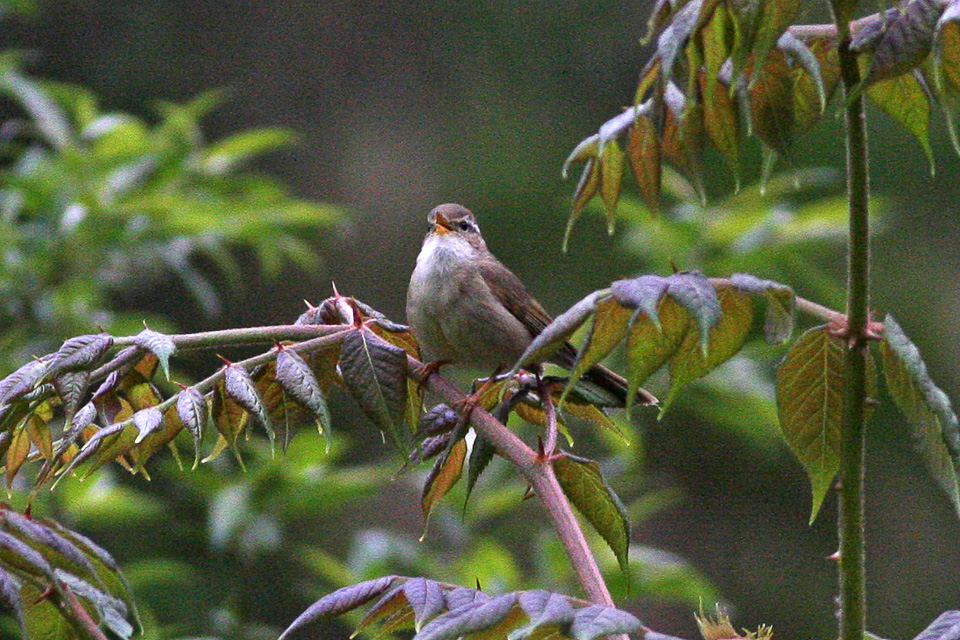
Gray-hooded Warbler
Phylloscopus xanthoschistos
Order: Passeriformes / Family: Phylloscopidae
Wikimedia Commons
About the Gray-hooded Warbler
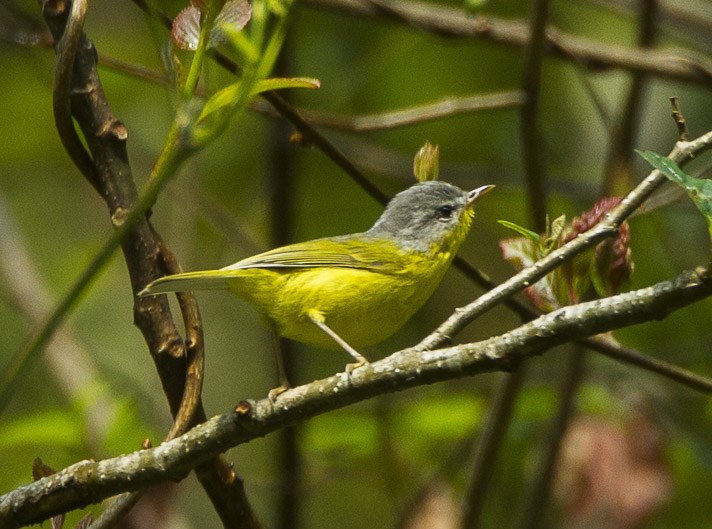
The Gray-hooded Warbler (Phylloscopus xanthoschistos) is a small, active songbird belonging to the family Phylloscopidae. This species is renowned for its vibrant yellow underparts contrasted with a gray head, a combination that makes it particularly striking against the backdrop of the dense Himalayan forests where it resides. The warbler inhabits a range that stretches across the mountainous regions of South Asia, primarily in the Himalayas, where it can be found from eastern Afghanistan through northern India and Nepal, reaching into Bhutan and extending into southwestern China. Its presence in these regions is not only a delight to birdwatchers but also ecologically significant, as the Gray-hooded Warbler plays a vital role in insect control within these forested ecosystems. During the breeding season, which typically occurs from April to July, these warblers contribute to the control of insect populations, feeding on a variety of small invertebrates. Their activity supports the health and balance of forest ecosystems, indirectly benefiting other species and maintaining the structure of their habitat. In winter, the Gray-hooded Warbler exhibits a slight altitudinal migration, moving to lower elevations, although it remains within its general geographic range. This seasonal movement is a response to the harsh conditions of the higher altitudes during winter months. Despite the challenges of winter, the Gray-hooded Warbler remains a resilient species, adapting its behavior and diet to the changing environmental conditions. Its adaptability is a testament to its evolutionary success in a region characterized by extreme seasonal variations. The warbler's role as both predator and prey underscores its importance in the food web, illustrating the interconnectedness of species within these mountainous ecosystems.
The Gray-hooded Warbler belongs to the family Phylloscopidae, within the order Passeriformes. These birds typically live average 2-5 years with a max recorded of 8 years.
How to Identify a Gray-hooded Warbler
The Gray-hooded Warbler is often recognized by its distinctive coloration and small size, typical of the Phylloscopidae family. Adult warblers feature a striking combination of a gray head and crown, which sharply contrasts with their bright yellow underparts. This color contrast is a key field mark for identification. The upperparts of the bird are olive-green, which provides effective camouflage in the leafy environments they inhabit. Juveniles resemble adults but may have slightly duller plumage, lacking the clear delineation between the gray head and yellow body seen in mature individuals. Both sexes appear similar, although males may exhibit marginally brighter plumage during the breeding season. Observers can distinguish the Gray-hooded Warbler from similar species, such as the Lemon-rumped Warbler, by the lack of wing bars and the consistent gray hood. In flight, the warbler's small, agile silhouette is characteristic, with rapid wingbeats and a tendency to flit through foliage. When perched, the warbler often adopts a horizontal posture, aiding in its identification.
Having trouble telling birds apart? Upload a photo to our bird identification tool for an instant species match.
Gray-hooded Warbler Habitat and Range
Preferred Habitat
The Gray-hooded Warbler primarily inhabits subtropical and temperate forests, with a preference for broadleaf and mixed woodlands. It thrives at elevations ranging from about 1,500 to 3,000 meters, although it descends to lower altitudes during the winter months. Within these forests, the warbler favors dense undergrowth and the edges of clearings, where it can forage for insects. This species shows adaptability to both primary and secondary forests, demonstrating a degree of resilience to habitat changes. While primarily a forest dweller, the Gray-hooded Warbler can occasionally be found in wooded areas in urban or suburban settings, particularly in regions where its natural habitat has been encroached upon by human development.
Geographic Range
The Gray-hooded Warbler's range is primarily concentrated in the Himalayan regions, stretching from eastern Afghanistan through the northern parts of the Indian subcontinent, including northern India and Nepal, and extending into Bhutan and parts of southwestern China. It is a resident breeder in these areas, with some populations exhibiting altitudinal migration in response to seasonal climatic changes. During the breeding season, the warbler is commonly found at higher elevations, but as winter approaches, it moves to lower altitudes within its range. Although its distribution is somewhat restricted to mountainous regions, the species is considered relatively common within suitable habitats. Key population density hotspots include the forests of Uttarakhand and Himachal Pradesh in India, as well as central and eastern regions of Nepal.
Want to know which birds visit your area? Browse our backyard birds by location guides for region-specific species lists.
What Does the Gray-hooded Warbler Eat?
The Gray-hooded Warbler primarily feeds on a diet of small insects and arthropods, including caterpillars, beetles, and spiders. During the breeding season, the abundance of insects provides ample food sources for both adults and their growing young. In the winter months, as insect availability declines, the warbler may supplement its diet with small seeds and berries, demonstrating a degree of dietary flexibility. The warbler employs a dynamic foraging technique, often seen flitting through foliage and branches, gleaning insects from leaves and bark. This active feeding behavior is characteristic of the Phylloscopus genus and aids in controlling insect populations within its habitat.
Gray-hooded Warbler Behavior and Social Structure
The Gray-hooded Warbler exhibits a solitary or paired lifestyle, particularly during the breeding season when territorial behaviors are prominent. Males establish and defend territories through vocal displays and physical presence, often singing from elevated perches to announce their presence and ward off rivals. Courtship displays involve a combination of song and aerial maneuvers, with males showcasing their agility and vigor to attract females. Outside the breeding season, the warbler may join mixed-species foraging flocks, benefiting from the collective vigilance and increased foraging efficiency. Its activity patterns are predominantly diurnal, with a peak in foraging activity during the cooler morning and late afternoon hours. When faced with predators, the warbler employs evasive tactics, using dense foliage for cover and engaging in rapid, erratic flight to escape.
Gray-hooded Warbler Nesting and Reproduction
The nesting habits of the Gray-hooded Warbler involve the construction of a cup-shaped nest, typically situated in dense shrubbery or low branches of trees. Both males and females participate in nest building, utilizing materials such as moss, grass, and spider silk to create a secure and camouflaged environment for their eggs. The typical clutch size ranges from three to five eggs, with an incubation period of approximately 12 to 14 days. Both parents share incubation duties and the feeding of the chicks once hatched. The fledging period lasts about 10 to 14 days, during which the young are entirely dependent on parental care. The species generally produces one brood per year, although favorable conditions may occasionally allow for a second.
Gray-hooded Warbler Sounds and Vocalizations
The Gray-hooded Warbler is known for its distinctive song, a series of melodious, high-pitched notes delivered in rapid succession. The rhythm often consists of a lively sequence of 'tsee-tsee-tsee,' which can be heard echoing through the forests during the breeding season. In addition to its primary song, the warbler emits soft call notes used for communication between mates and to maintain contact with fledglings. Alarm calls are sharper and more urgent, serving to alert other birds of potential threats. The warbler participates in the dawn chorus, contributing to the symphony of sounds that characterize the early morning hours in its habitat.
Interesting Facts About the Gray-hooded Warbler
- 1The Gray-hooded Warbler is one of the few Phylloscopus species that remains in the same geographical region year-round, albeit with altitudinal migration.
- 2Despite its vibrant colors, the Gray-hooded Warbler's preference for dense foliage makes it difficult to spot, relying on its song for identification.
- 3The species can consume up to 400 insects in a single day during peak foraging periods, showcasing its role in pest control.
- 4Gray-hooded Warblers are known to join mixed-species flocks in winter, increasing their foraging success and reducing predation risk.
- 5The warbler's song is one of the first to be heard in the morning, contributing to the dawn chorus in its Himalayan habitat.
- 6During the breeding season, male Gray-hooded Warblers are particularly vocal, using song to establish and defend territories.
- 7This warbler exhibits a remarkable ability to adapt its diet based on seasonal availability, switching to seeds and berries when insects are scarce.
Gray-hooded Warbler Conservation Status
The Gray-hooded Warbler is currently listed as Least Concern by the IUCN, with populations considered stable across its range. While habitat loss due to deforestation and land conversion poses a potential threat, the warbler's adaptability to secondary forests and its wide distribution provide a buffer against significant population declines. Conservation efforts focus on preserving forest habitats within its range, particularly in protected areas and national parks. Historical trends indicate that the population has remained relatively stable, benefiting from the preservation of large tracts of Himalayan forest.