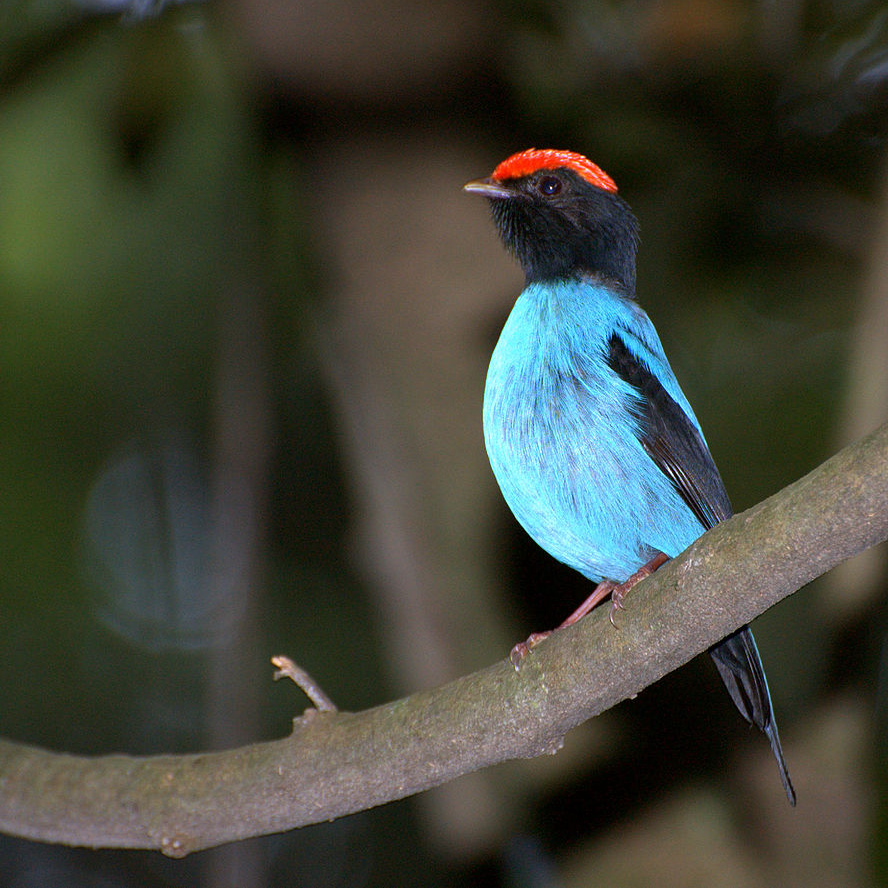
Green Manakin
Xenopipo holochlora
Order: Passeriformes / Family: Pipridae

Wikimedia Commons
About the Green Manakin
The Green Manakin, scientifically known as Xenopipo holochlora, thrives primarily in the lush, humid forests of Central and South America. This small bird, a member of the Pipridae family, plays a crucial role in the ecosystem as a seed disperser, aiding in forest regeneration. Typically found in countries like Venezuela, Colombia, and Ecuador, the Green Manakin prefers the canopy and mid-story of mature tropical forests. Its presence often indicates a healthy, biodiverse environment. During the breeding season, the Green Manakin becomes particularly active, participating in elaborate courtship rituals that involve acrobatic displays and vocalizations. These displays highlight their importance in maintaining the genetic diversity of their populations. Outside the breeding season, the Green Manakin tends to be less conspicuous, blending into the dense foliage, yet it remains an essential component of its habitat. By consuming a variety of fruits and insects, it helps control insect populations while facilitating seed dispersal. This bird's ecological role extends beyond its immediate environment, impacting forest dynamics and contributing to the broader biodiversity of the regions it inhabits. Observing the Green Manakin offers a glimpse into the intricate web of life within tropical forest ecosystems, underscoring the interdependence of species and the importance of conserving such habitats.
The Green Manakin belongs to the family Pipridae, within the order Passeriformes. These birds typically live typically lives around 5-7 years, with some individuals reaching 9-10 years..
How to Identify a Green Manakin
The Green Manakin is a small bird, measuring approximately 10-12 cm in length. Its most distinctive feature is its uniform bright green plumage, which provides excellent camouflage in its forest environment. Adult males and females have similar coloring, though males may exhibit slightly more vibrant hues. Juveniles appear similar to adults but may have a duller coloration until they reach maturity. Unlike many other manakin species, the Green Manakin lacks elaborate tail feathers or distinct color patches, relying instead on its consistent green shade for identification. This can lead to confusion with other green forest birds, but its size and behavior are key differentiators. In flight, the Green Manakin displays rapid, direct movements, often staying close to the canopy. When perching, it adopts a slightly upright posture, frequently bobbing its head as it surveys its surroundings. This, combined with its size and coloration, makes the Green Manakin a distinctive presence in its native habitat.
Having trouble telling birds apart? Upload a photo to our bird identification tool for an instant species match.
Green Manakin Habitat and Range
Preferred Habitat
The Green Manakin inhabits the dense, humid tropical forests of Central and South America. It thrives in mature, undisturbed forests with a rich canopy and is often found at elevations ranging from 500 to 1500 meters. Within this range, it shows a preference for areas with abundant fruiting trees and a diverse insect population. While primarily a forest dweller, the Green Manakin avoids urban areas and heavily disturbed habitats. Its reliance on undisturbed forest environments makes it particularly vulnerable to deforestation and habitat fragmentation. Seasonal changes in food availability may lead the Green Manakin to shift within its forested range, but it generally remains within a consistent habitat type throughout the year.
Geographic Range
The Green Manakin's range spans several countries in Central and South America. It is primarily found in Venezuela, Colombia, and Ecuador, with its distribution closely tied to the availability of suitable forest habitats. During the breeding season, populations may become more concentrated in specific areas with abundant food resources. However, the Green Manakin is largely non-migratory, maintaining a year-round presence within its range. While its range is relatively stable, the population density can vary significantly depending on local habitat conditions. Regions with well-preserved forest ecosystems often host the highest densities of Green Manakins, highlighting the importance of habitat conservation efforts.
Want to know which birds visit your area? Browse our backyard birds by location guides for region-specific species lists.
What Does the Green Manakin Eat?
The Green Manakin's diet consists mainly of fruits and insects, making it an important omnivore within its ecosystem. It shows a preference for small berries and fruits, which it plucks from branches with precision. In addition to fruit, the Green Manakin consumes a variety of insects, including ants, beetles, and caterpillars. Its foraging behavior involves short, agile flights to snatch prey from leaves and branches. Seasonal variations in fruit availability can influence its diet, with the Green Manakin consuming more insects during periods of fruit scarcity. This dietary flexibility helps the bird maintain its energy needs throughout the year. The Green Manakin typically forages during daylight hours, often in small groups, which can increase foraging efficiency and provide protection from predators.
Green Manakin Behavior and Social Structure
The Green Manakin exhibits a range of interesting behaviors, particularly during the breeding season. Males engage in elaborate courtship displays that involve a combination of vocalizations, wing flapping, and acrobatic flights designed to attract females. These displays occur in communal leks, where several males gather to perform and compete for the attention of visiting females. Outside the breeding season, the Green Manakin is more solitary or found in small groups. Though not highly territorial, it defends feeding areas when necessary. The bird's daily activity pattern involves periods of intense foraging interspersed with rest and preening. When faced with predators, the Green Manakin relies on its ability to blend into the foliage, often remaining motionless until the threat passes. This behavior, along with its fast, agile flight, helps it avoid many potential dangers in its environment.
Green Manakin Nesting and Reproduction
Green Manakins construct small, cup-shaped nests using fine plant materials like leaves, fibers, and moss. These nests are usually located in the forks of branches, well-concealed by surrounding foliage. The female primarily undertakes nest building, and she also incubates the clutch, which typically consists of two eggs. Incubation lasts around 18-20 days, during which the female remains attentive, leaving only briefly to feed. Once hatched, the chicks are altricial and require significant parental care. Both parents participate in feeding the young, delivering a diet rich in insects. Fledging occurs approximately 20-22 days after hatching, with juveniles remaining dependent on parental care for a short period thereafter. The Green Manakin typically raises one brood per year, but under favorable conditions, it may attempt a second.
Green Manakin Sounds and Vocalizations
The Green Manakin's vocalizations are a key component of its behavior, particularly in courtship. Its primary song is a rapid series of high-pitched notes, often described as a 'tinkling' sound. These notes can vary in rhythm but maintain a consistent pitch and quality. In addition to the primary song, the Green Manakin produces a variety of call notes used to communicate with other members of its species. Alarm calls are sharper and more urgent, serving as warnings to nearby birds. During the dawn chorus, the Green Manakin's song blends with the calls of other forest species, creating a rich soundscape typical of tropical environments. Its calls are somewhat reminiscent of the sound of small bells or chimes, a feature that aids in its identification.
Interesting Facts About the Green Manakin
- 1Green Manakins are known for their dynamic courtship displays, which can involve up to 20 males at a time in a lek.
- 2Despite their small size, Green Manakins can consume fruit up to 10% of their body weight in a single day.
- 3The Green Manakin's vivid plumage helps it blend into the dense foliage, making it less visible to predators.
- 4This species plays a vital role in seed dispersal, helping to maintain the health and diversity of tropical forests.
- 5Green Manakins often join mixed-species foraging flocks, benefiting from increased protection and foraging efficiency.
- 6Their diet shifts seasonally, with a higher proportion of insects consumed during periods of fruit scarcity.
- 7Green Manakins have a relatively stable range but are sensitive to habitat changes, relying on undisturbed forests.
Green Manakin Conservation Status
The Green Manakin is currently listed as Least Concern by the IUCN, although its population is believed to be decreasing due to habitat loss. Deforestation, driven by agriculture and logging, poses the most significant threat to its habitat. Conservation efforts focus on preserving mature forest ecosystems and promoting sustainable land-use practices. Historically, the Green Manakin's population fluctuated with changes in forest cover, but its resilience in relatively undisturbed areas provides hope for its future. Continued efforts to protect and restore its habitat are crucial to ensuring its long-term survival.