Haematopus spec
Haematopus spec
Order: Charadriiformes / Family: Haematopodidae
About the Haematopus spec
The Haematopus spec, commonly known as the oystercatcher, is a charismatic bird belonging to the family Haematopodidae. This bird is renowned for its bold coloration, with contrasting black and white plumage and a bright orange-red bill, making it easily identifiable along coastal regions. Oystercatchers are widely distributed across various continents, with distinct populations adapted to specific environmental conditions. Their presence in diverse habitats underscores their ecological significance, particularly in intertidal zones where they play a crucial role in controlling bivalve populations.
Oystercatchers are monogamous and often seen in pairs or small groups. Their social behavior is particularly notable during the breeding season, where pairs engage in elaborate courtship displays. These displays are not just mere spectacles but serve as vital rituals for pair bonding and territory establishment. The Haematopus spec is a ground-nesting bird, typically laying eggs on sandy or pebbly substrates, often in close proximity to the shore.
The ecological role of the oystercatcher is multifaceted. As a predator of shellfish, it helps regulate the populations of these invertebrates, thus maintaining the ecological balance of coastal ecosystems. This role becomes even more pronounced in regions where shellfish are a significant component of the local economy, highlighting the bird's indirect influence on human activities. In addition to their ecological contributions, oystercatchers serve as indicators of environmental health, with changes in their population dynamics often reflecting broader changes in coastal ecosystems.
The Haematopus spec belongs to the family Haematopodidae, within the order Charadriiformes. These birds typically live estimated at 10-20 years based on related species..
How to Identify a Haematopus spec
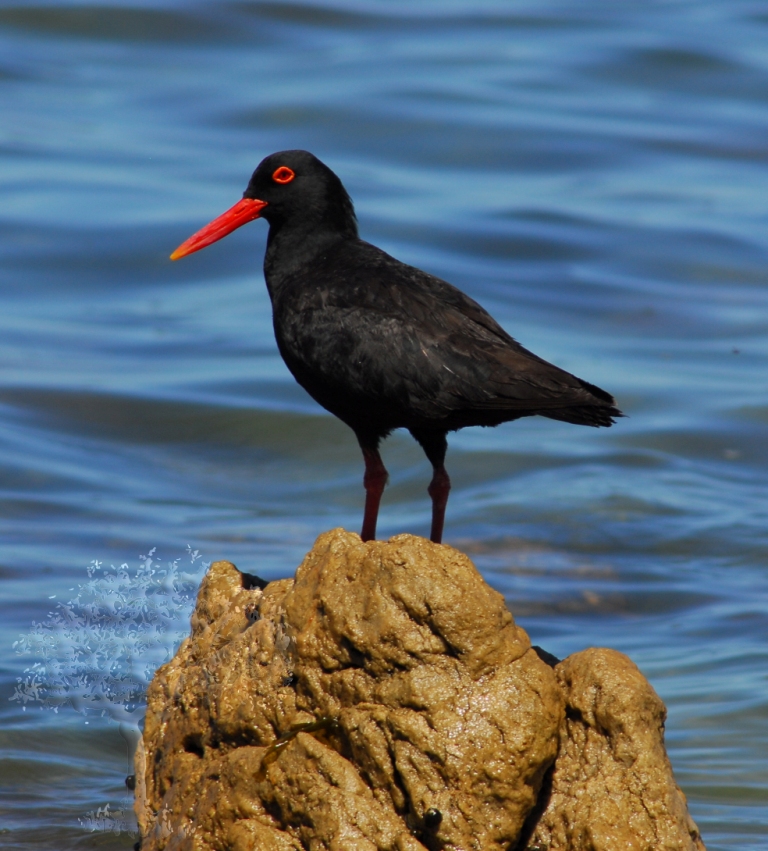
The adult Haematopus spec exhibits striking black and white plumage with a distinctive bright orange-red bill. Their legs are pale pink, and they have vivid yellow eyes with a red orbital ring. Juveniles, in contrast, may show a more muted coloration with duller bills and legs, yet they still possess the characteristic body pattern. Both male and female oystercatchers look similar, making gender differentiation challenging in the field. However, subtle differences in size and bill length may be noticeable upon close observation.
In flight, the oystercatcher presents a powerful, direct silhouette with broad, rounded wings showing a conspicuous white wingbar. This feature, along with the bird's steady flight pattern, aids in distinguishing it from other shorebirds. When perched, the oystercatcher stands upright with an alert posture, often vocalizing its presence with a loud piping call.
While the oystercatcher's striking coloration aids in identification, it can sometimes be confused with similar species such as the black oystercatcher, which is entirely black, or the pied oystercatcher, which shares similar habitat preferences but differs in wing patterns and geographic distribution.
Having trouble telling birds apart? Upload a photo to our bird identification tool for an instant species match.
Haematopus spec Habitat and Range
Preferred Habitat
Oystercatchers predominantly inhabit coastal areas, favoring sandy beaches, mudflats, and rocky shores. They are also found in estuarine environments and occasionally venture into salt marshes. The elevation range is generally from sea level to the immediate coastal hinterlands. In some regions, such as the Atlantic coasts of Europe and North America, they are found year-round, while in others, they may shift habitats seasonally, moving slightly inland during breeding.
In terms of urban presence, oystercatchers may adapt to human-altered landscapes, such as coastal parks and modified waterfronts, provided these areas offer sufficient feeding opportunities. In rural settings, they thrive in natural coastal ecosystems where human disturbance is minimal. Despite their adaptability, oystercatchers require specific nesting and feeding conditions to thrive, making them less common in heavily developed urban centers.
Geographic Range
The Haematopus spec exhibits a wide geographic range across several continents. In Europe, they are prevalent along the North Sea coasts, from the British Isles to Scandinavia. In North America, they inhabit both the Atlantic and Pacific coasts, extending from Alaska to Baja California during breeding seasons. Some populations are resident year-round, while others migrate short distances to more temperate regions during winter.
In the Southern Hemisphere, oystercatchers can be found along the coasts of southern Africa and parts of Australia and New Zealand. These populations often show localized migration patterns, moving toward sheltered bays and estuaries during non-breeding seasons. Population density hotspots include the Wadden Sea in Europe and the Chesapeake Bay in the United States, where large numbers gather during migration and breeding.
The migratory behavior of oystercatchers is influenced by the availability of food resources and suitable nesting sites. Their ability to adapt to different coastal conditions allows them to exploit a range of environments, contributing to their widespread distribution.
Want to know which birds visit your area? Browse our backyard birds by location guides for region-specific species lists.
What Does the Haematopus spec Eat?
The diet of the oystercatcher primarily consists of bivalves such as mussels and clams, which they expertly extract using their strong, chisel-like bills. They also consume other invertebrates, including worms and small crustaceans, depending on availability. During breeding season, their diet may shift slightly to include more protein-rich prey to support the energetic demands of raising young.
Oystercatchers are known for their specialized foraging techniques, often using their bills to pry open or hammer through the shells of their prey. This feeding strategy allows them to access food resources that are unavailable to less specialized shorebirds. They typically forage during low tide when their prey is accessible, aligning their feeding schedule with the tidal cycle.
Prey size can vary, with oystercatchers capable of handling relatively large mussels and cockles. Their preference for specific prey types can influence local shellfish population dynamics, highlighting their role as both predators and ecosystem engineers in coastal habitats.
Haematopus spec Behavior and Social Structure
Oystercatchers exhibit a complex social structure, often forming pairs that remain bonded for life. During the breeding season, these pairs establish and defend territories, engaging in vocal displays and physical posturing to deter intruders. Courtship displays involve synchronized flights and ground chases, which serve to reinforce pair bonds and assert territorial claims.
Outside of the breeding season, oystercatchers may form loose flocks, especially in areas with abundant food resources. These flocks are typically composed of non-breeding individuals or pairs that have finished breeding. Despite their social tendencies, oystercatchers can be aggressive in defending feeding territories, particularly when resources are scarce.
Their daily activity patterns revolve around the tidal cycle, with peak foraging times occurring during low tide. Oystercatchers are diurnal, relying on the cover of darkness for roosting in safe locations away from predators. They show a heightened awareness of potential threats, often responding to avian predators with alarm calls and evasive maneuvers.
Haematopus spec Nesting and Reproduction
Oystercatchers typically nest on the ground, choosing sites on sandy beaches, gravel islands, or rocky shores. The nest itself is a simple scrape in the substrate, often lined with small pebbles or shells to provide camouflage and insulation. Clutch sizes generally range from 2 to 4 eggs, with an incubation period lasting approximately 24 to 27 days.
Both parents share incubation duties, though females may spend slightly more time on the nest. Once hatched, chicks are precocial, leaving the nest soon after to follow their parents to feeding grounds. Fledging occurs at about 35 days, during which both parents continue to provide care and protection.
Oystercatchers usually have one brood per year, although in favorable conditions, especially in temperate regions, they may attempt a second brood if the first is successful. Nest site fidelity is common, with pairs often returning to the same location each year, provided it remains suitable and undisturbed.
Haematopus spec Sounds and Vocalizations
The primary vocalization of the oystercatcher is a loud, high-pitched piping call used for communication between pairs and during territorial disputes. This call is rapid and repetitive, often rising in intensity during displays or alarm situations. Oystercatchers also produce a variety of softer contact calls when feeding or roosting in groups.
Alarm calls are more urgent and can be likened to a sharp, repeated whistle, serving as a warning to conspecifics about potential threats. During the dawn chorus, their calls can be a prominent feature of coastal soundscapes, cutting through the ambient noise with clarity.
The sound of the oystercatcher's call is distinct and carries well over distances, aiding in territory establishment and partner coordination. This vocal clarity is crucial for maintaining bonds and coordinating activities within the often noisy and dynamic environments they inhabit.
Interesting Facts About the Haematopus spec
- 1Oystercatchers can live up to 20 years in the wild, with some individuals reaching over 30 years, showcasing their longevity.
- 2Despite their name, oystercatchers rarely eat oysters, preferring softer-shelled bivalves like mussels and cockles.
- 3The oystercatcher's bill color can indicate its health; a dull bill may suggest poor nutrition or health issues.
- 4Oystercatcher eggs are well camouflaged, resembling the surrounding pebbles and sand to avoid predation.
- 5In some regions, oystercatchers have adapted to urban environments, nesting on flat rooftops and other artificial structures.
- 6The species has demonstrated a remarkable ability to adapt to changing environments, shifting their range and nesting habits in response to human activity.
- 7Oystercatchers play a crucial role in controlling bivalve populations, thereby influencing the biodiversity of coastal ecosystems.
Haematopus spec Conservation Status
As of the latest assessments, the oystercatcher is classified as Least Concern by the IUCN, with stable population trends in most regions. However, localized threats, such as habitat loss due to coastal development and pollution, pose challenges to certain populations. Conservation efforts focus on habitat protection and management, ensuring that critical breeding and feeding sites remain undisturbed. Historically, oystercatcher populations have experienced fluctuations due to human activities, yet they have shown resilience and adaptability in many areas. Continued monitoring and research are essential to understand the impacts of climate change and sea-level rise on their habitats. Efforts to raise awareness about the ecological role of oystercatchers and the importance of conserving coastal ecosystems contribute to their overall conservation. Protection of key sites through legislation and community engagement remains a priority for ensuring the long-term survival of this species.
Other Haematopodidae Species


Birds Similar to the Haematopus spec
These species are often confused with the Haematopus spec due to similar appearance or overlapping range.