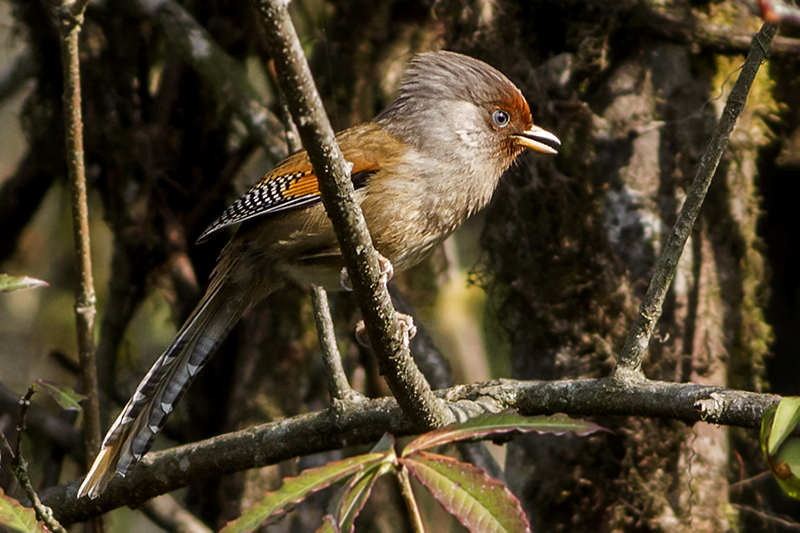
Hoary-throated Barwing
Sibia nipalensis
Order: Passeriformes / Family: Leiothrichidae
Wikimedia Commons
About the Hoary-throated Barwing
The Hoary-throated Barwing (Sibia nipalensis) is a captivating member of the Leiothrichidae family, known for its striking appearance and vibrant presence in the subtropical and temperate forests of the eastern Himalayas. This bird is primarily found across a range that includes parts of Bhutan, northeastern India, and southeastern Tibet. The Hoary-throated Barwing thrives in forested regions, often seen flitting through the underbrush in search of food. Its ecological role in these ecosystems is significant, as it participates in seed dispersal and insect control, contributing to the overall health of its habitat.
In terms of behavioral significance, the Hoary-throated Barwing is an active participant in mixed-species foraging flocks, a behavior that enhances its ability to find food and evade predators. This species typically forages in the mid-story and lower canopy, where it employs a variety of tactics to catch insects. The bird's presence is a reliable indicator of forest health, and its activities help maintain the delicate balance of its ecosystem. The Hoary-throated Barwing's role as both a predator of insects and a prey species for larger birds and mammals underscores its integral position in the food web.
Seasonally, the Hoary-throated Barwing remains relatively sedentary, with some altitudinal movement in response to changing weather conditions. During breeding season, which typically occurs between March and June, the bird becomes more vocal and territorial as it establishes nesting sites. Its calls are an essential component of its breeding behavior, facilitating communication between mates and deterring rivals. Throughout the year, the Hoary-throated Barwing continues to contribute to its environment, making it a key species for researchers and conservationists studying Himalayan forest ecosystems.
The Hoary-throated Barwing belongs to the family Leiothrichidae, within the order Passeriformes. These birds typically live average 5-7 years with a max recorded of 10 years.
How to Identify a Hoary-throated Barwing
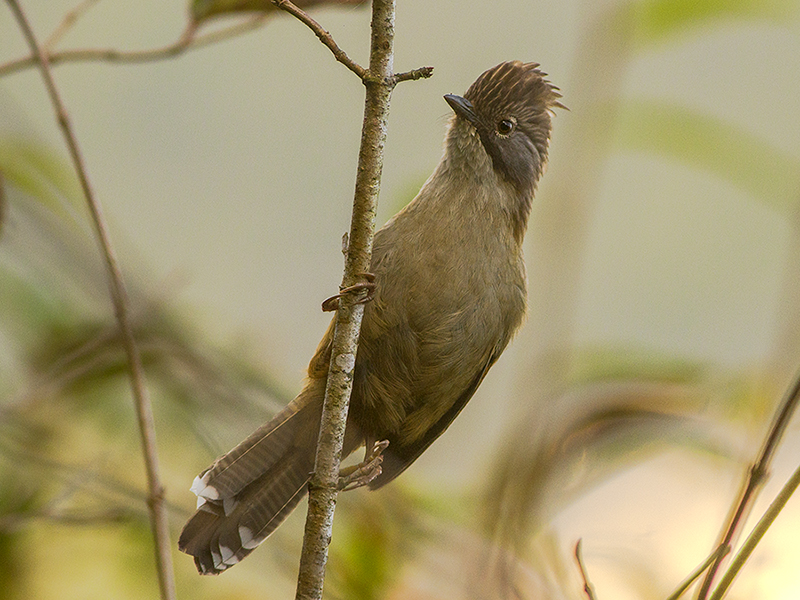
The Hoary-throated Barwing is a medium-sized bird, measuring approximately 23 centimeters in length. Its most distinctive feature is the white throat, which contrasts sharply with the rich brown of its upperparts and the grayish tones on its head and underparts. The wings exhibit a subtle barring pattern, characteristic of barwings, with a rufous tinge that adds to its visual appeal. Juvenile Hoary-throated Barwings resemble adults but often possess duller plumage, lacking the pronounced contrast seen in mature birds.
Sexual dimorphism is minimal in this species, making it difficult to distinguish between males and females based solely on appearance. However, males may sometimes show slightly brighter plumage during the breeding season. The bird's flight silhouette is robust, with broad wings and a relatively short tail, allowing it to maneuver adeptly through dense forest vegetation. When perching, the Hoary-throated Barwing often adopts an upright posture, its tail cocked slightly upwards.
Confusion with similar species can occur, particularly with other members of the Leiothrichidae family. However, the Hoary-throated Barwing's distinctive white throat and specific habitat preferences help set it apart. Birdwatchers can identify this bird by its unique vocalizations and its active foraging behavior in mixed-species flocks.
Having trouble telling birds apart? Upload a photo to our bird identification tool for an instant species match.
Hoary-throated Barwing Habitat and Range
Preferred Habitat
The Hoary-throated Barwing predominantly inhabits subtropical and temperate forests, thriving in areas characterized by dense undergrowth and mixed vegetation. Found at elevations ranging from 1,200 to 3,000 meters, this bird prefers the cool, moist environments of the eastern Himalayas. Such habitats provide abundant food resources and ample cover from predators. During different seasons, the Hoary-throated Barwing may adjust its elevation range, moving slightly higher or lower in response to temperature changes and food availability.
While primarily associated with forested regions, the Hoary-throated Barwing can occasionally be found in areas where forests meet agricultural lands. However, it avoids highly urbanized environments, relying on the natural cover and resources provided by forest ecosystems. Its presence in both primary and secondary forests highlights its adaptability, although it remains more common in undisturbed areas.
Geographic Range
The Hoary-throated Barwing's range spans parts of southern Asia, particularly in the eastern Himalayas. Its breeding range includes Bhutan, northeastern India, and southeastern Tibet, with populations often concentrated in forested regions of these countries. The bird does not engage in long-distance migrations, instead exhibiting some local movements within its range in response to seasonal changes.
In Bhutan, the Hoary-throated Barwing is quite common in the lush forests of the country's central and eastern regions. In northeastern India, it can be found in the states of Arunachal Pradesh, Sikkim, and West Bengal, where suitable forest habitats exist. Southeastern Tibet also hosts populations of this bird, though it is less commonly observed there compared to India and Bhutan. While the Hoary-throated Barwing's population density varies across its range, it is generally more numerous in areas with extensive, undisturbed forest cover.
Want to know which birds visit your area? Browse our backyard birds by location guides for region-specific species lists.
What Does the Hoary-throated Barwing Eat?
The diet of the Hoary-throated Barwing primarily consists of insects and small arthropods, which it actively seeks out in the forest mid-story and canopy. This bird employs a variety of foraging techniques, including gleaning from leaves and branches, as well as hovering to catch prey in mid-air. Its diet shifts seasonally, with an increased reliance on fruits and berries during periods of lower insect availability.
Insects such as beetles, caterpillars, and ants form the bulk of its diet, along with spiders and other small invertebrates. The Hoary-throated Barwing's ability to adapt its diet to include more fruits during leaner months demonstrates its ecological flexibility. Foraging typically occurs throughout the day, with peaks in activity during the early morning and late afternoon when insects are most active. By participating in mixed-species foraging flocks, the Hoary-throated Barwing maximizes its foraging efficiency and reduces the risk of predation.
Hoary-throated Barwing Behavior and Social Structure
Social behavior is a hallmark of the Hoary-throated Barwing, which often participates in mixed-species flocks. This communal foraging strategy enhances its ability to find food and provides safety in numbers against predators. Within these flocks, the Hoary-throated Barwing is an active and agile participant, frequently moving between the mid-story and the canopy.
Territoriality becomes more pronounced during the breeding season. Males, in particular, exhibit heightened aggression towards intruders while engaging in courtship displays to attract mates. These displays often include vocalizations and dynamic movements, showcasing the bird's plumage and vitality. Outside of the breeding season, the Hoary-throated Barwing maintains a less rigid territory, focusing on resource-rich areas for foraging.
The bird's response to predators includes alarm calls and evasive flight patterns, designed to alert conspecifics and confuse potential threats. Daily activity patterns consist of active foraging interspersed with periods of rest and preening, ensuring that the bird maintains optimum health and plumage condition throughout the year.
Hoary-throated Barwing Nesting and Reproduction
The Hoary-throated Barwing constructs cup-shaped nests, typically placed in dense shrubbery or low trees. These nests are crafted from twigs, grasses, and moss, providing a secure and camouflaged environment for raising young. The preferred nesting sites are often in areas of thick vegetation, offering protection from predators and harsh weather conditions.
Clutch size typically ranges from three to five eggs, which are incubated by both parents over a period of approximately 14 to 16 days. The cooperative nature of this species extends to parenting, with both male and female sharing duties of feeding and caring for the chicks. Fledging occurs about 12 to 14 days after hatching, although young birds may remain dependent on their parents for some time afterward.
The Hoary-throated Barwing generally raises one to two broods per year, with the timing of nesting coinciding with the availability of abundant food resources. This reproductive strategy ensures that the young have the highest chance of survival in their formative weeks.
Hoary-throated Barwing Sounds and Vocalizations
The Hoary-throated Barwing's vocalizations are a key aspect of its identification and social interactions. Its primary song consists of a series of melodious warbles and whistles, delivered in a rhythmic sequence that can vary slightly between individuals. These songs serve not only to attract mates during the breeding season but also to establish territory boundaries and communicate with flock members.
Apart from its song, the Hoary-throated Barwing emits a range of call notes, including sharp 'chuk' sounds and softer 'peep' notes, often used in flock communication and during foraging. Alarm calls are more abrupt and harsh, designed to alert nearby birds to the presence of predators. During the dawn chorus, the Hoary-throated Barwing often contributes its voice to the symphony of the forest, its clear notes cutting through the morning air.
Interesting Facts About the Hoary-throated Barwing
- 1The Hoary-throated Barwing's name refers to the distinctive white throat, a key field mark for identification.
- 2Despite its small size, the Hoary-throated Barwing plays a crucial role in seed dispersal and insect control in its habitat.
- 3The bird's participation in mixed-species flocks enhances its foraging efficiency, demonstrating its adaptable social behavior.
- 4Hoary-throated Barwings are known to adjust their elevation range seasonally, showcasing their adaptability to different environmental conditions.
- 5This species' melodious song is a common sound in the forests of the eastern Himalayas, especially during the breeding season.
- 6The Hoary-throated Barwing typically raises one to two broods per year, with both parents participating in chick rearing.
- 7In some areas, the Hoary-throated Barwing shares its habitat with other barwing species, yet its distinctive white throat sets it apart.
Hoary-throated Barwing Conservation Status
According to the IUCN Red List, the Hoary-throated Barwing is currently classified as Least Concern, reflecting a stable population trend across its range. However, habitat destruction poses a potential threat to its long-term survival, as deforestation and land conversion reduce available nesting and foraging sites. Conservation efforts focused on preserving forest habitats are crucial for maintaining healthy populations of this species. Protected areas within its range, such as national parks and wildlife sanctuaries, play a vital role in safeguarding the Hoary-throated Barwing's habitat. Continued monitoring of population trends and habitat quality is essential to ensure the species remains secure in the face of environmental changes.