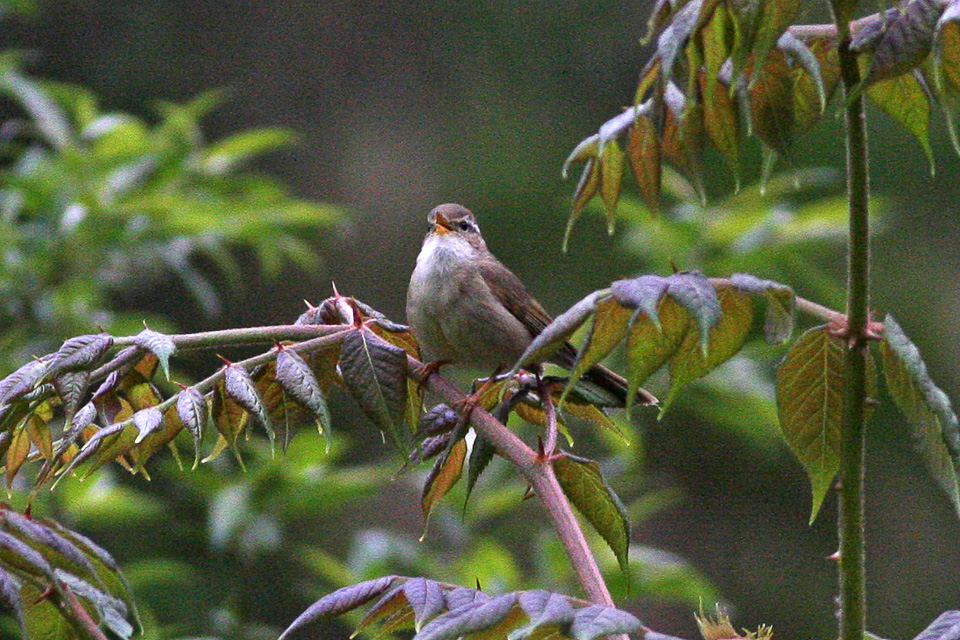
Iberian Chiffchaff
Phylloscopus ibericus
Order: Passeriformes / Family: Phylloscopidae

Wikimedia Commons
About the Iberian Chiffchaff
The Iberian Chiffchaff, scientifically known as Phylloscopus ibericus, is a small passerine bird that thrives primarily in the woodlands of the Iberian Peninsula. This species, a member of the Phylloscopidae family, is known for its agile movements and distinctive vocalizations, which set it apart from other similar warblers. The bird predominantly occupies regions in southwestern Europe, including Portugal and parts of Spain, particularly in areas characterized by both deciduous and mixed forests. The species plays a crucial role in these ecosystems, acting as both a predator and prey within its food web. It helps control insect populations while also serving as a food source for larger birds and mammals. During the breeding season, which typically spans from April to July, the Iberian Chiffchaff establishes territories in dense woodland areas, utilizing the canopy and understory for nesting and foraging. In winter, it migrates to sub-Saharan Africa, traversing a route that takes it across the Mediterranean and into more arid landscapes. Here, it adapts to different environments, showcasing its ecological versatility. The Iberian Chiffchaff's presence and activities are vital for maintaining the balance of its native habitats, as it participates in seed dispersal and helps with the pollination of various plant species through its interactions with flowers and insects. Its seasonal movements and adaptability to different habitats underscore its importance in both its breeding and wintering grounds.
The Iberian Chiffchaff belongs to the family Phylloscopidae, within the order Passeriformes. These birds typically live typically 2-3 years with a maximum recorded of 5 years..
How to Identify a Iberian Chiffchaff
The Iberian Chiffchaff is a small bird, measuring about 11-12 centimeters in length with a wingspan of approximately 18-21 centimeters. Adult plumage consists of olive-green upperparts and pale yellowish underparts, providing excellent camouflage among the leaves. The bird's supercilium, or eye stripe, is usually yellowish, contrasting with its darker eye line. Juveniles resemble adults but tend to have slightly duller plumage. Both males and females look alike, making visual sex differentiation difficult. However, males are typically more vocal, especially during the breeding season. This bird can often be confused with the Common Chiffchaff due to their similar appearance, but the Iberian Chiffchaff's song is more varied and complex. In flight, it displays a fluttering, agile silhouette. When perched, it often flicks its wings and tail, a behavior that aids in identification.
Having trouble telling birds apart? Upload a photo to our bird identification tool for an instant species match.
Iberian Chiffchaff Habitat and Range
Preferred Habitat
The Iberian Chiffchaff primarily inhabits deciduous and mixed forests within the Iberian Peninsula. It prefers regions with abundant undergrowth and a rich canopy, favoring areas with oak, chestnut, and pine trees. During breeding, it occupies elevations ranging from sea level to about 1,500 meters. In its wintering grounds, it shifts to more open woodlands and savannas in sub-Saharan Africa. The bird also adapts to urban environments, often seen in parks and gardens where suitable vegetation exists. Despite its adaptability, it shows a preference for natural habitats with dense foliage.
Geographic Range
The breeding range of the Iberian Chiffchaff is confined to the Iberian Peninsula, particularly in Portugal and western Spain. It thrives in these regions during the spring and summer months. As the seasons change, this migratory bird undertakes a southward journey towards its wintering grounds in West Africa, including Senegal, Gambia, and Mali. During migration, it traverses France and the Mediterranean, often stopping in suitable habitats along the way. While the species remains concentrated in its primary range, occasional vagrants are reported in other European countries, highlighting its expansive migratory reach.
Want to know which birds visit your area? Browse our backyard birds by location guides for region-specific species lists.
What Does the Iberian Chiffchaff Eat?
The diet of the Iberian Chiffchaff primarily consists of small insects and larvae, which it skillfully extracts from foliage using its slender bill. During the breeding season, caterpillars form a significant part of its diet, providing the necessary protein for raising young. The bird employs a methodical foraging technique, hopping among branches and occasionally performing aerial sallies to catch flying insects. In the winter months, it adapts to available resources in Africa, consuming a mix of insects and some plant material such as seeds and berries. This dietary flexibility is crucial for its survival across different habitats and seasons.
Iberian Chiffchaff Behavior and Social Structure
Iberian Chiffchaffs are generally solitary or seen in pairs during the breeding season, where males establish and defend territories through song. Their courtship displays involve males singing and performing aerial displays to attract females. Outside the breeding season, they may form loose flocks, particularly during migration. The species is diurnal, with most of its foraging and singing activities occurring in the early morning and late afternoon. When threatened by predators, the chiffchaff employs a series of rapid, high-pitched alarm calls and often retreats to dense foliage for cover. Its daily activities revolve around foraging, preening, and vocalizing, with a notable increase in singing during the dawn chorus.
Iberian Chiffchaff Nesting and Reproduction
The Iberian Chiffchaff constructs its nest in dense shrubbery, usually close to the ground. The nest is a compact structure made from grass, moss, and leaves, lined with feathers and soft plant materials. Typically, a female lays a clutch of 4-5 eggs, which she incubates for about 13-15 days. Both parents participate in feeding the hatchlings, which fledge approximately 13-14 days after hatching. The species may raise one or two broods per year, depending on environmental conditions. The nesting period is a critical time for the chiffchaff, as it requires abundant food resources and secure nesting sites to ensure reproductive success.
Iberian Chiffchaff Sounds and Vocalizations
The primary song of the Iberian Chiffchaff is a rapid, rhythmic series of notes that varies in pitch and tempo, often described as a 'chiff-chaff, chiff-chaff, chitty-chitty-chitty' sequence. This song serves as a territorial call and a courtship display. In addition to its song, the bird produces call notes that are sharp and metallic, used in communication between individuals and as alarm signals. During the dawn chorus, the Iberian Chiffchaff's song is prominent and persistent, adding a distinctive sound to the early morning woodland soundscape.
Interesting Facts About the Iberian Chiffchaff
- 1The Iberian Chiffchaff's song differs significantly from its close relative, the Common Chiffchaff, aiding in its identification.
- 2Despite its preference for woodland habitats, the Iberian Chiffchaff is known to visit gardens and parks during migration.
- 3The bird's migratory route covers over 3,000 kilometers, showcasing its impressive endurance and navigational abilities.
- 4Its rapid, complex song has made it a subject of interest for ornithologists studying bird vocalizations.
- 5The Iberian Chiffchaff often uses its song not only to attract mates but also to establish and defend its territory.
- 6This species has a relatively short breeding season, lasting only about three months each year.
- 7Iberian Chiffchaffs are known to hybridize with the Common Chiffchaff in areas where their ranges overlap.
Iberian Chiffchaff Conservation Status
The Iberian Chiffchaff is currently listed as Least Concern by the IUCN, with a stable population trend. Primary threats include habitat loss due to deforestation and urbanization, as well as climate change, which may affect its migratory patterns and breeding success. Conservation efforts focus on preserving its natural habitats and ensuring safe migratory routes. Historical data indicate that the Iberian Chiffchaff has maintained a relatively stable population, owing to its adaptability and broad geographical range.