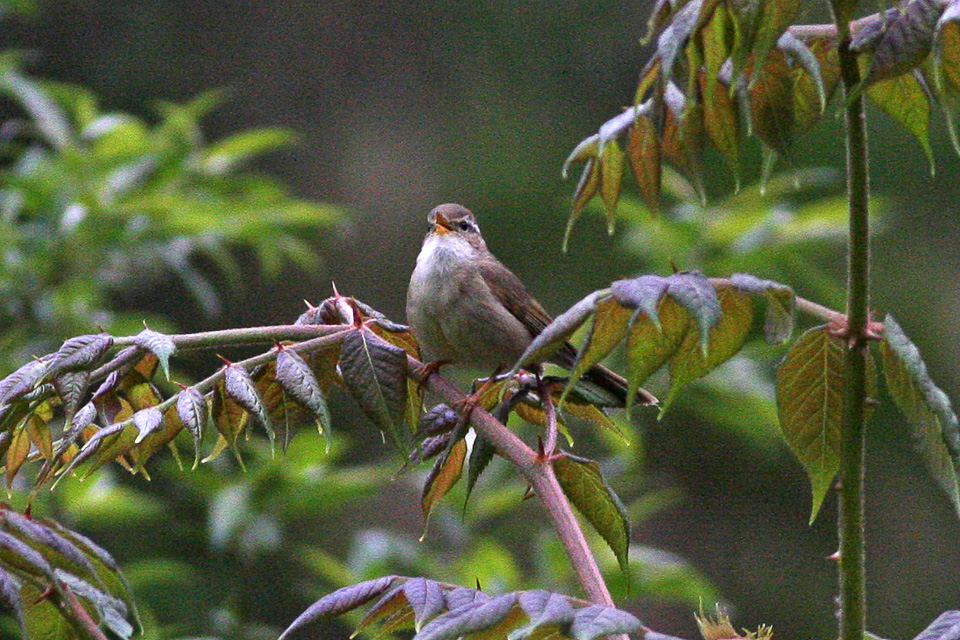
Ijima's Leaf Warbler
Phylloscopus ijimae
Order: Passeriformes / Family: Phylloscopidae

Wikimedia Commons
About the Ijima's Leaf Warbler
Ijima's Leaf Warbler (Phylloscopus ijimae) is a captivating small songbird belonging to the family Phylloscopidae. This species is endemic to Japan, specifically thriving on the islands of Amami Oshima and Okinawa. The warbler's presence in these regions underscores its ecological importance as an indicator of the health of subtropical forest ecosystems. Characterized by its olive-green upperparts and yellowish underparts, the Ijima's Leaf Warbler is well-adapted to its environment, blending seamlessly with the foliage in which it forages.
The bird's ecological role cannot be overstated, as it contributes to controlling insect populations within its habitat. The Ijima's Leaf Warbler is most active during the breeding season, typically from March to June, when males are often heard delivering their melodious songs to establish territories and attract mates. These songs, marked by a series of high-pitched, rapid trills, resonate through the dense forests, adding a vibrant dimension to the soundscape of its habitat.
During the non-breeding season, the Ijima's Leaf Warbler remains in the subtropical regions, where it continues to forage amidst the evergreen broadleaf forests. Its presence throughout the year in this specific geographic area highlights its role as a resident species, contrasting with many other Phylloscopus species known for their migratory behavior. The warbler's adaptability to the subtropical climate and its reliance on the unique flora of these islands further emphasize the importance of preserving its natural habitat to ensure its continued survival.
The Ijima's Leaf Warbler also plays a critical role in seed dispersal, inadvertently aiding in the regeneration of forest vegetation as it moves through its environment. The bird's relationship with its ecosystem exemplifies the intricate connections between species and habitat, where the warbler not only benefits from the resources provided but also contributes to the overall health and balance of the forest. Conservation efforts focused on maintaining these habitats are crucial, as habitat loss poses a significant threat to this species' survival.
The Ijima's Leaf Warbler belongs to the family Phylloscopidae, within the order Passeriformes. These birds typically live typically 2-3 years with a maximum recorded of 5 years..
How to Identify a Ijima's Leaf Warbler
Ijima's Leaf Warbler is a small, delicate bird measuring about 11 cm in length, with a distinct olive-green plumage that provides excellent camouflage in its forested environment. The upperparts are a rich olive-green, while the underparts transition to a paler yellowish hue, a combination that can make the bird challenging to spot among the leaves. A prominent feature is its supercilium, or eyebrow stripe, which is a pale yellow and arches over the eye, accentuating its expression.
Juvenile Ijima's Leaf Warblers resemble adults but often display slightly duller colors, lacking the intensity of the olive and yellow found in mature birds. There is minimal sexual dimorphism in this species; both males and females appear similar in plumage, though during the breeding season, males may be marginally brighter. The warbler's small size and quick movements, coupled with its distinctive high-pitched song, aid birders in identifying it.
In flight, the Ijima's Leaf Warbler presents a rapid and erratic silhouette, typical of many leaf warblers. Its wings are relatively short and rounded, which enhances maneuverability within dense foliage. When perched, the bird often maintains an upright posture, flicking its wings and tail intermittently, a behavior that can be a helpful identification clue. Confusion with similar species, such as the Japanese Leaf Warbler, can occur, but the Ijima's Leaf Warbler's specific vocalizations and slight differences in plumage help distinguish it.
Having trouble telling birds apart? Upload a photo to our bird identification tool for an instant species match.
Ijima's Leaf Warbler Habitat and Range
Preferred Habitat
The Ijima's Leaf Warbler primarily inhabits subtropical forests, favoring dense, broadleaf evergreen areas that provide ample cover and foraging opportunities. These forests, rich in biodiversity, offer the necessary resources for the warbler's survival, including a variety of insects and other invertebrates. On Amami Oshima and Okinawa, the bird can be found at elevations ranging from sea level to about 800 meters, where the forest composition remains conducive to their needs.
During different seasons, the Ijima's Leaf Warbler does not exhibit significant shifts in habitat preference, remaining within these lush environments year-round. This consistency underscores the importance of the subtropical forest ecosystem in supporting the species' life cycle. Although primarily a forest dweller, the warbler can occasionally be found in secondary growth areas or forest edges, indicating some adaptability to habitat changes.
The warbler's presence in rural landscapes contrasts with its absence from urban areas, where habitat fragmentation and human disturbance can significantly impact its populations. Conservation of forest habitats, particularly in the face of expanding urban development, is crucial for maintaining the ecological balance and ensuring the survival of Ijima's Leaf Warbler.
Geographic Range
Ijima's Leaf Warbler has a limited geographic range, being endemic to Japan. It primarily inhabits the islands of Amami Oshima and Okinawa in the Ryukyu Archipelago. This specificity in range makes it particularly susceptible to environmental changes and habitat destruction. The bird is a resident species, spending both the breeding and non-breeding seasons within these islands, which limits its dispersal opportunities and increases its vulnerability.
During the breeding season, which spans from March to June, the warbler is especially vocal and active, occupying territories within the subtropical forests of these islands. The population is relatively stable, though not widespread, with densities being higher in undisturbed forested areas where human impact is minimal.
Migration is not a characteristic behavior of the Ijima's Leaf Warbler, unlike many of its Phylloscopus relatives. This lack of migratory behavior means that the species' survival is intrinsically linked to the conservation of its habitat in the Ryukyu Islands. Efforts to protect these regions are vital, as any loss or degradation of habitat could have dire consequences for the warbler's long-term viability.
Want to know which birds visit your area? Browse our backyard birds by location guides for region-specific species lists.
What Does the Ijima's Leaf Warbler Eat?
Ijima's Leaf Warbler primarily feeds on a diet of insects and other small invertebrates, which it actively forages for among the foliage of subtropical forests. The bird employs a variety of foraging techniques, including gleaning insects from leaves and twigs, as well as occasionally hovering to snatch prey from the underside of leaves. Its diet consists of a range of arthropods, such as caterpillars, spiders, and beetles, which are abundant in its forest habitat.
Seasonal changes can influence the warbler's diet, as the availability of different prey types fluctuates throughout the year. During the breeding season, the demand for high-energy food increases, leading the warbler to focus on more substantial prey items to sustain itself and its offspring. In contrast, during the non-breeding season, the warbler may consume a more varied diet, taking advantage of whatever prey is most abundant.
The Ijima's Leaf Warbler is typically most active during the early morning and late afternoon, coinciding with peak insect activity. This feeding schedule allows the bird to maximize its foraging efficiency, ensuring it meets its nutritional needs throughout the day. The warbler's role as an insectivore is crucial in controlling insect populations within its ecosystem, maintaining ecological balance.
Ijima's Leaf Warbler Behavior and Social Structure
Ijima's Leaf Warbler exhibits a solitary or paired social structure, particularly during the breeding season when territorial behavior becomes prominent. Males establish territories through vocalizations, using their distinctive songs to ward off rivals and attract potential mates. The warbler's song is an essential component of its courtship display, with males often perching conspicuously to broadcast their calls.
Courtship involves various displays, including singing and sometimes fluttering flights, aimed at impressing females. Once paired, the warbler becomes more secretive, focusing on nesting and rearing young. Flocking behavior is relatively uncommon, although outside the breeding season, small groups may form temporarily, especially when resources are abundant.
The warbler responds to predators with alarm calls and evasive maneuvers, utilizing the dense forest cover to escape threats. Its daily activity pattern includes periods of intense foraging interspersed with rest and preening. The Ijima's Leaf Warbler is diurnal, with activity levels peaking during cooler parts of the day, avoiding the midday heat common in its subtropical habitat. This behavior exemplifies its adaptation to the environmental conditions it inhabits, ensuring survival and reproductive success.
Ijima's Leaf Warbler Nesting and Reproduction
Ijima's Leaf Warbler constructs its nest as a cup-shaped structure, typically located low in dense vegetation or on the ground amid thick undergrowth. The choice of nest site in the subtropical forests provides concealment from predators and protection from the elements. The nest is usually composed of grasses, leaves, and moss, with a lining of finer materials such as feathers or soft plant fibers to cushion the eggs.
The breeding season extends from March to June, during which the female lays a clutch of usually 3 to 4 eggs. Incubation is primarily the responsibility of the female, lasting about 12 to 14 days. During this period, the male may assist by providing food, although his primary role involves defending the territory from intruders.
Once the eggs hatch, both parents participate in feeding the chicks, delivering a diet rich in insects to ensure rapid growth. The fledging period is relatively short, with young birds leaving the nest approximately 12 to 15 days after hatching. The warbler may raise one or two broods per year, depending on environmental conditions and resource availability. Parental care continues for some time after fledging, with adults teaching their young essential survival skills.
Ijima's Leaf Warbler Sounds and Vocalizations
Ijima's Leaf Warbler is known for its distinct and vibrant song, which consists of a series of rapid, high-pitched trills. The rhythm is fast-paced, with each phrase often repeated several times in succession, creating an unmistakable acoustic signature within its forest habitat. The song serves as both a territorial marker and a courtship call, with males singing frequently during the breeding season.
In addition to its primary song, the Ijima's Leaf Warbler produces various call notes used for communication between mates and signaling alarm. These calls are generally short and sharp, allowing for efficient transmission through dense foliage. The warbler's alarm calls are particularly important for alerting nearby individuals to the presence of predators.
During the dawn chorus, the Ijima's Leaf Warbler's song contributes to the rich tapestry of sounds that characterize its subtropical forest environment. The bird's ability to project its voice over considerable distances ensures that its presence is noted by both potential mates and rivals, reinforcing its territorial claims and enhancing its reproductive success.
Interesting Facts About the Ijima's Leaf Warbler
- 1Ijima's Leaf Warbler was named in honor of Japanese ornithologist Ijima Isao, reflecting its discovery in his home country.
- 2The warbler's territorial song can be heard up to 100 meters away, a testament to its vocal strength and importance in communication.
- 3Despite its small size, Ijima's Leaf Warbler plays a significant role in insect population control, highlighting its ecological importance.
- 4The species is non-migratory, a rarity among Phylloscopus warblers, emphasizing its adaptation to the subtropical climate of its habitat.
- 5Ijima's Leaf Warbler chicks grow rapidly, fledging just 12 to 15 days post-hatching, ensuring quick independence in a predator-rich environment.
- 6The warbler's olive-green plumage provides excellent camouflage, making it difficult to spot despite its active foraging behavior.
- 7Conservation efforts for the warbler focus on preventing habitat loss, as its restricted range in Japan makes it particularly vulnerable.
Ijima's Leaf Warbler Conservation Status
Ijima's Leaf Warbler is currently listed as Near Threatened on the IUCN Red List, reflecting concerns over habitat loss and fragmentation within its limited range. The primary threats to the species include deforestation and habitat degradation due to human activities such as agriculture and urban development. These activities reduce the availability of suitable breeding and foraging sites, impacting population stability. Conservation efforts focus on protecting the subtropical forests of Amami Oshima and Okinawa, recognizing the importance of these habitats in sustaining the warbler's populations. Initiatives include the establishment of protected areas and habitat restoration projects aimed at enhancing forest health and biodiversity. Historically, population changes for the Ijima's Leaf Warbler have been closely tied to fluctuations in habitat quality. While some populations remain stable, others face declines as development pressures increase. Continued monitoring and targeted conservation actions are essential to ensure the long-term survival of this unique species, addressing both immediate threats and fostering long-term habitat resilience.