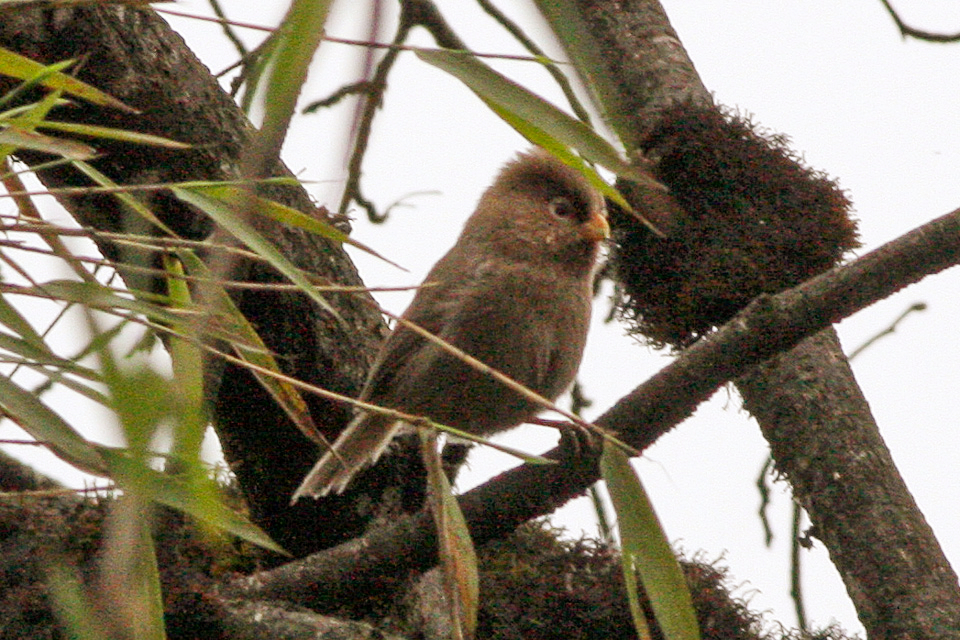
Jerdon's Babbler
Chrysomma altirostre
Order: Passeriformes / Family: Sylviidae

Wikimedia Commons
About the Jerdon's Babbler
Jerdon's Babbler (Chrysomma altirostre) is an intriguing avian inhabitant of South Asia, particularly adapted to life in dense reed beds and tall grasslands. This small songbird, part of the Sylviidae family, plays a vital role in the ecosystem by managing insect populations and serving as a prey species for larger predators. Endemic to the Indian subcontinent, its presence is most notable in countries such as India, Nepal, and Bangladesh. The bird's warm browns and subtle markings allow it to blend seamlessly into its surroundings, providing excellent camouflage against potential threats.
This species primarily resides in wetlands and grasslands where it finds ample food supply and suitable nesting sites. Jerdon's Babbler exhibits fascinating behavioral adaptations to its environment. For instance, during the monsoon season, it benefits from the proliferation of insects, which serve as its primary food source. As water levels rise, these birds exhibit a remarkable ability to navigate their flooded habitats, often seen skillfully moving among reeds and grasses.
Ecologically, Jerdon's Babbler plays a significant role in its habitat. By controlling insect populations, it helps maintain the balance of its ecosystem. This function also benefits nearby human communities, as the bird aids in reducing pest numbers that could otherwise impact agriculture. The presence of Jerdon's Babbler often indicates a healthy, thriving environment, thus serving as an important bioindicator for wetland and grassland health across its range.
The Jerdon's Babbler belongs to the family Sylviidae, within the order Passeriformes. These birds typically live average 5 years, with a maximum recorded of 7 years..
How to Identify a Jerdon's Babbler
Jerdon's Babbler is a small, plump songbird characterized by its distinctive chestnut crown and warm brown upperparts. Adult birds exhibit a grayish-white throat and breast, with a slight buff wash on the flanks. Their eyes are notably pale, providing a contrast to their dark lores and eye stripe. Juvenile birds present similar markings but lack the intense chestnut coloration on the crown, appearing more uniform in their brown tones.
Males and females appear quite similar, making visual sex differentiation challenging in the field. However, during the breeding season, males may be observed engaging in more conspicuous vocalizations and territorial displays, which can assist in identification.
The bird's perching posture is typically upright, with a slightly cocked tail. In flight, Jerdon's Babbler exhibits rapid, fluttering wingbeats and short, direct flights between vegetation patches. Observers might confuse this bird with other sympatric species such as the Yellow-eyed Babbler, but the latter features a more pronounced yellow eye and different vocalizations.
Having trouble telling birds apart? Upload a photo to our bird identification tool for an instant species match.
Jerdon's Babbler Habitat and Range
Preferred Habitat
Jerdon's Babbler typically inhabits dense reed beds, tall grasslands, and marshy areas, often near water bodies. These habitats provide essential cover and food resources. The species is most commonly found at lower elevations, generally below 1,000 meters. During the dry season, it may shift to slightly drier grassland areas but remains closely associated with wetland environments.
Unlike some songbirds, Jerdon's Babbler rarely ventures into urban areas, preferring rural settings where its preferred habitat is intact. Its presence in human-modified landscapes is limited to regions where wetlands and grasslands remain relatively undisturbed, underscoring the importance of habitat conservation for this species.
Geographic Range
The range of Jerdon's Babbler extends across the Indian subcontinent, with established populations in India, Nepal, and Bangladesh. It is primarily a resident species, meaning it does not undertake significant migratory movements. However, seasonal shifts occur locally as the bird adjusts to changing water levels and food availability in its habitat.
In India, the bird is frequently sighted in states such as Assam, West Bengal, and Bihar, where suitable wetland habitats are prevalent. In Nepal, it is found in the lowland Terai region, while in Bangladesh, it inhabits the eastern wetlands and grasslands. Population densities are highest in regions where extensive marshlands provide ample resources.
Want to know which birds visit your area? Browse our backyard birds by location guides for region-specific species lists.
What Does the Jerdon's Babbler Eat?
Jerdon's Babbler primarily feeds on insects and other small invertebrates, which it forages for within the dense grasses and reeds of its habitat. Its diet includes beetles, grasshoppers, and caterpillars, with occasional forays into consuming seeds and plant matter, particularly during periods of insect scarcity.
Seasonal diet variations correspond to changes in food availability, with a marked increase in insect consumption during the monsoon season. The bird employs a methodical foraging technique, often seen hopping along the ground or probing into vegetation to uncover hidden prey.
Prey size varies, but Jerdon's Babbler typically targets smaller insects that can be easily managed and consumed. Feeding activity occurs throughout the day, with peaks in the morning and late afternoon when temperatures are more moderate.
Jerdon's Babbler Behavior and Social Structure
Jerdon's Babbler exhibits a socially cohesive structure, often forming small flocks outside the breeding season. These groups enable cooperative foraging and enhanced vigilance against predators. The species is territorial, especially during the breeding season, when males actively defend their nesting areas through vocal displays and physical posturing.
Courtship displays involve a series of intricate movements and vocalizations, with males showcasing their agility and strength. These displays serve to strengthen pair bonds and establish mating territories. The bird's response to predators involves alarm calls and evasive maneuvers, often retreating into dense vegetation to avoid detection.
Daily activity patterns are influenced by environmental conditions, with foraging and social interactions occurring primarily during cooler parts of the day. The bird is generally active from dawn until dusk, utilizing the cover of tall grasses and reeds for both feeding and shelter.
Jerdon's Babbler Nesting and Reproduction
Jerdon's Babbler constructs cup-shaped nests, typically located low in dense vegetation such as reeds or tall grasses. The nest is woven from grass, leaves, and other plant fibers, providing a secure site for egg-laying and chick rearing. Nest placement within dense foliage offers protection from predators and environmental elements.
The typical clutch size ranges from two to four eggs, which are incubated by both parents over a period of approximately 12 to 14 days. Following hatching, both male and female participate in feeding and caring for the chicks, ensuring a steady supply of food and protection.
Fledging occurs around 10 to 12 days post-hatching, with young birds remaining dependent on their parents for several weeks thereafter. Jerdon's Babbler usually produces one or two broods per year, depending on environmental conditions and resource availability.
Jerdon's Babbler Sounds and Vocalizations
Jerdon's Babbler is known for its melodious song, which consists of a series of clear, whistled notes. The primary song is delivered in a rhythmic pattern, often described as sweet and musical. These vocalizations are most prominent during the breeding season, serving to establish territory and attract mates.
In addition to their song, the birds produce a variety of call notes, including sharp, clucking sounds used for communication within flocks and alarm calls that alert others to potential danger. During the dawn chorus, Jerdon's Babbler's song adds to the symphony of wetland sounds, standing out for its clarity and melodic quality.
Interesting Facts About the Jerdon's Babbler
- 1Jerdon's Babbler was thought extinct in Myanmar until its rediscovery in 2014, highlighting its elusive nature.
- 2The species was named after Thomas C. Jerdon, a British zoologist who extensively studied Indian birds.
- 3Jerdon's Babbler's song was once used as a background sound in traditional South Asian music recordings.
- 4These birds can maneuver skillfully through dense reeds, a trait that aids in avoiding predators.
- 5Their nests, often located just above water, demonstrate exceptional structural integrity against flooding.
- 6Jerdon's Babbler exhibits remarkable site fidelity, often returning to the same breeding territories annually.
- 7In some regions, Jerdon's Babbler is considered an indicator of wetland health, due to its habitat specificity.
Jerdon's Babbler Conservation Status
Jerdon's Babbler is classified as Near Threatened by the IUCN, with its population experiencing a decreasing trend. Habitat loss and degradation, primarily due to agricultural expansion and wetland drainage, pose significant threats to the species' survival. Conservation efforts focus on preserving and restoring wetland habitats, alongside community engagement programs that highlight the bird's ecological importance. Historical population declines were more pronounced, but recent protective measures have contributed to stabilizing some local populations. Continued habitat protection and management are crucial for the long-term conservation of Jerdon's Babbler.