
Kauai Oo
Moho braccatus
Order: Passeriformes / Family: Mohoidae

Wikimedia Commons
About the Kauai Oo
The Kauai Oo (Moho braccatus) was a unique and iconic bird, once endemic to the Hawaiian island of Kauai. This member of the Mohoidae family was renowned for its rich and melodious song, which made it a symbol of the island's natural beauty and a subject of fascination for ornithologists and bird enthusiasts alike. The bird occupied a critical ecological niche in Kauai's forests, playing a significant role in the pollination of native plants. It was primarily found in the dense, wet forests of the Alakai Swamp, a remote and pristine area on the island. The Kauai Oo was a medium-sized bird, with a distinctive combination of black and yellow plumage, and a slightly curved bill adapted for its specialized feeding habits. Historically, the Kauai Oo was an important pollinator for several native plant species, including the lobelioids and certain species of ʻōhiʻa lehua. The bird's diet primarily consisted of nectar, supplemented by small insects and fruits, which allowed it to serve as both a pollinator and a seed disperser. The Kauai Oo's presence was once a common feature in the forests of Kauai, where its song could be heard echoing through the lush canopy. Seasonal behaviors of the Kauai Oo included nesting and breeding primarily during the wet season when food was abundant. The bird's call was an integral part of the forest's soundscape, marking territories and attracting mates in the dense understory of the island's rainforests. Unfortunately, by the late 20th century, the Kauai Oo faced numerous challenges that ultimately led to its extinction. Habitat destruction, introduced predators, and diseases such as avian malaria decimated its population. Conservation efforts came too late, and the last confirmed sighting of the Kauai Oo was in the late 1980s. Today, the bird serves as a poignant reminder of the fragility of island ecosystems and the importance of timely conservation efforts. The loss of the Kauai Oo has had lasting impacts on the ecological dynamics of Kauai's forests, where the absence of this unique pollinator has altered the reproductive success of native plants. This extinction event underscores the interconnectedness of species within an ecosystem and highlights the critical need for preserving biodiversity in vulnerable habitats.
The Kauai Oo belongs to the family Mohoidae, within the order Passeriformes. These birds typically live Unknown, as the species is extinct..
How to Identify a Kauai Oo
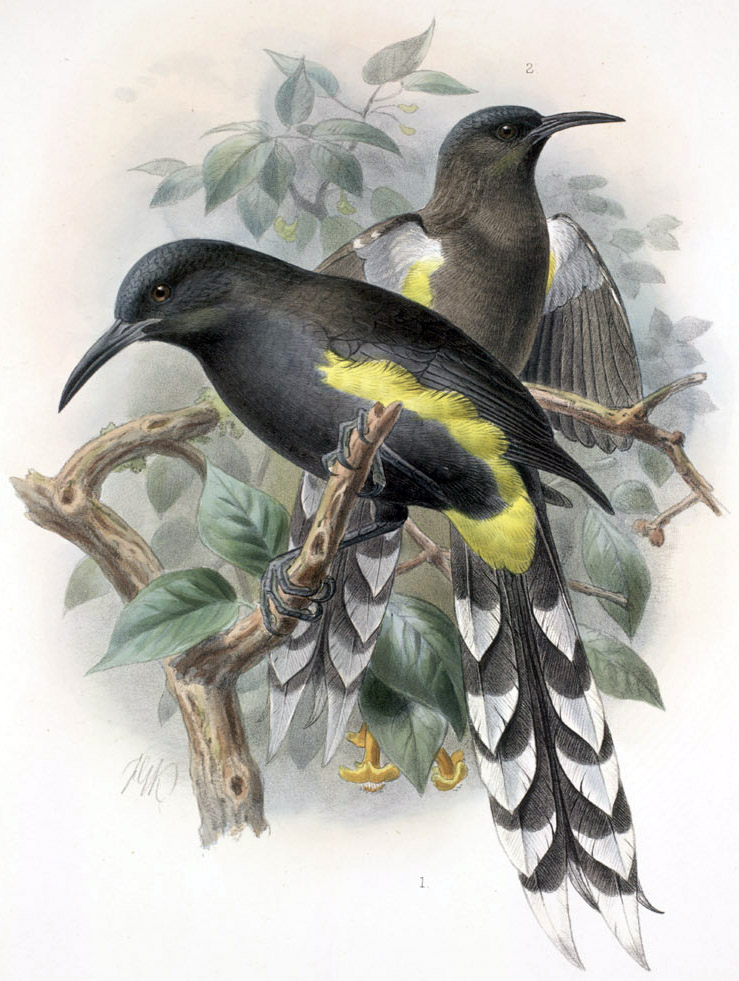
The Kauai Oo was a medium-sized bird, easily identifiable by its striking plumage and melodious song. Adult Kauai Oos exhibited a predominantly black plumage with a glossy sheen that appeared almost bluish in certain lights. The bird's underparts and undertail coverts were a bright yellow, providing a stark contrast to its otherwise dark appearance. This distinctive color pattern made the Kauai Oo recognizable and an alluring subject for birdwatchers. Juvenile Kauai Oos resembled adults but had slightly duller plumage lacking the glossy sheen. Males and females looked similar, making sex identification in the field challenging without close observation. In flight, the Kauai Oo displayed a swift and agile silhouette, with rapid wingbeats and a slightly undulating flight pattern. Perched, the bird maintained an upright posture, often seen clinging to branches in search of nectar and insects. The Kauai Oo could be confused with other members of the Mohoidae family, such as the Oahu Oo and the Bishop's Oo, but its specific combination of yellow and black plumage and its unique vocalizations set it apart. Observers noted that its song was both complex and variable, adding to the bird's mystique.
Having trouble telling birds apart? Upload a photo to our bird identification tool for an instant species match.
Kauai Oo Habitat and Range
Preferred Habitat
The Kauai Oo inhabited the dense, wet montane forests of Kauai, particularly favoring the Alakai Swamp. This remote and pristine region, characterized by its high elevation and frequent rainfall, provided the ideal environment for the bird's specialized feeding habits. The forest's lush vegetation, consisting of a mixture of ʻōhiʻa lehua trees and native ferns, offered abundant nectar sources and insect prey. The Kauai Oo preferred elevations above 1000 meters, where the cooler temperatures and high humidity supported a rich diversity of plant and animal life. Seasonal shifts did not significantly alter the bird's habitat preferences, as the wet forest ecosystem provided year-round resources. The Kauai Oo was not found in urban or heavily altered landscapes, as it relied on the undisturbed forest environment to thrive.
Geographic Range
Historically, the Kauai Oo was restricted to the island of Kauai in Hawaii, with its range limited to the high-elevation forests of the Alakai Plateau. The bird did not exhibit migratory behavior, as its range was confined entirely to this specific region. Within Kauai, the Alakai Swamp served as the primary habitat, offering the unique environmental conditions required for the bird's survival. Due to habitat specificity and geographic isolation, the Kauai Oo population density was concentrated in this remote area, making it particularly vulnerable to ecological disturbances. The bird's range did not extend beyond Kauai, highlighting its status as an island-endemic species.
Want to know which birds visit your area? Browse our backyard birds by location guides for region-specific species lists.
What Does the Kauai Oo Eat?
The Kauai Oo primarily fed on nectar, utilizing its slightly curved bill to access the floral resources of native Hawaiian plants. The bird's primary nectar sources included ʻōhiʻa lehua and various species of lobelioids, which provided both sustenance and a role in pollination. In addition to nectar, the Kauai Oo consumed small insects and arthropods, supplementing its diet with protein-rich prey. This insectivorous behavior involved gleaning insects from foliage and bark, showcasing the bird's adaptability in foraging techniques. Seasonal variations in food availability influenced the Kauai Oo's diet, with an increased reliance on insects during periods when floral resources were scarce. The bird's feeding schedule was predominantly diurnal, aligning with the activity patterns of its prey and nectar sources.
Kauai Oo Behavior and Social Structure
The Kauai Oo exhibited a solitary or paired social structure, with individuals often seen alone or in pairs during the breeding season. The bird demonstrated strong territorial behavior, with males establishing and defending territories through vocalizations and displays. Courtship displays included a combination of song and subtle posturing, aimed at attracting a mate and reinforcing pair bonds. Flocking was not a typical behavior for the Kauai Oo, as its territorial nature and specialized diet limited the potential for large group formations. In response to predators, the Kauai Oo relied on its agility and dense habitat for protection, often retreating into the understory to evade threats. Daily activity patterns were influenced by food availability, with peak foraging occurring during the morning and late afternoon.
Kauai Oo Nesting and Reproduction
The Kauai Oo constructed cup-shaped nests from plant materials, such as mosses, ferns, and twigs, carefully woven together to create a secure structure. These nests were typically located in dense vegetation, often positioned on a horizontal branch or within the fork of a tree, providing concealment and protection from predators. The typical clutch size ranged from one to two eggs, with both parents sharing incubation duties. The incubation period lasted approximately 14 to 17 days, followed by a fledging timeline of around 21 to 24 days. Parental roles were shared, with both male and female contributing to feeding and caring for the young. The Kauai Oo typically raised one brood per year, with breeding activity aligning with the wet season to ensure ample food resources.
Kauai Oo Sounds and Vocalizations
The Kauai Oo was renowned for its melodious and complex song, characterized by a series of clear whistles and trills. The primary song, often heard during the breeding season, featured a rhythmic pattern with varying pitches and a musical quality that resonated through the forest. In addition to its song, the Kauai Oo produced call notes and alarm calls, which were shorter and sharper in contrast to its elaborate song. The bird's vocalizations played a crucial role in territory establishment and mate attraction, contributing to the rich acoustic landscape of Kauai's forests.
Interesting Facts About the Kauai Oo
- 1The Kauai Oo's song was once described as one of the most beautiful bird songs in Hawaii, often compared to the sound of a flute.
- 2The Kauai Oo played a crucial role in the pollination of native Hawaiian plants, particularly the lobelioids and ʻōhiʻa lehua.
- 3The last known individual of the Kauai Oo was a solitary male, heard singing in the Alakai Swamp in 1987.
- 4The Kauai Oo's extinction is a testament to the vulnerability of island ecosystems to introduced species and diseases.
- 5The bird's extinction has led to changes in the ecological dynamics of Kauai's forests, affecting plant reproduction and diversity.
Kauai Oo Conservation Status
The Kauai Oo is classified as extinct by the IUCN, with the last confirmed sighting occurring in the late 1980s. The bird's population experienced a rapid decline due to habitat destruction, introduced predators such as rats and cats, and diseases like avian malaria and pox. Conservation efforts, including habitat protection and disease management, proved insufficient to prevent extinction. The loss of the Kauai Oo highlights the critical importance of proactive conservation measures, particularly for island-endemic species vulnerable to environmental changes.
Other Mohoidae Species



Birds Similar to the Kauai Oo
These species are often confused with the Kauai Oo due to similar appearance or overlapping range.