
Oahu Oo
Moho apicalis
Order: Passeriformes / Family: Mohoidae
Wikimedia Commons
About the Oahu Oo
The Oahu Oo, scientifically known as Moho apicalis, was once a prominent member of the Hawaiian avian community. This bird belonged to the family Mohoidae and was native to the island of Oahu in Hawaii. The Oahu Oo played a significant role in its ecosystem, primarily as a pollinator, due to its specialized feeding habits. Its extinction highlights the fragility of island ecosystems and the profound impact of habitat destruction and introduced species.
Historically, the Oahu Oo inhabited the dense, tropical montane forests of Oahu, where it thrived in the humid and lush environment that supported a vast array of plant and animal life. These birds predominantly occupied the canopy level, where they could easily access the nectar of flowering plants, a critical part of their diet. The Oahu Oo was crucial in the pollination of various native plant species, contributing to the health and regeneration of the forest.
Seasonally, the Oahu Oo's behavior would have been closely tied to the flowering cycles of the native flora. This synchronization ensured that the bird had a reliable food source throughout the year, which in turn supported its breeding and nesting activities. The loss of the Oahu Oo has left a gap in the ecological processes of Oahu's forests, demonstrating the interconnectedness of species within an ecosystem.
The Oahu Oo's extinction is a poignant reminder of the impact of human colonization on native species. Habitat loss due to deforestation for agriculture and urban development, along with predation by introduced species such as rats and cats, led to the decline of this once vibrant bird. Its story underscores the importance of conservation efforts to protect remaining Hawaiian avifauna from similar fates.
The Oahu Oo belongs to the family Mohoidae, within the order Passeriformes. These birds typically live Unknown, as the species is extinct..
How to Identify a Oahu Oo
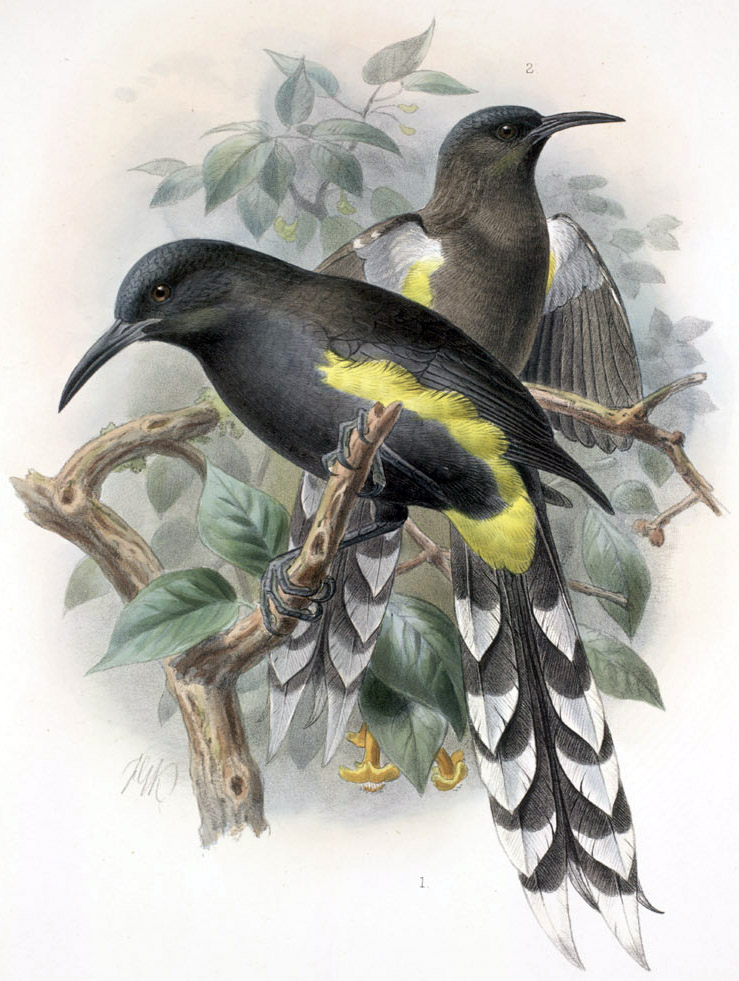
The Oahu Oo was a medium-sized bird distinguished by its glossy black plumage and striking yellow axillaries, which were tufts of feathers under the wings. Adult Oahu Oos exhibited a metallic sheen on their feathers, which was particularly noticeable when the sun caught them. The bright yellow feathers contrasted sharply against the darker body, making it a visually captivating species to observe.
Juvenile Oahu Oos were similar in appearance to adults but had slightly duller plumage and less pronounced yellow tufts. Males and females appeared alike, with no significant sexual dimorphism in plumage or size. This uniform appearance could sometimes make it challenging to differentiate between the sexes in the field.
In flight, the Oahu Oo had a distinctive silhouette with broad wings and a relatively long tail. Its flight was strong and direct, often across the canopy where it foraged for nectar. When perched, the Oahu Oo would often hold its tail slightly cocked, a posture that could help distinguish it from other Hawaiian honeycreepers. Although no longer extant, these field marks were crucial for early ornithologists studying the species.
Having trouble telling birds apart? Upload a photo to our bird identification tool for an instant species match.
Oahu Oo Habitat and Range
Preferred Habitat
The Oahu Oo thrived in the montane rainforests of Oahu, favoring elevations of 500 to 1,200 meters. These habitats offered a rich diversity of flowering plants, providing ample nectar sources for the Oahu Oo's diet. The dense canopy of these forests allowed the bird to forage with minimal exposure to predators.
The Oahu Oo preferred areas with abundant Ohia lehua and native lobelias, which produced the nectar vital to its survival. Seasonal shifts in flowering patterns influenced the Oahu Oo's movements within these forests. Unlike some Hawaiian birds, the Oahu Oo showed little adaptation to urban environments, and its presence was restricted to lush, undisturbed forest areas.
With the deforestation of lowland areas for agricultural purposes and later urbanization, the Oahu Oo's habitat became increasingly fragmented, exacerbating its decline. The bird's dependence on specific forest types made it particularly vulnerable to habitat destruction.
Geographic Range
The Oahu Oo was endemic to the island of Oahu in the Hawaiian archipelago. It did not migrate, residing year-round within its home range. Historically, the Oahu Oo's range encompassed the moist and verdant mountain regions of Oahu, including the Waianae and Koolau mountain ranges.
Within these areas, the bird's population density was likely highest in regions with abundant flowering plants and minimal human disturbance. Over time, the Oahu Oo's range contracted significantly due to habitat loss and the introduction of invasive species, confining the bird to increasingly isolated pockets of suitable habitat.
The Oahu Oo's restricted range and specialized habitat requirements made it particularly susceptible to environmental changes and human activities. The combination of these factors ultimately led to its extinction, with the last confirmed sightings occurring in the late 19th century.
Want to know which birds visit your area? Browse our backyard birds by location guides for region-specific species lists.
What Does the Oahu Oo Eat?
The Oahu Oo primarily subsisted on nectar, making it a key pollinator within its ecosystem. Its curved bill was well-adapted to accessing the nectar of tubular flowers, particularly those of the Ohia lehua and lobelias. This specialization allowed the Oahu Oo to efficiently extract nectar while inadvertently transferring pollen between flowers.
In addition to nectar, the Oahu Oo's diet included insects and spiders. These provided essential proteins and nutrients, especially during the breeding season when the energy demands increased. The bird foraged by probing flowers with its bill and gleaning insects from foliage.
The Oahu Oo's feeding schedule was likely dictated by the availability of flowering plants, which varied seasonally. During periods of low nectar availability, the Oahu Oo would have relied more heavily on invertebrates to meet its nutritional needs, underscoring its adaptability within its specialized niche.
Oahu Oo Behavior and Social Structure
The Oahu Oo exhibited a solitary or paired social structure, rarely forming flocks. This behavior was typical of nectarivorous birds, which often maintain larger territories to ensure sufficient food resources. The Oahu Oo defended its territory vigorously against intruders, using vocalizations and displays to assert its dominance.
Courtship displays likely involved vocalizations and visual displays, showcasing the bird's vibrant plumage. These displays reinforced pair bonds, crucial for cooperative breeding and nesting. Once paired, the Oahu Oo's interactions with its mate became more subdued, focusing on nesting and rearing young.
In response to predators, the Oahu Oo likely employed evasive flight and concealment within dense foliage. The bird's alertness to potential threats would have been heightened during the breeding season, when eggs and nestlings were vulnerable. Diurnally active, the Oahu Oo's daily activities centered around foraging, with peak activity during the early morning and late afternoon.
Oahu Oo Nesting and Reproduction
The Oahu Oo constructed cup-shaped nests, carefully woven from plant fibers and lined with softer materials like mosses and feathers. These nests were typically placed high in the canopy, concealed among dense foliage to protect against predators.
The clutch size of the Oahu Oo was generally small, consisting of just one or two eggs. Both parents shared incubation duties, which lasted approximately two weeks. After hatching, the nestlings remained under the care of the parents for an additional two to three weeks before fledging.
Parental roles were shared, with both male and female participating in feeding and protecting the young. The Oahu Oo likely produced one brood per year, with breeding closely aligned to periods of peak nectar availability. The bird's reproductive strategy reflected a high investment in offspring survival, typical of species with stable but limited food resources.
Oahu Oo Sounds and Vocalizations
The Oahu Oo's primary song was a melodious, flute-like series of notes, known for its clarity and rhythmic precision. This song, often heard during the dawn chorus, played a crucial role in territory establishment and mate attraction.
In addition to its song, the Oahu Oo produced a variety of call notes, including sharp alarms when disturbed by potential threats. These calls varied in pitch and intensity, conveying different levels of urgency. The bird's vocal repertoire was integral to its social interactions and territorial defense.
Comparatively, the Oahu Oo's song bore resemblance to certain thrushes, though its distinct tonal quality set it apart. The bird's vocalizations were a characteristic feature of Oahu's montane forests, contributing to the acoustic landscape of its habitat.
Interesting Facts About the Oahu Oo
- 1The Oahu Oo was one of five species in the Mohoidae family, all of which are now extinct.
- 2Its striking yellow tufts were prized by native Hawaiians for traditional featherwork.
- 3The Oahu Oo's extinction was largely due to habitat destruction and introduced predators.
- 4It was last seen in the late 19th century, with no confirmed sightings since.
- 5Despite its small size, the Oahu Oo played a significant role in pollinating native Hawaiian plants.
- 6The Oahu Oo's song was described as one of the most melodious among Hawaiian birds.
- 7Its extinction highlights the fragility of island ecosystems under human influence.
Oahu Oo Conservation Status
The Oahu Oo is classified as extinct by the IUCN. Its population decline was primarily driven by habitat destruction and the introduction of non-native predators such as rats and cats. As native forests were cleared for agriculture and urban development, the Oahu Oo's habitat became increasingly fragmented, severely limiting its range. Historical records indicate a rapid decline in the late 19th century, with the last confirmed sightings occurring around that time. Conservation efforts for the Oahu Oo were limited by the time its plight was recognized, reflecting a broader lack of awareness of island species vulnerability during that era. The extinction of the Oahu Oo serves as a stark reminder of the need for proactive conservation measures to protect remaining endemic species in Hawaii. Current efforts focus on habitat restoration and the control of invasive species to prevent similar losses of other native birds.
Other Mohoidae Species


Birds Similar to the Oahu Oo
These species are often confused with the Oahu Oo due to similar appearance or overlapping range.