
Kittacincla albiventris
Kittacincla albiventris
Order: Passeriformes / Family: Sylviidae

Wikimedia Commons
About the Kittacincla albiventris
The Kittacincla albiventris, commonly referred to as the White-bellied Shama, is a captivating songbird native to the dense forests of Southeast Asia. It belongs to the Sylviidae family and the Passeriformes order, renowned for their complex vocalizations and diverse habitats. This species thrives primarily in the tropical and subtropical forests of regions like Borneo and Sumatra, where it plays a crucial ecological role as both a seed disperser and an insect predator. Its presence signifies a healthy forest ecosystem. The White-bellied Shama prefers lowland forests but can also be found in secondary growth and plantations, adapting well to human-altered landscapes. This adaptability has allowed the species to maintain stable populations despite habitat encroachment. Seasonally, the Kittacincla albiventris displays distinct behaviors. During the breeding season, males become highly territorial, showcasing elaborate courtship displays to attract mates. Their melodious songs, which serve both as a mating call and a territorial warning, fill the air. In non-breeding months, these birds are less territorial, often moving in small, loosely associated groups. As insectivores, their foraging activities help control insect populations, benefiting both the forest ecosystem and agricultural areas nearby. The Kittacincla albiventris is of particular interest to ornithologists and bird watchers due to its vocal prowess. Its ability to mimic other birds' calls and its complex song structures make it a subject of study in avian acoustics. Overall, the White-bellied Shama is a vital component of Southeast Asia's avian diversity, contributing to the ecological balance and offering endless fascination for nature enthusiasts.
The Kittacincla albiventris belongs to the family Sylviidae, within the order Passeriformes. These birds typically live approximately 7 years in the wild, with some individuals reaching 10 years..
How to Identify a Kittacincla albiventris
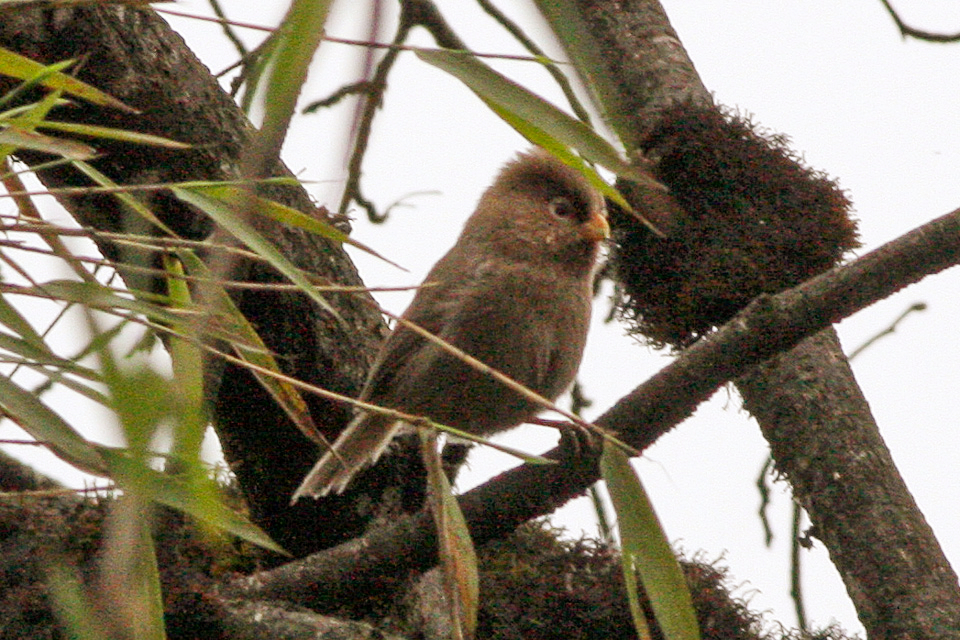
Identifying the Kittacincla albiventris in the field involves noting its distinctive plumage and posture. Adult males exhibit a glossy black head, back, and tail, sharply contrasted by the bright white underparts for which the species is named. Females tend to have a more subdued coloration, with brownish tones on the head and back. Juvenile White-bellied Shamas resemble females but have more mottled plumage, which gradually becomes more defined as they mature. In terms of size, this songbird falls into the medium category, measuring approximately 23 centimeters in length. The bird's flight silhouette is characterized by a long tail and rounded wings, typical of forest-dwelling species that require agility among dense foliage. When perching, the Kittacincla albiventris often adopts an upright posture, allowing its tail to fan out prominently, which can be a useful field mark. Birdwatchers might confuse it with the closely related White-rumped Shama, but the latter has a distinct white rump patch not present in Kittacincla albiventris. Careful attention to these details can aid in accurate identification during birding excursions.
Having trouble telling birds apart? Upload a photo to our bird identification tool for an instant species match.
Kittacincla albiventris Habitat and Range
Preferred Habitat
The Kittacincla albiventris predominantly inhabits tropical and subtropical forests, favoring dense undergrowth where it can forage and nest. This species is commonly found in the lowland rainforests of Borneo and Sumatra, where it utilizes the rich biodiversity for food and shelter. While it prefers primary forests, it can also adapt to secondary growth and plantation areas, demonstrating a degree of resilience to habitat modification. The bird typically resides at elevations from sea level up to 1200 meters, although it is most abundant in lower elevations. During the breeding season, the Kittacincla albiventris may venture into more open areas within its forest habitat to establish territories, but it remains primarily a forest bird. Its presence in urban settings is minimal, as it does not commonly inhabit human-dominated landscapes.
Geographic Range
The Kittacincla albiventris is primarily found in Southeast Asia, with its range encompassing the islands of Borneo and Sumatra. These regions provide the ideal habitat for the species, offering a rich diversity of insects and dense foliage for nesting. The White-bellied Shama does not engage in long-distance migration, instead exhibiting local movements related to food availability and breeding. Within its range, population densities vary, with certain forested areas hosting higher concentrations of the species due to favorable ecological conditions. While its distribution is relatively insular, the bird's adaptability to secondary growth areas ensures it remains reasonably widespread across its native islands.
Want to know which birds visit your area? Browse our backyard birds by location guides for region-specific species lists.
What Does the Kittacincla albiventris Eat?
The diet of the Kittacincla albiventris primarily comprises insects and other small invertebrates, making it an effective insectivore within its ecosystem. It forages in the undergrowth, using its keen eyesight to detect prey among leaves and branches. The bird's diet includes beetles, ants, caterpillars, and spiders, with occasional consumption of small fruits and berries, particularly during seasons when insect abundance diminishes. During the breeding season, the demand for protein-rich foods increases to support the energy needs of growing chicks. The White-bellied Shama often forages alone or in pairs, employing a methodical approach to search each section of its territory. It typically feeds during daylight hours, with peak activity observed in the early morning and late afternoon.
Kittacincla albiventris Behavior and Social Structure
The Kittacincla albiventris displays a range of intriguing behaviors, particularly during the breeding season. Males engage in elaborate courtship displays, which include singing complex songs from prominent perches to attract females and deter rival males. These displays often involve fluttering flights and tail fanning, showcasing the bird's striking plumage. Territorial behavior is pronounced, with males defending their chosen area vigorously. Outside the breeding season, the White-bellied Shama becomes less territorial and may associate with mixed-species flocks, benefiting from the safety and foraging opportunities these groups provide. The bird's response to predators involves a series of alarm calls and evasive maneuvers, often retreating to denser cover to escape threats. Daily activities typically commence at dawn, with the bird actively foraging and vocalizing throughout the morning. The afternoon is spent in more subdued activities, such as preening and resting, before resuming feeding in the late afternoon.
Kittacincla albiventris Nesting and Reproduction
The nesting habits of the Kittacincla albiventris are closely tied to its forested habitat. It typically constructs its nest in the dense undergrowth or within fallen logs, using materials like twigs, leaves, and rootlets to create a well-camouflaged structure. The nest, cup-shaped and sturdy, provides a secure environment for the eggs and chicks. Clutch sizes range from two to four eggs, which the female incubates for about 12 to 14 days. During this period, the male assists by providing food and defending the nesting territory. Once the chicks hatch, both parents participate in feeding and caring for the young. The fledging period lasts approximately 14 days, after which the young birds leave the nest but remain under parental supervision until they achieve full independence. The Kittacincla albiventris typically raises one or two broods per year, depending on environmental conditions and food availability.
Kittacincla albiventris Sounds and Vocalizations
The song of the Kittacincla albiventris is a melodious series of whistles and trills, delivered with a clear, resonant quality that carries through the forest. Each male possesses a unique song, which it uses to establish territory and attract a mate. The bird's vocal repertoire includes a variety of call notes, from sharp alarm calls to softer contact calls used between mates. During the dawn chorus, the White-bellied Shama's song stands out for its complexity and beauty, often beginning with a series of rising notes followed by a rapid sequence of trills. Its calls are reminiscent of some thrushes, though with a distinct clarity and pattern that make it identifiable to those familiar with its sounds.
Interesting Facts About the Kittacincla albiventris
- 1The White-bellied Shama can mimic the calls of other bird species, showcasing impressive vocal versatility.
- 2Despite its reliance on forest habitats, the Kittacincla albiventris can adapt to secondary growth, demonstrating ecological resilience.
- 3The song of the Kittacincla albiventris is often compared to that of the European Nightingale for its complexity and beauty.
- 4Males are known to sing nearly year-round, with peak activity during the breeding season to attract females.
- 5The White-bellied Shama's striking white belly is a key identification feature, aiding in distinguishing it from similar species.
- 6This bird's role as an insect predator helps control pest populations in its native forests, benefiting both natural and agricultural systems.
- 7The Kittacincla albiventris uses its long tail for balance and agility while navigating the dense forest undergrowth.
Kittacincla albiventris Conservation Status
The Kittacincla albiventris currently holds a status of Least Concern on the IUCN Red List, with stable population trends across its range. However, habitat loss due to deforestation and land conversion poses ongoing threats to its long-term survival, particularly in areas where agricultural expansion is intense. Conservation efforts focus on preserving primary forest habitats and promoting sustainable land use practices that accommodate both human needs and wildlife conservation. Historically, the species has managed to adapt to some degree of habitat modification, but continued efforts are necessary to ensure its habitat remains viable. In protected areas and national parks within its range, population densities remain robust, offering a hopeful outlook for this melodious songbird.
Other Sylviidae Species



Birds Similar to the Kittacincla albiventris
These species are often confused with the Kittacincla albiventris due to similar appearance or overlapping range.
