Kloss's Leaf Warbler
Phylloscopus ogilviegranti
Order: Passeriformes / Family: Phylloscopidae
Wikimedia Commons
About the Kloss's Leaf Warbler
Kloss's Leaf Warbler, scientifically known as Phylloscopus ogilviegranti, is a small passerine bird belonging to the Phylloscopidae family. It is primarily found in the forests and mountainous regions of Southeast Asia, specifically in areas like southern China, Vietnam, and Hainan Island. This species plays a crucial role in its ecosystem by controlling insect populations and serving as a prey item for larger predators. The warbler's vibrant green and yellow plumage, combined with its active foraging behavior, makes it a delightful subject for birdwatchers and researchers alike.
This bird thrives in subtropical and tropical moist lowland forests but is also adaptable to various woodland habitats. Typically, Kloss's Leaf Warbler is seen flitting through the canopy as it searches for insects. The bird's presence is often detected by its distinct, melodious song, which contributes to the acoustic landscape of its environment. During the breeding season, these songs become more pronounced, serving to establish territories and attract mates.
The ecological significance of Kloss's Leaf Warbler extends beyond its own survival. By preying on insects, the warbler helps maintain the health of the forest ecosystems. This insectivorous diet also highlights its role in the food web, supporting both the biodiversity of its habitat and the survival of larger predatory species. Seasonal behaviors of the warbler include altitudinal migrations in response to climate conditions, ensuring access to optimal habitats throughout the year.
The Kloss's Leaf Warbler belongs to the family Phylloscopidae, within the order Passeriformes. These birds typically live average 4-6 years, with some living up to 8 years..
How to Identify a Kloss's Leaf Warbler
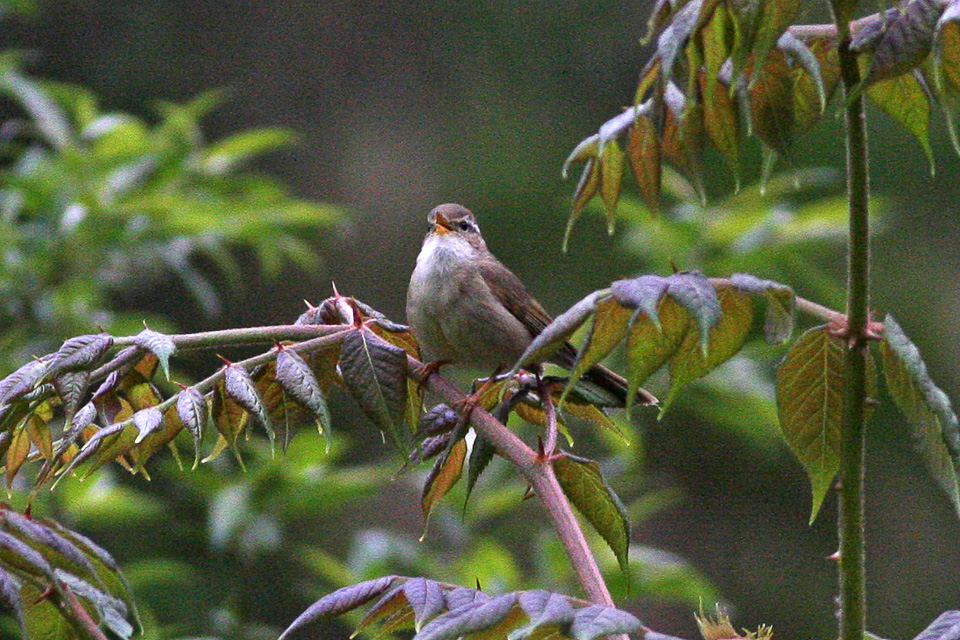
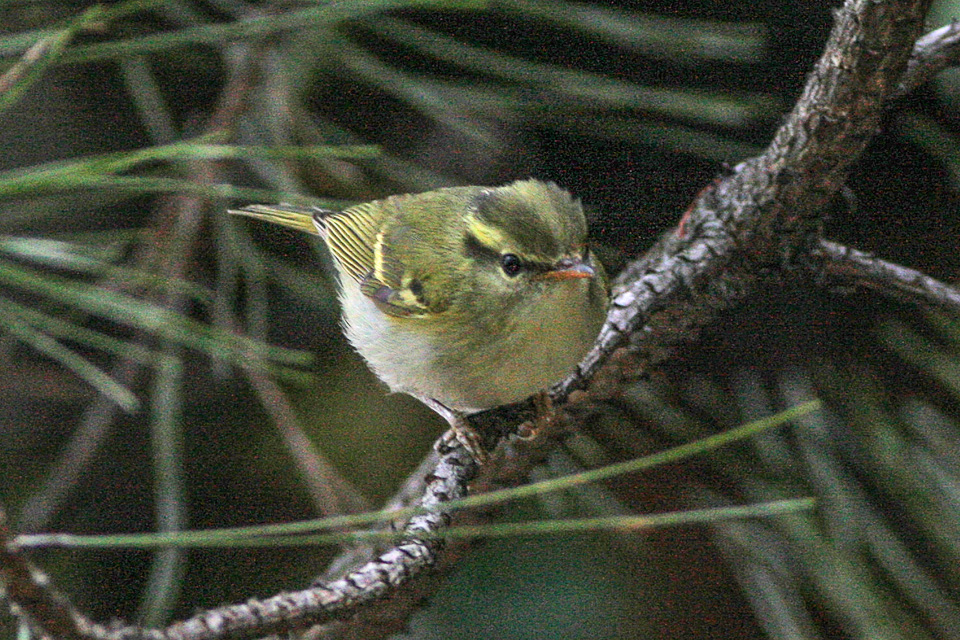
Kloss's Leaf Warbler is easily identified by its bright yellow-green plumage, a striking feature that distinguishes it from many other warblers. The bird measures approximately 10-12 cm in length, making it a small but noticeable presence in its habitat. Its underparts are predominantly pale yellow, while the upperparts display a vibrant green hue. This contrast is especially useful for identification when the bird is in motion among the canopy leaves.
Adult Kloss's Leaf Warblers can be distinguished from juveniles by their more intense coloration and slightly more defined wing bars. Unlike many other warblers, there is little sexual dimorphism, meaning males and females appear very similar in coloration and size. However, during the breeding season, males may exhibit slightly brighter plumage and more frequent singing.
The warbler's flight silhouette is characterized by rapid wing beats and short glides, typical of small passerines. When perched, it often adopts an upright posture, which, along with its color, helps it blend seamlessly into the foliage. It's important to note that this species can be confused with the Yellow-browed Warbler, but Kloss's Leaf Warbler lacks the distinct eyebrow stripe of its relative.
Having trouble telling birds apart? Upload a photo to our bird identification tool for an instant species match.
Kloss's Leaf Warbler Habitat and Range
Preferred Habitat
Kloss's Leaf Warbler inhabits a variety of forested environments but shows a preference for subtropical and tropical moist lowland forests. These habitats, rich in insect life, provide ample foraging opportunities. The warbler is most commonly found at elevations ranging from 500 to 2000 meters.
During the breeding season, it favors dense, undisturbed forest canopies where it can safely nest and rear its young. In contrast, during non-breeding periods, it may be found at lower elevations or in more open woodlands, demonstrating a degree of habitat flexibility.
While primarily a forest dweller, Kloss's Leaf Warbler is sometimes observed in more urbanized settings, particularly in city parks and gardens that mimic its natural environment. This adaptability to different habitats facilitates its survival across various landscapes.
Geographic Range
The breeding range of Kloss's Leaf Warbler extends across parts of southern China, including the provinces of Fujian and Guangdong, and into northern Vietnam. Hainan Island also hosts a significant population, given its suitable forest habitats.
During winter, the warbler undertakes altitudinal migrations to lower elevations within its range, though it remains largely within the same geographical areas. This movement allows the bird to exploit more temperate conditions and abundant food resources during colder months.
Population density is particularly high in the subtropical forests of Hainan, where suitable conditions and ample food supply support thriving communities. However, the warbler's presence is less common in the northernmost parts of its range, where harsher climates prevail.
Want to know which birds visit your area? Browse our backyard birds by location guides for region-specific species lists.
What Does the Kloss's Leaf Warbler Eat?
Kloss's Leaf Warbler primarily feeds on insects, making it an important insectivore within its ecosystem. Its diet consists mainly of caterpillars, beetles, and other small arthropods, which it skillfully extracts from the foliage using its slender bill.
During the breeding season, the warbler's diet becomes more protein-rich, as it needs to support the energy demands of nesting and rearing young. Insect abundance during this period ensures that both adults and nestlings receive adequate nutrition.
Foraging behavior involves active searching among leaves and branches, often accompanied by short flights and agile maneuvers to capture prey. The warbler's feeding schedule is generally diurnal, with peak activity occurring in the morning and late afternoon when insects are most active.
Kloss's Leaf Warbler Behavior and Social Structure
Kloss's Leaf Warbler exhibits a variety of interesting behaviors that make it a fascinating subject for observation. Socially, it tends to be solitary or found in pairs, particularly during the breeding season when territoriality is pronounced. Males establish and defend territories through song, using their melodious calls to deter rivals and attract mates.
Courtship displays involve aerial chases and song duets, where both male and female participate in a synchronized vocal exchange. Outside of the breeding season, the warbler may join mixed-species foraging flocks, benefiting from the increased vigilance and foraging efficiency such groups provide.
In response to predators, Kloss's Leaf Warbler employs a mix of vocal alarms and evasive maneuvers. It is an active and agile flier, capable of quick, darting movements that help evade capture. Daily activity patterns are largely dictated by light levels, with most feeding and social interactions occurring during daylight hours.
Kloss's Leaf Warbler Nesting and Reproduction
Kloss's Leaf Warbler constructs its nest high in the forest canopy, choosing locations that offer protection from predators and environmental elements. The nest is a cup-shaped structure made from fine grass, leaves, and spider webs, camouflaged to blend in with its surroundings.
Typically, the female lays a clutch of 3-5 eggs, which she incubates for about 12-14 days. During this time, the male may assist by bringing food to the nesting site, though the female is primarily responsible for incubation.
Once hatched, the chicks remain in the nest for approximately 10-12 days before fledging. Both parents are involved in feeding and caring for the young, ensuring they receive adequate nutrition and protection. Kloss's Leaf Warbler may produce one or two broods per year, depending on environmental conditions and food availability.
Kloss's Leaf Warbler Sounds and Vocalizations
The primary song of Kloss's Leaf Warbler is a series of clear, melodious notes typically delivered in a rising and falling pattern. This song serves both as a territorial marker and a mating call.
Call notes are softer and more subdued, used for communication between mates or within foraging groups. Alarm calls, on the other hand, are sharp and rapid, designed to alert conspecifics to potential threats.
During the dawn chorus, the warbler's song stands out for its rhythmic quality, adding to the symphony of forest sounds. Its vocalizations, while unique, may remind listeners of other warblers' songs but with a distinctive melodic twist.
Interesting Facts About the Kloss's Leaf Warbler
- 1Kloss's Leaf Warbler is named after Captain Cecil Boden Kloss, a British naturalist who explored Southeast Asia in the early 20th century.
- 2The species' scientific name, Phylloscopus ogilviegranti, honors two individuals: ornithologist William Robert Ogilvie-Grant and Captain Kloss.
- 3This warbler's ability to adapt to various forest types helps it maintain stable populations despite habitat changes.
- 4Unlike many other warblers, Kloss's Leaf Warbler does not undertake long-distance migrations, preferring altitudinal shifts instead.
- 5The warbler's melodious song can be heard over long distances, making it easier for birdwatchers to locate in dense forests.
- 6Its diet primarily consists of caterpillars, which it skillfully plucks from leaves and branches with precision.
- 7Kloss's Leaf Warbler plays a vital role in controlling insect populations, contributing to the health of its forest ecosystem.
Kloss's Leaf Warbler Conservation Status
The IUCN currently classifies Kloss's Leaf Warbler as Least Concern, reflecting a stable population trend across its range. Despite this status, certain populations face threats from habitat loss due to deforestation and land conversion for agriculture. Conservation efforts focus on preserving critical forest habitats and promoting sustainable land-use practices. Protected areas within its range, such as nature reserves in Hainan, play a vital role in safeguarding its future. Historically, the warbler's population has shown resilience, but ongoing monitoring and habitat conservation are essential to ensure its continued survival amid environmental changes.