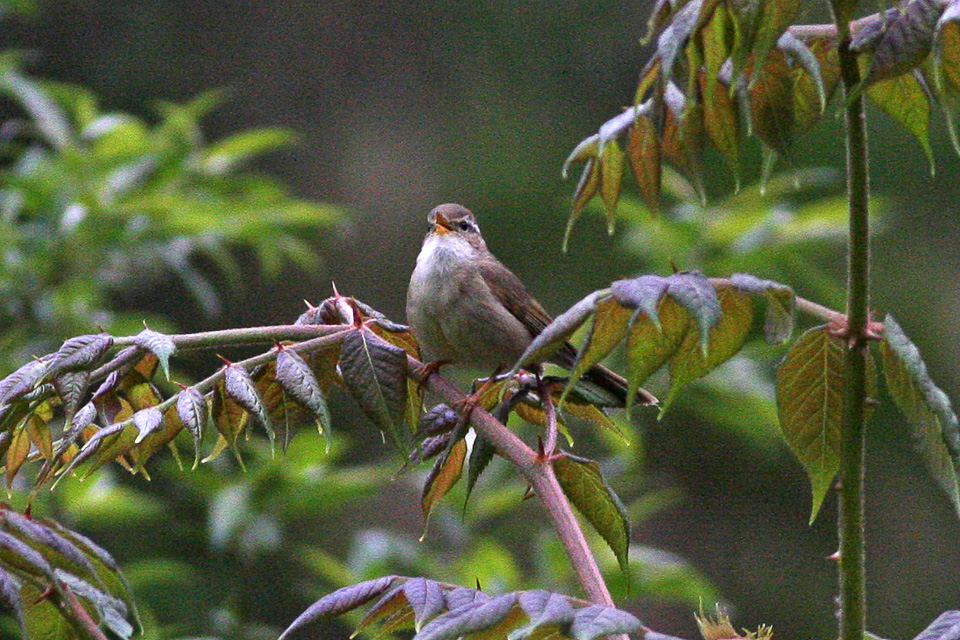
Laura's Woodland-Warbler
Phylloscopus laurae
Order: Passeriformes / Family: Phylloscopidae

Wikimedia Commons
About the Laura's Woodland-Warbler
Laura's Woodland-Warbler (Phylloscopus laurae) is a small passerine bird that finds its home primarily in the montane forests of Central Africa. This species plays a critical role in the ecosystem as an insectivore, helping to control insect populations. Found predominantly in regions like the Albertine Rift, the warbler flourishes in the rich biodiversity of countries such as Uganda, Rwanda, and the Democratic Republic of the Congo. It thrives in the understory of dense, moist forests, where it exhibits remarkable adaptability to seasonal changes in food availability and climatic conditions. During the wet season, the abundance of insects allows these warblers to partake in active foraging, while in the drier months, they rely on their keen sense of hearing to locate prey hidden beneath leaf litter. As an indicator species, Laura's Woodland-Warbler reflects the health of its forest environment. Its presence or absence can signal changes in habitat quality, influenced by factors such as deforestation and climate change. These warblers form an important part of the avian community, contributing to seed dispersal and forest regeneration through their interactions within the ecosystem. Seasonal behaviors of Laura's Woodland-Warbler include breeding activities that coincide with the rainy season, when food is plentiful. This timing ensures that the warblers can provide ample nourishment for their young. Outside of the breeding season, these birds exhibit more solitary behaviors, though they occasionally join mixed-species flocks. Such associations allow them to exploit food sources more efficiently and provide some safety in numbers against potential predators.
The Laura's Woodland-Warbler belongs to the family Phylloscopidae, within the order Passeriformes. These birds typically live typically 4-6 years, with some living up to 8 years..
How to Identify a Laura's Woodland-Warbler
Laura's Woodland-Warbler is a small bird, measuring approximately 10-12 cm in length. Adults display a distinctive olive-green plumage on their upperparts, with a lighter, yellowish wash on the underparts. The face features a prominent pale supercilium that contrasts with a darker eye stripe. Juveniles resemble adults but with slightly duller plumage and less defined facial markings. Males and females appear similar, making visual sex differentiation challenging in the field. The warbler's flight is characterized by quick, darting movements, often accompanied by a series of short, high-pitched calls. When perched, it maintains an alert and upright posture, frequently flicking its wings and tail. Confusion may arise with similar Phylloscopus species, such as the Yellow-browed Warbler, but Laura's Woodland-Warbler's more muted coloration and specific habitat preferences aid in identification.
Having trouble telling birds apart? Upload a photo to our bird identification tool for an instant species match.
Laura's Woodland-Warbler Habitat and Range
Preferred Habitat
Laura's Woodland-Warbler inhabits dense montane forests, typically at elevations ranging from 1,000 to 2,500 meters. These forests, rich in biodiversity, offer the dense foliage and abundant insect life that the warbler requires. During the breeding season, they prefer areas with thick understory vegetation that provides ample cover and nesting sites. In non-breeding periods, they may venture slightly lower in elevation, but remain within forested areas to exploit different food resources. Although primarily found in rural and pristine environments, Laura's Woodland-Warbler can occasionally be observed in forest fragments near urban areas, provided these patches are sufficiently dense and large enough to support their ecological needs.
Geographic Range
The range of Laura's Woodland-Warbler is restricted to Central Africa, with its core population in the Albertine Rift. This includes the eastern Democratic Republic of the Congo, western Uganda, Rwanda, and parts of Burundi. The species is non-migratory, residing year-round within its forest habitat. However, slight altitudinal movements may occur in response to seasonal food availability. Population densities are highest in undisturbed, primary forest areas where human impact is minimal. Conservation efforts in these regions focus on protecting forest habitats from logging and agricultural encroachment to ensure the warbler's continued survival.
Want to know which birds visit your area? Browse our backyard birds by location guides for region-specific species lists.
What Does the Laura's Woodland-Warbler Eat?
Laura's Woodland-Warbler primarily feeds on insects and other invertebrates. Its diet consists of beetles, caterpillars, and spiders, with occasional consumption of small fruits and seeds. During the wet season, the warbler exploits the abundance of caterpillars, which provide a rich source of protein essential for breeding and raising young. In drier months, it relies more on gleaning insects from foliage and bark. Foraging behavior involves agile movements through the understory, utilizing its keen eyesight to detect prey and its dexterous bill to capture it. Feeding occurs throughout the day, with peaks in activity during early morning and late afternoon when insects are most active.
Laura's Woodland-Warbler Behavior and Social Structure
Laura's Woodland-Warbler exhibits solitary or pair-based social structures, especially during the breeding season. Males establish territories through song and display behaviors, such as wing flicking and tail spreading, to deter rivals and attract mates. Courtship involves males presenting food items to females and synchronized movements through the forest canopy. Outside the breeding season, the warbler may join mixed-species flocks, which offers enhanced foraging opportunities and protection from predators like snakes and raptors. Its daily activity pattern includes periods of intense foraging interspersed with rest and preening. The warbler remains vigilant to threats, utilizing its cryptic plumage to blend into the foliage and escape detection.
Laura's Woodland-Warbler Nesting and Reproduction
The nesting habits of Laura's Woodland-Warbler involve constructing cup-shaped nests made of grasses, moss, and leaves, placed low in dense shrubbery or small trees. The female lays a clutch of 2-4 eggs, which she incubates for approximately 12-14 days. Both parents participate in feeding the chicks, which fledge about two weeks after hatching. The warbler typically raises one brood per year, timed to coincide with the peak abundance of food during the rainy season. Nest predation is a significant concern, with snakes and small mammals posing threats to eggs and chicks.
Laura's Woodland-Warbler Sounds and Vocalizations
The primary song of Laura's Woodland-Warbler is a series of rapid, high-pitched trills and whistles, often delivered from a hidden perch within the dense forest. Its calls, used for communication and alarm, consist of short, sharp 'chip' notes. During the dawn chorus, males sing persistently to establish territory and attract mates. The warbler's song is distinct from similar species by its faster tempo and more complex structure, resembling the sound of a distant, babbling brook.
Interesting Facts About the Laura's Woodland-Warbler
- 1Laura's Woodland-Warbler is named after the wife of the ornithologist who first described it, adding a personal touch to its scientific legacy.
- 2Despite its small size, Laura's Woodland-Warbler can eat up to 10% of its body weight in insects daily, showcasing its voracious appetite.
- 3These warblers are known for their agile movements, flitting through dense foliage with remarkable speed and precision.
- 4Laura's Woodland-Warbler participates in mixed-species flocks, benefiting from the increased vigilance of larger bird groups.
- 5Their nests are often strategically placed near ant trails, which may deter predators due to the ants' presence.
- 6The warbler's call is distinct and easily identifiable, featuring rapid, high-pitched trills that reverberate through the forest.
- 7During the wet season, the abundance of insects allows the warbler to feed its young more efficiently, ensuring higher survival rates.
Laura's Woodland-Warbler Conservation Status
Laura's Woodland-Warbler is currently listed as Least Concern by the IUCN. However, its population is suspected to be in decline due to habitat loss from deforestation and agricultural expansion. Conservation efforts focus on preserving forest habitats through protected areas and sustainable land-use practices. Historical records indicate that the warbler's range has contracted in areas where forest cover has been significantly reduced. Continued monitoring is essential to ensure that populations remain stable and to address emerging threats like climate change.